
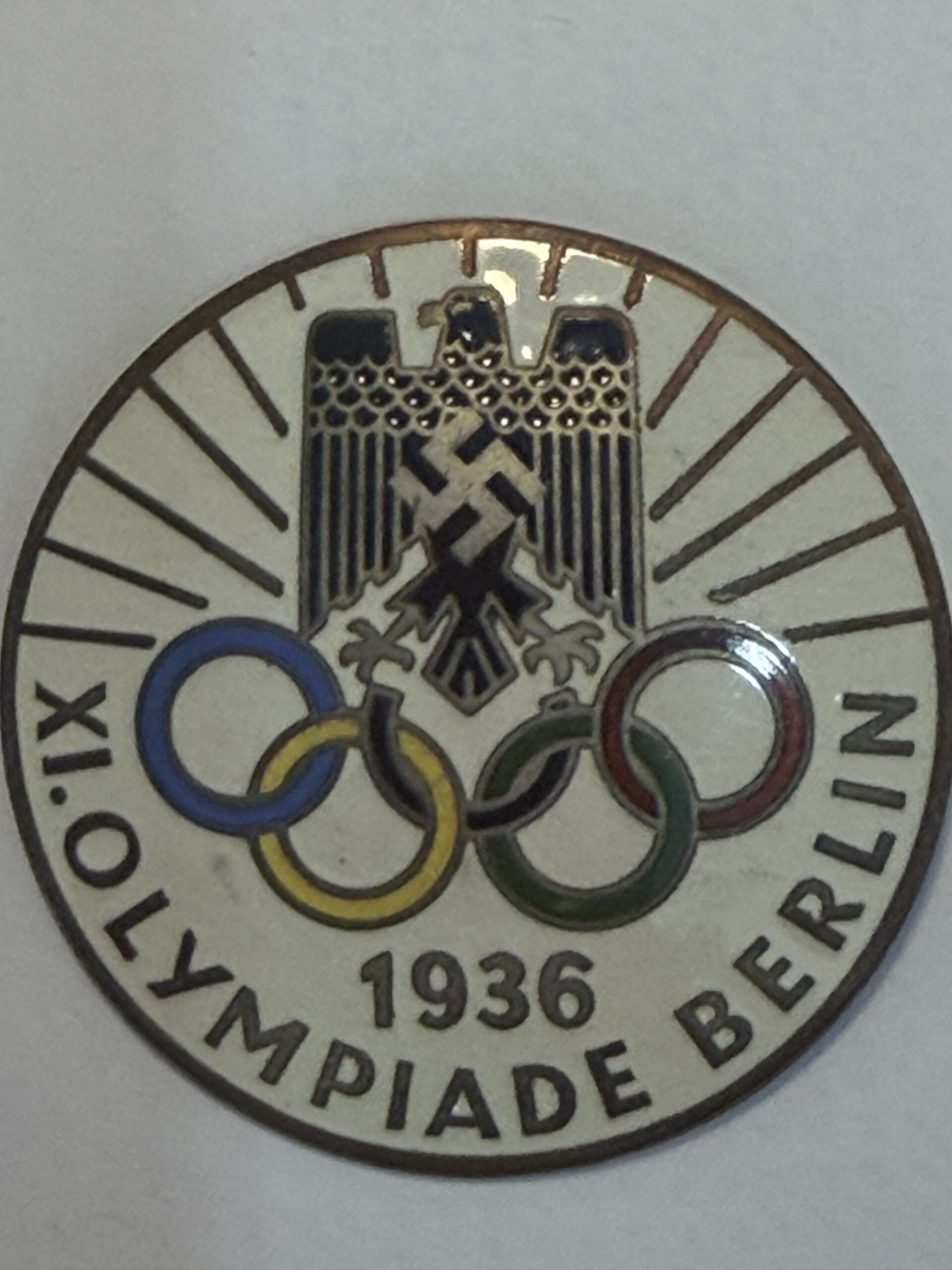
This 1936 Berlin Olympic Games badge is a scarce, individually numbered enamel example manufactured by H. Osang of Dresden. The badge carries the number 514 and retains its original horizontal pin fitting.
€ 200
1 in stock
This 1936 Berlin Olympic Games badge is a scarce, individually numbered enamel example manufactured by H. Osang of Dresden. The badge carries the number 514 and retains its original horizontal pin fitting.
The circular badge displays the German national eagle above the five coloured Olympic rings. Around the outer field appears the inscription “XI. Olympiade Berlin 1936.” Cream-coloured enamel forms the background, while dark dividing lines create a radiating border around the central design.
The badge is visually striking and remains in notably attractive condition. Moreover, its low three-digit number makes it especially desirable within a specialised collection of Olympic memorabilia, German sports badges or Third Reich-period enamel insignia.
The front combines several important symbols associated with the Berlin Games. At the top sits a stylised German eagle holding a wreath and swastika. Below it appear the five interlocking Olympic rings in blue, yellow, black, green and red.
The maker applied the design in coloured vitreous enamel over a non-ferrous metal body. The cream enamel field contrasts strongly with the black lettering and central eagle. In addition, the coloured rings retain a deep gloss and clear separation between each enamelled section.
The inscription reads:
XI. OLYMPIADE BERLIN
1936
The badge measures approximately 46 mm in diameter, based on recorded examples of this type. An exact measurement should be added to the listing after physical confirmation. A recognised auction description records the H. Osang version as a 46 mm, coloured-enamel, non-ferrous badge.
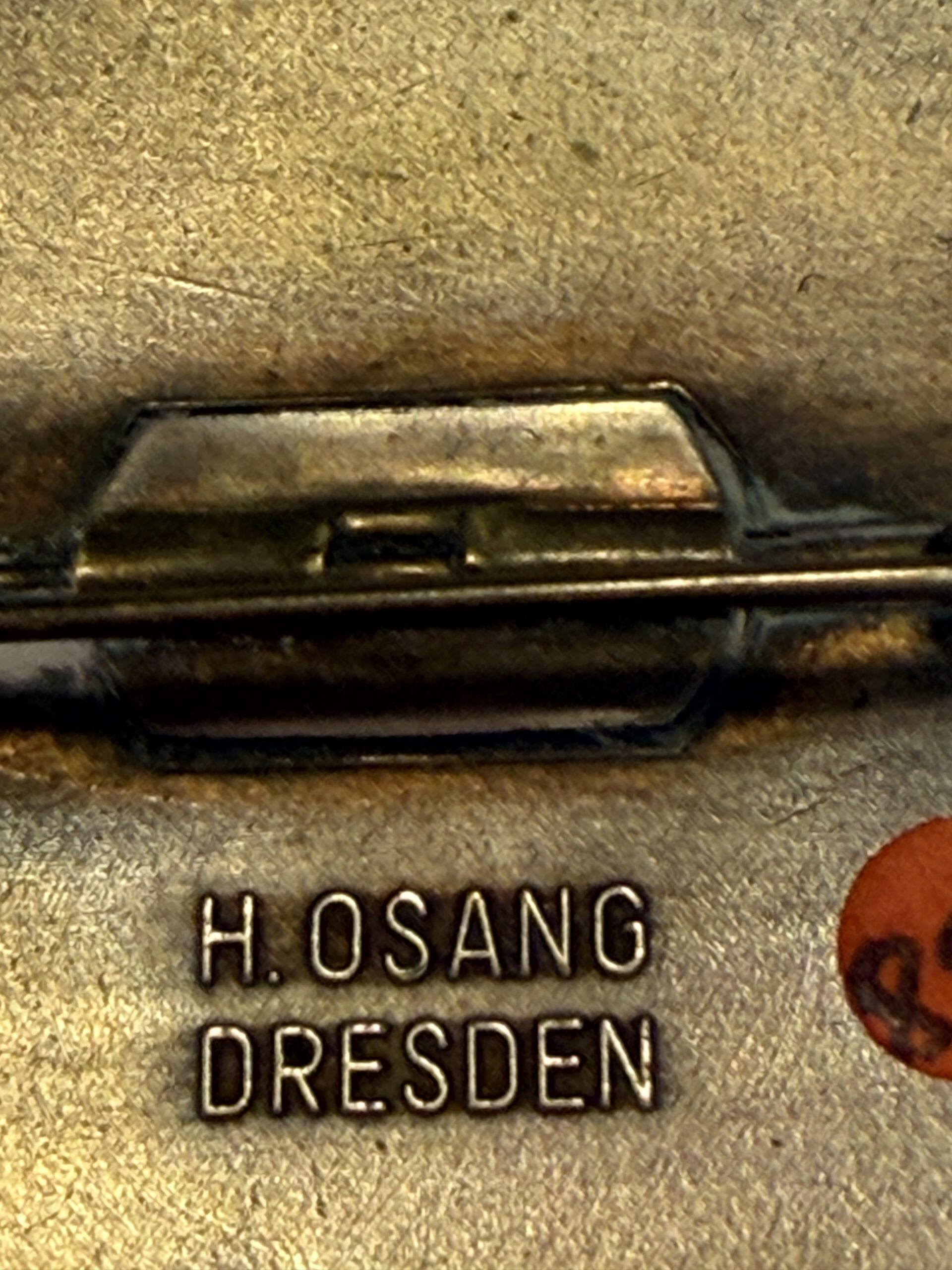
The reverse bears the raised maker’s mark:
H. OSANG
DRESDEN
H. Osang was a Dresden manufacturer known for producing medals, badges and political or military insignia. The clear maker marking is positioned beneath the pin assembly and remains sharply defined.
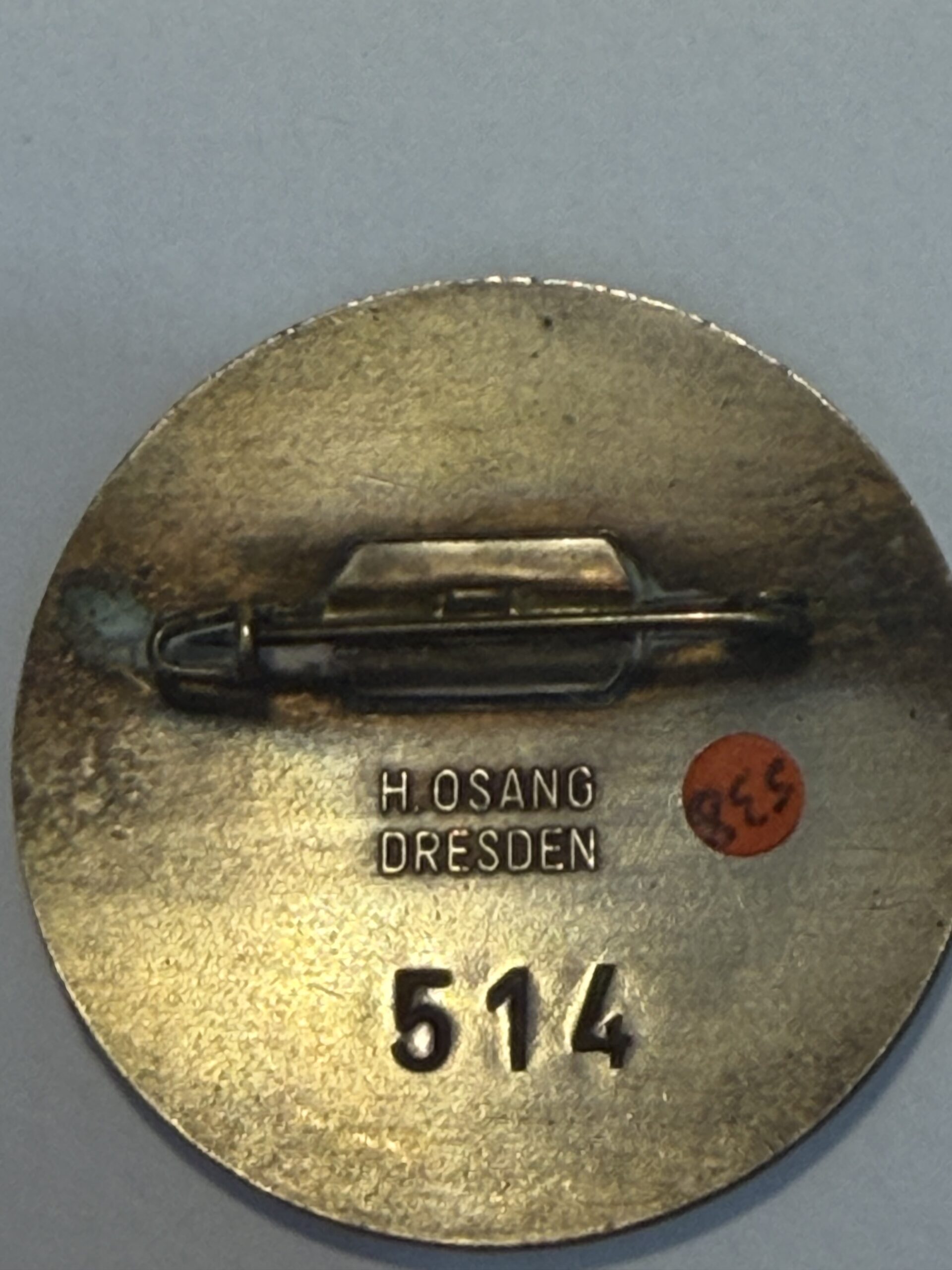
Below the maker’s mark appears the individually applied number:
514
The figures have been stamped into the reverse rather than cast as part of the badge. This feature is consistent with other known numbered H. Osang examples.
The original pin assembly consists of a horizontal pin, a formed hinge and a broad sheet-metal catch. The fittings display age-consistent darkening, while the surrounding reverse retains a naturally toned, lightly textured finish.
Specialist dealers and auction houses regularly describe this H. Osang design as an early participant badge for the 1936 Berlin Olympic Games. Some auction descriptions state that the design was proposed as an official participant badge but was rejected because of the prominent political imagery.
However, the precise “rejected by the IOC” account has not been conclusively established through a surviving official document. Therefore, a museum-standard description should distinguish the physical evidence from the traditional collector attribution.
The safest identification is:
An original, individually numbered H. Osang enamel badge associated with the XI Olympic Games in Berlin in 1936, traditionally identified as a participant or proposed participant badge.
The badge should not be described unconditionally as belonging to an athlete unless contemporary documentation accompanies it.
The reverse number 514 is an important feature. Other surviving H. Osang badges carry different individual numbers, confirming that the badges formed a controlled numbered series.
Nevertheless, no accessible surviving register has yet been located that connects number 514 with a named athlete, official, organiser or guest. Therefore, the original recipient remains unidentified.
The number may have served as:
Until archival documentation emerges, the number should not be attributed to a particular person.
For further research, the most relevant papers are likely to lie among the records of the Organising Committee for the XI Olympiad or within surviving German sporting and municipal archives.
Berlin hosted the Games of the XI Olympiad from 1 to 16 August 1936. The event became one of the most politically significant Olympic Games of the twentieth century.
The German government invested heavily in facilities, ceremonies, visual propaganda and international presentation. Although presented publicly as a celebration of international sport, the regime also used the Games to project an image of national strength and political stability.
The Olympic flame relay from Olympia to the host city became a prominent feature of the 1936 Games. In addition, the event attracted athletes and visitors from across the world. The official Olympic record provides details of the competitors, medal results and principal events.
The United States Holocaust Memorial Museum places the Games within the wider political and racial policies of Nazi Germany. It also documents the international debate over participation and the proposed boycott.
The Berlin Games used several distinct badges for athletes, officials, judges, press representatives and visitors. Designs and materials differed according to function.
The best-known general visitor badge incorporated the Brandenburg Gate. By contrast, the present H. Osang badge uses the national eagle and coloured Olympic rings as its central design.
An Olympic badge reference records that a competition was held for the official badge designs and that Professor Walter Raemisch’s submissions were selected. This supports the need for caution when calling the Osang badge a formally adopted official participant badge.
Nevertheless, recognised militaria auctioneers have catalogued the Osang badge directly as a Teilnehmer-Abzeichen, or participant badge.
Consequently, the badge occupies an interesting position between established auction terminology and the more cautious standards required for museum cataloguing.
The photographed badge displays several characteristics consistent with genuine pre-1945 manufacture.
The cream background and coloured Olympic rings display the depth and reflective quality expected from fired vitreous enamel. Minor surface marks appear naturally distributed rather than artificially applied.
The enamel remains strong overall. No major chips or substantial losses are visible in the supplied photographs.
The raised H. Osang Dresden marking is clearly formed and matches the wording found on other recorded examples.
The individually stamped number 514 shows natural variation in depth and alignment. It does not appear to have been incorporated into a modern casting.
The reverse shows age-consistent oxidation, toning and fine handling marks. Darker oxidation surrounds the pin fittings, which is typical where solder, moisture and dissimilar metals interact over time.
The hinge, pin and formed catch are appropriate in appearance for a period enamel badge of this size. The pin remains complete and appears functional.
Based on the supplied photographs, the badge appears to be a genuine period-manufactured example. However, any absolute commercial guarantee should follow an in-hand examination, including weight, dimensions, ultraviolet inspection and magnified study of the enamel and soldering.
The 1936 Berlin Olympic Games badge survives in very good collectible condition.
The front enamel retains strong colour and gloss. Furthermore, the lettering remains clear and the central eagle retains good definition. Minor age-related marks and light surface wear are visible under close inspection.
The reverse displays natural toning, fine scratches and areas of oxidation around the pin assembly. These features are consistent with age and storage. The maker’s mark and serial number remain clear.
A small circular collection or price label is attached to the reverse. This label should preferably remain in place unless conservation advice suggests otherwise, as it forms part of the badge’s collecting history.
Very good original condition, with strong enamel, complete fittings and age-consistent reverse toning.
No original award document, participant identity card, photograph or recipient record has been supplied with the badge.
Therefore, the current attribution must rest on:
The original owner of badge number 514 is currently unknown. Any future archival discovery linking the number to a named recipient would significantly increase both its historical importance and commercial value.
This badge is considerably scarcer than the small mass-produced visitor and souvenir badges normally associated with the Berlin Olympics.
It will appeal particularly to collectors of:
The numbered reverse, impressive size and multicoloured enamel construction give it a much stronger visual presence than an ordinary Olympic lapel badge.
Germany, 1936. Numbered enamel badge associated with the Games of the XI Olympiad, Berlin. Circular non-ferrous metal body with cream vitreous-enamel field and radiating border. The centre displays a black and cream German national eagle above five enamelled Olympic rings in blue, yellow, black, green and red. Surrounding inscription: “XI. Olympiade Berlin 1936.” Reverse fitted with horizontal pin, hinge and formed catch. Raised maker’s mark “H. Osang Dresden” and individually stamped issue or control number “514.” Approximately 46 mm in diameter. Very good condition, with strong original enamel, complete fittings, light surface wear and age-consistent reverse toning. Traditionally described as an early participant or proposed participant badge; however, the precise status of the design and the identity of recipient number 514 remain unconfirmed.
Further information about the badge and the historical setting of the Games can be found through the following authoritative or relevant sources:
The market for this badge varies because some auction houses describe it simply as an Olympic enamel badge, while others promote it as a scarce rejected or proposed participant badge.
The value also depends on enamel condition, pin originality, maker-mark clarity, serial number and accompanying provenance.
Item: Numbered Berlin Olympic Games badge
Date: 1936
Country: Germany
Event: Games of the XI Olympiad, Berlin
Maker: H. Osang, Dresden
Serial or issue number: 514
Material: Non-ferrous metal and coloured vitreous enamel
Approximate diameter: 46 mm
Attachment: Horizontal pin, hinge and catch
This 1936 Berlin Olympic Games badge is an attractive and scarce numbered enamel badge by H. Osang of Dresden. Its multicoloured Olympic rings, large format, complete pin system and clearly stamped number 514 distinguish it from the more commonly encountered Berlin Olympic souvenirs.
The badge appears original from the photographs and remains in strong condition. Although traditionally identified as a participant or proposed participant badge, the precise official status of the design has not yet been conclusively documented. Likewise, no surviving accessible record currently identifies the original recipient of number 514.
Explore related listings: Pin Badges & Stick Pins.