
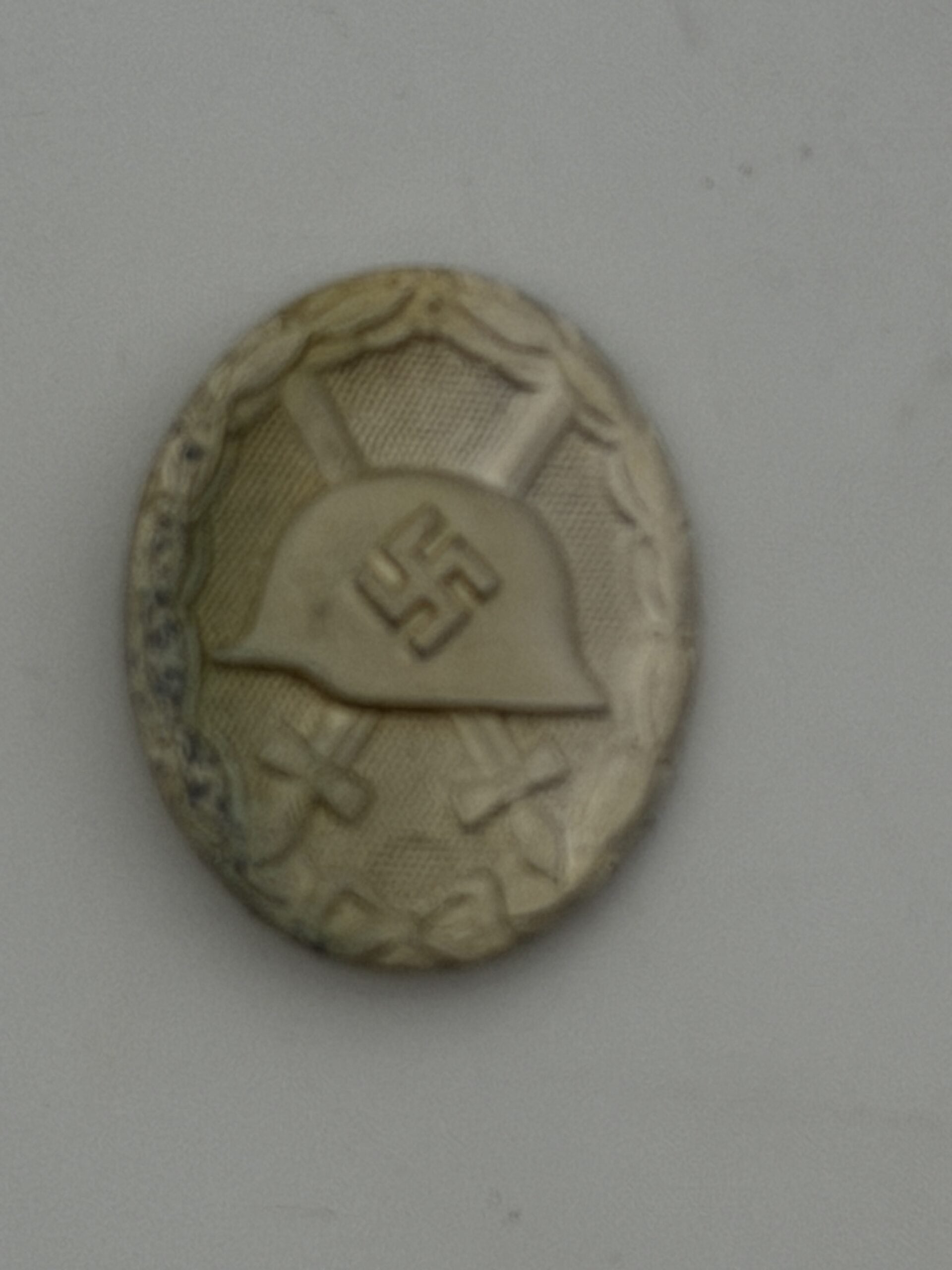
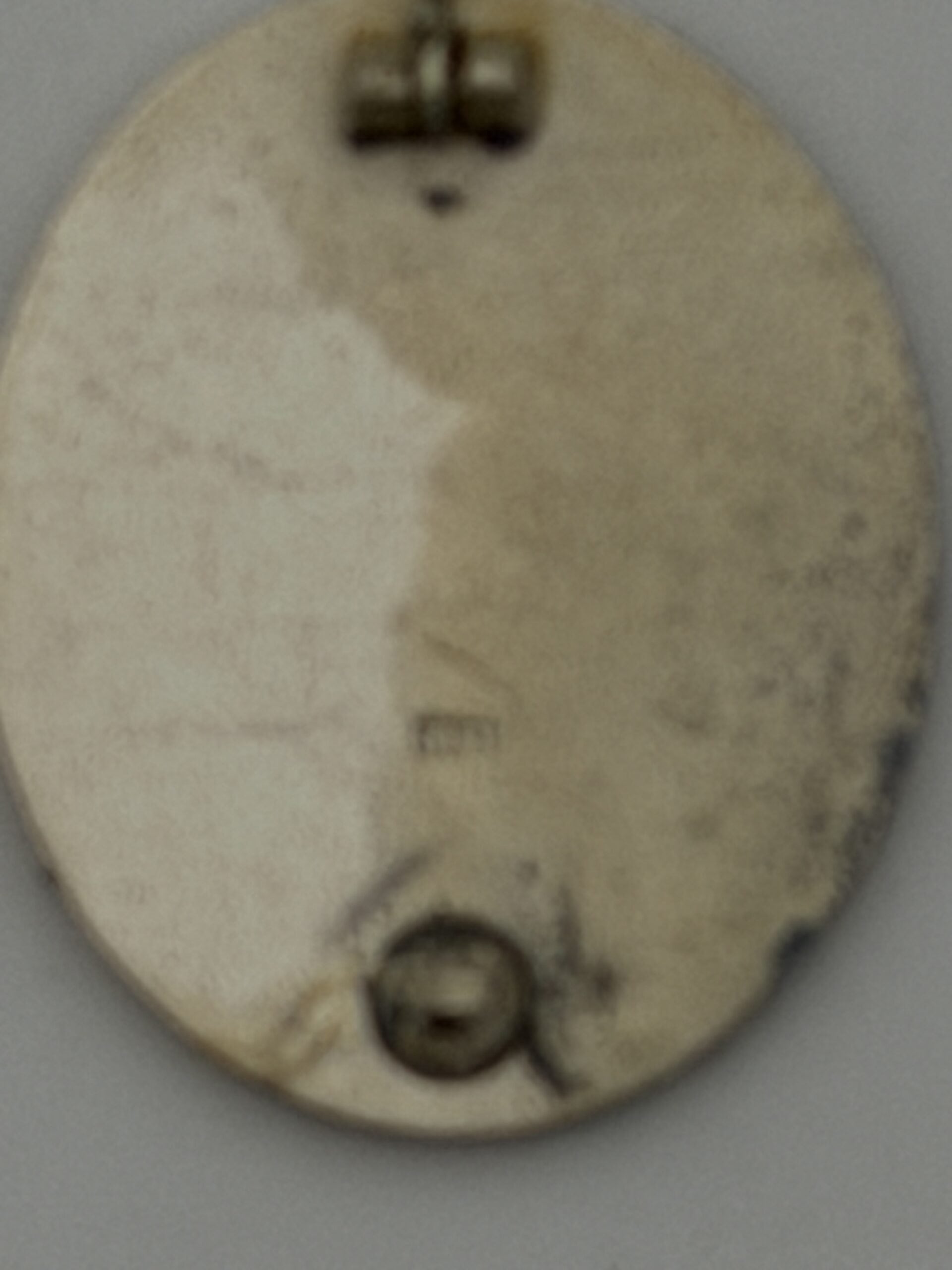
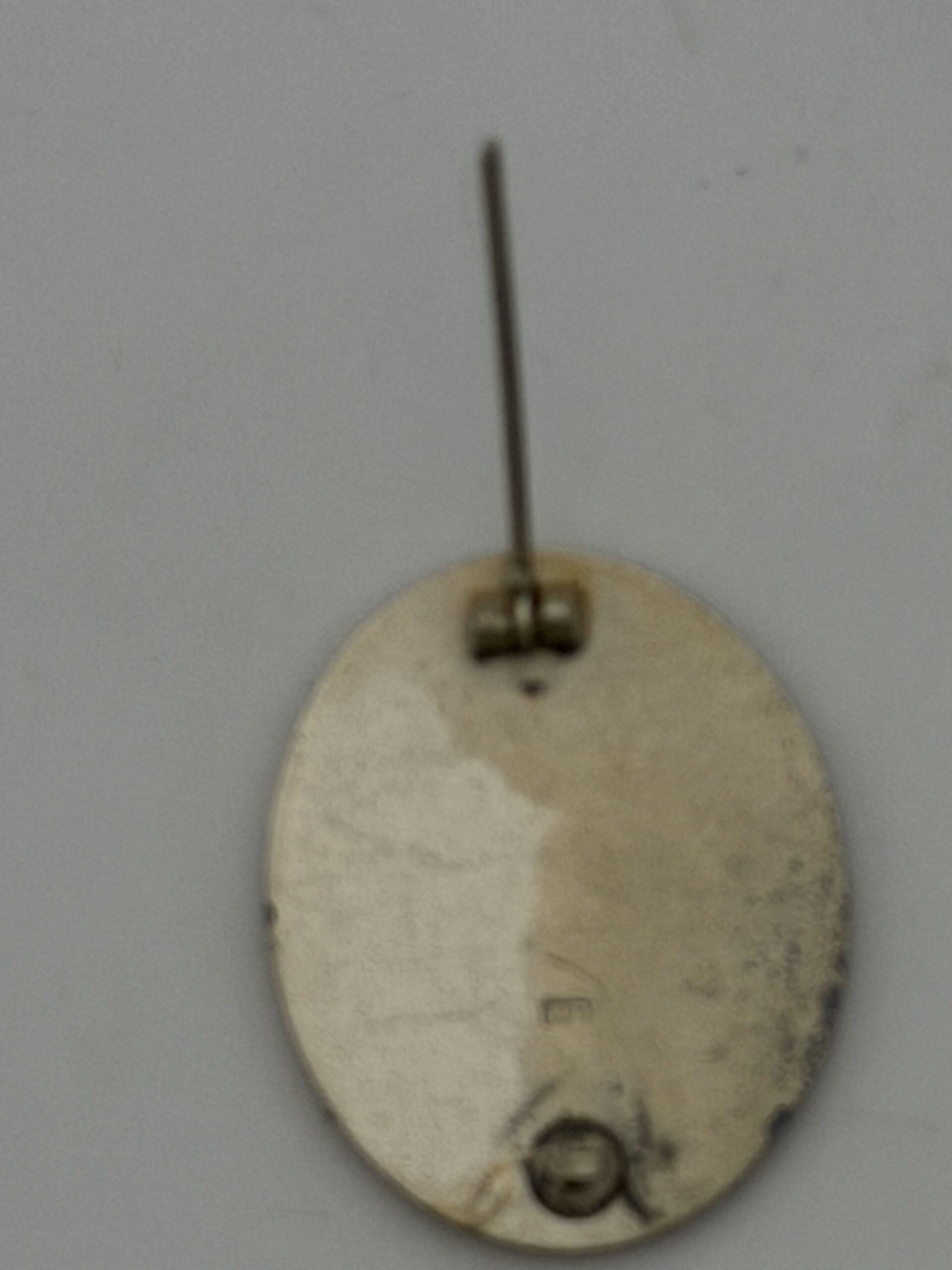
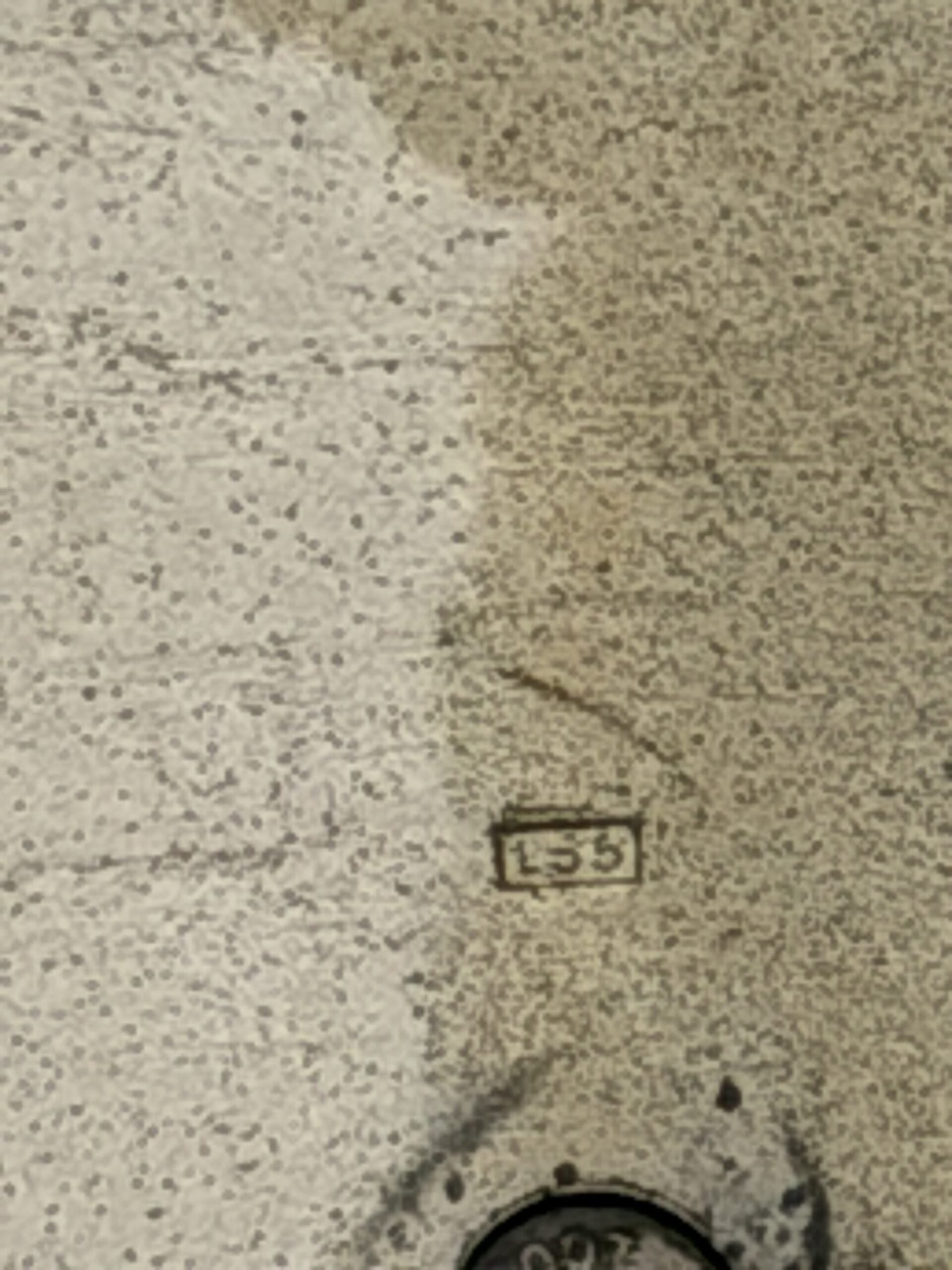
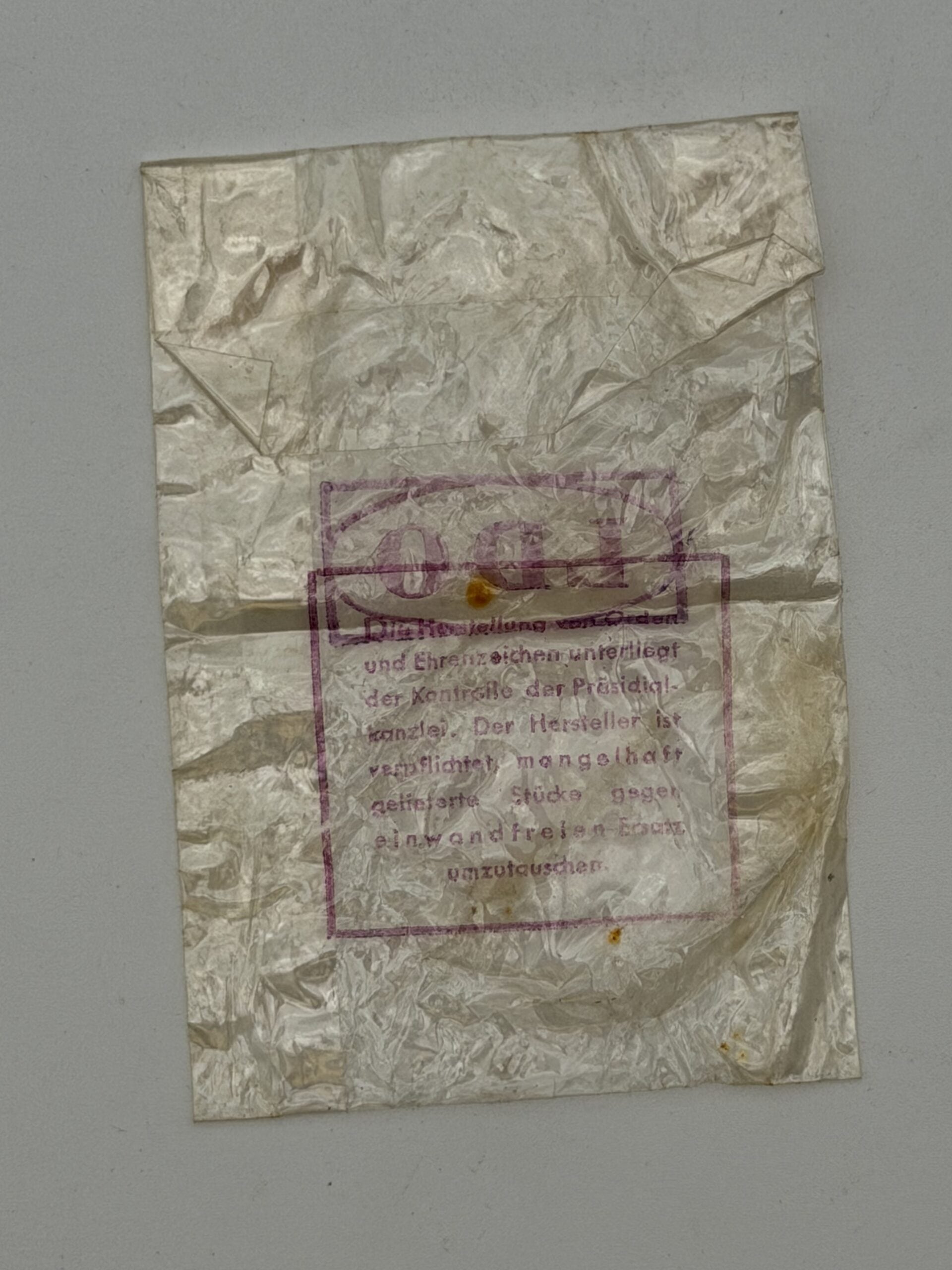
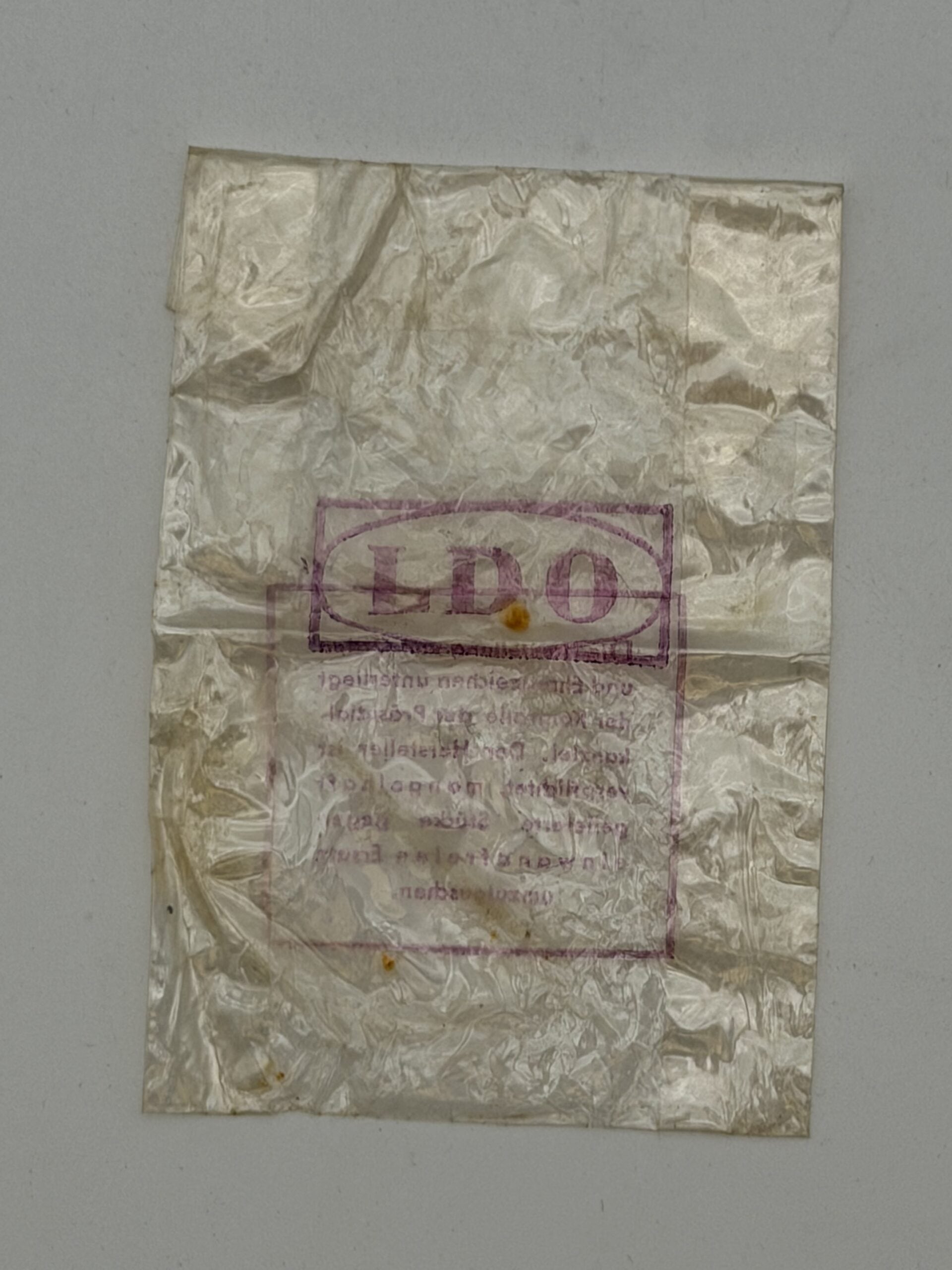
An original 1939 Silver Wound Badge manufactured by Rudolf Wächtler & Lange of Mittweida. This solid, silvered zinc example carries the boxed LDO code L/55 and retains its complete vertical pin system. It comes with an original period LDO cellophane retail packet.
€ 250
1 in stock
This original Silver Wound Badge is a standard 1939-pattern German military decoration. Rudolf Wächtler & Lange of Mittweida manufactured the badge in solid, die-struck zinc with a silvered finish.
The reverse carries the maker’s boxed L/55 code. In addition, it retains the correct long pin, upper hinge and round crimped lower catch associated with this manufacturer.
Most importantly, the badge comes with an original transparent LDO retail packet. The fragile cellophane wrapper displays the violet LDO emblem and the official quality-control notice relating to orders and decorations.
The 1939 Wound Badge, or Verwundetenabzeichen 1939, was instituted on 1 September 1939. Its basic design developed from the German Army Wound Badge introduced during the First World War.
The award had three grades. Black recognised one or two qualifying wounds. Silver normally recognised three or four wounds. Gold recognised more than four wounds.
However, the number of wounds did not always determine the grade. A particularly serious injury could qualify a recipient directly for the silver or gold class.
The original decree also specified that the badge should be worn on the left breast. The 1939 Reichsgesetzblatt records the foundation of the decoration and its three-grade structure.
A surviving Silver Wound Badge award certificate in the Deutsche Digitale Bibliothek documents an actual silver-grade award made to a Panzergrenadier in November 1943.
The silver grade usually recognised a recipient who had suffered three or four separate qualifying wounds.
Nevertheless, the authorities could award it after one severe injury. Qualifying cases could include the loss of a hand, foot or eye. Severe deafness, brain injury or serious facial disfigurement could also justify the silver grade.
Several wounds received during one incident normally counted as a single wounding event. Furthermore, only the highest awarded grade could be worn on the uniform.
Therefore, the Silver Wound Badge represented more than a simple progression from the black class. It could also record a single life-changing combat injury.
The badge has the regulation high-oval shape. A raised laurel wreath follows the outer border and meets at a tied bow below the central design.
A German steel helmet dominates the centre. The helmet bears a raised swastika and rests over two crossed swords. Meanwhile, a finely textured field fills the spaces behind the helmet and blades.
The maker gave the wreath, helmet and swords clear die-struck definition. Individual leaves remain visible around the border. Likewise, the stippled background retains its regular texture.
The surviving silver finish gives the badge a pale, frosted appearance. Natural darkening appears mainly around the left edge and within protected recesses.
Rudolf Wächtler & Lange produced this example from solid, die-struck zinc. The manufacturer then applied a silver-coloured finish over the base metal.
Later-war zinc awards often lost their finish because zinc reacts with plated surfaces over time. However, this badge retains a substantial amount of its original silvering.
The smooth reverse shows the expected solid construction. It does not display a hollow stamped cavity. Moreover, the outer edge appears clean and properly finished.
The badge should not be described as solid silver. Its appearance comes from the applied silver finish rather than precious-metal construction.
The lower reverse carries a clearly visible boxed mark:
L/55
The LDO assigned L/55 to Rudolf Wächtler & Lange of Mittweida. The same company also used the Präsidialkanzlei supplier number 100 on officially controlled awards.
The LDO, or Leistungsgemeinschaft der Deutschen Ordenshersteller, regulated manufacturers producing orders and decorations for authorised retail distribution. LDO-marked awards generally served as privately purchased replacement or duplicate pieces for entitled recipients.
The LDO manufacturer list published by Militaria Berlin identifies L/55 as Rudolf Wächtler & Lange. A related example appears in our own collection as an original L/55 Iron Cross First Class by Rudolf Wächtler & Lange.
Accepted examples of this precise variant often carry two manufacturer codes. The boxed L/55 appears on the main reverse body, while the number 100 appears on the round crimped catch.
The supplied photographs clearly establish the L/55 mark. However, they do not resolve any number on the catch sharply enough for a definitive reading.
The catch has the correct form and position for the known L/55 and 100 double-marked variant. Nevertheless, museum-standard cataloguing requires caution.
Therefore, the present badge should be advertised as:
L/55 marked by Rudolf Wächtler & Lange
It should not be described as conclusively double-marked until a sharp macro photograph confirms the number 100 on the catch.
Documented L/55 and 100 examples use the same solid zinc body, long vertical pin and round crimped catch construction.
The reverse retains a long vertical pin secured by an upper barrel-style hinge. The pin closes into a circular crimped catch at the lower edge.
The hinge, pin and catch display consistent age. Darkened areas appear around the fittings, although no fresh solder or recent repair is visible.
The long pin remains straight in the photographs. Furthermore, the hinge appears firmly attached to the badge body.
No modern safety-pin replacement or crude post-war fitting appears present. Consequently, the complete attachment system strongly supports period manufacture.
The badge comes with an original period transparent LDO packet. An oval violet emblem containing the letters LDOappears prominently on the wrapper.
Below the emblem, the packet carries the following German notice:
Die Herstellung von Orden und Ehrenzeichen unterliegt der Kontrolle der Präsidialkanzlei. Der Hersteller ist verpflichtet, mangelhaft gelieferte Stücke gegen einwandfreien Ersatz umzutauschen.
The text translates as:
“The manufacture of orders and decorations is subject to the supervision of the Presidential Chancellery. The manufacturer must exchange defective supplied pieces for faultless replacements.”
This wording confirms that the wrapper relates to the regulated retail distribution of official orders and decorations. It is more accurate to call it an LDO retail packet than a military award packet of issue.
The wrapper shows extensive folds, creasing and light discolouration. Several small brown storage marks also appear. However, the violet printing remains legible.
Original cellophane LDO wrappers are much less durable than paper packets or rigid cases. Consequently, many failed through handling, drying and long-term storage. Comparable surviving examples confirm the same LDO emblem and quality-control text.
Both the badge and packet appear to be genuine period items. Moreover, an L/55-marked retail award belongs logically with an LDO-controlled wrapper.
However, the packet does not carry an individual L/55 manufacturer number. Therefore, no surviving mark proves that this particular badge left the retailer inside this specific wrapper.
For accurate catalogue purposes, the group should be described as:
An original L/55 Silver Wound Badge with an associated original period LDO cellophane retail packet.
This wording recognises the historical compatibility of both pieces without presenting an unprovable factory association as fact.
Photographic examination supports genuine pre-1945 manufacture with high confidence.
The strongest positive characteristics include:
The finish loss also appears natural. It follows exposed edges and recessed areas rather than creating an artificially uniform aged effect.
Therefore, the badge itself presents as a convincing original Rudolf Wächtler & Lange product. The LDO wrapper also appears original, although its direct association remains unproven.
The Silver Wound Badge remains in very good condition.
A substantial amount of the original silver-coloured finish survives across the helmet, swords, wreath and textured field. Some darker oxidation appears around the left edge. Light spotting and age toning also affect the reverse.
Nevertheless, the principal design remains complete and well defined. No major bend, crack or structural loss appears visible.
The pin, hinge and catch remain present. The photographs do not show any obvious repair to the attachment system.
The LDO packet remains complete but fragile. It has extensive creasing, fold lines, light yellowing and several small storage stains. These marks reflect genuine age rather than careless modern damage.
Do not polish or chemically clean the badge. Silvered zinc can lose its surviving finish very quickly under abrasive treatment.
Likewise, do not attempt to flatten the LDO wrapper. Aged cellophane can split along its folds with very little pressure.
The safest storage method uses an acid-free card support beneath the badge and packet. An archival polyester sleeve can then protect the group from handling.
The badge should not rest directly against the printed packet for prolonged periods. Separate archival supports will reduce abrasion and chemical interaction.
Maker-marked silver wound badges appeal to collectors because manufacturers used several different dies, fittings and marking systems.
This example has added interest because it carries an LDO code rather than only the numerical Präsidialkanzlei mark. In addition, its original cellophane LDO wrapper provides valuable evidence of the regulated retail system for replacement awards.
The group would complement a specialised collection of German military decorations, maker-marked badges or wartime packaging.
Explore further pieces in our Medals, Badges and Awards collection. Collectors studying this manufacturer should also view our L/55 Iron Cross First Class by Rudolf Wächtler & Lange.
Item: Wound Badge in Silver
German title: Verwundetenabzeichen 1939 in Silber
Period: Circa 1941–1945
Grade: Silver
Manufacturer: Rudolf Wächtler & Lange
Manufacturer location: Mittweida, Saxony
Visible marking: Boxed L/55
Possible additional marking: 100 on catch, not confirmed from photographs
Construction: Solid die-struck zinc
Finish: Silvered
Design: Steel helmet, crossed swords and laurel wreath
Attachment: Long vertical pin, upper hinge and round crimped catch
Packaging: Original period LDO cellophane retail packet
Packet association: Historically compatible but not independently proven
Condition: Very good badge; good, age-worn packet
This original Silver Wound Badge represents a strong LDO-marked example by Rudolf Wächtler & Lange of Mittweida.
Its solid silvered-zinc construction, boxed L/55 mark and correct pin assembly match recognised period products from this manufacturer. Furthermore, the surviving finish remains considerably stronger than on many zinc examples.
The original LDO cellophane wrapper adds an important retail and manufacturing context. Although the packet cannot be proven as original to this exact badge, both elements form a historically appropriate group.
Overall, the badge displays convincing period manufacture and honest age. It would suit an advanced collection of German military decorations, maker-marked awards or surviving LDO packaging.
The silver grade normally recognised three or four separate qualifying wounds. A single severe injury could also qualify a recipient.
The boxed L/55 code identifies Rudolf Wächtler & Lange of Mittweida.
L/55 was the manufacturer’s LDO code. LDO-marked decorations generally entered authorised retail distribution as replacement or duplicate awards for entitled recipients.
The round catch has the correct form for the known double-marked variant. However, the supplied photographs do not show the number clearly enough for positive confirmation.
It is more accurately described as an LDO retail packet. It relates to the authorised commercial supply of orders and decorations rather than direct military presentation.
The two pieces are historically compatible. However, the unnumbered wrapper cannot prove a continuous association with this particular badge.
No. Polishing could remove the remaining silver finish and expose the zinc beneath.
Categories: Medals, Badges and Awards; Wehrmacht Awards; Wound Badges; Maker-Marked Decorations
Product tags: Silver Wound Badge, L/55, Rudolf Wächtler & Lange, Verwundetenabzeichen in Silber, LDO packet, German wound badge, silvered zinc badge, Mittweida, military decoration