
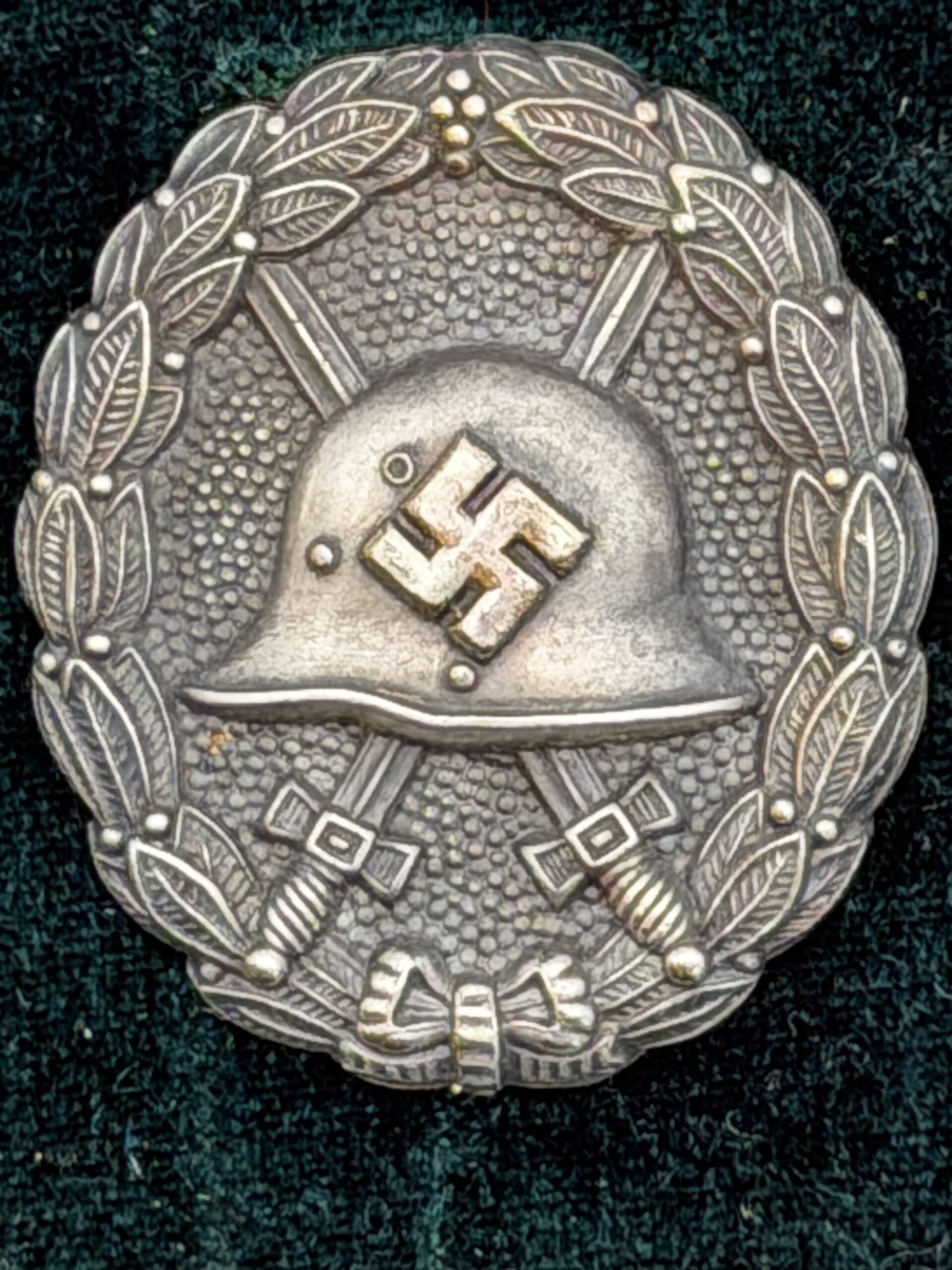
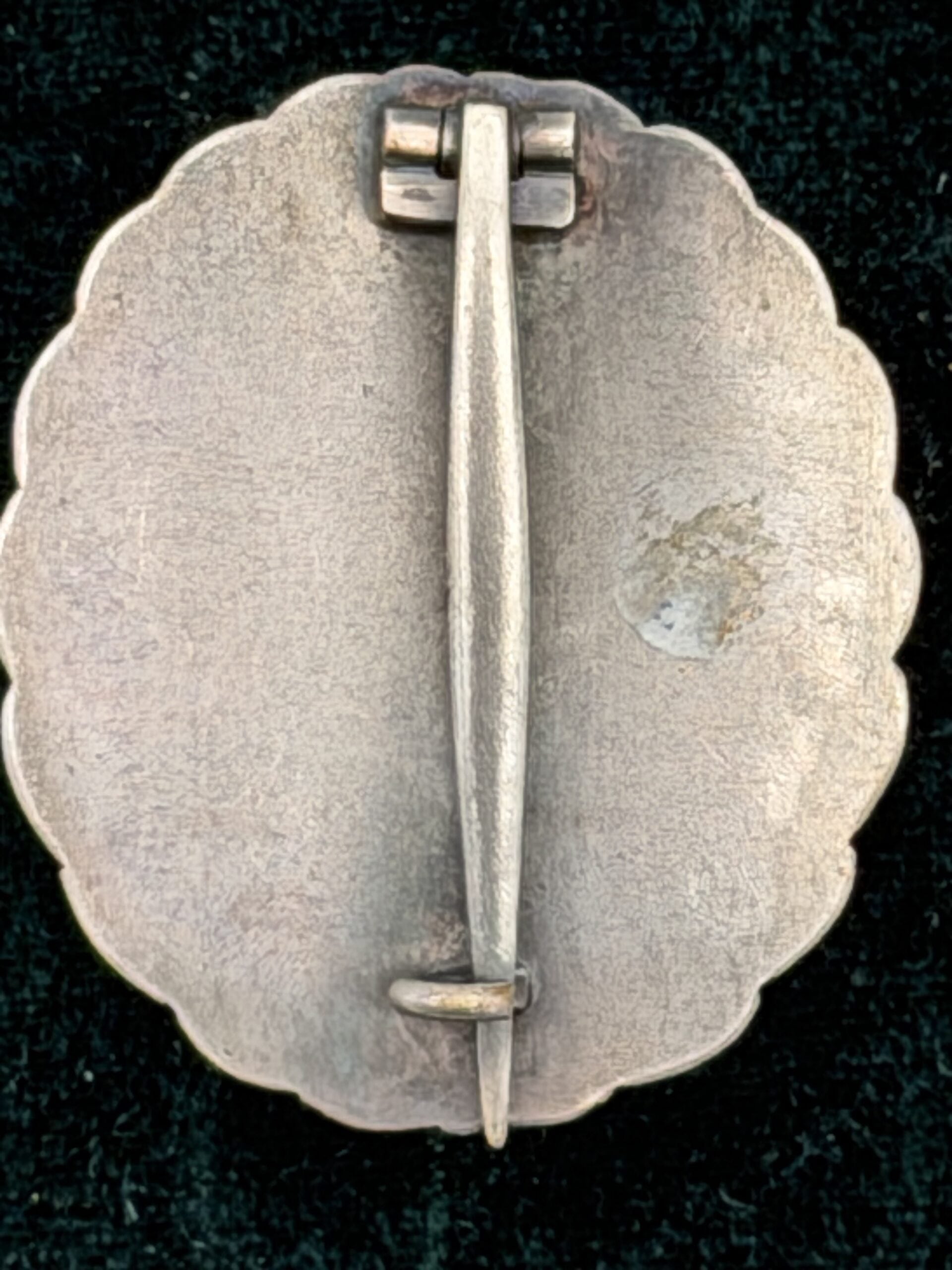
Outstanding original 1939 Silver Wound Badge, or Verwundetenabzeichen 1939 in Silber, of the solid Second Pattern. Manufactured from silver-plated Buntmetall with an early broad vertical pin, the badge retains sharp helmet, crossed-sword and laurel-wreath detail together with an attractive untouched age patina. No maker mark is visible in the supplied photographs.
A particularly desirable early-quality example of one of Germany’s principal Second World War military decorations.
€ 250
1 in stock
This original 1939 Silver Wound Badge represents an excellent early-quality example of the Second Pattern German Wound Badge introduced during the Second World War.
The decoration has a vertically oval form surrounded by a detailed laurel wreath. At the centre sits a German M35-pattern steel helmet bearing a raised swastika. Two crossed swords appear behind the helmet, while a finely textured pebbled field fills the surrounding background.
Unlike the hollow First Pattern derived from the earlier First World War design, this example has a solid reverse. Consequently, its construction places it within the standard Second Pattern introduced from approximately 1940.
The badge displays particularly crisp die work and retains an attractive naturally toned silver finish.
The Wound Badge existed in three principal grades:
However, the regulations also allowed the Silver grade for a single particularly severe wound. Qualifying injuries could include the loss of a hand, foot or eye, serious brain injury, severe facial disfigurement or major loss of hearing.
Therefore, an original 1939 Silver Wound Badge represented a significant military distinction rather than a routine uniform badge.
Several characteristics identify this piece as the later Second Pattern.
Most importantly, the helmet is the later M35-style steel helmet rather than the deeper M16 helmet associated with the earlier First Pattern.
Furthermore, the badge has a solid metal reverse.
The obverse incorporates:
These features correspond closely with documented Second Pattern Silver Wound Badges preserved in museum collections.
The photographs indicate a silver-plated Buntmetall or tombak-type base metal rather than later grey zinc manufacture.
Small areas of wear on the reverse expose a warmer non-ferrous base beneath the silver surface. This characteristic is commonly encountered on better-quality early production badges.
Later wartime examples increasingly used Feinzink because strategic material shortages affected medal and badge production.
Consequently, early silvered Buntmetall examples generally attract stronger collector interest than heavily degraded late-war zinc pieces.
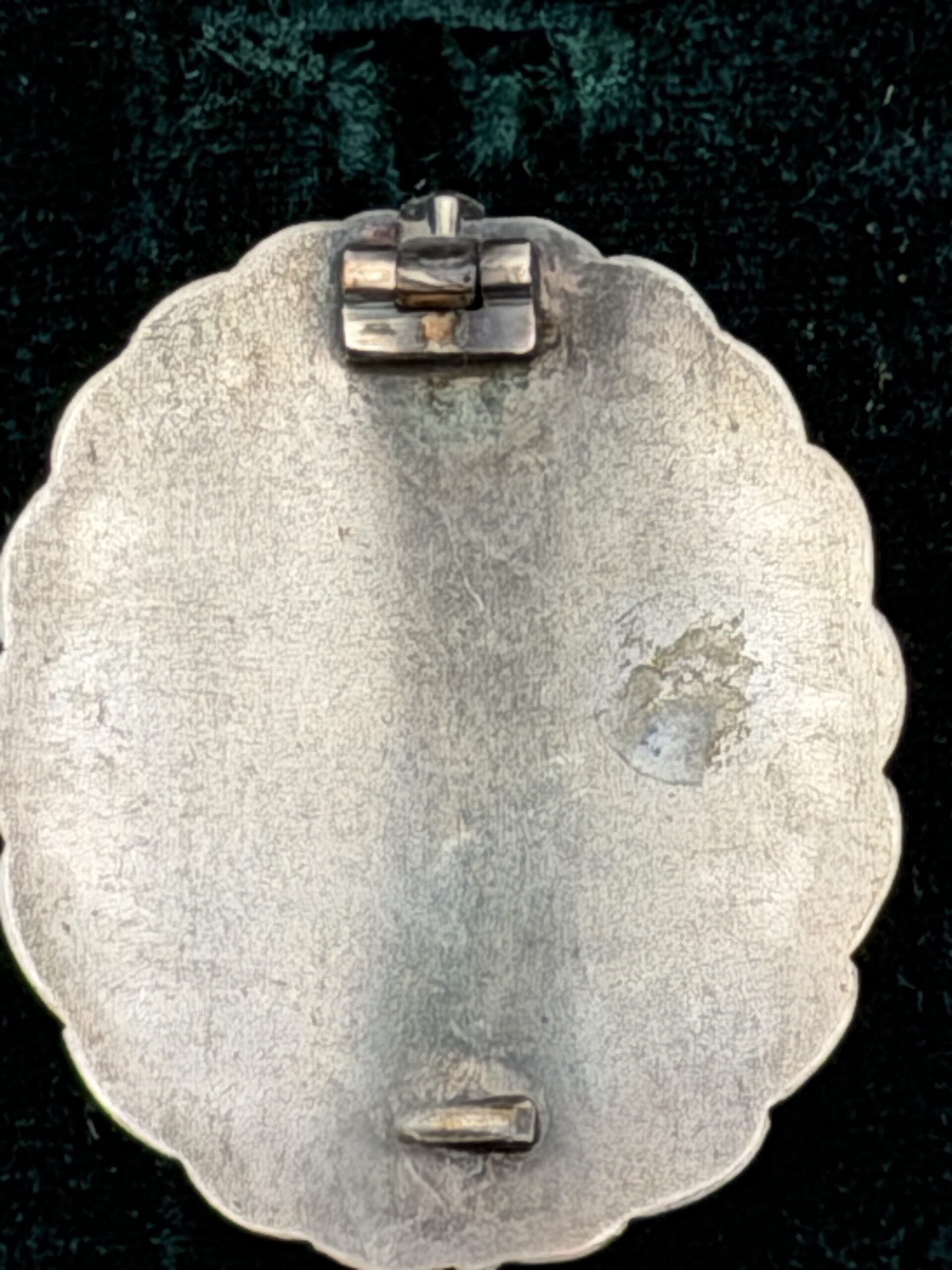
The reverse carries an impressive original broad vertical fastening pin.
A substantial block and barrel-style hinge secures the pin at the upper edge. Meanwhile, the lower section terminates in the original formed catch.
The tapered pin retains good shape and remains visually consistent with early-period hardware.
Broad-pin construction appears on several recognised early manufacturers, including examples associated with the Hauptmünzamt Wien. Nevertheless, the fastening system alone cannot establish a manufacturer beyond doubt.
For that reason, this badge should remain catalogued as:
Maker: Unmarked / unidentified
rather than being assigned to a particular factory without a visible manufacturer’s code.
Collectors will immediately notice similarities between this piece and early Hauptmünzamt Wien Silver Wound Badges.
Vienna Mint examples are known with:
Some early Hauptmünzamt examples were issued without the later manufacturer’s number 30.
Even so, several firms produced related hardware variations. Therefore, it would be inappropriate to advertise the present badge positively as Hauptmünzamt Wien unless further evidence confirms that attribution.
The conservative museum-standard identification remains:
Unmarked early-production Silver Wound Badge, Second Pattern.
The front of this 1939 Silver Wound Badge remains exceptionally attractive.
Individual leaves within the laurel wreath retain pronounced central veins and clearly defined outer edges. Small spherical berries separate sections of foliage.
Fine pebbling surrounds the helmet and swords. Consequently, the smoother raised elements stand prominently against the textured background.
Both sword hilts retain sharply executed grip and guard details. Their blades continue upward behind the helmet toward the upper wreath.
The helmet itself remains particularly well defined. Its brim has a pronounced edge, while the raised swastika remains complete.
Overall, the front displays excellent depth and convincing period die-struck character.
The solid reverse provides important evidence when examining authenticity.
Its surface shows an even aged texture beneath the surviving silver finish. In addition, natural oxidation appears around the soldered fittings.
The original hinge remains attached at the top. Likewise, the broad vertical pin and lower catch remain present.
A small area of surface discoloration or old residue appears on the right-hand side of the reverse. This should remain untouched.
No obvious modern casting seams or crude reproduction fittings can be seen in the supplied photographs.
The visible construction of this 1939 Silver Wound Badge strongly supports period manufacture.
Positive features include:
Based on the supplied photographs, the badge is consistent with an original wartime example.
Final authentication should always combine photographic analysis with weight, exact dimensions and magnified examination. Nevertheless, no obvious concern is visible here.
The German Wound Badge had its origins during the First World War.
A revised form appeared in 1939. The new design eventually incorporated the contemporary M35 steel helmet, crossed swords and National Socialist emblem seen on this example.
Military personnel wore the award on the lower left breast of the uniform.
Unlike many campaign decorations, the badge directly represented physical wounds or serious injury received during wartime service.
Therefore, surviving examples form an important part of the study of German military decorations and individual wartime service.
Condition: Very Good to Excellent Original Collector Condition
The obverse retains strong silver colouring together with attractive natural toning.
Raised details remain sharply defined. Moreover, there are no obvious major dents, cracks or structural losses.
The original fastening hardware remains complete.
Minor oxidation, finish wear and age-related surface marks remain visible on the reverse. These characteristics are desirable on an untouched period award and should not be polished away.
The badge displays exceptionally well.
Do not polish this badge.
Silver cleaner, metal polish or chemical treatments would remove original surface material and natural oxidation.
Instead, store the badge in a stable, dry environment. Handle it carefully by its edges and avoid repeatedly operating the pin.
The current patina adds authenticity and historical character.
An early solid Buntmetall 1939 Silver Wound Badge is more desirable than an ordinary late-war zinc example.
Particularly attractive features of this piece include:
Its quality makes it suitable for a specialist German awards collection or museum-standard display.
Explore related listings: Wound Badges.
This museum example confirms the silver-plated construction, helmet, crossed swords, laurel wreath and award criteria.
A second useful institutional reference is the Deutsche Digitale Bibliothek – Verwundetenabzeichen in Silber, which documents an archival period example.
For specialist market and construction comparison, use:
Helmut Weitze Militaria – Wound Badge 1939 in Silver
and
Ratisbon’s – Wound Badge in Silver, Second Pattern
These references provide useful comparative information on original construction and current collector-market values.