
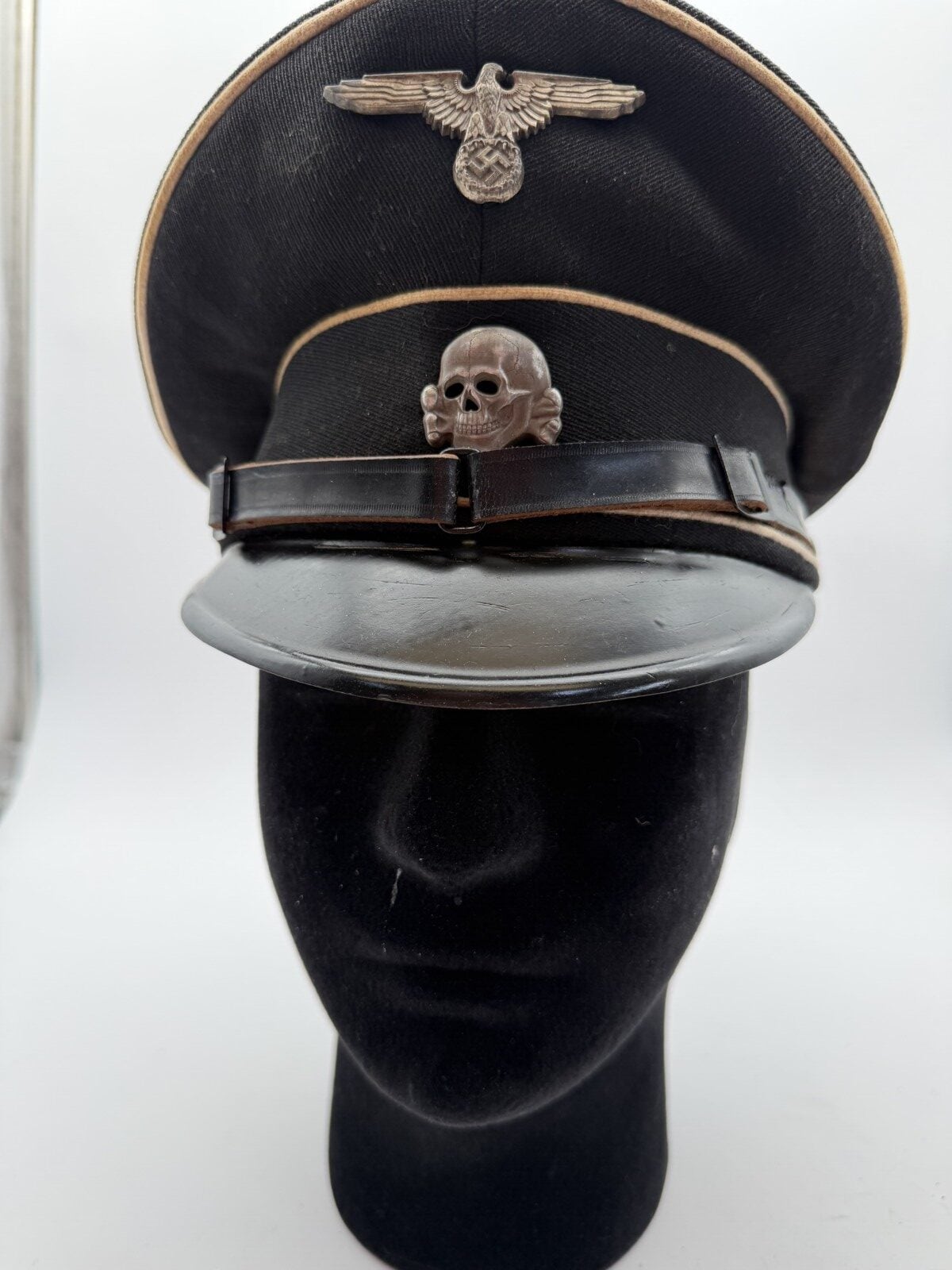
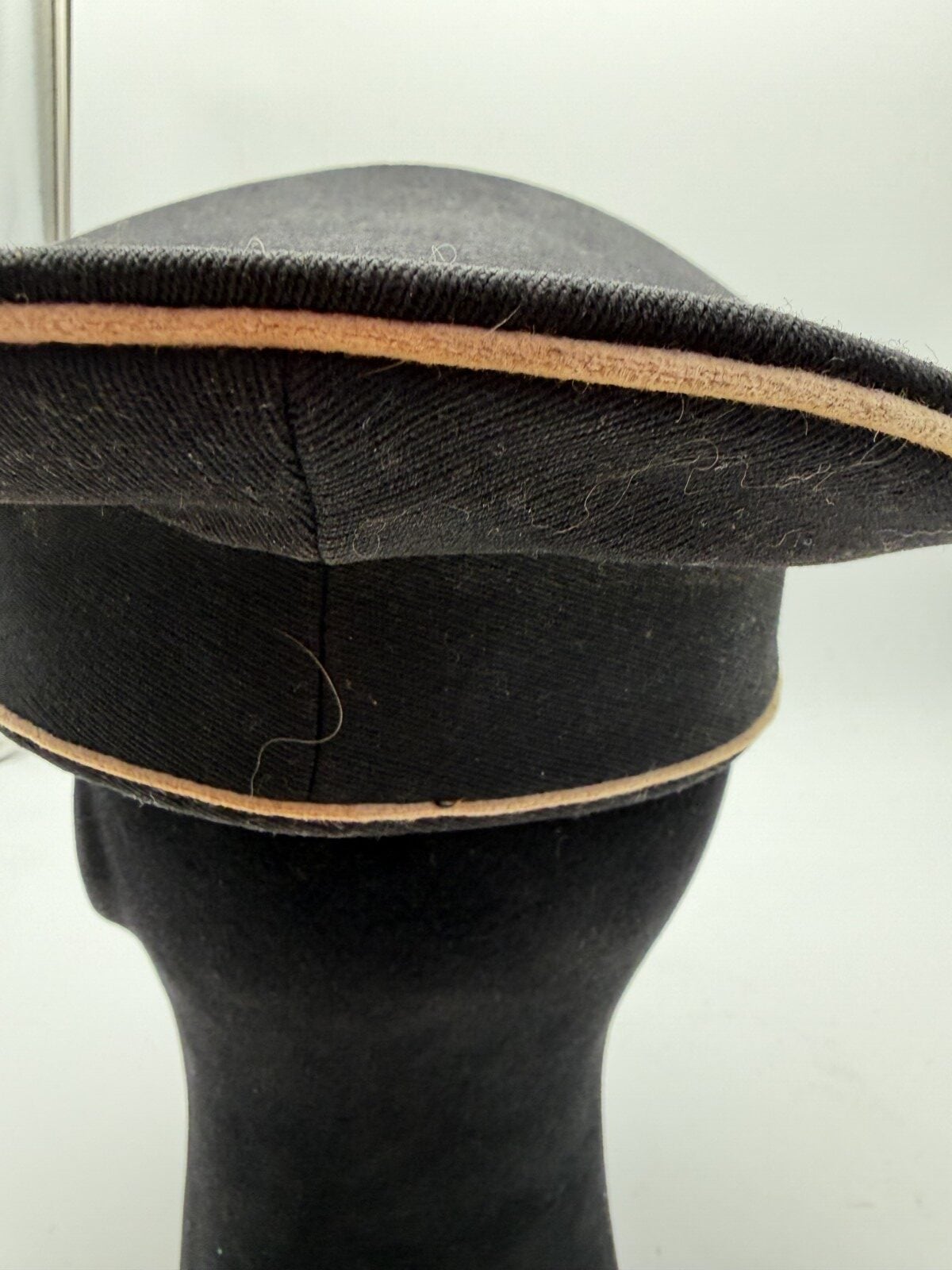
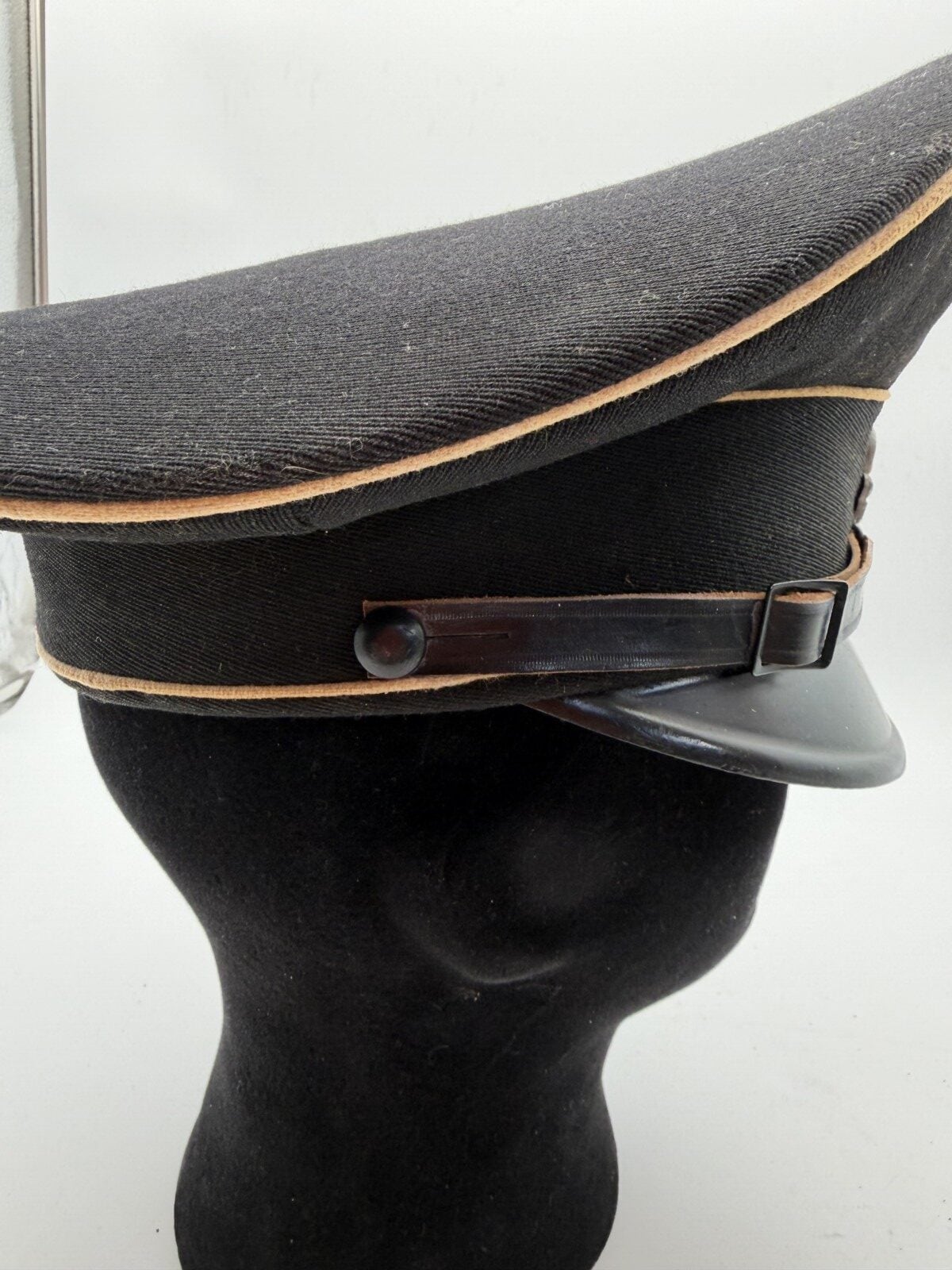
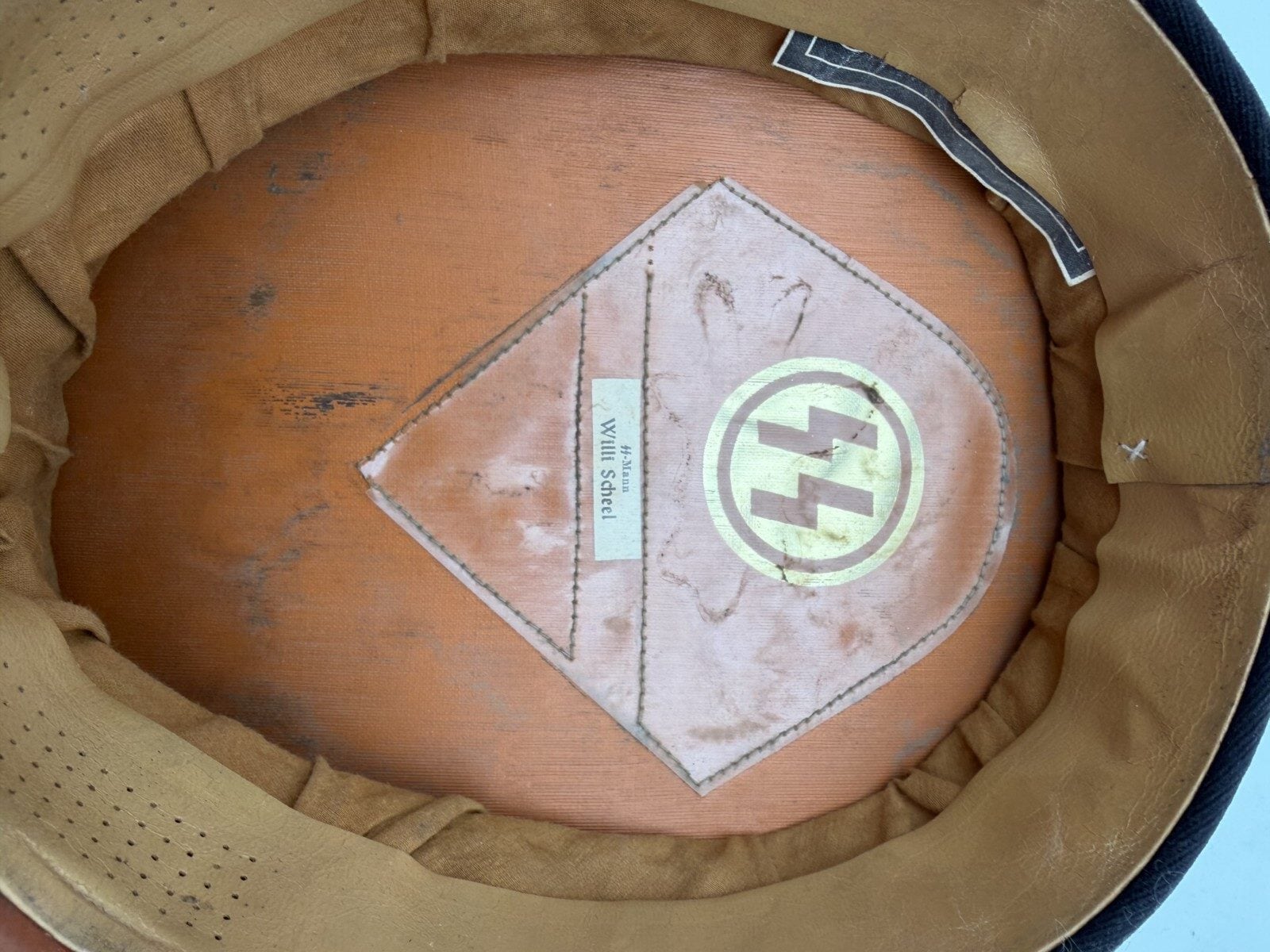
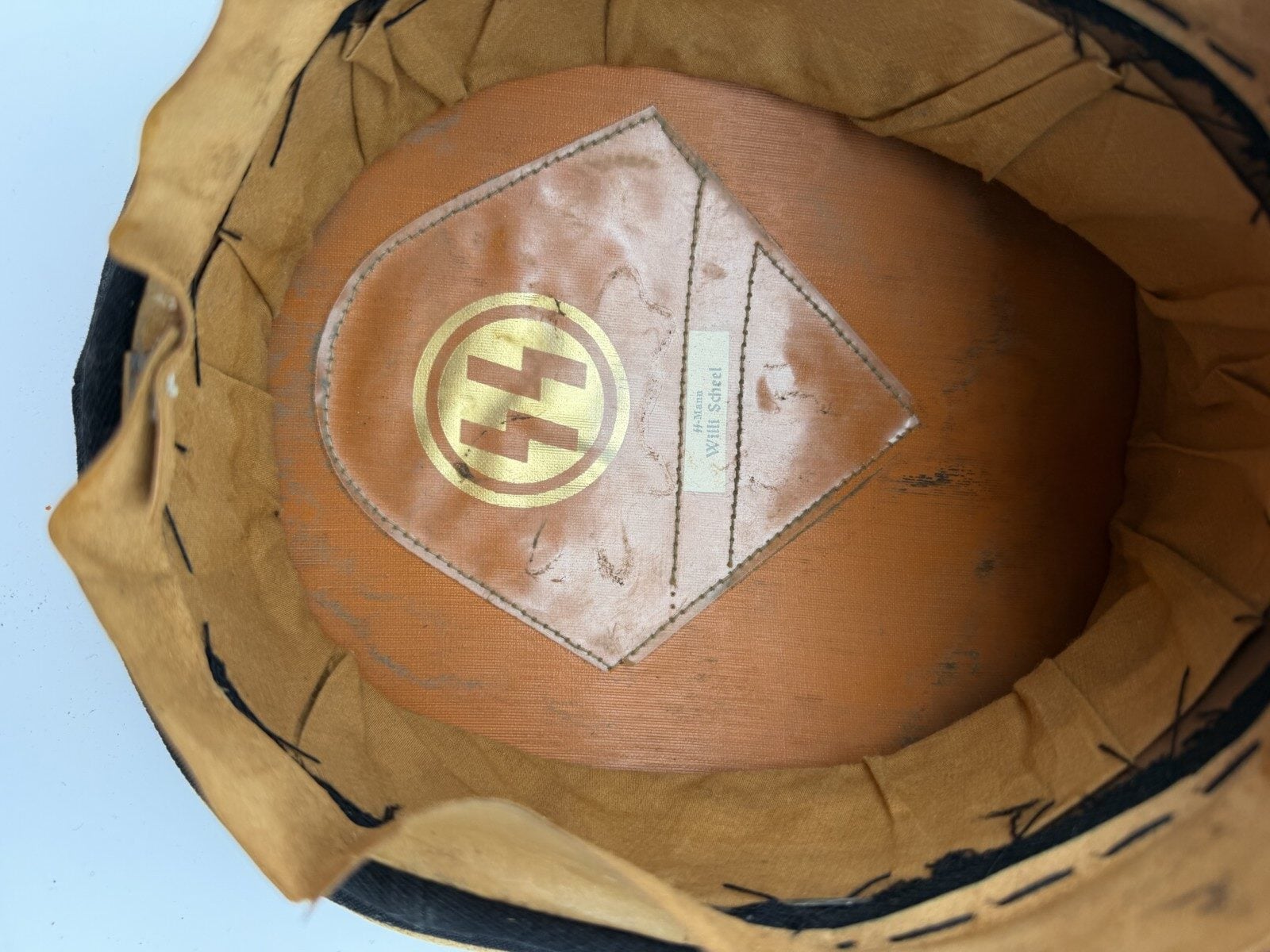
This exceptional Allgemeine-SS SS-Mann Visor Cap represents a remarkably complete early example of black SS enlisted headgear, retaining its original-style insignia, white piping, black leather chinstrap, interior SS markings and, most importantly, a period ownership label identifying its wearer as:
€ 9.500
1 in stock
This exceptional Allgemeine-SS Mann Visor Cap represents a remarkably complete early example of black SS enlisted headgear, retaining its original-style insignia, white piping, black leather chinstrap, interior SS markings and, most importantly, a period ownership label identifying its wearer as:
Archival research now provides a very strong candidate for this named owner.
Historian Hans-Christian Harten records a Willi Scheel, born 28 September 1903 in Pomerania, the son of a farmer and employed as a Volksschullehrer, or primary-school teacher. Significantly, Harten records that Scheel entered the SS in 1933.
That chronology corresponds extremely well with the early enlisted SS cap shown here.
Further research strengthens the attribution.
A surviving teacher register for the Regierungsbezirk Köslin records:
SCHEEL, Willi Franz Anton – born 28.09.1903
The identical date of birth, surname, given name and teaching profession make it highly probable that this is the same man described by Harten.
Consequently, the most likely full identity of the wearer is:
Willi Franz Anton Scheel
Born: 28 September 1903
Region: Pomerania
Profession: Volksschullehrer / primary-school teacher
SS membership: documented from 1933
The cap itself identifies him at the enlisted rank of SS-Mann.
That rank fits perfectly with a newly joined member during the early phase of his SS career.
Another important record has now emerged.
The North Rhine-Westphalia archive catalogue contains a denazification file for:
Willi Scheel, born 28.09.1903, Lehrer
The exact combination of name, birth date and profession provides another potentially significant documentary trail.
At present, however, I would stop short of claiming that this denazification file has been conclusively matched to the cap owner until its contents have been examined.
Even so, the convergence of evidence is unusually strong.
Harten’s research is especially interesting because Scheel appears in material concerning SS ideological education and training personnel.
His civilian profession makes such employment understandable.
Teachers possessed precisely the instructional background useful for SS political and ideological education.
Harten’s biographical entry states that Willi Scheel was a Pomeranian primary-school teacher and entered the SS in 1933.
This gives the cap a potentially much richer history than an anonymous Allgemeine-SS uniform item.
Nevertheless, no specific later SS unit or wartime activity should be assigned to Scheel without his personnel file.
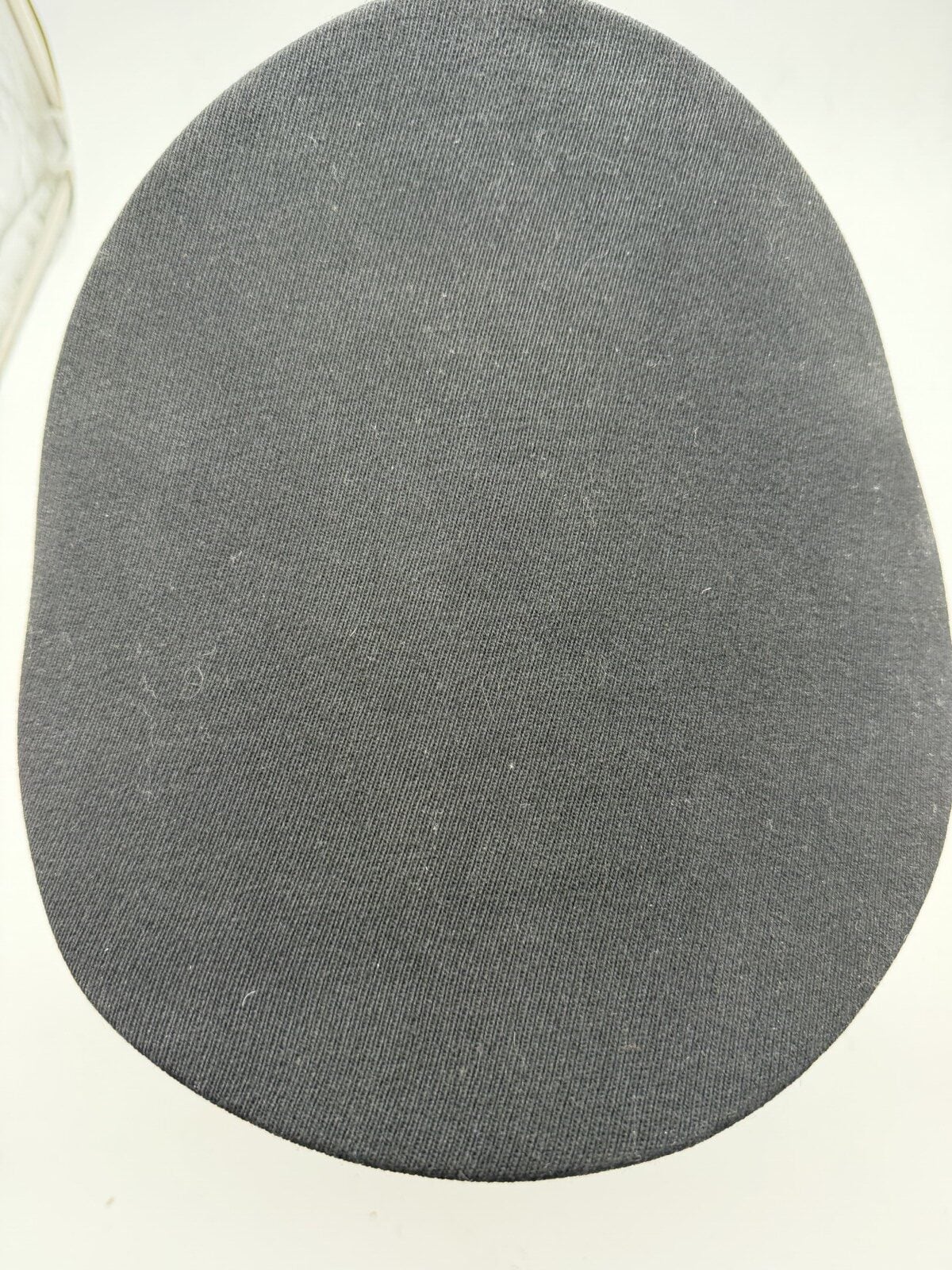
The Allgemeine-SS SS-Mann Visor Cap uses fine black gabardine-type cloth with the distinctive high profile associated with early SS headgear.
White textile piping surrounds the crown and borders the centre band.
Age has transformed the originally white piping into an attractive cream or light tan tone.
That colour is consistent with natural ageing and should not be described as gold piping.
The construction compares closely with documented early enlisted and NCO SS caps.
Helmut Weitze currently offers an original circa-1936 Allgemeine-SS / SS-Verfügungstruppe enlisted visor with black gabardine, white piping, silvered insignia and the special black SS leather chinstrap for €8,500.
Helmut Weitze – Early Allgemeine-SS Enlisted Visor Cap
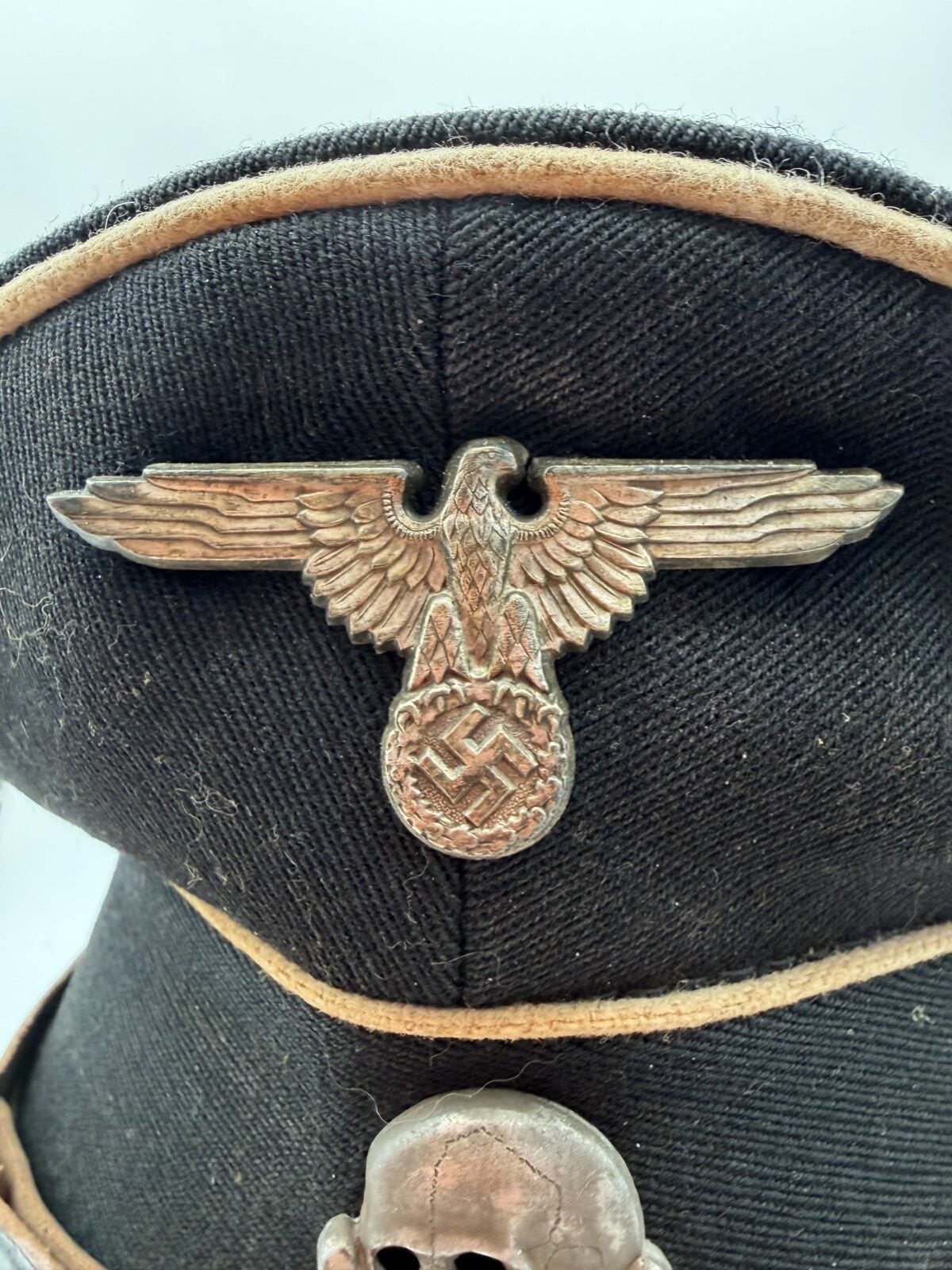
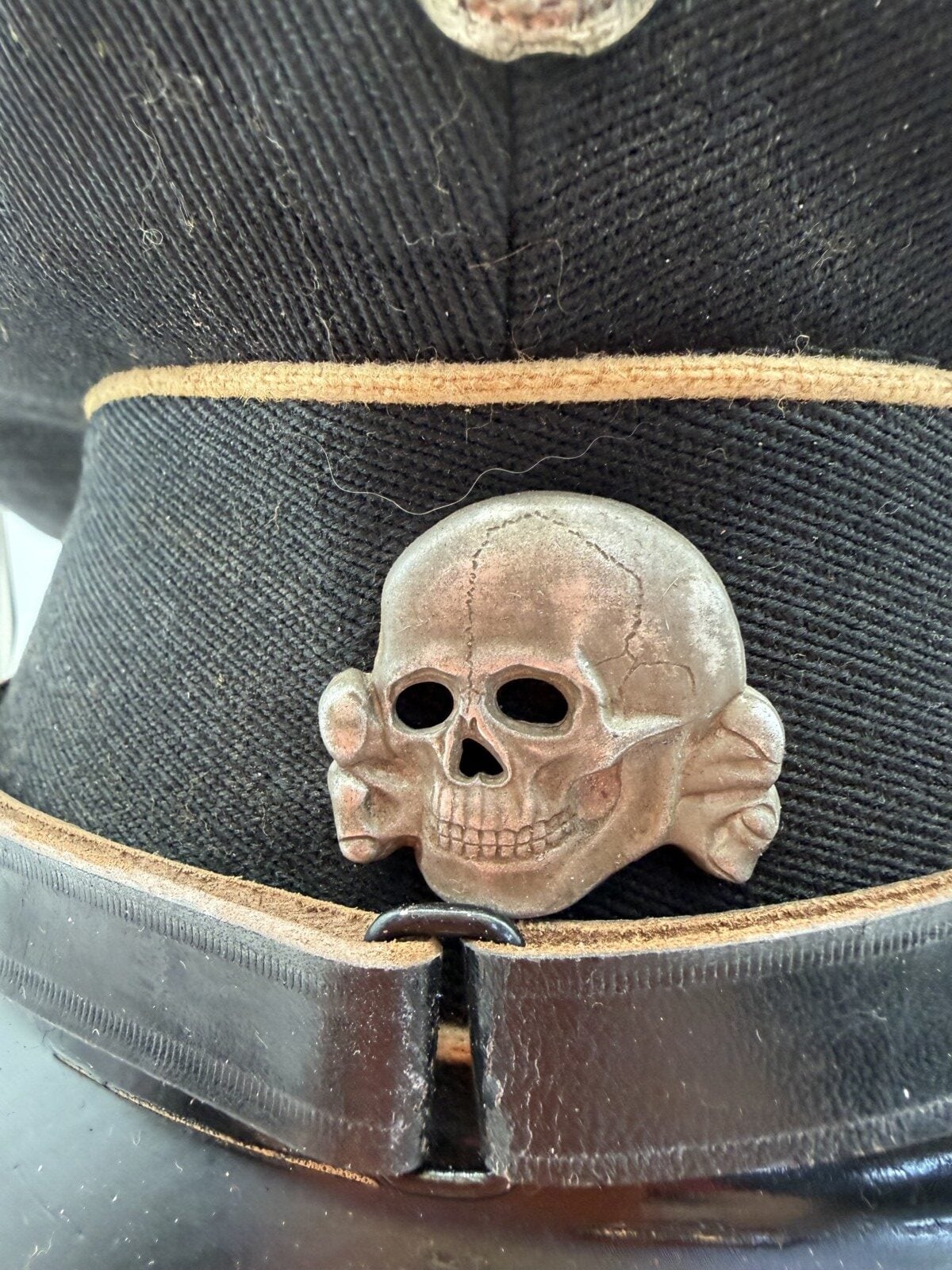
The cap retains its original-style SS eagle and Totenkopf.
Both pieces display substantial age patina.
Importantly, their surfaces have not been aggressively polished.
The subdued silver-grey appearance complements the naturally aged piping, chinstrap and interior.
Ulric of England documents a pre-1936 Allgemeine-SS NCO visor using the same fundamental configuration of black gabardine, white piping, early silvered eagle and skull, plus a centre-split black leather chinstrap.
Ulric of England – Pre-1936 Allgemeine-SS NCO Visor Reference
The aged insignia on this cap should remain entirely untouched.
A black centre-split leather chinstrap crosses the front of the cap.
This feature identifies the cap as enlisted or NCO headgear rather than officer equipment.
Officer visor caps employed metallic cords instead.
The leather displays attractive age crazing, yet its overall structure remains remarkably strong.
Likewise, the buckle and attachment fittings have developed patina consistent with the remainder of the cap.
Weitze specifically documents this distinctive black leather Sturmriemen on period SS enlisted caps.
One of the strongest authentication features lies beneath the sweatband.
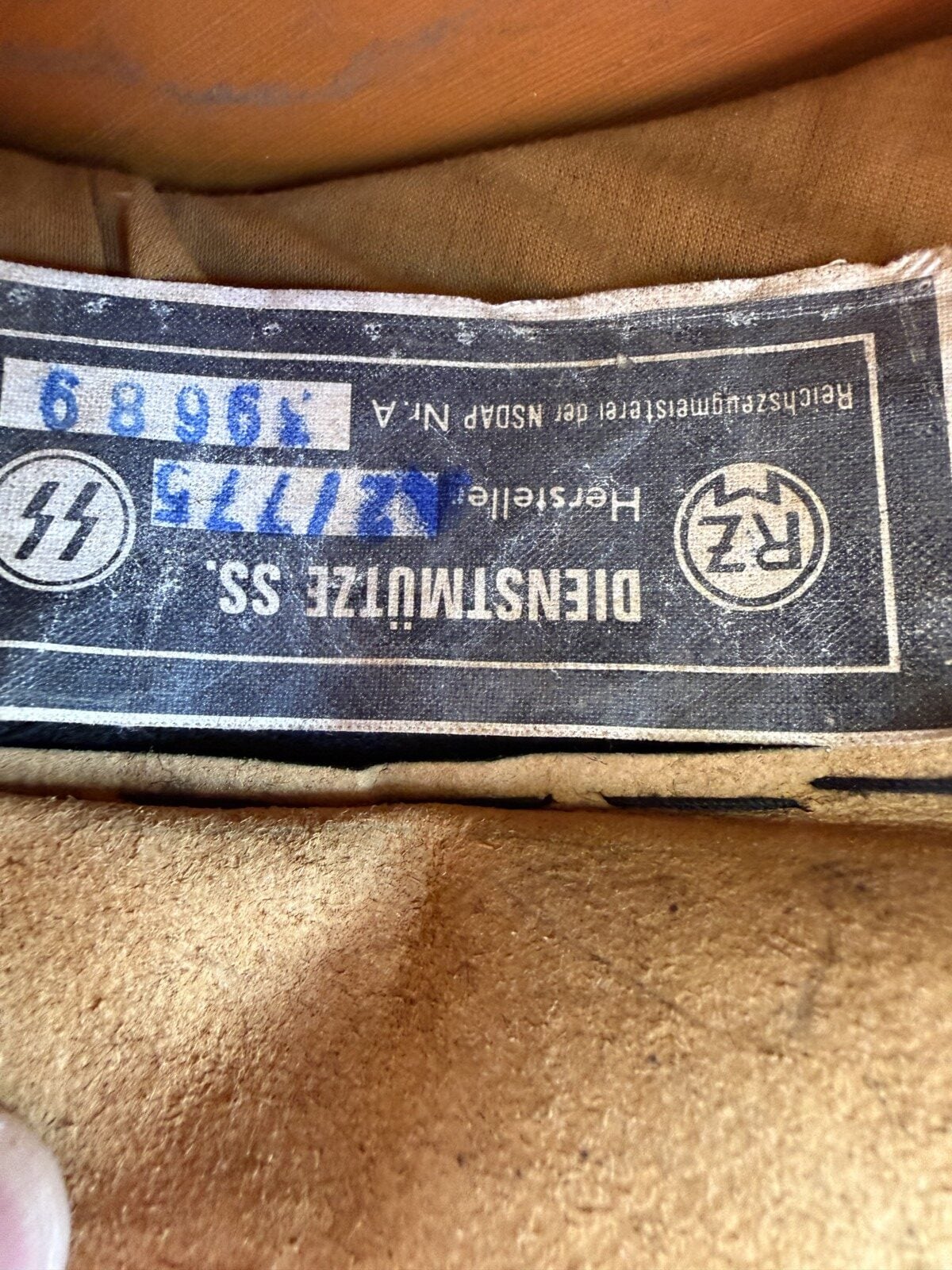
The large black label carries the prominent wording:
Additional elements include the RZM emblem, SS runes, manufacturer field and Reichszeugmeisterei control wording.
Surviving blue entries remain visible in the manufacturer and control fields.
I would not assign a specific manufacturer number until those entries have been read from a perfectly square high-resolution photograph.
The important point is that this Allgemeine-SS SS-Mann Visor Cap retains exactly the type of substantial SS/RZM interior control label documented on recognised period originals.
Weitze’s circa-1936 enlisted cap likewise retains a large “SS Dienstmütze” RZM label beneath its sweatband.
The interior retains an orange-brown lining.
Within the crown sits the characteristic celluloid sweat-shield area with large gold-printed SS runes.
Period comparison caps show extremely similar construction.
For example, Weitze describes an early SS visor with red-brown lining, gold runes beneath the celluloid trapezoid and the corresponding SS/RZM cloth label.
The surviving celluloid area and SS markings add considerably to both originality and display interest.
The separate personal identification is arguably even more significant than the RZM label.
It reads:
Named SS headgear is considerably scarcer than anonymous examples.
More importantly, this label provides a direct research starting point rather than an inferred attribution based upon dealer provenance.
The available historical evidence produces an unusually convincing correspondence:
name → Willi Scheel
rank → SS-Mann
SS entry → 1933
birth → 28 September 1903
profession → primary-school teacher
region → Pomerania / Köslin district
That combination warrants describing the cap as probably attributable to Willi Franz Anton Scheel, while retaining appropriate scholarly caution until the SS personnel file has been inspected.
The next stage should concentrate on the Berlin Document Center files.
The Bundesarchiv confirms that collection:
R 9361-III – Sammlung Berlin Document Center: Personenbezogene Unterlagen der SS und SA
contains surviving individual SS and SA personnel records.
Bundesarchiv – Digitised SS and SA Personnel Holdings
The search should use:
Willi Franz Anton Scheel
28.09.1903
Volksschullehrer
Pommern / Köslin
SS entry 1933
A successful file could reveal his SS number, precise unit, promotions, addresses and service history.
That information could transform the attribution from highly probable to documented.
The exterior presents exceptionally well.
Black cloth retains strong colour and an attractive early saddle profile.
No major moth damage is evident in the photographs.
The white piping has mellowed uniformly through age.
Meanwhile, both insignia retain heavy untouched patination rather than an artificially bright restored appearance.
The black leather chinstrap remains complete and attractive.
Inside, the orange-brown lining displays genuine age and use while remaining structurally strong.
Most importantly, the RZM label, gold SS runes and named identification all survive.
I would classify the cap as:
Several characteristics strongly support this Allgemeine-SS SS-Mann Visor Cap as an original early period example.
The black gabardine construction, aged white piping, early-style metal insignia, centre-split leather chinstrap, orange-brown interior, gold SS runes and large Dienstmütze SS RZM label compare favourably with documented originals.
A museum-quality example documented by Ulric of England combines black gabardine, white piping, black leather strap, original SS insignia, orange lining, gold runes and RZM/SS markings in essentially the same construction family.
Patination throughout the present cap also appears coherent.
No single component visually appears dramatically younger than the rest.
Current dealer evidence provides a useful base valuation.
Weitze currently asks €8,500 for an early circa-1936 SS enlisted/NCO black visor with correct construction and RZM labels.
Another Weitze cap attributed through family provenance to a member of the III./12. SS-Standarte is listed at €6,800, although that example is substantially more worn.
Meanwhile, an early Allgemeine-SS officer cap at Nordmenn is presently positioned at €13,000.
Those comparisons place the present cap in an interesting position.
It remains an enlisted example rather than an officer cap, yet its combination of early construction, RZM documentation, excellent exterior condition and surviving named identity deserves a substantial premium over a comparable anonymous cap.
The Allgemeine-SS SS-Mann Visor Cap is already a scarce surviving item of early SS uniform history.
This example offers substantially more.
Its original ownership label potentially connects the object directly to a documented man who entered the SS during 1933, the year in which the organisation expanded dramatically following the Nazi seizure of power.
Scheel’s civilian employment as a teacher creates another historically significant dimension because later research records him among personnel connected with SS ideological training.
Accordingly, the cap merits preservation as a named historical object rather than simply as collectible headgear.
This named Allgemeine-SS SS-Mann Visor Cap represents a particularly important early example of black SS enlisted headgear.
Its black gabardine body remains exceptionally attractive, while naturally aged white piping, early-pattern SS eagle and Totenkopf, and the original-style black leather chinstrap create a highly convincing untouched appearance.
Inside, the large “Dienstmütze SS” RZM label, gold SS runes and period identification label substantially elevate the cap above most surviving examples.
Most importantly, that identification reads:
Archival research strongly indicates that the probable owner was Willi Franz Anton Scheel, born 28 September 1903 in Pomerania, a primary-school teacher who entered the SS in 1933 and was later documented within research concerning SS ideological-training personnel.
Until his personnel file has been obtained, the catalogue should describe that attribution as highly probable rather than definitively proven.
Taken together, the cap’s originality, condition, RZM documentation and researchable named provenance make it a particularly desirable example for an advanced SS headgear collection.
Explore related listings: Military Visor & Peaked Caps; Original Allgemeine-SS Officer’s Black Visor Cap; Original SS Officer White Summer Visor Cap | Allgemeine-SS; Browse Original Uniforms and Headgear at Nordmenn.
Hans-Christian Harten – Himmlers Lehrer
Research reference identifying Willi Scheel, born 28 September 1903
Historical Köslin Teacher Register
Teacher register entry for Willi Franz Anton Scheel
Bundesarchiv SS Personnel Holdings
Bundesarchiv R 9361-III SS and SA Personnel Records
Helmut Weitze – Original Enlisted Allgemeine-SS Visor Comparison
View Weitze’s early enlisted SS visor comparison