
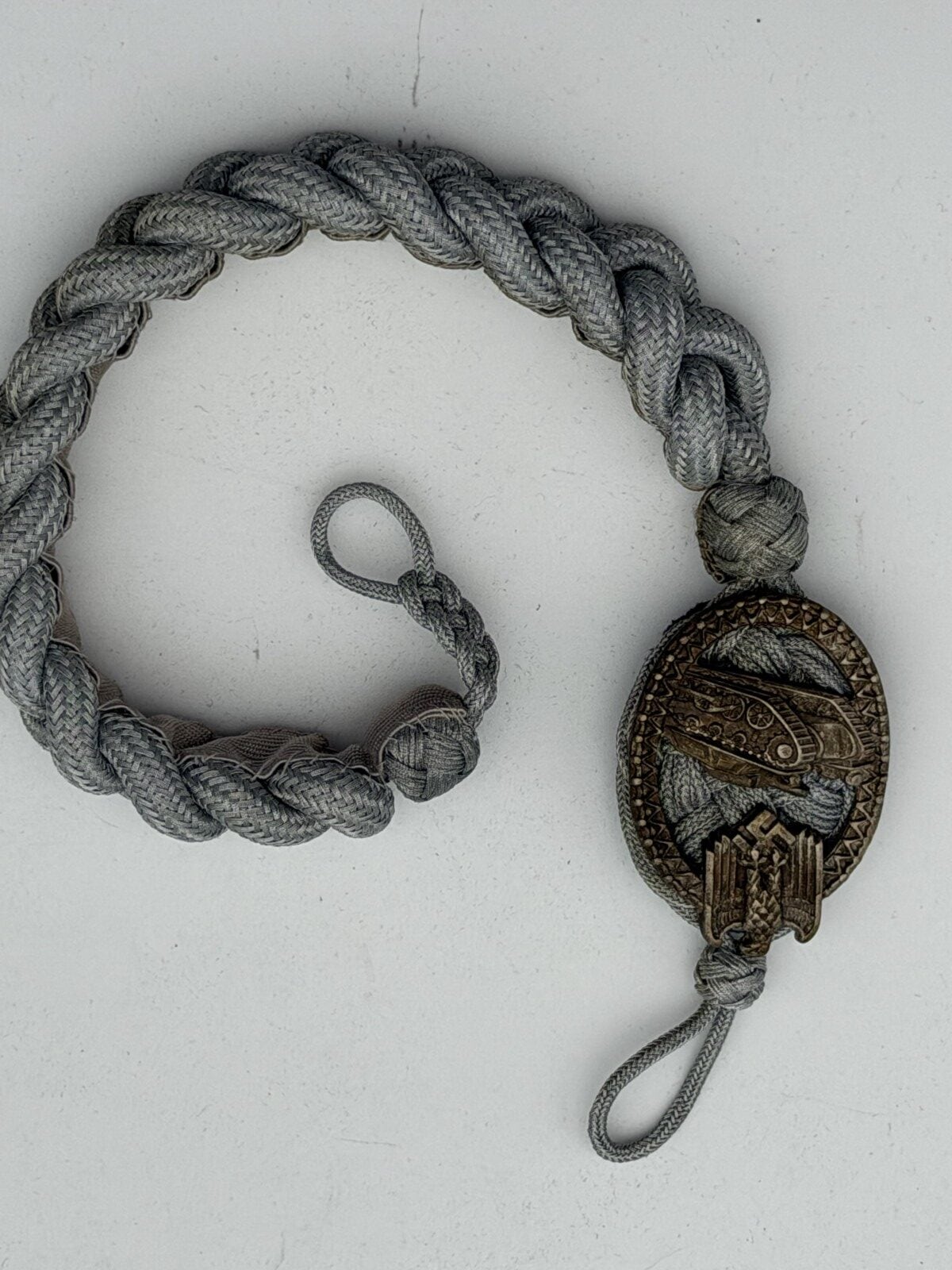
Scarce original Heer Panzer Marksmanship Lanyard Grade 1, or Schützenschnur für Panzertruppen 1. Stufe, introduced specifically for German armoured personnel in October 1938.
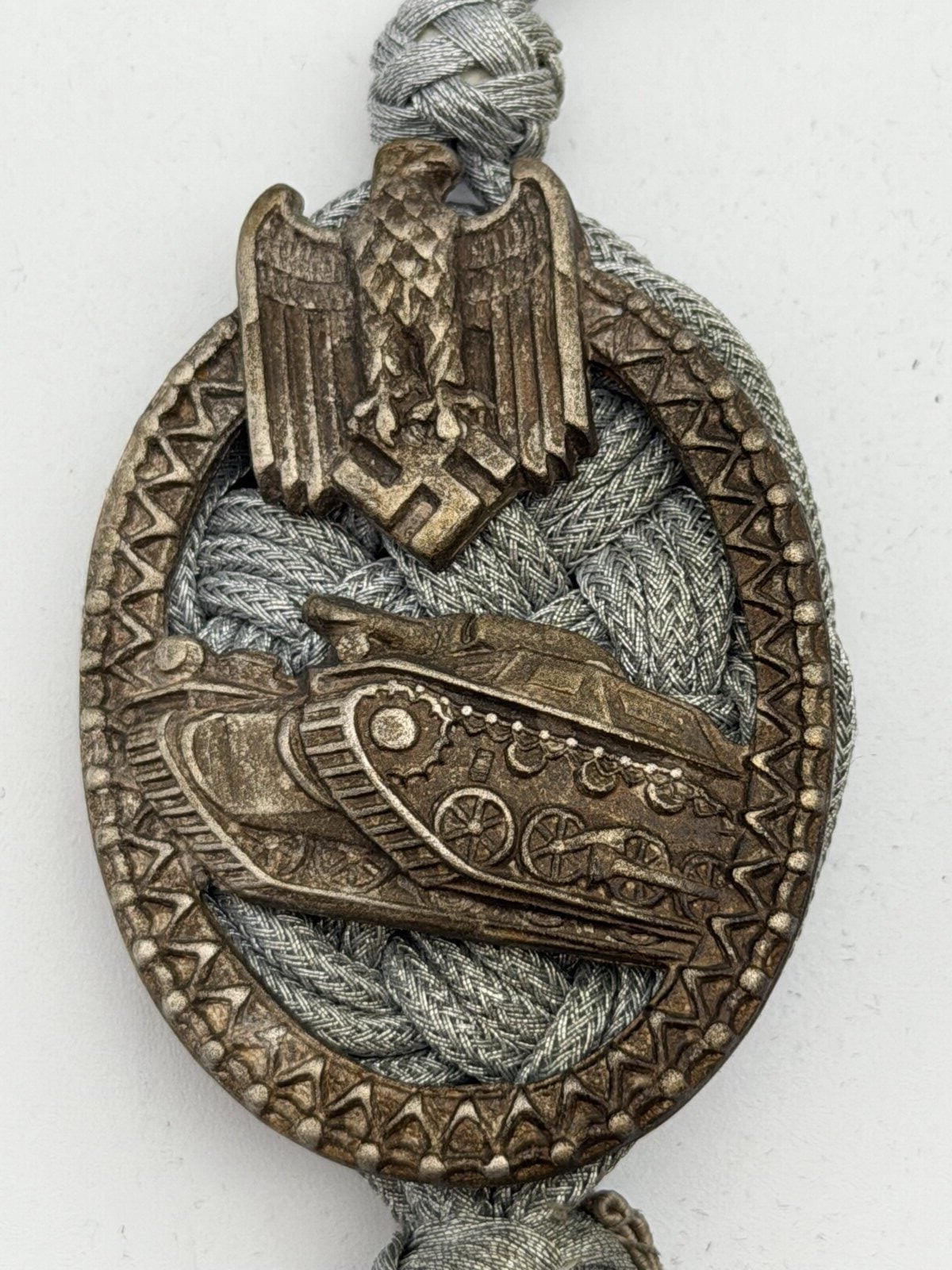
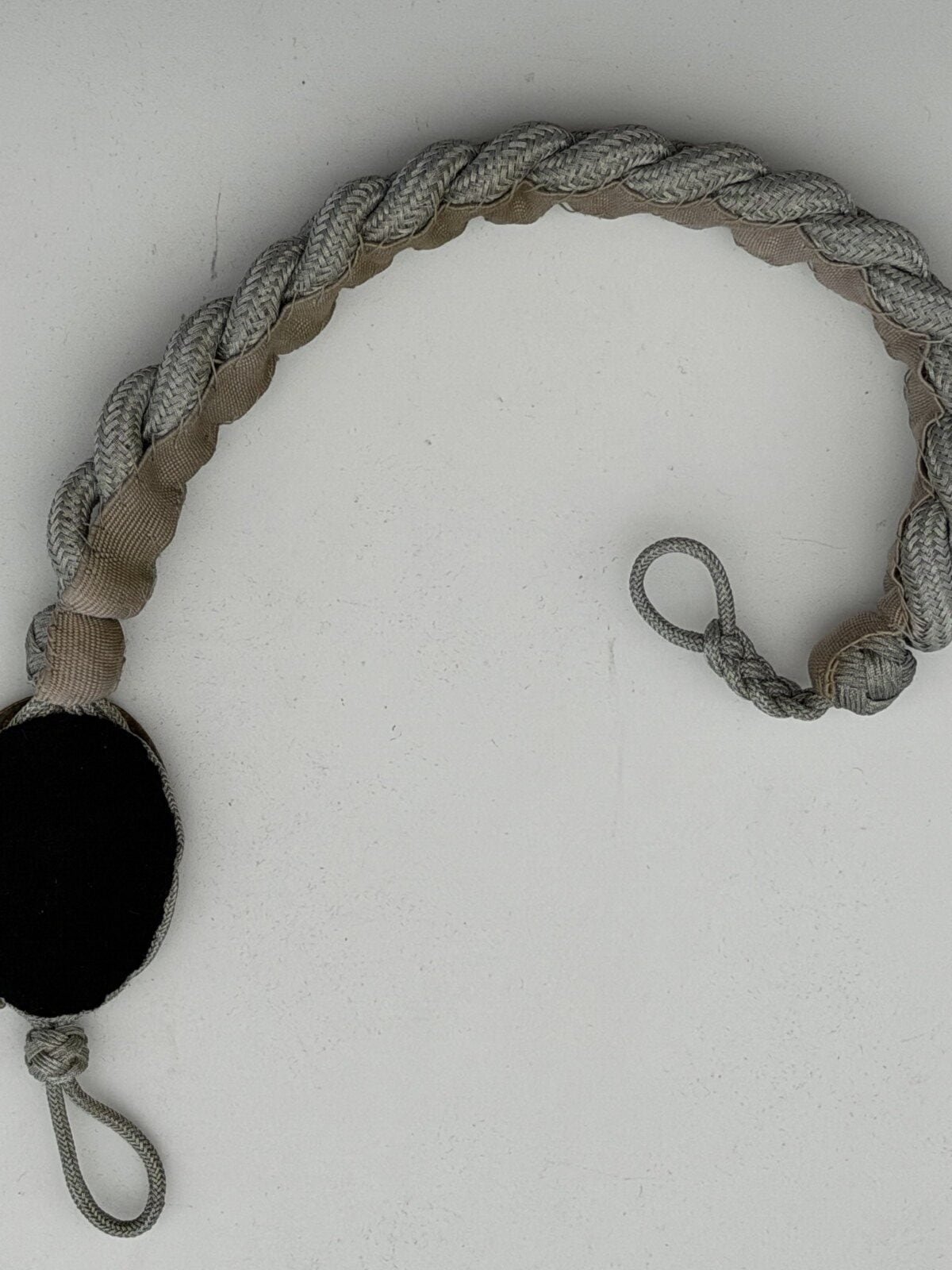
The lanyard retains its substantial silver-grey aluminium braid, textile backing, woven attachment loops and distinctive oval Panzer badge. The badge depicts a Panzer tank beneath the Heer national eagle, surrounded by the characteristic stylised tank-track border associated with the lower Panzer grades.
Most importantly, there are no additional shell pendants, correctly identifying this example as 1. Stufe – Grade 1. The metal device displays attractive untouched age patination, while the braided cord remains exceptionally complete.
€ 395
1 in stock
This Heer Panzer Marksmanship Lanyard Grade 1 is a particularly attractive surviving example of the specialist shooting-proficiency award produced for German armoured troops.
Known in German as the Schützenschnur für Panzertruppen, the Panzer version differed substantially from the standard Heer infantry pattern.
Instead of the conventional shield and crossed-weapons design, the armoured version carried a specially designed oval device incorporating a Panzer tank, Heer eagle and stylised tank-track border.
The dedicated Panzer pattern was introduced on 17 October 1938. Helmut Weitze’s reference material confirms that a separate version for Panzer troops appeared on that date and used tank imagery to distinguish it from the normal infantry and artillery awards.
This example can be identified specifically as the 1st Grade.
The twelve-grade Heer marksmanship system used additional pendants to indicate progression.
For the Panzer version, the first four grades retained the oval tank-track-bordered badge. Grade 1 carried no additional pendant, while subsequent grades added one, two and three devices respectively. Specialist references similarly identify the track-pattern Panzer badge without an additional shell device as Stufe 1.
Therefore, the absence of any additional shell or grenade-shaped pendant on this example is correct rather than evidence of a missing component.
The oval metal fitting is the key identifying element.
A detailed Panzer vehicle occupies the centre of the device.
Above it sits the national Heer eagle with outstretched wings and swastika.
Around the outer edge runs a strongly defined repeating geometric pattern designed to represent Panzer track links.
Comparable Grade 1 examples catalogued by eMedals measure approximately 40 × 56 mm and use silvered metal construction with the device fixed directly to the braided lanyard.
The precise base alloy of your badge cannot be established from photographs alone.
Accordingly, I would describe it conservatively as:
Silvered non-ferrous/light-alloy Panzer badge; exact alloy untested.
That is preferable to automatically calling it aluminium or zinc without XRF analysis.
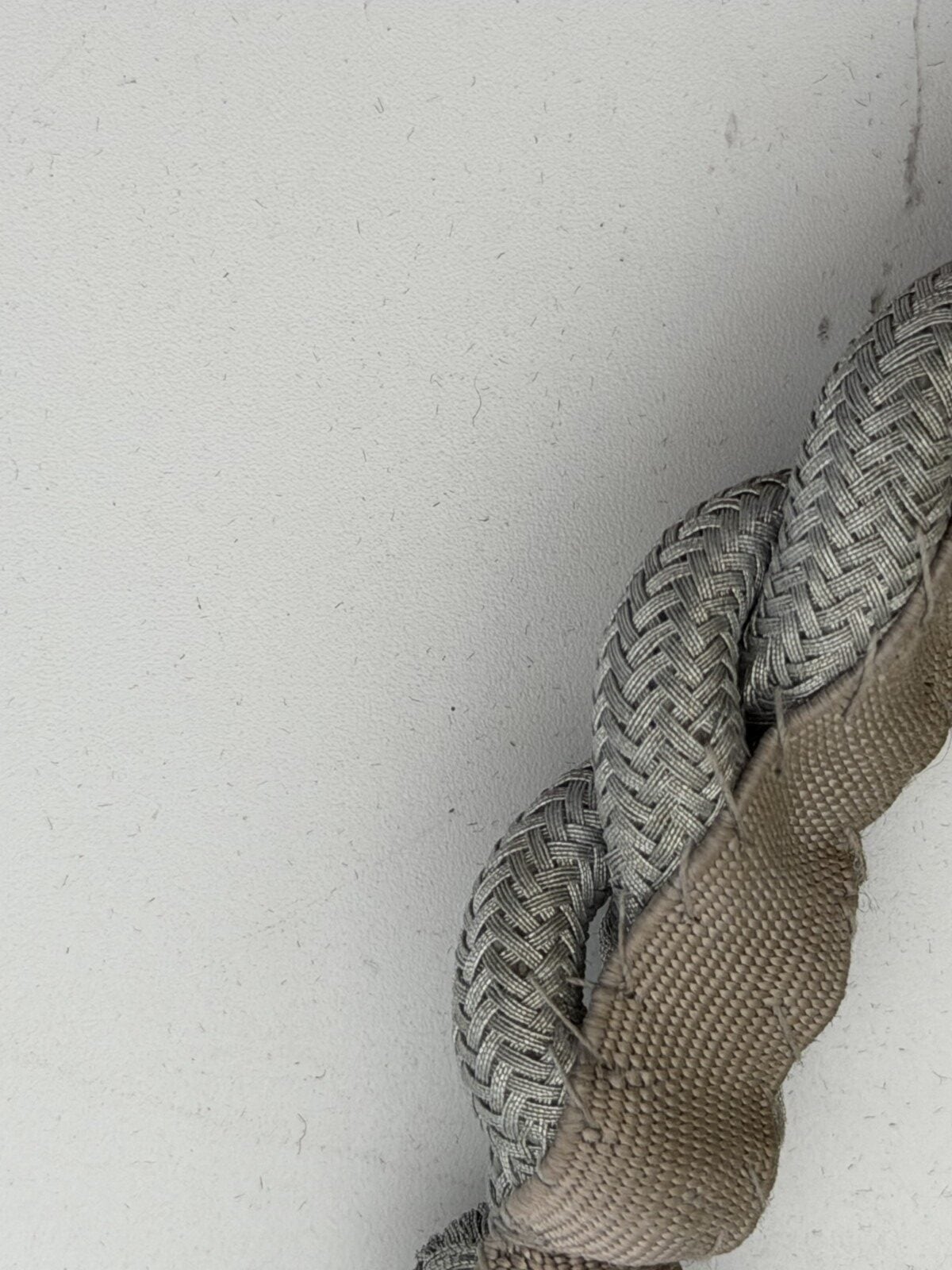
The main body is formed from multiple substantial intertwined cords.
Each cord uses tightly woven silver-grey metallic thread arranged into the characteristic heavy braided structure associated with Heer Schützenschnüre.
The surviving weave remains particularly attractive.
Natural darkening appears between the individual strands, while the high points retain considerably lighter silver-grey colouring.
That contrast is consistent with genuine age and handling.
Furthermore, the inner side retains its beige-grey textile backing strip. This protected the metallic cord from direct wear against the uniform and helped the lanyard maintain its intended shape.
Comparable original Panzer lanyards are documented with silver aluminium cord and field-grey or grey rayon backing.
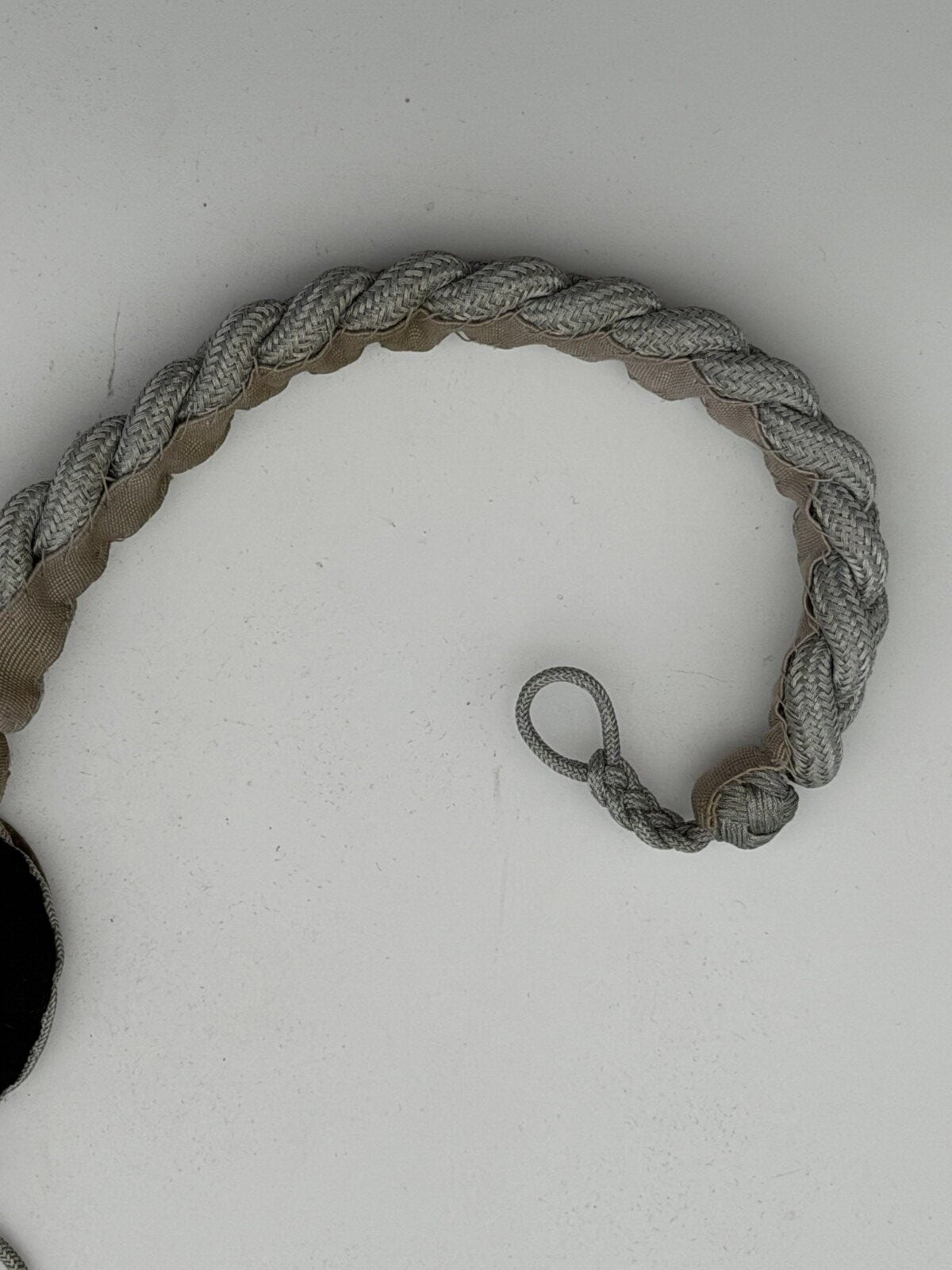
Both terminal arrangements survive.
At one end, a small braided loop remains connected to the main cord through a woven decorative knot.
The opposite end passes through the mounted Panzer device and terminates in its corresponding loop.
These loops enabled the award to be secured to the uniform.
The Schützenschnur was worn from beneath the right shoulder board and draped across the upper right breast towards a tunic button. Weitze confirms that these awards were worn by enlisted men and NCOs rather than as ordinary officer decoration.
The Panzer marksmanship lanyard was not a combat decoration.
Instead, it rewarded exceptional weapons proficiency.
For armoured troops, qualification could involve tank-mounted weapons and Panzer cannon rather than ordinary rifle shooting alone. Weitze records shooting disciplines including tank guns among the weapons considered within the Heer qualification system.
Consequently, the award represented technical competence and accuracy rather than simply service within a tank unit.
This distinction makes the Panzer version particularly interesting because it directly reflects the specialised training expected of German armoured crews during the rapid pre-war and early-war expansion of the Panzerwaffe.
The dedicated Panzer form was authorised in October 1938.
Awarding of the Heer Schützenschnur was suspended in February 1941, although previously earned lanyards continued to exist and appear in wartime photographs. Weitze gives 14 February 1941 as the date on which further Heer awards were discontinued.
Therefore, the most accurate production/award period for this example is approximately:
1938–1941
It could, of course, have continued to be retained by its recipient later in the war.
From the photographs supplied, this Heer Panzer Marksmanship Lanyard Grade 1 presents very positively as an original period example.
Several features are especially encouraging:
The form compares closely with documented Grade 1 Panzer Schützenschnüre offered by eMedals, Ratisbon’s and specialist German dealers.
I see no obvious photographic red flag suggesting a modern reproduction.
Overall condition is very good original condition.
The metallic cord remains complete and retains excellent structural definition.
Some dulling and oxidation are visible across the braid, although this is completely appropriate for its age.
Likewise, the Panzer badge has developed a deep grey-bronze patina with lighter highlights on raised surfaces.
The beige textile backing remains present beneath the braid.
Attachment loops survive at both ends.
Nothing should be polished, chemically cleaned or re-silvered.
In particular, the badge should remain exactly as found because its existing patina gives the lanyard a highly convincing untouched appearance.
Panzer Schützenschnüre are significantly less frequently encountered than standard infantry marksmanship lanyards.
Current Weitze inventory illustrates the difference: standard Heer Grade 1 infantry lanyards can still be found around the €90–€160 level, whereas specialist Panzer versions appear much less often.
Ratisbon’s sold Panzer Grade 1 examples for €240 in December 2025, €285 in November 2024, and another particularly attractive example for €495 in June 2023.
Meanwhile, a current specialist German retail example is listed at €549.
That makes the Panzer version a noticeably more desirable specialist piece than the ordinary Heer Schützenschnur.
A realistic specialist retail range is approximately €500–€650.
The complete loops, intact backing, strong braid and particularly attractive untouched patina justify placing it slightly above the €549 comparison.
I would not reduce it to the €250–€300 auction level because those figures represent auction results rather than curated specialist retail pricing.
Explore related listings: Heer (Army); Original WWII FLL Infantry Assault Badge in Silver; Original Großdeutschland Officer Shoulder Board with Solid GD Cypher; Nordmenn Militaria – Original Uniforms.
For the closest exact Grade 1 construction comparison:
eMedals – Heer Panzer Marksmanship Lanyard Grade 1
For confirmed auction-market comparisons:
Ratisbon’s – Heer Panzer Schützenschnur 1st Grade
For the Heer Schützenschnur system and Panzer introduction:
Helmut Weitze – Wehrmacht Heer Marksmanship Lanyard Reference
| Feature | Details |
|---|---|
| Organisation | Wehrmacht Heer |
| Branch | Panzertruppe |
| Award | Schützenschnur für Panzertruppen |
| Grade | 1. Stufe / Grade 1 |
| Introduction | 17 October 1938 |
| Approximate issue period | 1938–1941 |
| Badge design | Panzer, Heer eagle and tank-track border |
| Badge material | Silvered non-ferrous/light alloy, untested |
| Lanyard | Silver-grey aluminium metallic braid |
| Backing | Beige-grey textile |
| Grade pendants | None – correct for Grade 1 |
| Attachment | Original woven loops |
| Condition | Very good original condition |
| Authentication | Strongly consistent with wartime original |