
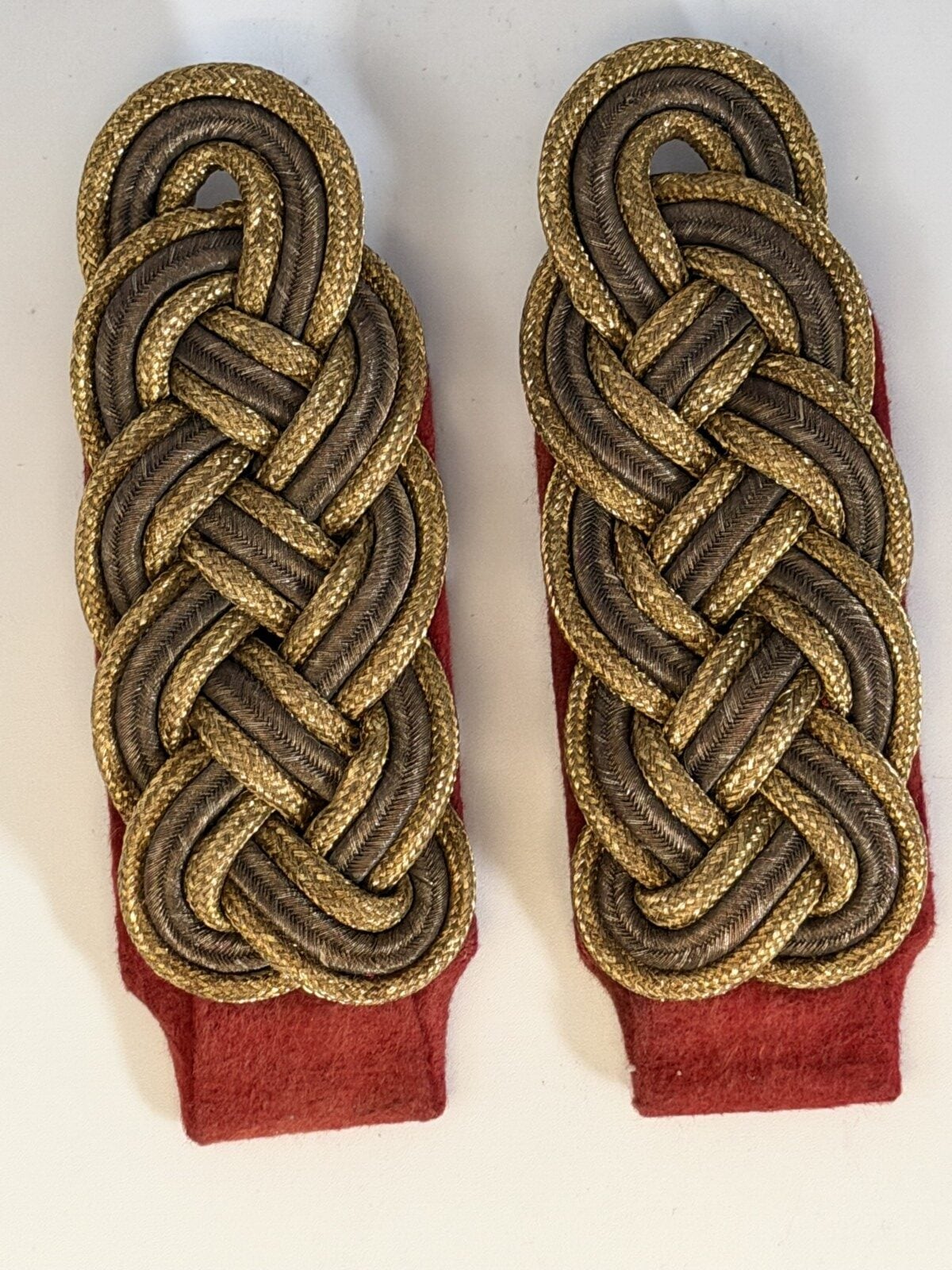
Exceptional Original Wehrmacht Heer Generalmajor Shoulder Boards, forming a matching pair of high-quality German Army general officer insignia.
Each shoulder board features substantial intertwined gold and silver metallic general’s braid mounted on the traditional hochrot scarlet-red wool backing used by Heer general officers. No silver rank stars have been fitted, correctly identifying the rank as Generalmajor.
These Original Wehrmacht Heer Generalmajor Shoulder Boards represent one of the most instantly recognisable forms of senior officer insignia worn by the German Army during the Second World War.
Unlike standard Army officer shoulder boards, those of the Generalität combined contrasting gold and silver cords in an elaborate heavy braid. Furthermore, they were mounted upon the traditional scarlet-red or hochrot cloth associated with Heer general officers.
The present pair displays precisely this distinctive construction.
No rank stars or other devices are present on either shoulder board.
Importantly, this is correct for a Generalmajor and should not be mistaken for missing insignia.
The Heer general officer sequence was:
Period Heer general shoulder boards consequently allow the rank to be identified very precisely from their applied devices.
Ratisbon’s has documented an original sew-in Generalmajor pair of essentially the same basic configuration: gold and silver interwoven cords, red cloth backing and no rank stars.
A more recent Ratisbon’s example from its 2025 auction was likewise described as a matching pair of sew-in Heer Generalmajor shoulder boards and carried a starting price of €450 before buyer’s premium.
Construction is one of the strongest features of this pair.
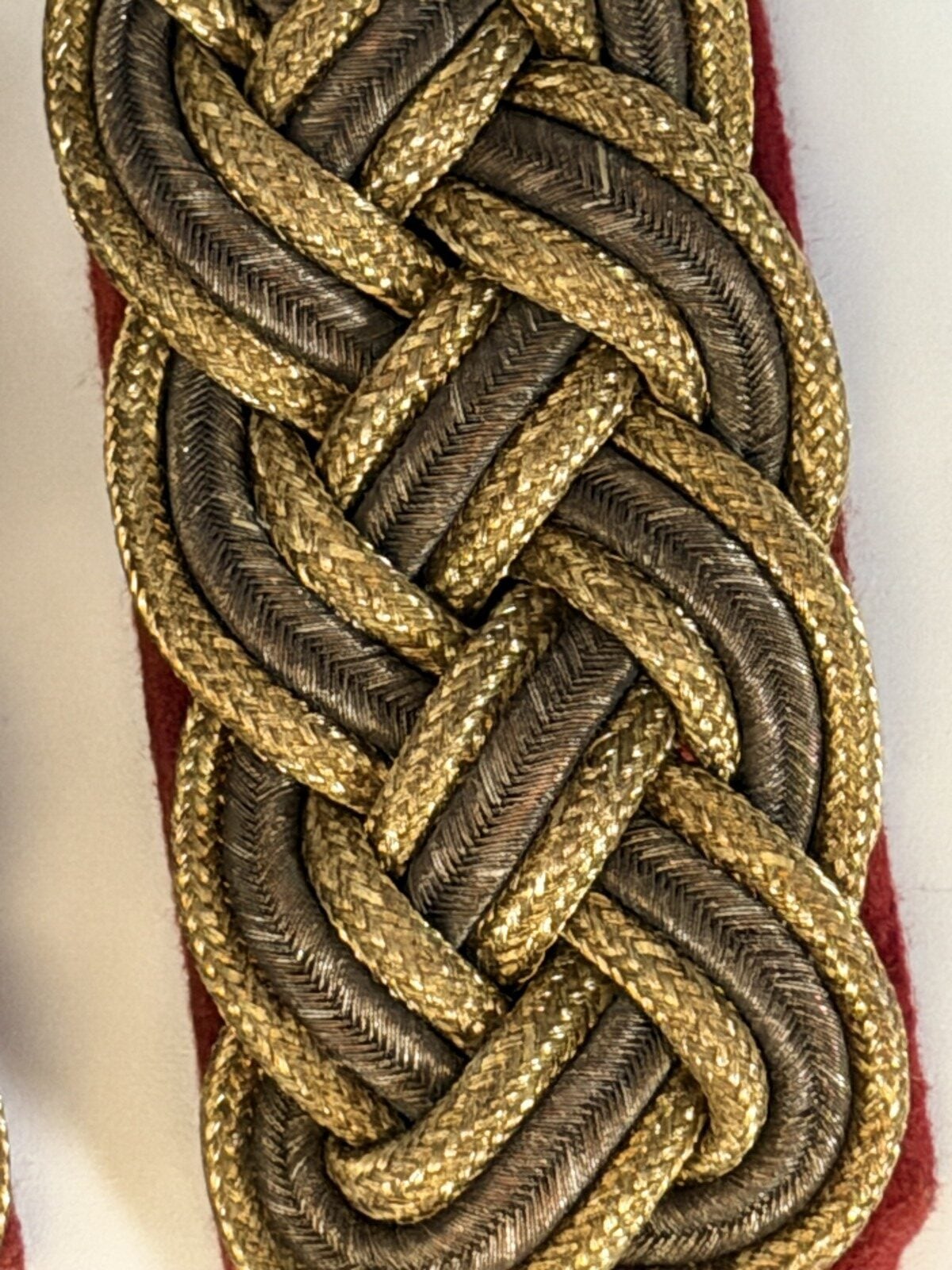
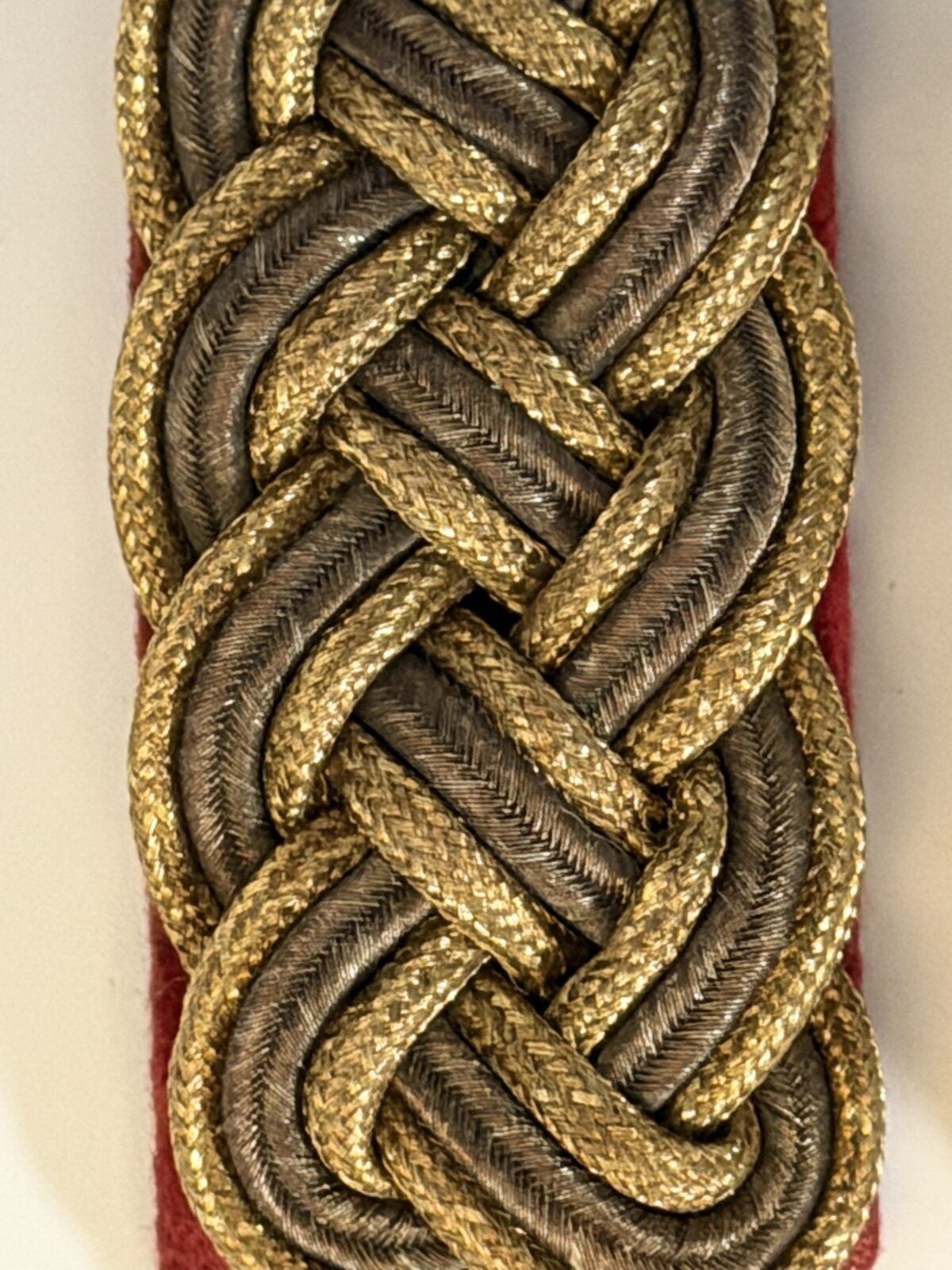
The boards employ the characteristic broad Generalsgeflecht, consisting of contrasting gold and silver cords intertwined into the distinctive four-bend general officer pattern.
The gold sections retain considerable brilliance. Meanwhile, the silver-coloured metallic sections have developed a dark grey-brown oxidation that appears naturally accumulated rather than artificially applied.
Close examination of the photographs shows particularly convincing detail in the metallic threads. Individual fine wires remain visible within the silver elements, while the gold cords exhibit the slightly irregular surface expected from period woven metallic material.
That difference in ageing between the two materials is something I particularly like on this pair.
Beneath the metallic braid is a substantial scarlet-red wool foundation.
This hochrot backing is an important identification feature because scarlet was traditionally associated with the Heer general officer corps.
Contemporary-style references describe Heer general boards as silver Russia braid positioned between gold cords and mounted on scarlet backing.
Helmut Weitze also documents surviving wartime general officer shoulder boards using heavy gold/silver metallic braid over red cloth. A circa-1942 General der Infanterie pair currently provides a useful construction comparison.
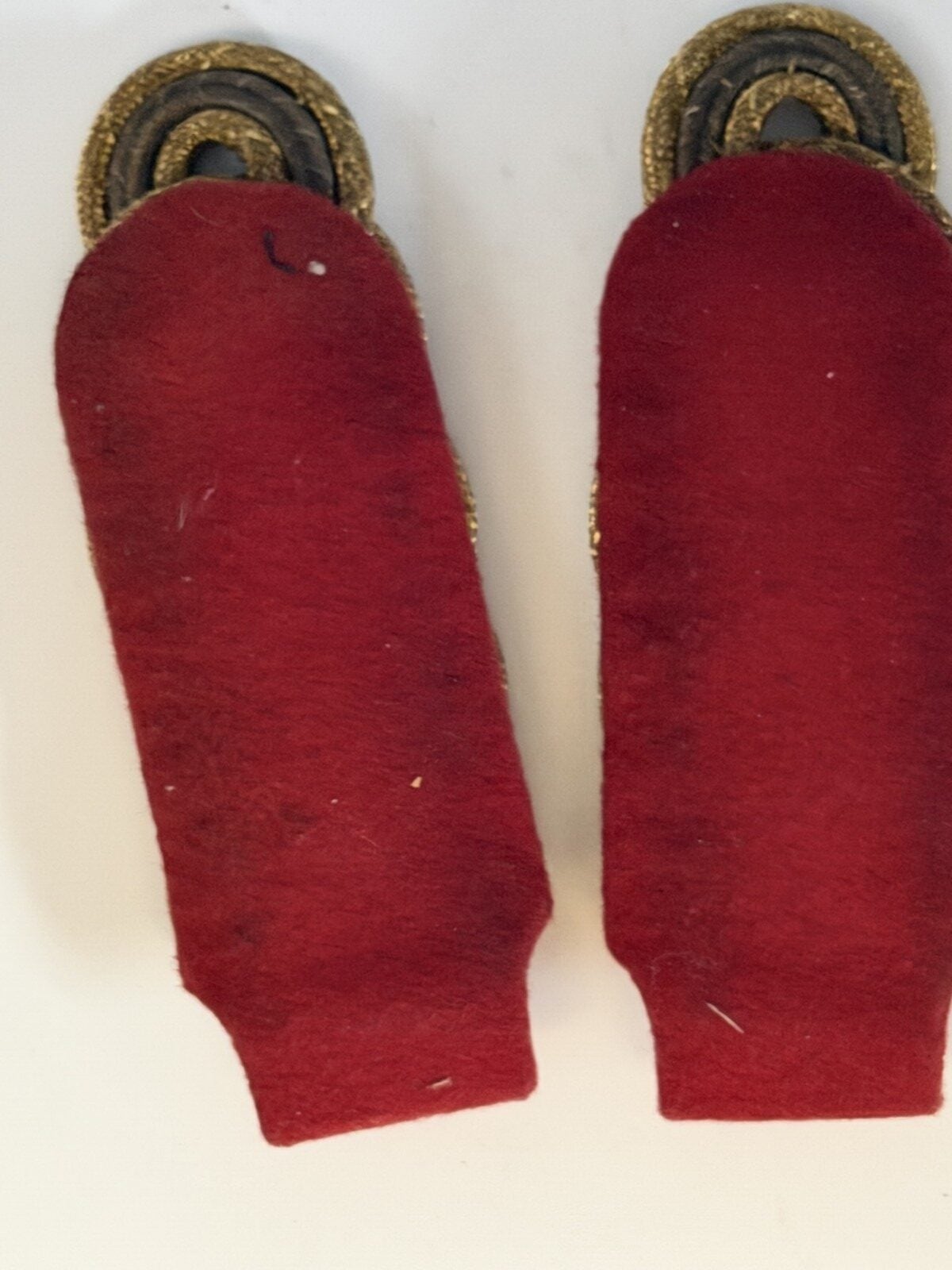
These are not simple slip-on shoulder boards.
Instead, each has a long red wool continuation beneath the braided body. That construction allowed the shoulder board to be permanently sewn into the shoulder seam of the tunic.
The reverse consequently remains largely plain red cloth.
Moreover, both examples appear to have been constructed as a pair rather than assembled later from unrelated singles. Their materials, braid configuration, wear and general patination correspond particularly well.
The metallic construction suggests a relatively high-quality officer-purchased set rather than inexpensive late-war production.
Earlier and better-quality general insignia frequently employed substantial metallic braid. Cellon and mixed synthetic-metallic constructions subsequently became increasingly common.
However, private-purchase uniforms and superior-quality insignia continued to show considerable manufacturing variation. Therefore, I would not attempt to date these more tightly than approximately the Wehrmacht 1935–45 period without examining the reverse stitching and materials under magnification.
Based upon the photographs supplied, my assessment is:
Strong probability of genuine period manufacture.
Several characteristics support that conclusion.
The metallic braiding exhibits convincing construction and genuine-looking oxidation. Likewise, the gold and silver elements have aged differently rather than displaying a uniform artificial surface treatment.
Additionally, the red wool appears appropriate in texture and colour. Its exposed lower portions show natural compression, minor distortion and age rather than the fresh-cut appearance often encountered on reproductions.
The complex plaiting also compares favourably with documented original general officer insignia.
Most importantly, I see no immediate construction feature that would cause me to reject this pair.
As always with valuable loose insignia, final authentication would ideally include microscopic examination of the metallic threads, sewing thread, backing cloth and UV response.
Period: 1935–1945
Organisation: Wehrmacht
Branch: Heer
Rank: Generalmajor
Insignia: General officer shoulder boards
Construction: Gold and silver metallic Generalsgeflecht
Underlay: Hochrot scarlet wool
Rank stars: None – correct for Generalmajor
Attachment: Sew-in type
Pair: Yes – appears matching
Authenticity: Strongly consistent with original wartime manufacture
Condition: Very good, naturally aged
The Original Wehrmacht Heer Generalmajor Shoulder Boards remain in particularly attractive collector condition.
Heavy age toning is evident across the silver portions of the braid. In contrast, the gold cords have retained considerable colour and brilliance.
This difference gives the boards an excellent untouched appearance.
Minor wear and small fibres are present on the red backing, while some compression can be seen around the lower sew-in sections. Nevertheless, the wool retains strong colour and appears substantially intact.
Neither shoulder board appears to have been aggressively cleaned.
Consequently, the original age patina should be preserved.
I would not polish the metallic braid.
Generalmajor was the first full general officer rank within the Wehrmacht Heer hierarchy.
Officers reaching this grade could command divisions or occupy important administrative and higher staff appointments.
Consequently, genuine general officer insignia was manufactured in substantially smaller quantities than ordinary officer shoulder boards.
The survival of a convincing matching pair is therefore considerably more desirable than an isolated shoulder board.
I rate this pair highly.
The combination of:
matching construction + heavy metallic braid + excellent patination + red general’s backing + correct pipless Generalmajor configuration
makes them considerably more attractive than many loose general officer boards encountered on the market.
They would also make an excellent comparison piece alongside the named Heer Generalleutnant material already catalogued by Nordmenn.
Explore related listings: Insignia, Shoulder Boards and Breast Eagles.
Ratisbon’s – Heer Generalmajor Shoulder Boards
A useful specialist dealer comparison is:
Helmut Weitze – Heer General Officer Shoulder Boards
Scarlet or hochrot was the traditional backing colour for regular Heer general officer shoulder boards.
From the photographs, I consider them strongly consistent with genuine Wehrmacht-period manufacture. The braid, oxidation, cloth, construction and matching ageing all compare favourably with documented originals.
No. The present oxidation and patination form an important part of the boards’ originality and appearance. Polishing could permanently damage both their historical character and collector value.
Original WWII Wehrmacht Heer Generalmajor Shoulder Boards – Matching Gold/Silver Metallic Braid Pair, Hochrot Red Wool, Sew-In Pattern, 1935–45
For your catalogue, I would use Generalmajor confidently rather than simply describing them as generic “General Officer shoulder boards.” The absence of pips is a positive rank identifier, not a deficiency.