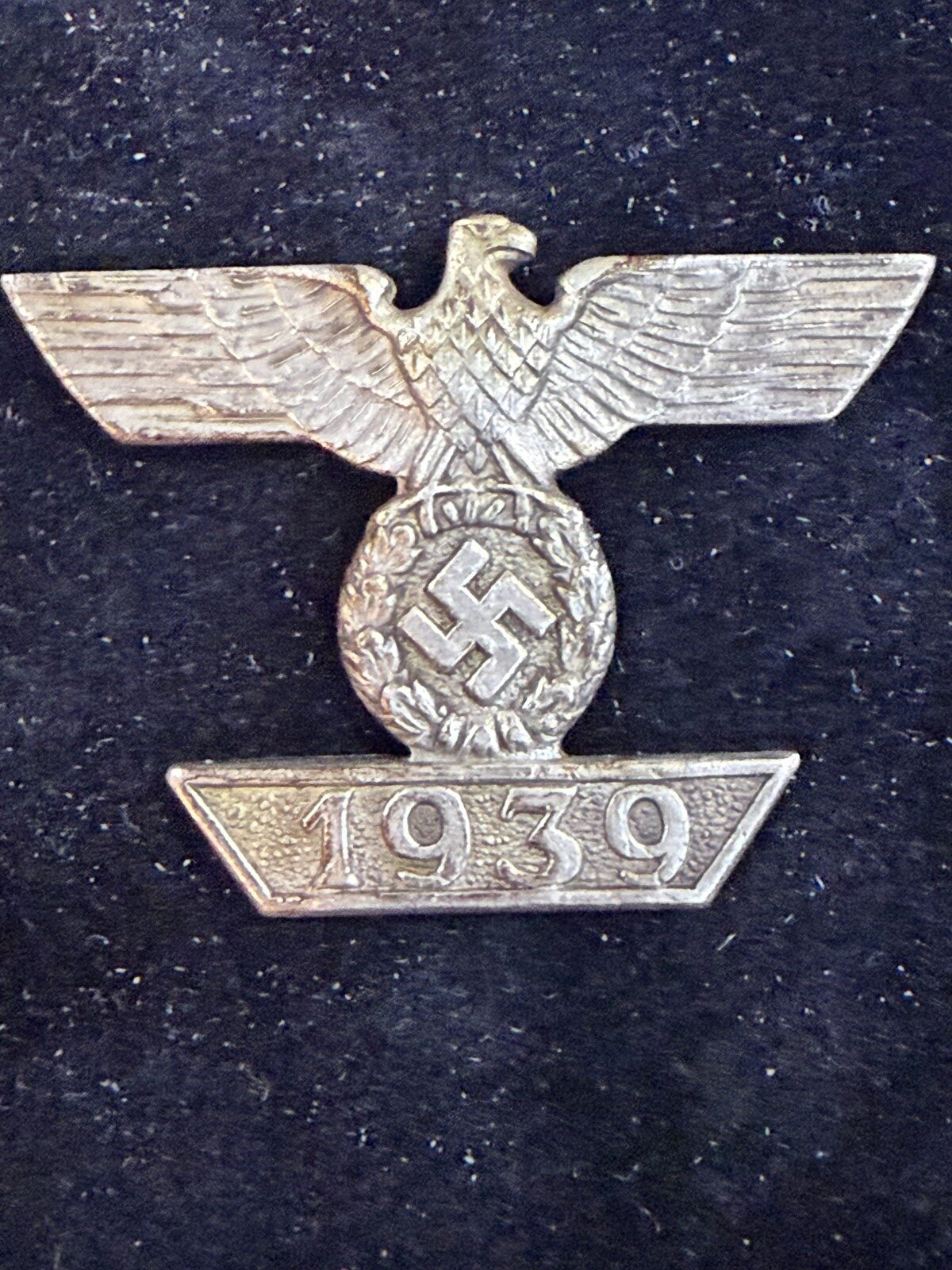
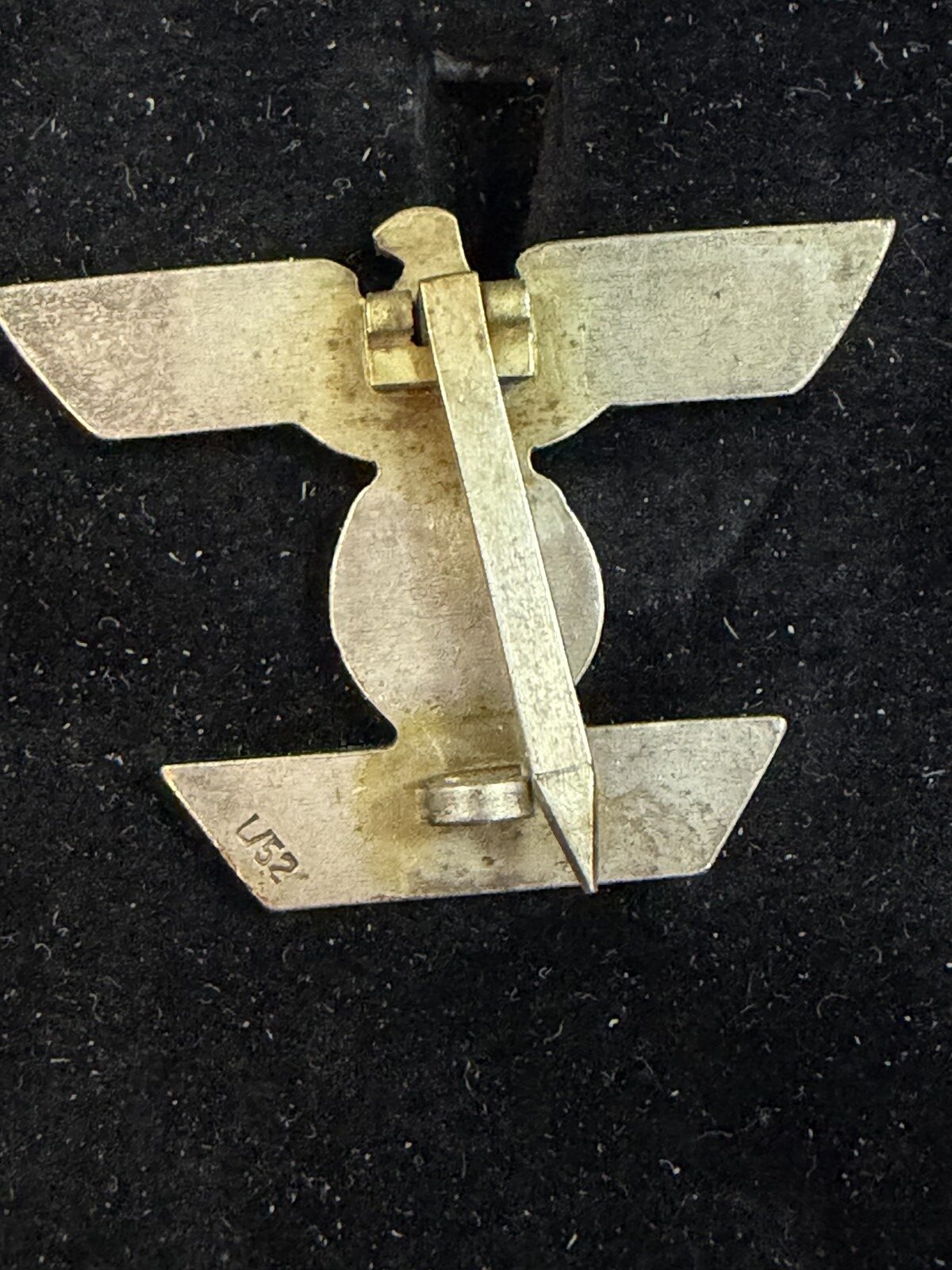
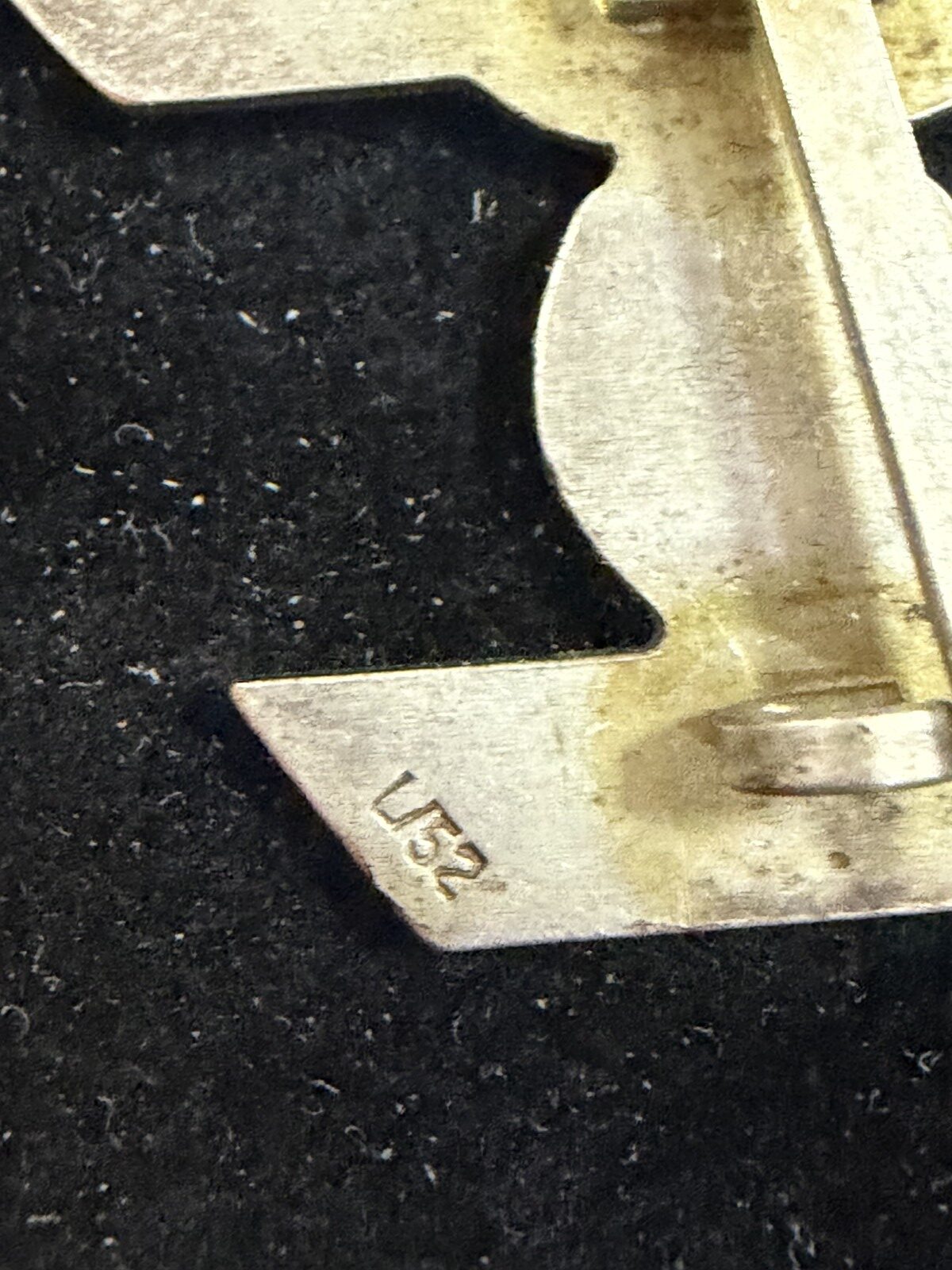
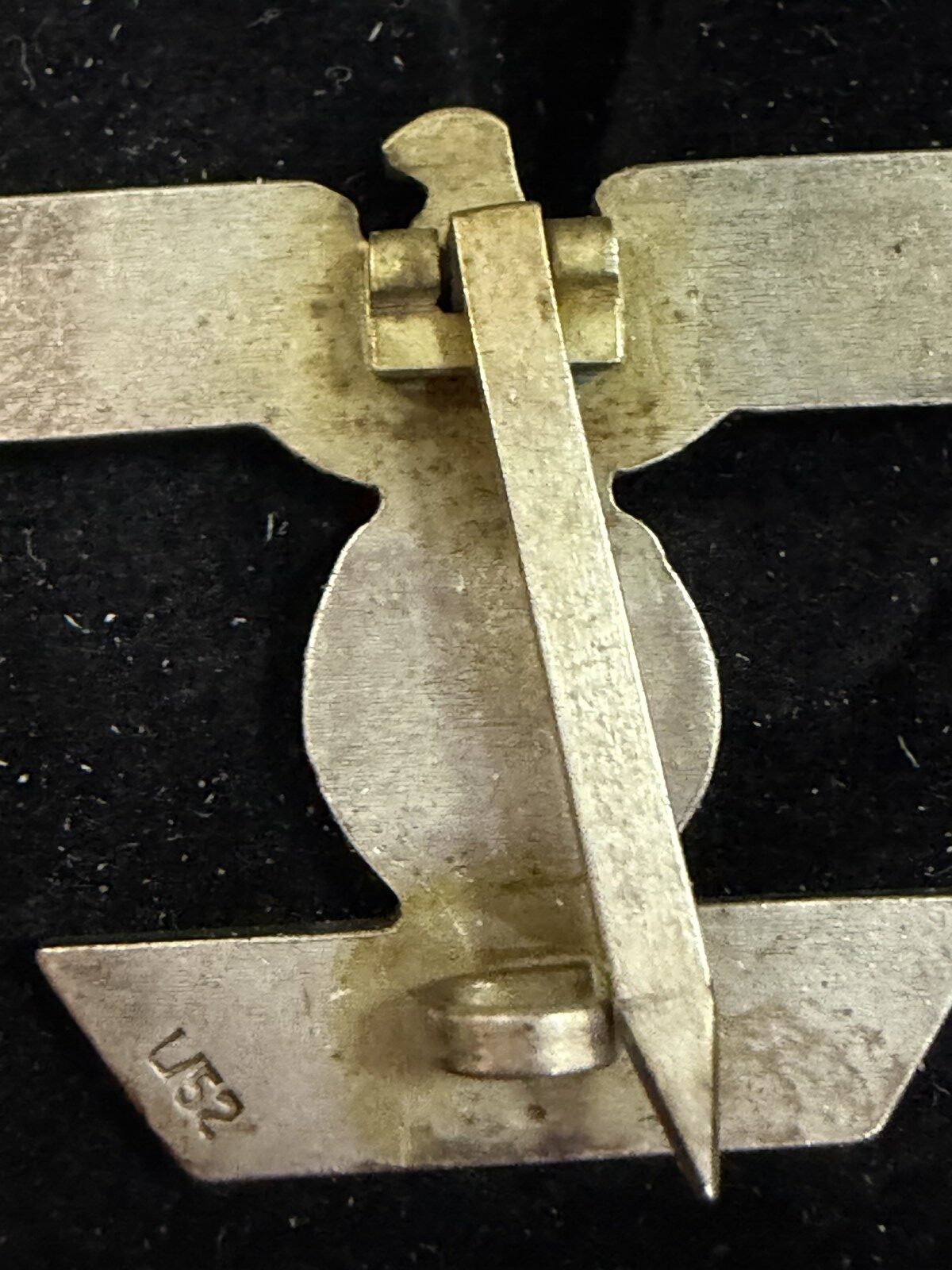
Period manufacture and maker attribution remain unverified. The description therefore records the visible design, marking and fittings without treating the stamp as proof of origin.
Construction and visible detail
The metal body has a relief front and a largely flat reverse. Rows of feathers define the wings, and the eagle stands above the central wreath. Below this, raised numerals sit within a bordered date panel with a textured background.The reverse retains a broad vertical pin, a rectangular hinge assembly and a lower catch. In addition, the L/52 stamp appears diagonally at the left end of the date panel. Surface marks and areas of toning remain visible around the fittings. The precise alloy is unconfirmed.
L/52 marking and maker background
C. F. Zimmermann of Pforzheim used the LDO code L/52. The firm appears in period-award research as a manufacturer of German decorations. The LDO system covered licensed manufacturers and the supply of privately purchased awards.For reference, the
Wehrmacht-Awards LDO maker-code guide identifies this code. However, a matching code does not by itself establish who made an individual clasp.
Historical context of the 1939 Iron Cross clasp
The German authorities introduced the repetition clasp in September 1939 for holders of the 1914 Iron Cross who qualified again. Recipients wore the 1st Class clasp above their existing Iron Cross on the left breast. Consequently, the combination recorded awards from both wars.The
Iron Cross regulations and wearing instructions explain this arrangement. The 2nd Class clasp instead attached to the ribbon of the earlier cross.
Condition and related collecting
The eagle, wreath and date panel remain present, with visible wear to raised areas and surface toning. The reverse photographs show the pin assembly in place. No case, award document or named recipient accompanies the information supplied for this catalogue entry.Explore our
Iron Crosses collection for related awards. You can also browse our wider
military medals collection for further examples.
, page 533. Your photographs show an
. That difference alone does not establish a reproduction, but the photographs are insufficient to authenticate period Zimmermann manufacture. The underside of your pin is not shown, so its possible markings remain unconfirmed.