More about the product
General Assault Badge in Silver
This
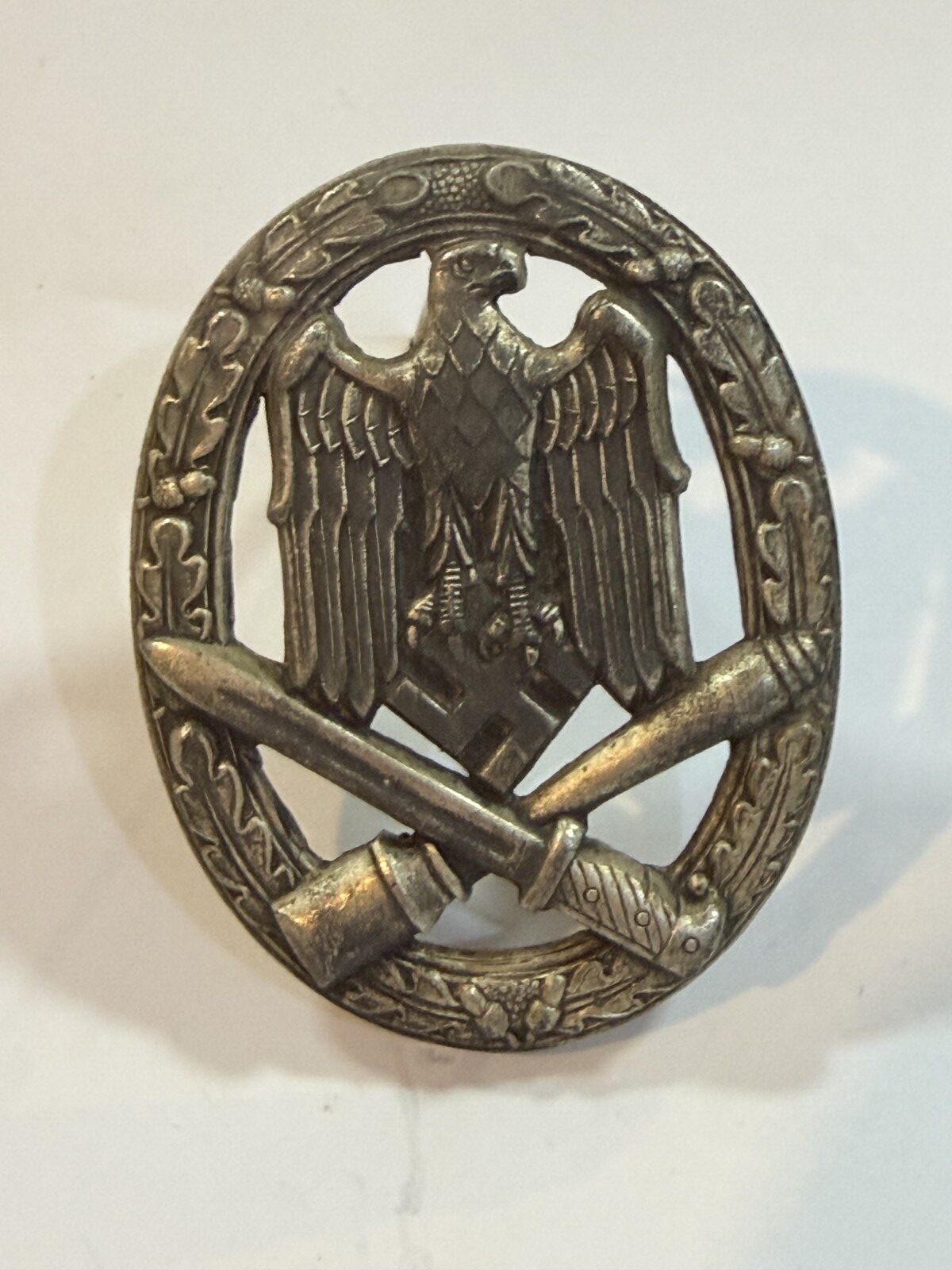
General Assault Badge in Silver displays the distinctive eagle, crossed bayonet and stick grenade design within an oval oak-leaf wreath. Known as the
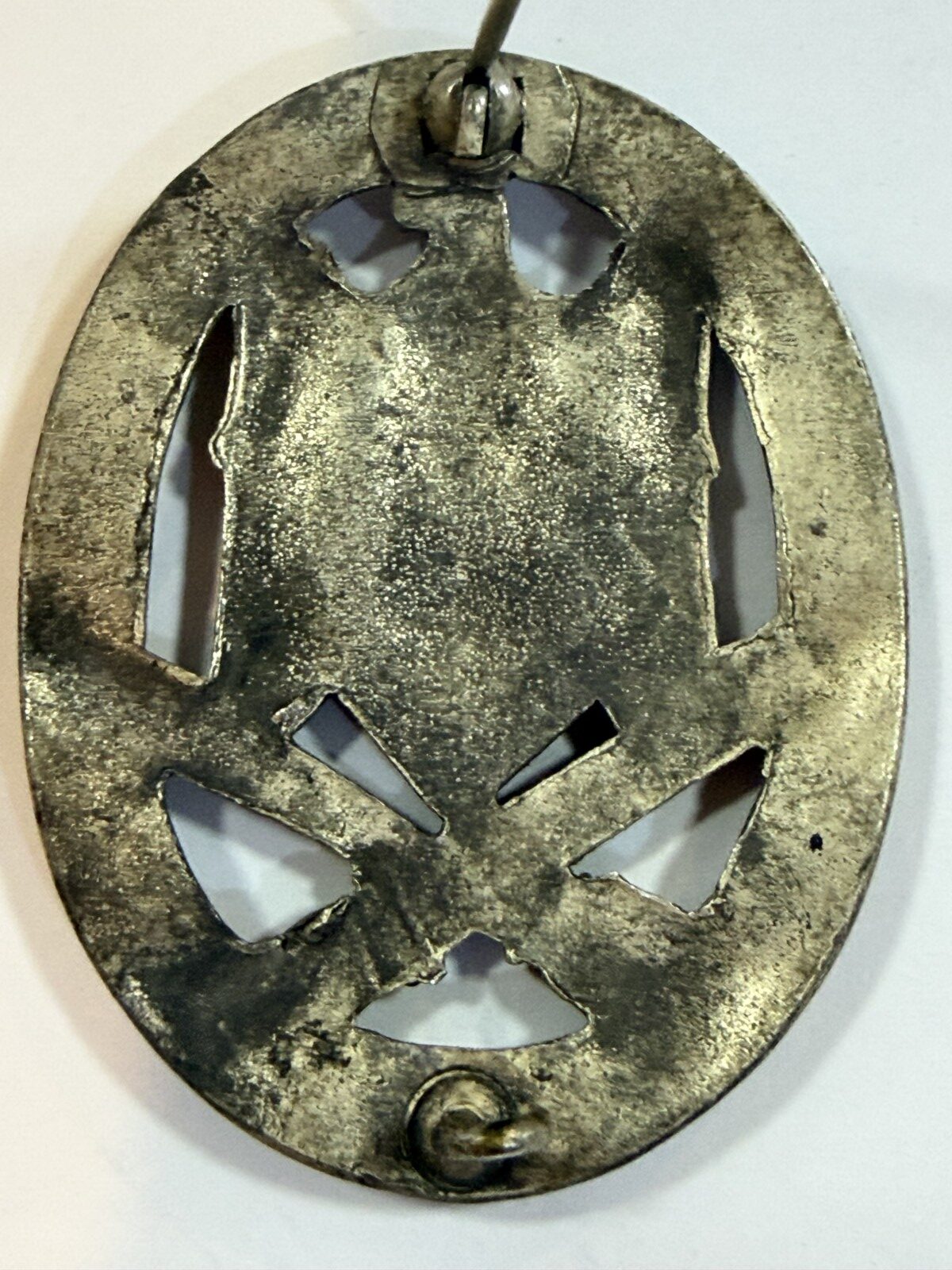
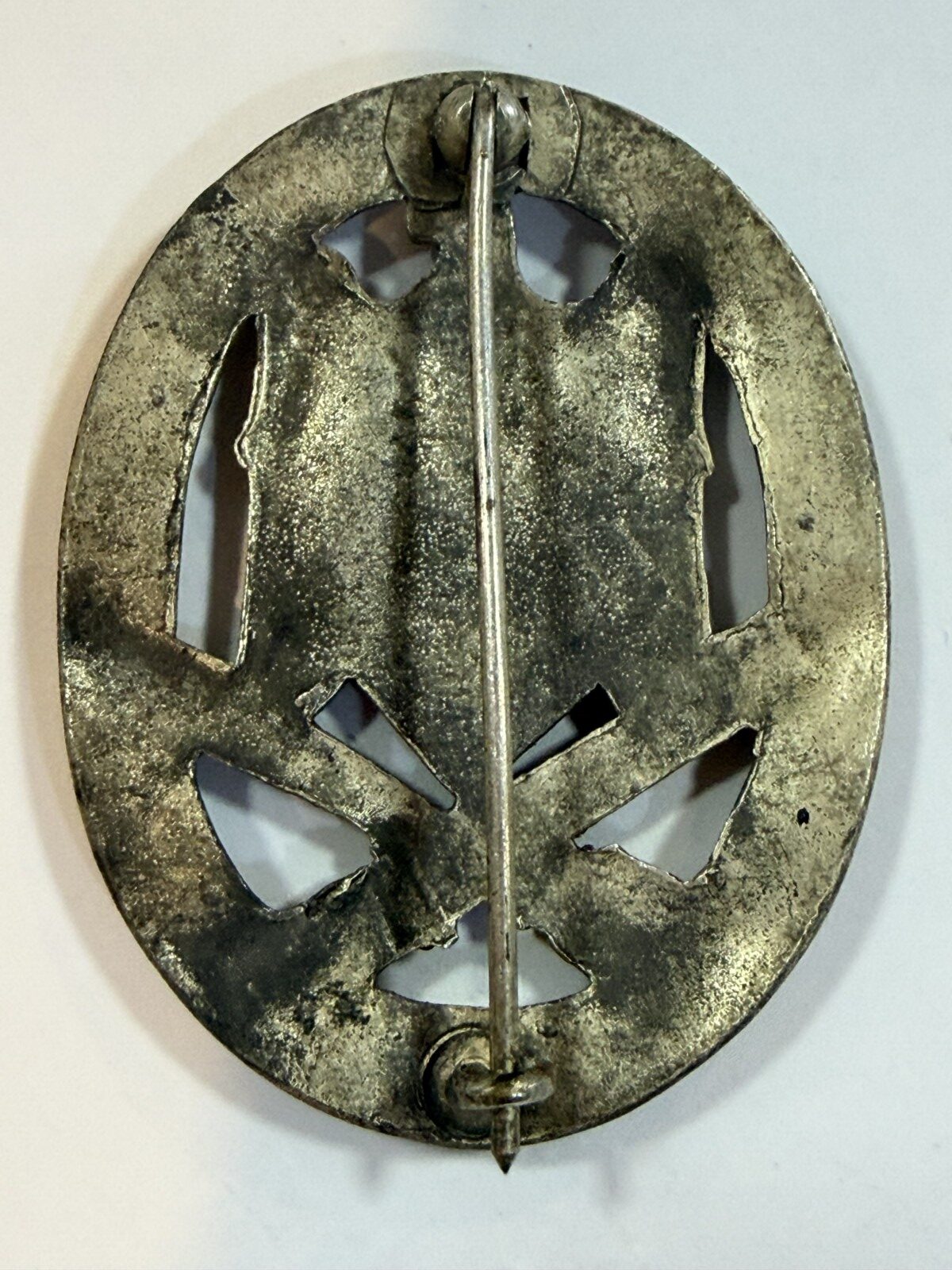
Allgemeines Sturmabzeichen, the decoration recognised qualifying assault participation by personnel outside the infantry award categories.The badge has an unmarked reverse with a vertical fastening pin. In addition, its ball hinge and circular catch mounting provide useful construction details for identifying the production variant.
Construction and Rudolf Karneth Attribution
The design and reverse fittings correspond to the unmarked ball-hinge pattern commonly attributed to
Rudolf Karneth of Gablonz. However, this attribution rests on construction and design comparisons, since the badge carries no visible manufacturer’s stamp.Its construction is consistent with silvered zinc. The central eagle and surrounding wreath form a single body, with openings around the wings and crossed weapons. Meanwhile, the reverse has a largely flat surface with visible texture and patches of remaining finish.A rounded ball hinge supports the long pin at the top. At the lower edge, a curved catch sits within a circular mounting. The supplied photographs show the pin both raised and resting in the catch, allowing a clear view of these components.
Design and Condition
The eagle’s feathers, oak leaves, acorns and bayonet grip remain recognisable. Furthermore, darker toning in the recessed areas contrasts with the lighter raised surfaces.Visible condition features include wear to the silver finish, scattered dark spots and surface roughness, particularly on the reverse. The hinge, pin and catch are all present. Overall, the badge retains clear design detail alongside its aged surface appearance.
Historical Background
The General Assault Badge dates from
1 June 1940. Initially associated with pioneer troops, it subsequently extended to other eligible support personnel, including artillery, anti-tank and anti-aircraft crews. The standard qualification involved participation in three assaults on separate days.For historical reference, the
Australian War Memorial’s General Assault Badge record describes the award’s design and qualifying service.This example represents the standard unnumbered pattern. Its principal collecting interest lies in the combination of the unmarked reverse, ball hinge and surviving finish.Explore our
Heer badges collection and wider
military badges catalogue for related German decorations.