
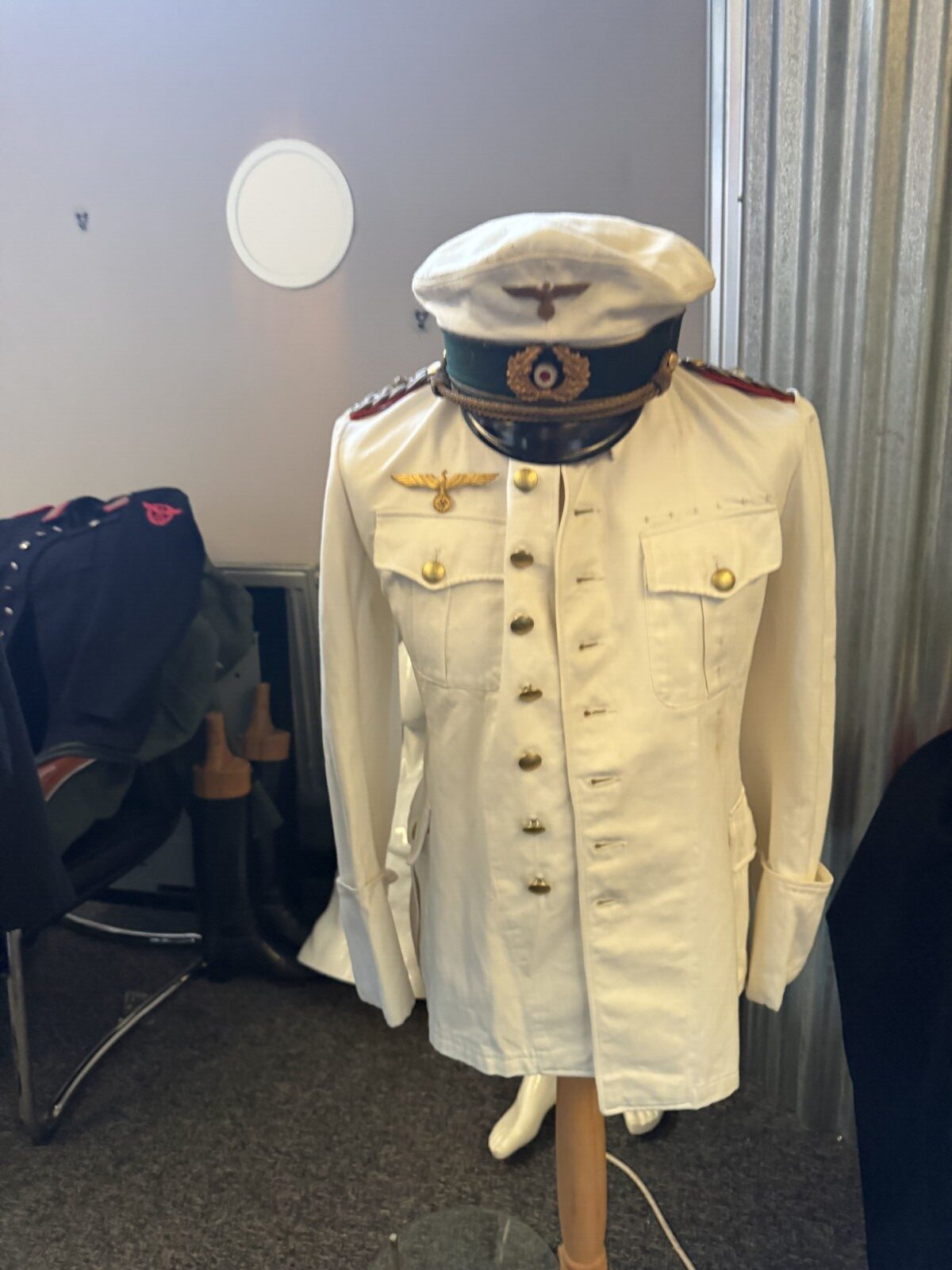
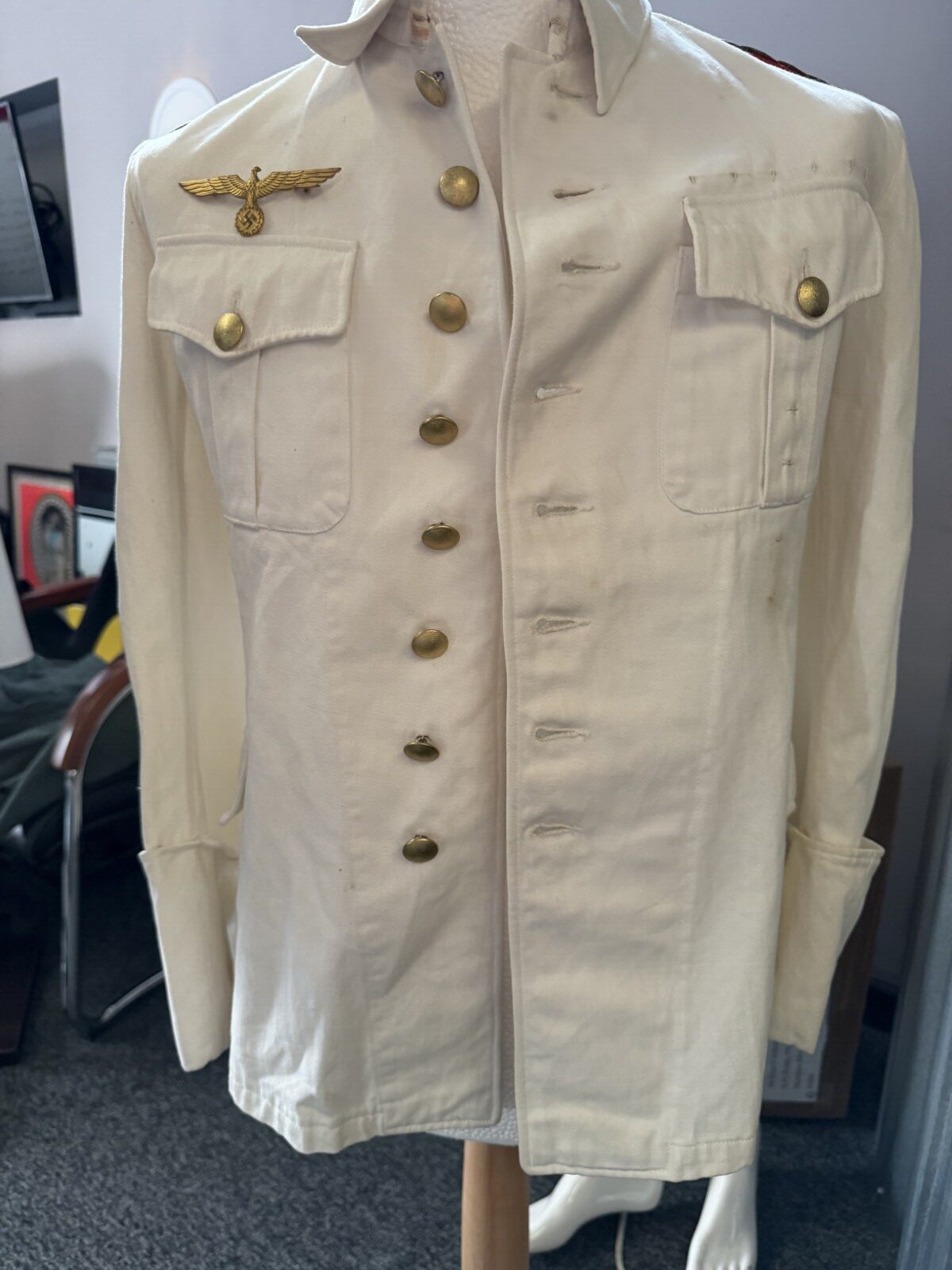
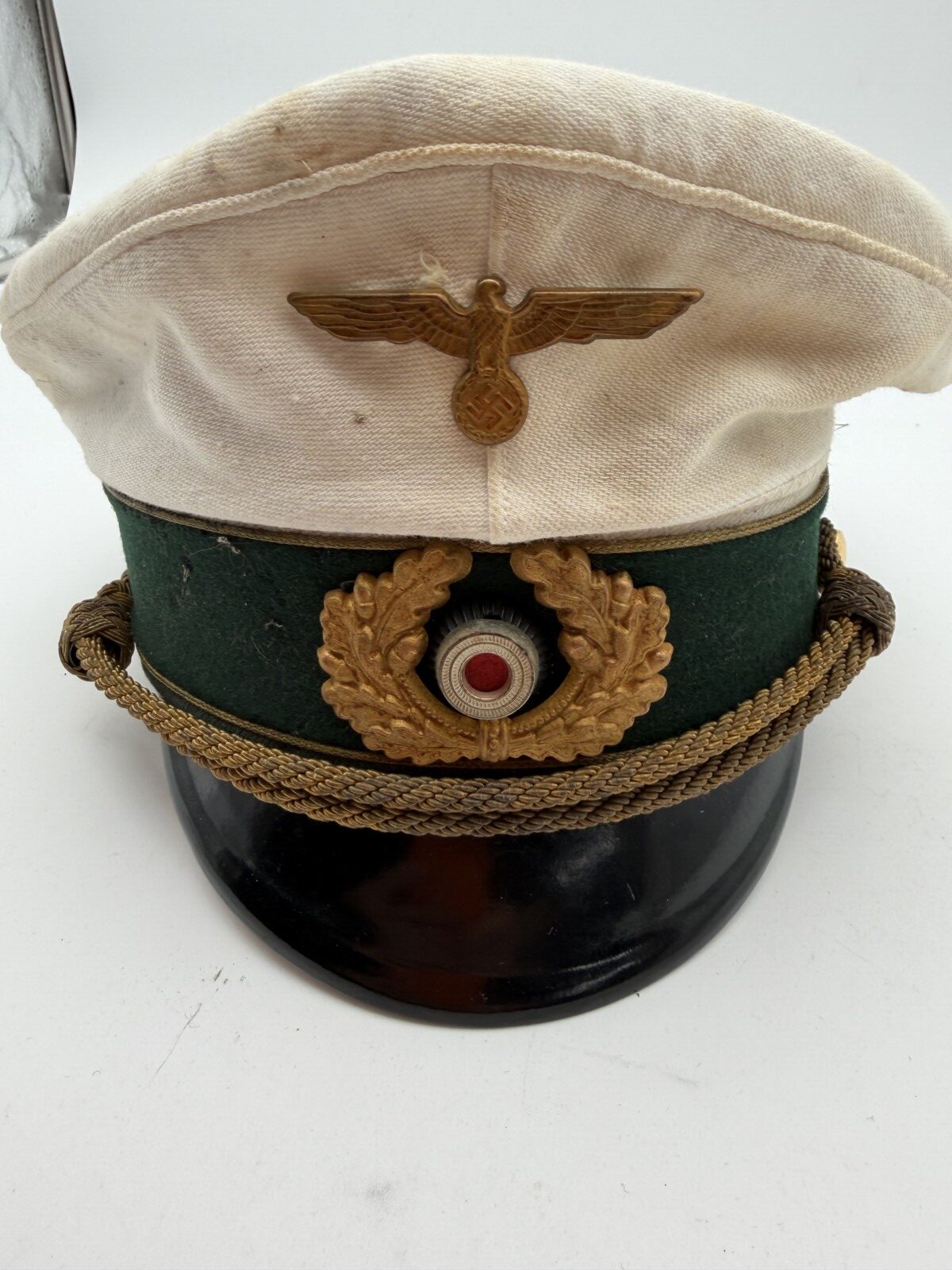
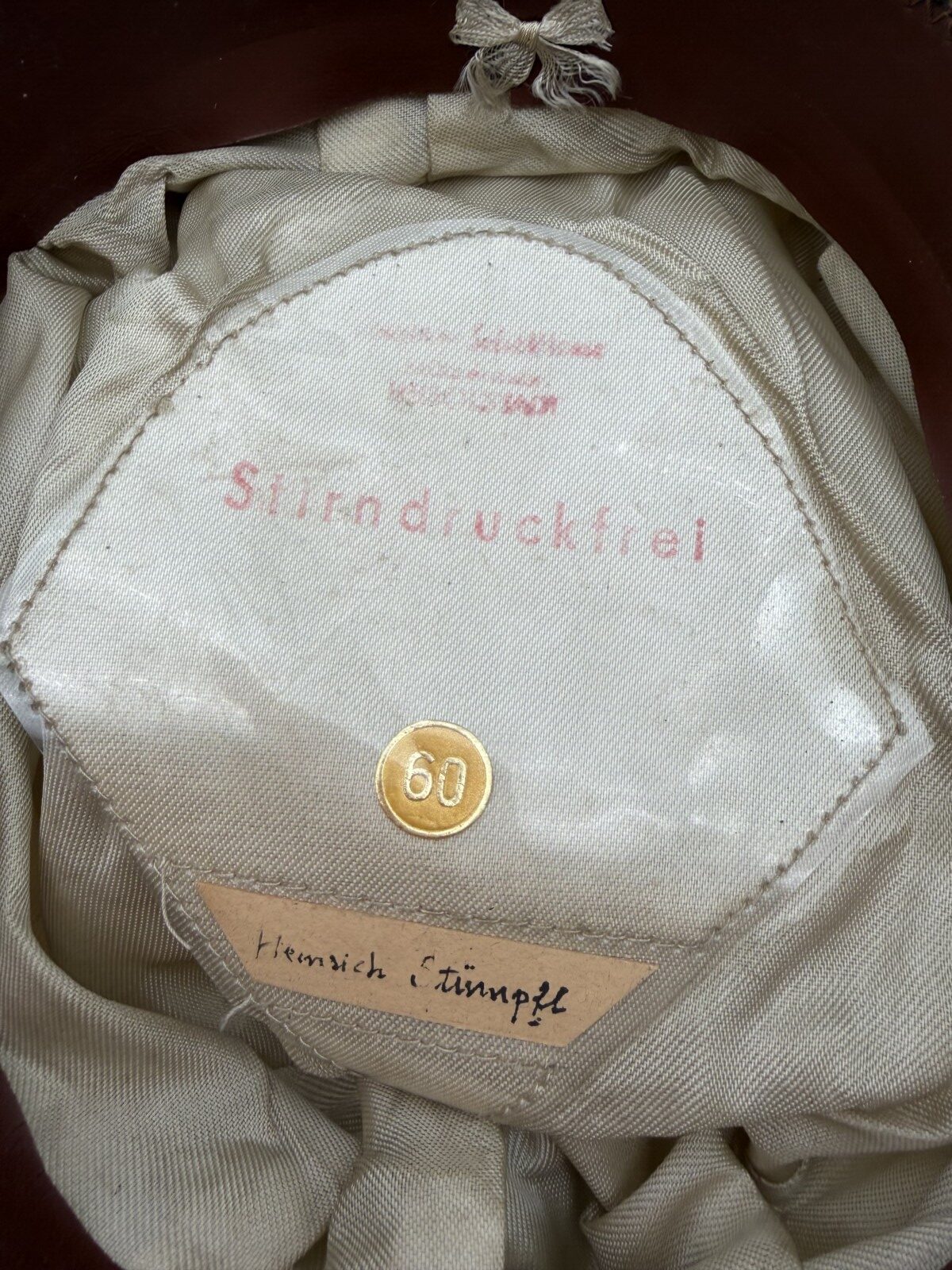
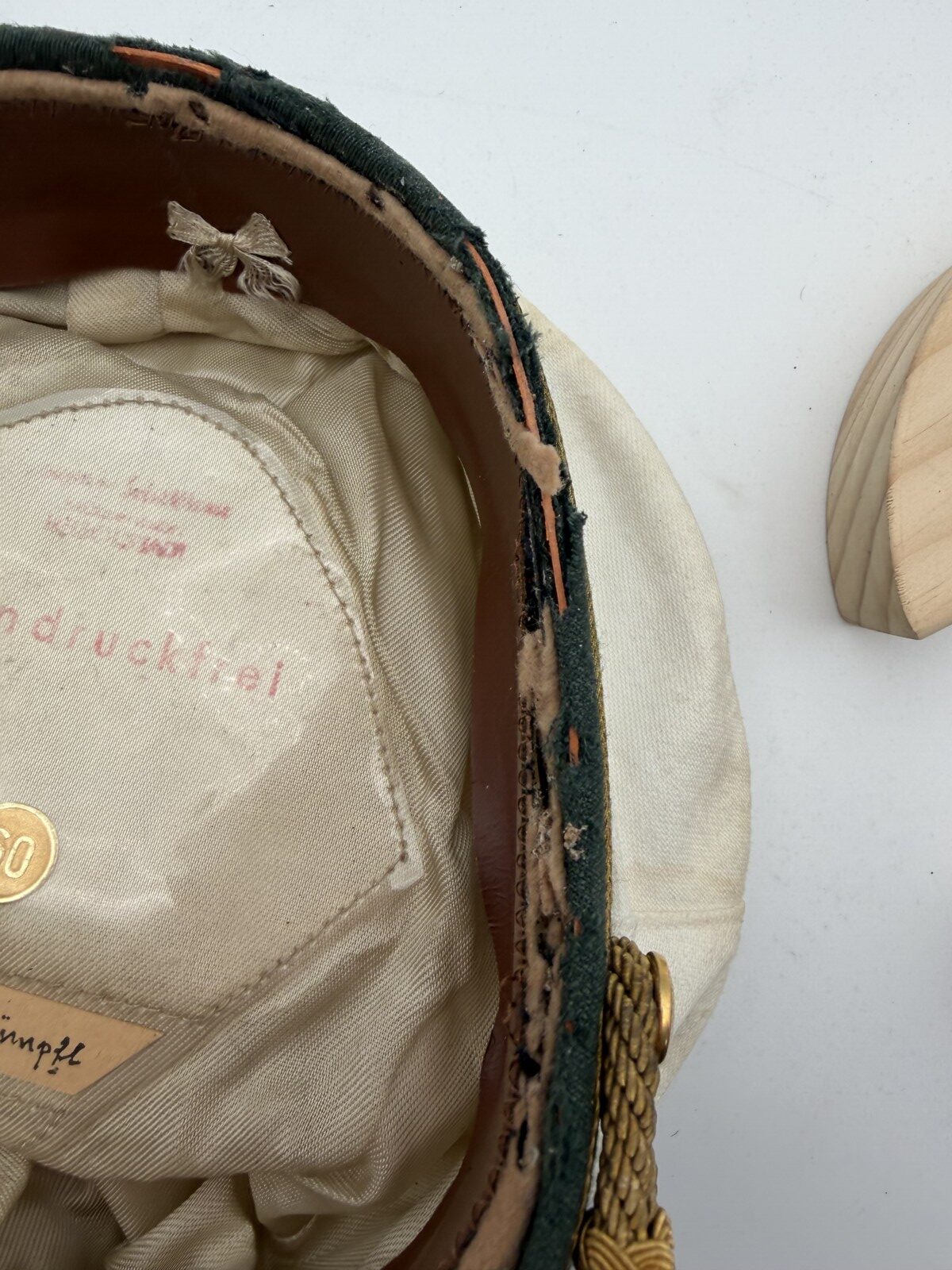
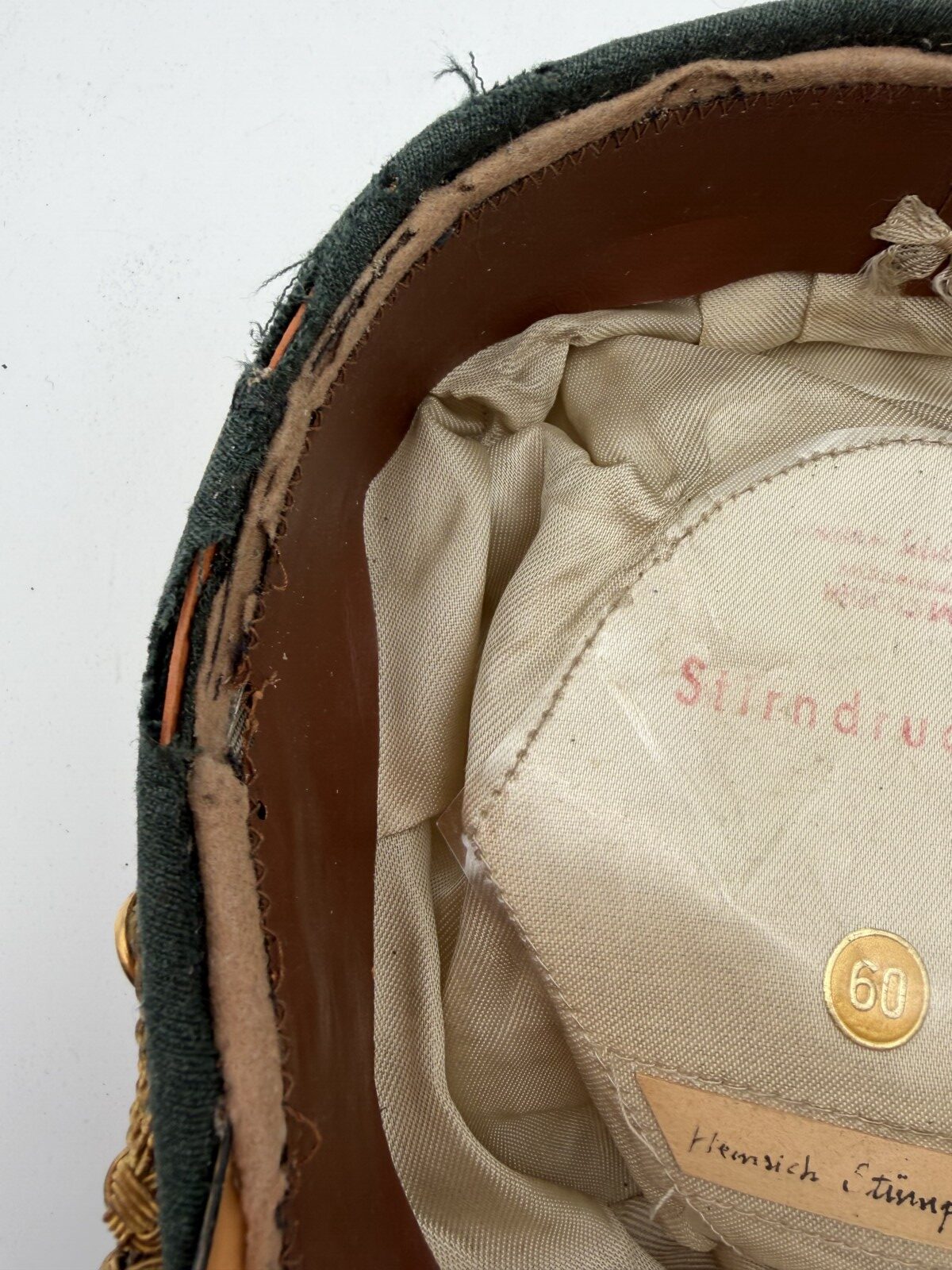
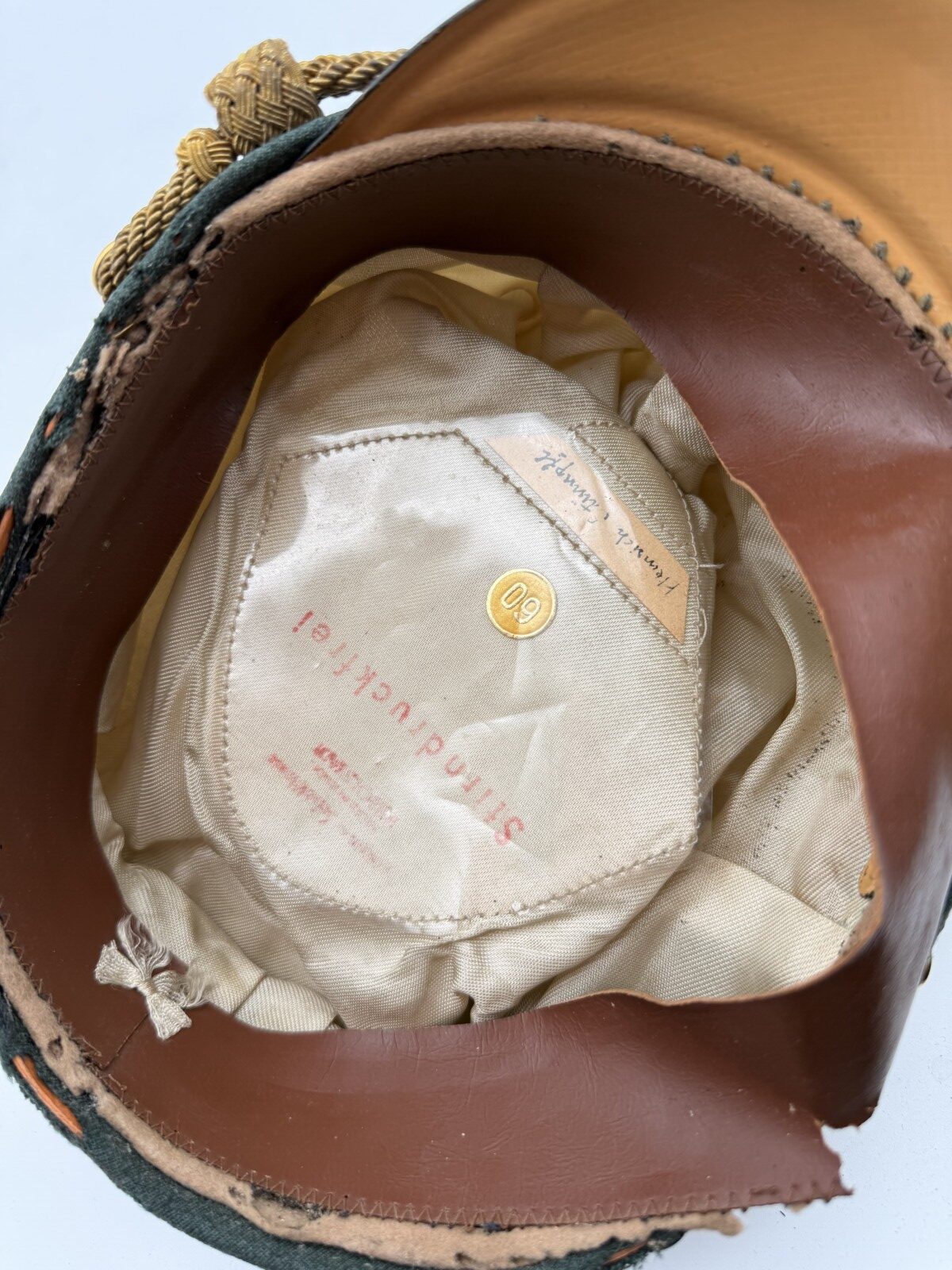
Exceptional Heinrich Stümpfl White Summer Uniform ensemble comprising a directly named Heer Generalleutnant visor cap with removable white summer cover and an accompanying white summer general officer’s tunic configured for exactly the rank of Generalleutnant.
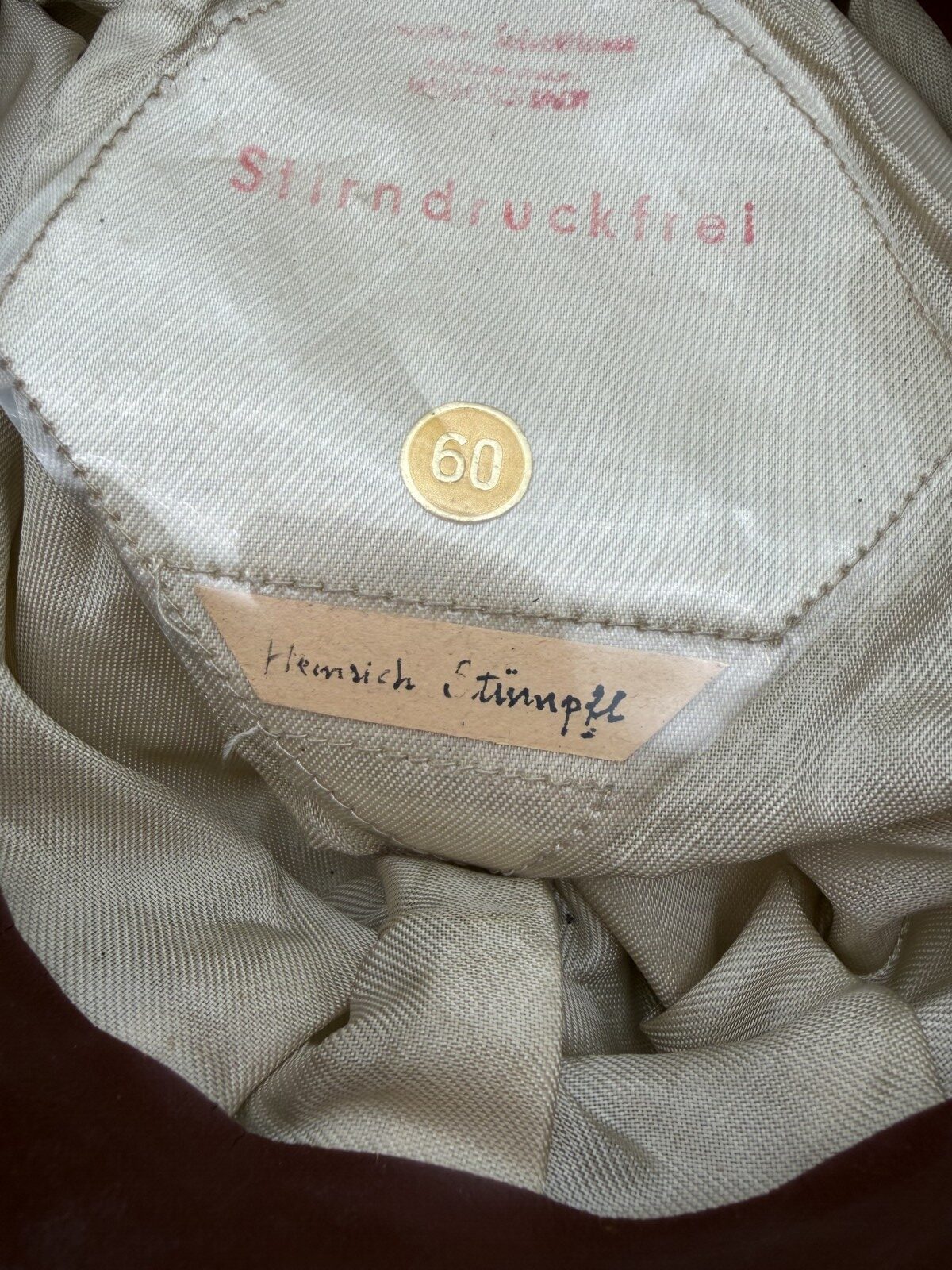
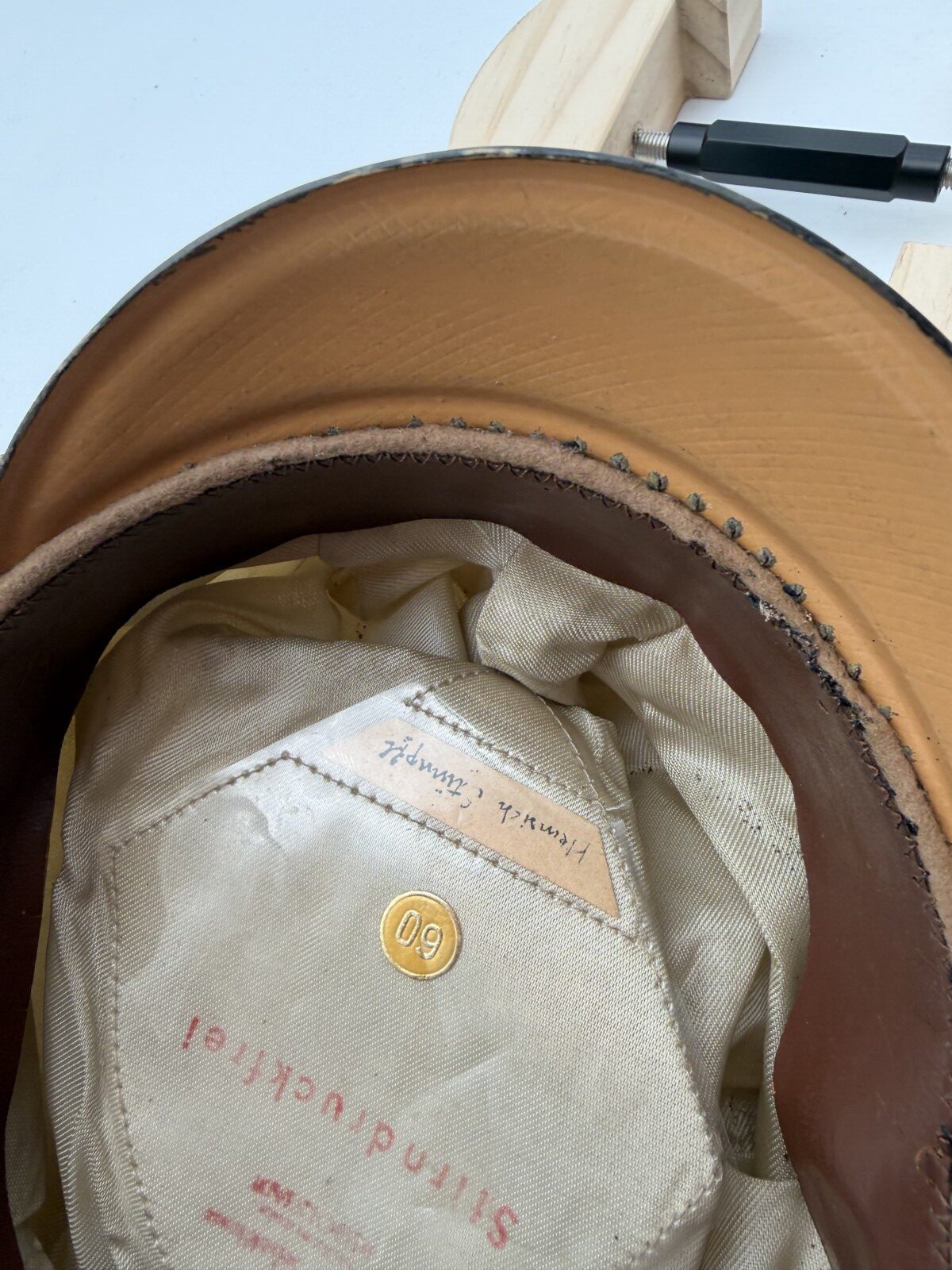
The cap retains an original handwritten ownership label reading “Heinrich Stümpfl”, together with a size 60 disc, gilt general-officer insignia, gold cords and removable white summer cover.
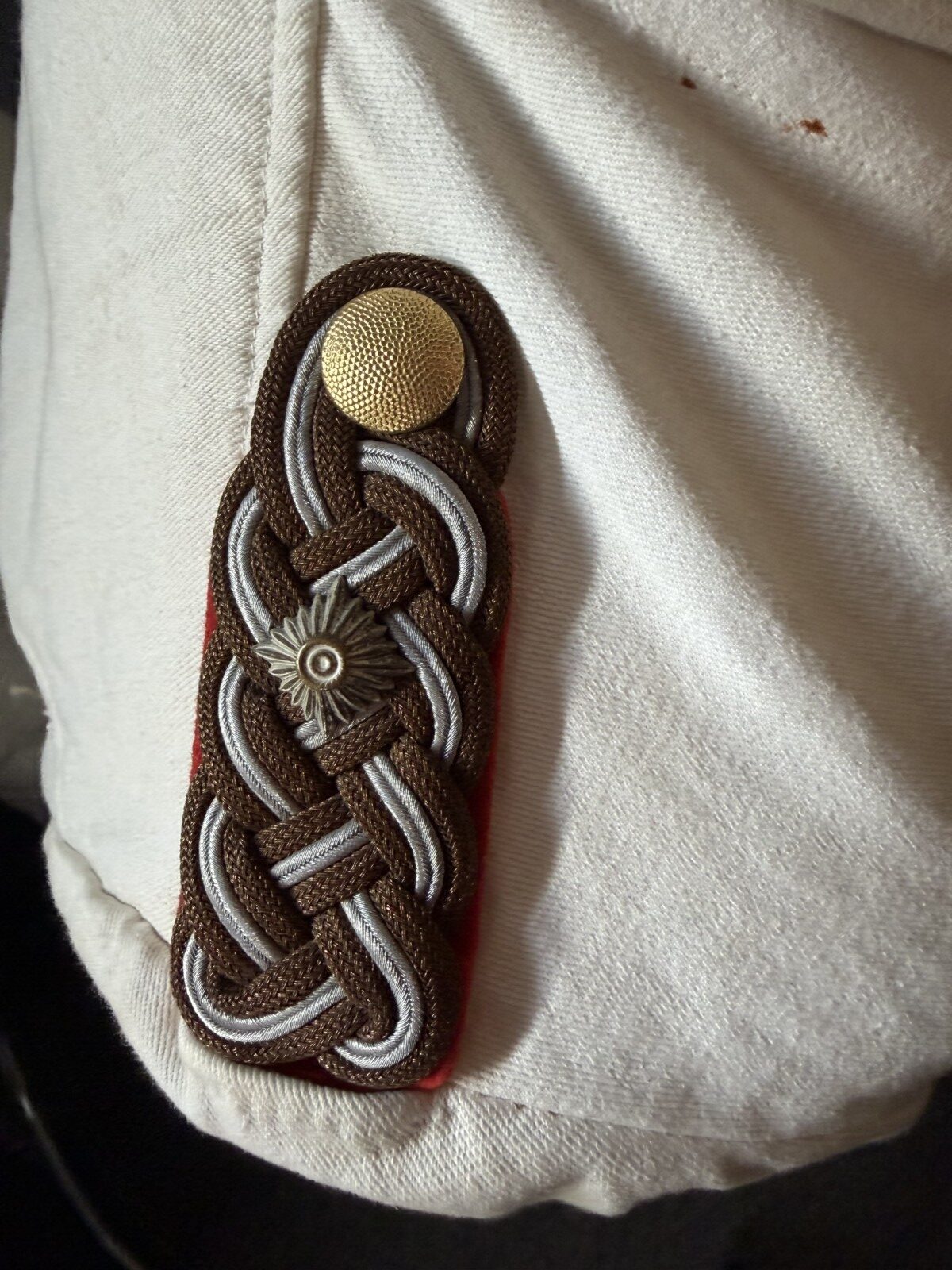
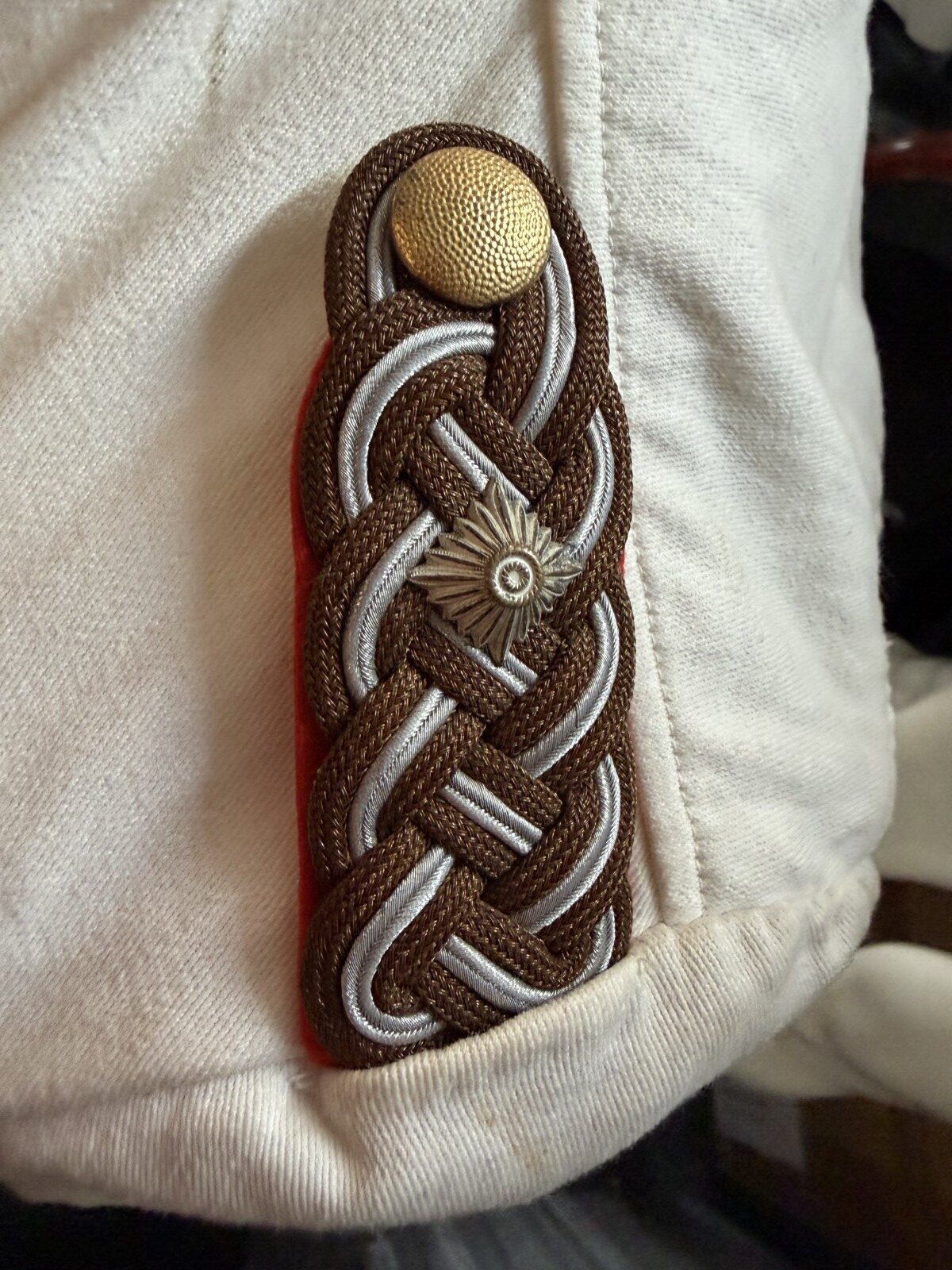
The matching tunic features removable gilt Heer breast eagle and buttons together with magnificent gold-and-silver general-officer shoulder boards on red underlay. Each shoulder board carries one silver rank star, identifying Generalleutnant rank.
Archival records confirm that Heinrich Stümpfl became a character Generalleutnant on 1 April 1939, received full promotion to Generalleutnant on 1 June 1940, and served as Stadtkommandant von Wien — Commandant of Vienna.
This Heinrich Stümpfl White Summer Uniform is an unusually important surviving German Army general-officer ensemble from the Second World War.
Rather than presenting as an anonymous general’s uniform, the group contains a visor cap directly bearing the handwritten name Heinrich Stümpfl.
That attribution corresponds with a documented German Generalleutnant whose wartime rank perfectly matches the accompanying white tunic.
The Austrian State Archives preserves Stümpfl’s personal military estate under AT-OeStA/KA NL 1399. Its catalogue records his career, personal documents and photographs, giving this uniform unusually strong possibilities for continued provenance research.
Collectors can compare another documented named Heer general’s visor within the Nordmenn collection here: Original Heer Generalmajor Parade Visor Cap – Nordmenn
That internal comparison demonstrates how important direct officer attribution becomes when assessing senior Heer headgear.
The visor cap provides the strongest direct provenance within the ensemble.
Inside the cap is a handwritten ownership strip that reads:
Heinrich Stümpfl
A separate gilt size disc reads:
60
This combination is particularly compelling because Heinrich Stümpfl was a genuine Generalleutnant and senior Wehrmacht officer.
The Austrian archival record confirms that Stümpfl was born on 18 December 1884, became Generalmajor in 1934, served as Stadtkommandant von Wien from 1 August 1938, received the character of Generalleutnant on 1 April 1939 and full Generalleutnant rank on 1 June 1940.
Therefore, the rank, period and name all agree.
The cap itself displays the elaborate fittings expected of a Heer general officer.
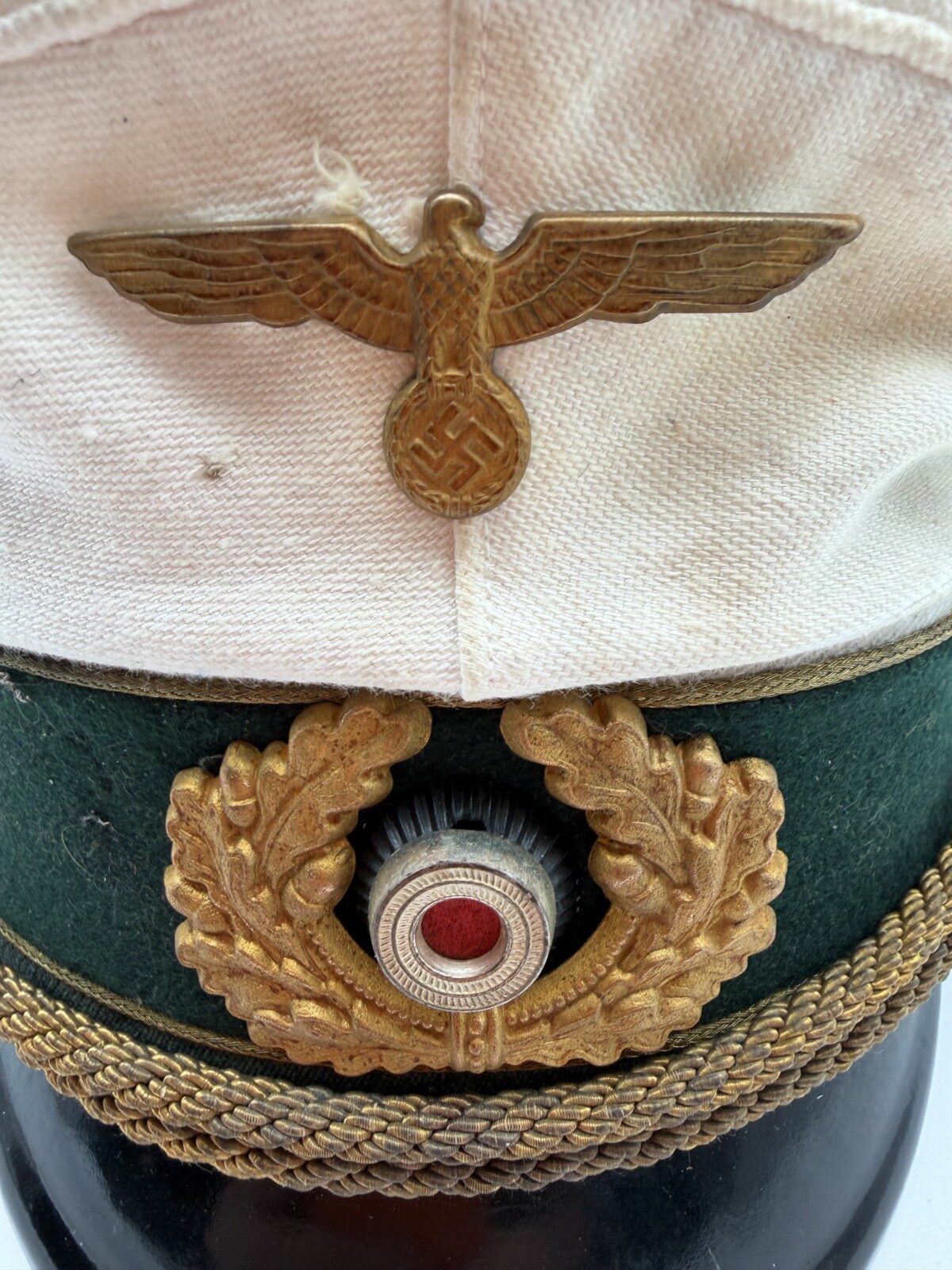
It retains a dark bottle-green centre band, gilt national eagle, large gilt oak-leaf wreath and cockade, gold general-officer cords and gilt side buttons.
The black visor remains highly presentable.
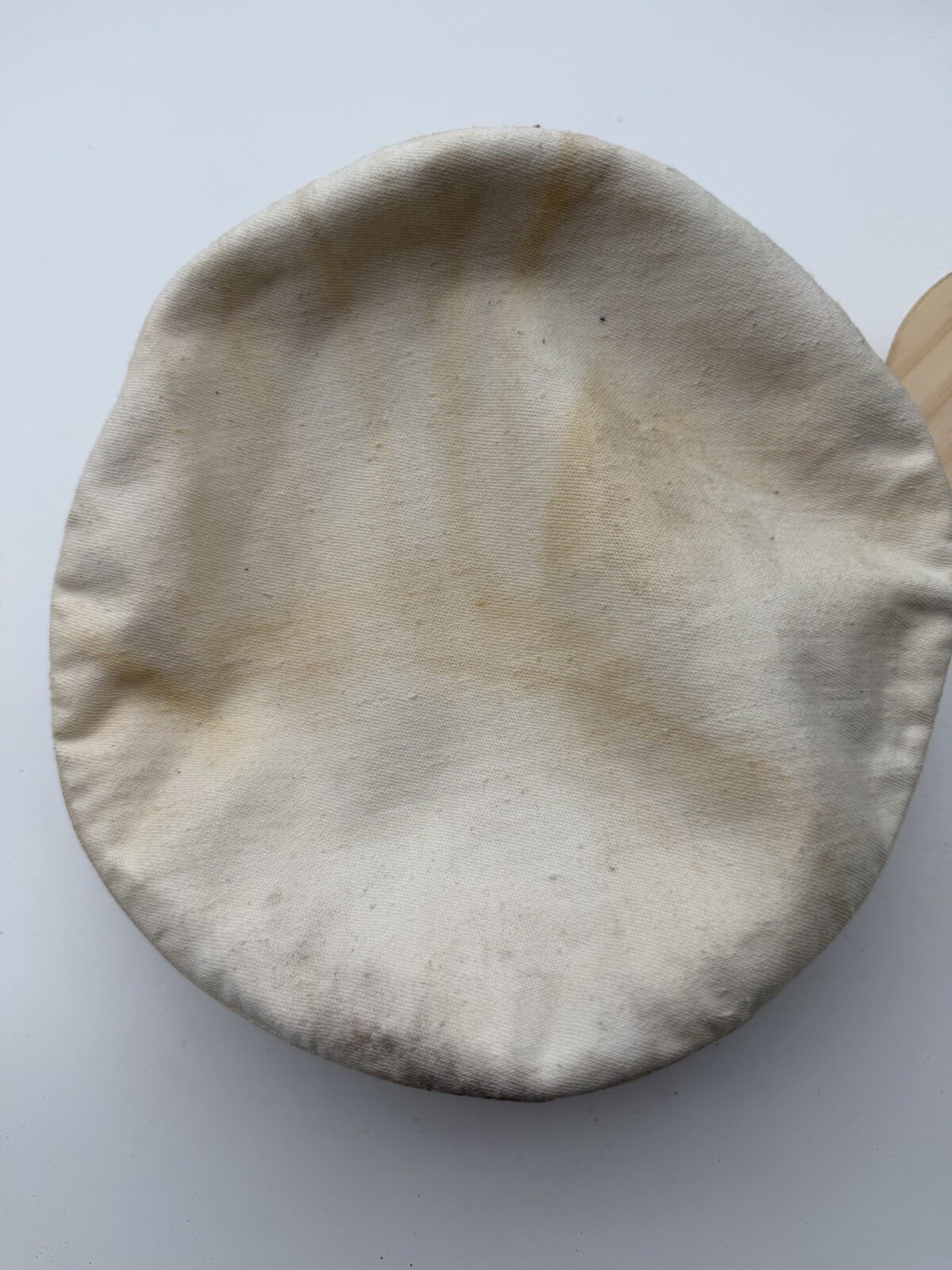
Most importantly, the cap also retains its removable white summer cover.
When fitted, this white crown transforms the cap into the distinctive summer configuration seen in the principal catalogue photograph.
Placed with the white tunic, the visual relationship is exceptionally strong.
The surviving white cap cover is an important element of this group.
Its cloth has naturally mellowed from bright white toward an aged cream tone. Light staining and storage marks remain visible.
These signs should remain untouched.
The cover should not be bleached, aggressively cleaned or restored.
Its survival allows the cap to be displayed precisely as part of the Generalleutnant’s white summer uniform.
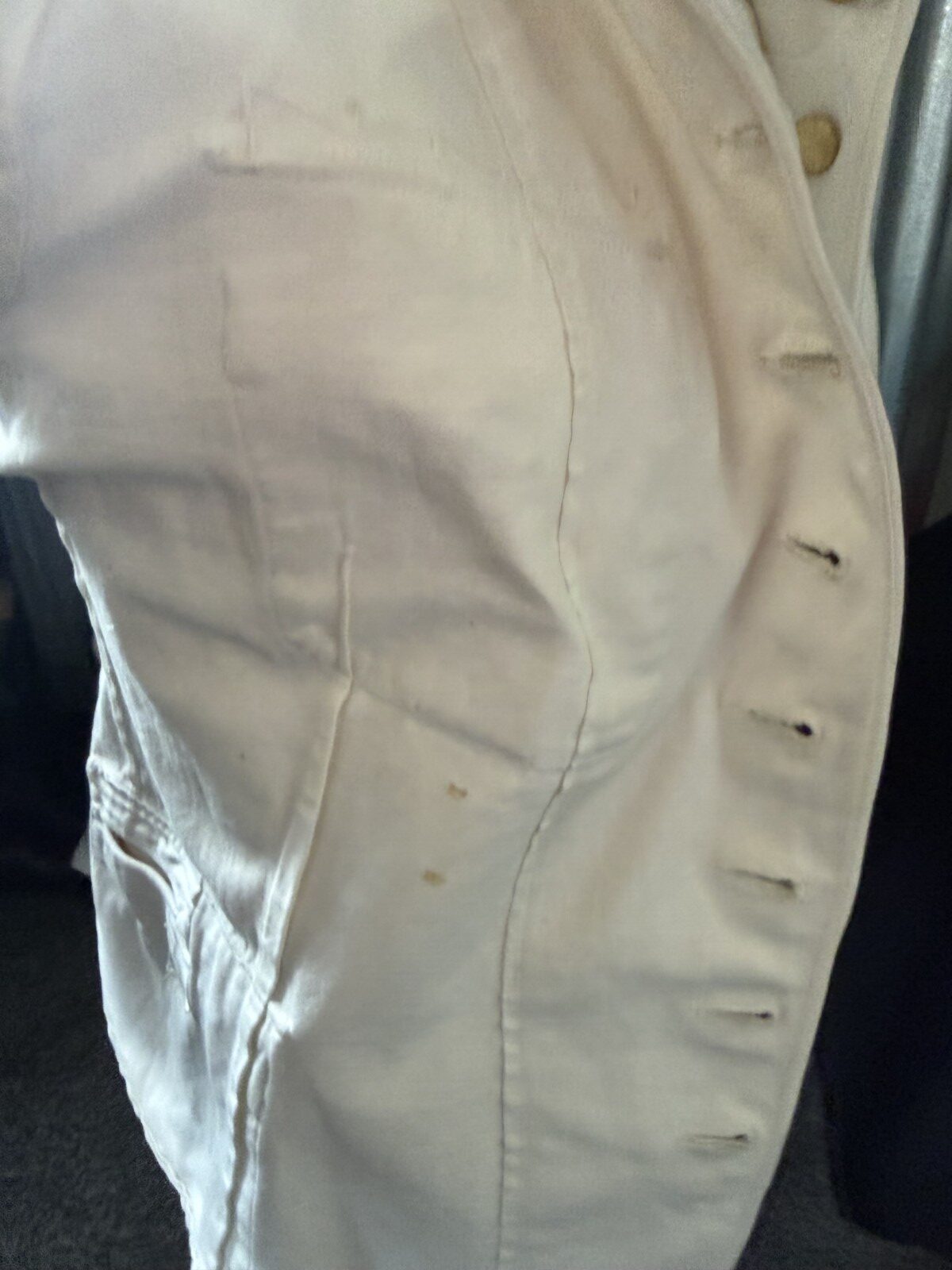
The accompanying tunic is a high-quality Heer white summer tunic for a general officer.
Its construction uses washable white cloth with removable metal insignia and fittings.
That arrangement was practical because the wearer could remove the metallic components before laundering the garment.
A documented Generalleutnant Richard Satow summer tunic uses the same fundamental system: removable gilt breast eagle, detachable gilt buttons, slip-on general’s shoulder boards and no collar tabs.
For a direct specialist comparison, see: Ratisbon’s – Generalleutnant Richard Satow White Summer Tunic
The shoulder boards are particularly important.
They employ the elaborate interwoven braid used for Heer general officers, combining metallic gold and silver elements over a vivid red cloth underlay.
Each board carries one silver rank star.
That configuration identifies:
This is precisely the wartime rank held by Heinrich Stümpfl.
Therefore, the tunic does not merely belong to the broad category of German general-officer clothing. It is configured for exactly the rank of the officer named inside the accompanying cap.
That correspondence materially strengthens the ensemble attribution.
A large gilt metal Heer eagle appears above the right breast pocket.
The eagle retains an attractive aged gold finish and strong detailing.
Its detachable construction is appropriate to a washable white summer tunic.
The insignia should remain unpolished.
Removing the old surface patina would diminish both appearance and historical integrity.
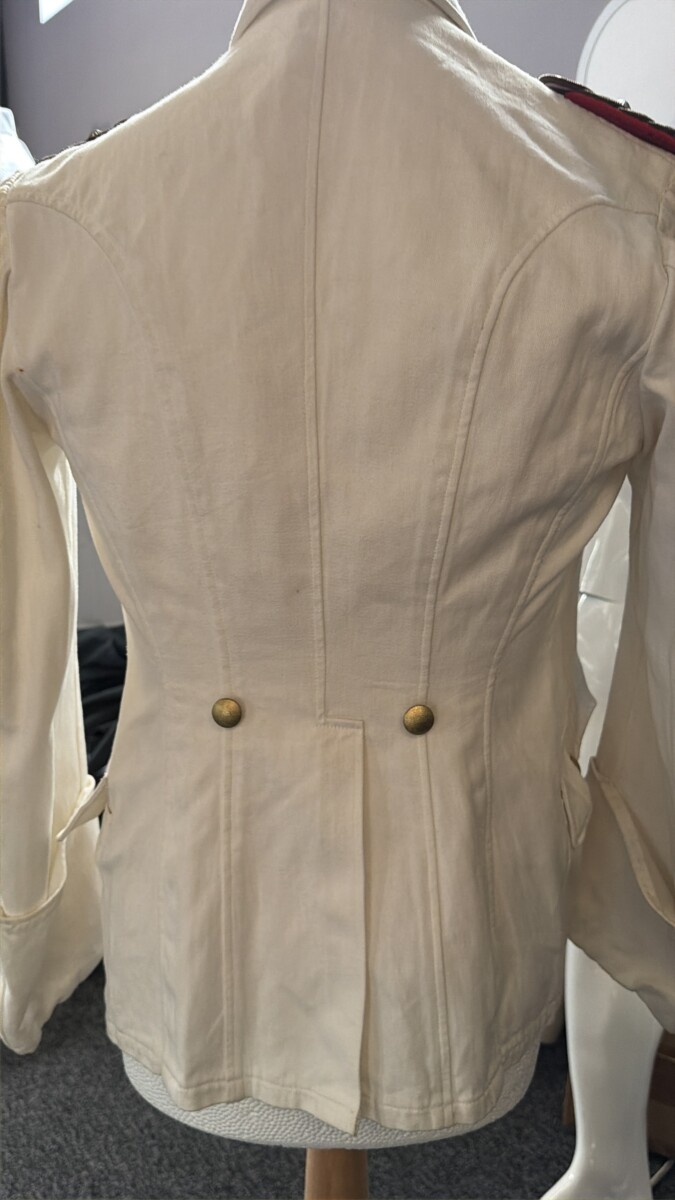
The tunic carries gilt pebbled buttons down the front and on the pocket flaps, with further buttons at the rear waist.
The photographs also show the removable fixing arrangements used on the garment.
This construction agrees closely with documented original Heer white summer tunics. Ratisbon’s specifically notes the use of easily removable insignia and buttons on comparable examples so that the tunic could be washed.
The absence of conventional general-officer collar patches is not a missing component.
This particular white summer tunic pattern was worn without the normal field-grey general’s collar tabs.
The documented Richard Satow example likewise has no collar tabs, and the specialist description specifically identifies this as correct for the garment type.
That point deserves inclusion in the product listing because collectors unfamiliar with summer uniforms sometimes mistakenly assume that the collar insignia has been removed.
The tunic displays attractive private-purchase quality tailoring.
Two pleated breast pockets dominate the front. Both retain pointed pocket flaps and gilt buttons.
The long front closure gives the tunic its characteristic summer-service appearance.
At the rear, pronounced shaped seams draw the garment into the waist before opening into the lower skirt. Two gilt buttons accentuate the rear waist.
The shoulder area, sleeve construction and fitted back all indicate a garment designed for a specific wearer rather than a shapeless generic issue item.
The named owner significantly elevates the importance of this ensemble.
Heinrich Stümpfl followed a long military career that began before the First World War.
The Austrian State Archives records his progression through the General Staff and senior command structure. He became Generalmajor on 20 January 1934 and subsequently entered Wehrmacht service following Austria’s incorporation into Germany.
On 1 August 1938, Stümpfl became Stadtkommandant von Wien.
His later career included:
1 April 1939 — Charakter als Generalleutnant
1 June 1940 — Generalleutnant
30 June 1944 — Kommandeur der Kriegsgefangenen im Wehrkreis XVII
He remained in that final recorded position until March 1945.
The complete primary archival record is available from the Austrian State Archives: Austrian State Archives – Heinrich Stümpfl, NL 1399
The archival survival is an especially important selling point.
The Austrian State Archives holds Stümpfl’s military and civilian personal documentation as part of NL 1399. The material includes a Wehrpass, identification documents, wartime papers and additional records connected with his military career.
That creates an unusually promising research opportunity.
The logical next stage is to compare surviving wartime photographs of Stümpfl with this uniform, particularly photographs taken during his period as Commandant of Vienna.
A clear photograph showing Stümpfl wearing the same white summer configuration could substantially strengthen the already impressive attribution.
The provenance should be worded carefully.
The handwritten name inside provides tangible object-based provenance.
At present, the photographs do not show a separate Stümpfl ownership label inside the tunic.
However, the tunic is equipped specifically for Generalleutnant rank, which exactly corresponds with Stümpfl’s wartime rank.
Furthermore, the cap and tunic form a coherent white general-officer summer ensemble.
I would therefore catalogue the pair as a named Heinrich Stümpfl group, while retaining the distinction between the directly named cap and attributed matching tunic.
That wording is stronger academically than claiming unsupported direct naming on both garments.
The supplied photographs show numerous encouraging period characteristics.
The cap demonstrates quality general-officer construction, aged gilt insignia, appropriate gold cords, original-style interior finishing and an important handwritten ownership label.
The tunic likewise displays convincing white summer construction, detachable metal fittings, gilt general-officer eagle, removable buttons and high-grade Generalleutnant shoulder boards.
Its configuration corresponds with documented original Heer summer tunics.
Based upon the available photographs, I would describe the ensemble as:
The complete ensemble remains in good to very good original condition.
The visor cap retains excellent display character, while its white summer cover shows age toning, staining and natural signs of storage.
The gold fittings have developed attractive patina.
The tunic displays scattered period staining and age marks against the white cloth. Nevertheless, the garment remains structurally strong.
Its shoulder boards are exceptionally attractive.
Likewise, the gilt breast eagle and buttons remain well preserved.
These pieces should not be bleached, dry-cleaned aggressively, chemically brightened or polished.
The present age patina contributes substantially to their historical character.
Named general-officer material occupies one of the strongest areas of Wehrmacht uniform collecting.
This group combines several desirable elements in one ensemble: a documented Generalleutnant, directly named headgear, a removable white summer cap cover, a matching Generalleutnant white summer tunic, original gilt fittings and an extensive surviving national-archive record.
The Nordmenn collection already includes another important named German general’s cap, providing an excellent internal comparison for visitors interested in senior officer headgear.
Compare the Original Heer Generalmajor Parade Visor Cap at Nordmenn
Visitors can also browse the wider collection here:
Original Third Reich Uniforms – Nordmenn
Original Heer Generalmajor Parade Visor Cap – Nordmenn
Original Third Reich Uniforms – Nordmenn
These are current Nordmenn pages. The Uniforms category presently contains more than 100 related products.
Use the following external references naturally within the description:
Austrian State Archives – Heinrich Stümpfl NL 1399
Ratisbon’s – Heer General White Summer Tunic Reference
The first establishes Stümpfl historically through a national archival source. The second provides a highly relevant construction comparison for the removable insignia and no-collar-tab white summer tunic pattern.
Named owner: Generalleutnant Heinrich Stümpfl
Organisation: Wehrmacht Heer
Cap: General officer visor cap
Cap ownership: Directly named Heinrich Stümpfl
Cap size: 60
Summer configuration: Removable white crown cover
Tunic: White washable Heer summer tunic
Tunic attribution: Accompanying garment attributed to Stümpfl
Rank represented: Generalleutnant
Shoulder boards: Gold/silver general braid with red underlay and one silver star
Breast eagle: Removable gilt Heer eagle
Buttons: Removable gilt type
Collar tabs: None — correct for this white summer pattern
Known posting: Stadtkommandant von Wien
Full Generalleutnant promotion: 1 June 1940
Archival holding: Austrian State Archives, NL 1399
Condition: Good to very good, with genuine age and service/storage marks