
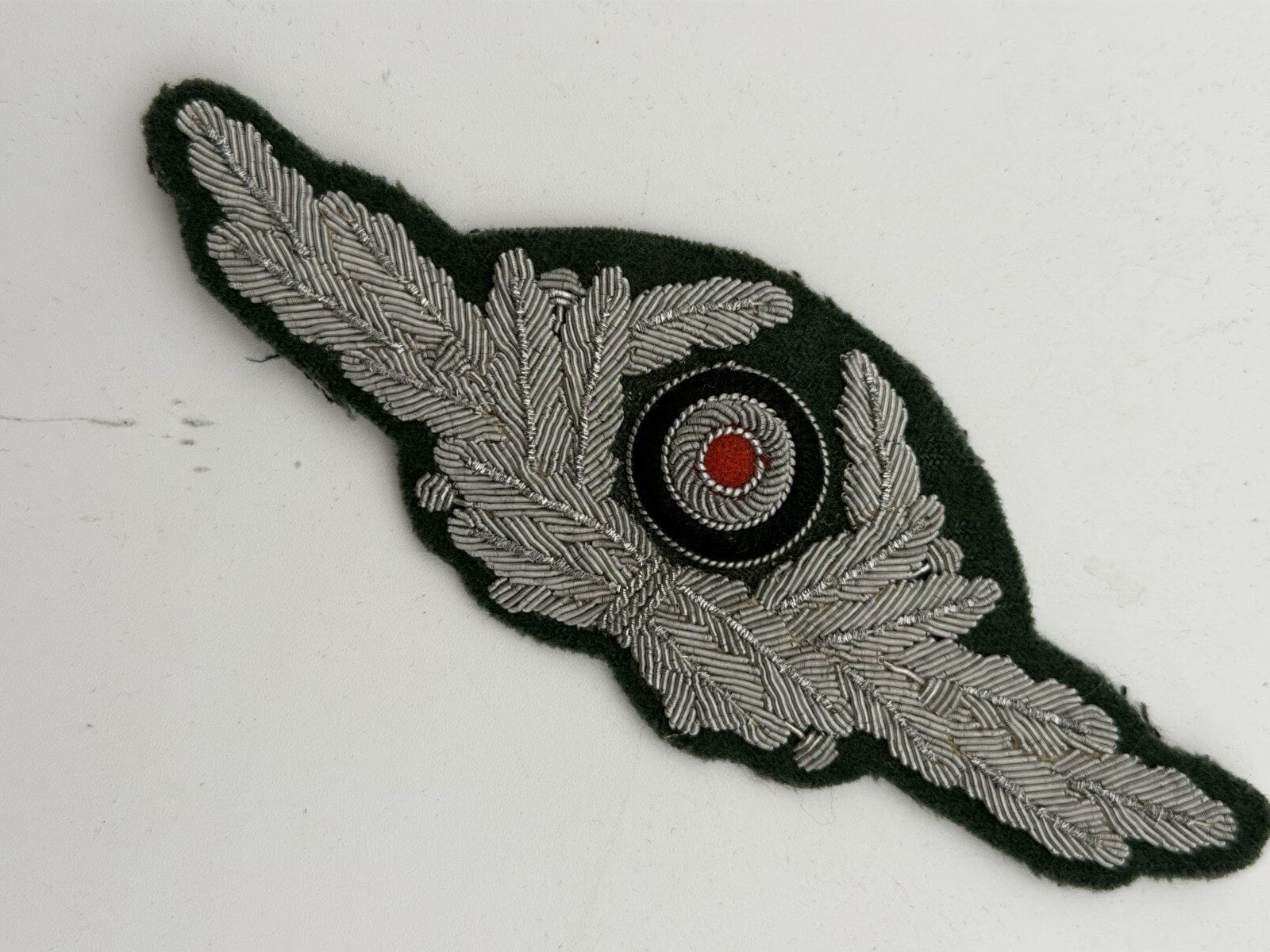
This original Luftwaffe Officer Cap Wreath features finely worked silver-coloured bullion embroidery surrounding a black, white and red national cockade. Luftwaffe commissioned officers wore this winged wreath on the centre band of the Schirmmütze or peaked service cap.
€ 200
1 in stock
This original Luftwaffe Officer Cap Wreath features finely worked silver-coloured bullion embroidery surrounding a black, white and red national cockade. Luftwaffe commissioned officers wore this winged wreath on the centre band of the Schirmmütze or peaked service cap.
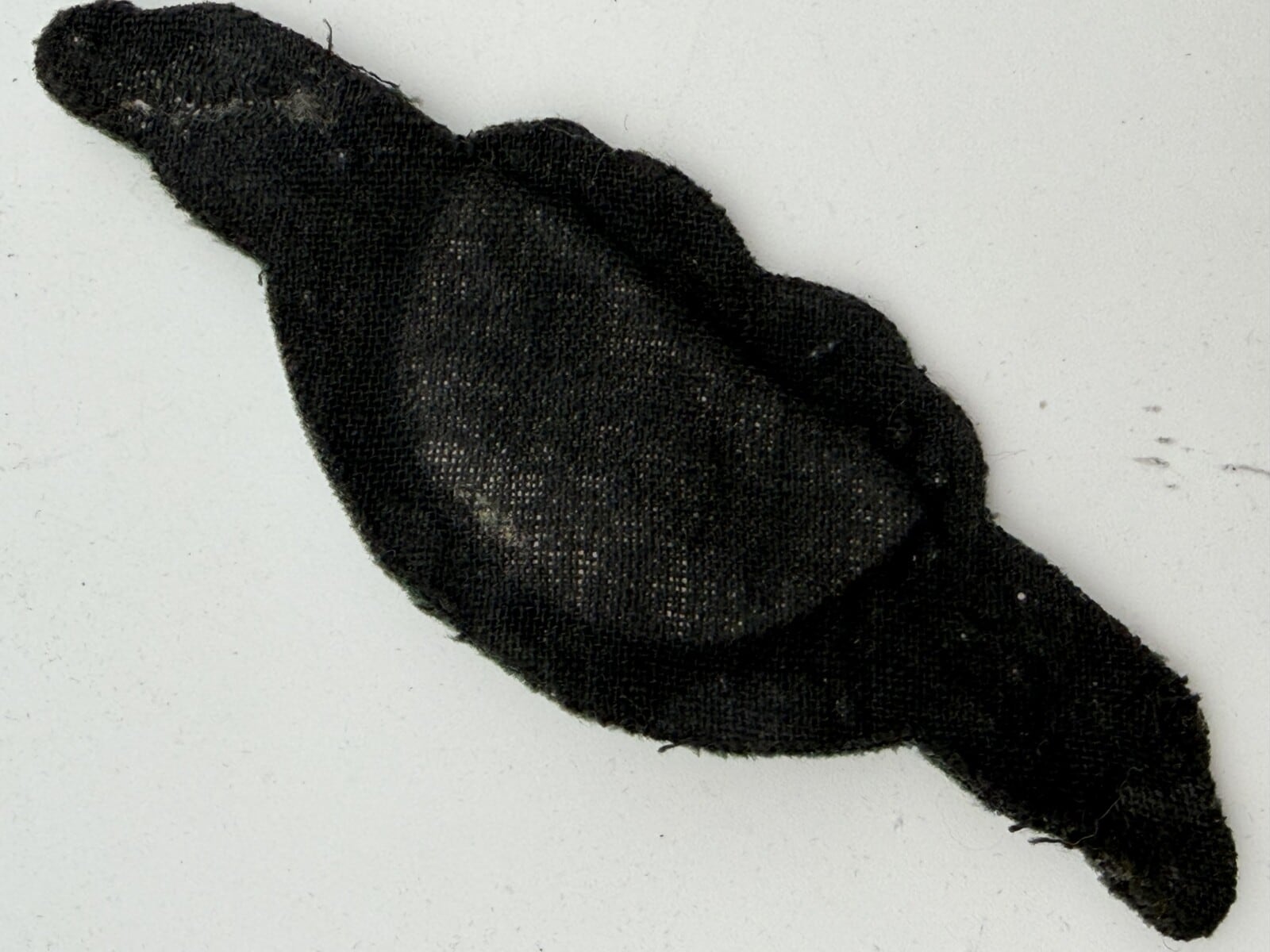
The insignia remains on its shaped dark green wool foundation. Its reverse displays the original woven backing, age-related marks and evidence of removal from a cap. These features form part of its historical construction and should not be described as damage.
Skilled embroiderers created the winged oak-leaf design from several types of aluminium bullion. Broad coiled strips form the leaves, while finer twisted wire defines their veins and outlines. This combination produces the raised, three-dimensional appearance associated with privately purchased officer-quality cap insignia.
A national cockade occupies the centre. It retains the correct arrangement of:
Dark green wool supports the entire design. The colour allowed the backing to blend with the cap band while providing a stable foundation for the heavy metallic embroidery.
The Nordmenn Luftwaffe Officer White Summer Visor Cap provides a useful complete-cap comparison. Its surviving officer insignia shows the same combination of silver bullion, a national cockade and a winged oak-leaf wreath.
The Luftwaffe used a distinctive winged wreath and cockade on its peaked caps. The extended oak-leaf sprays gave the insignia a wing-like appearance that separated it from the smaller Heer officer wreath.
Commissioned officers below General rank normally wore silver-coloured aluminium insignia, piping and cap cords. General officers used gold-coloured versions. Therefore, the silver bullion construction identifies this example as an officer pattern rather than a General officer pattern.
Private-purchase uniform suppliers offered officers several grades of insignia. Expensive examples employed dense hand embroidery, varied bullion wire and carefully shaped wool foundations. Less costly versions used flatter machine embroidery or stamped metal components.
Collectors can compare the construction with this documented Luftwaffe officer’s visor cockade and wreath. Reproduction examples also exist, including modern versions sold as Luftwaffe officer cap insignia, so the reverse construction remains particularly important during authentication.
The supplied photographs show several characteristics consistent with period manufacture:
The reverse supports the assessment particularly well. Its woven foundation, old stitching impressions and uneven surface wear correspond with an insignia that once sat against a cap band. Modern reproductions often display cleaner machine stitching, synthetic thread or artificially uniform ageing.
No maker’s label or identifying mark appears in the photographs. This absence remains normal because makers rarely marked hand-embroidered cap wreaths individually.
Based on the photographs, the insignia presents as a convincing original pre-1945 example. Nevertheless, a final sales guarantee should follow physical examination under magnification and ultraviolet light. No UV-test result currently accompanies the item.
A search of Helmut Weitze Militaria was completed for additional market and construction comparisons. No exact loose example matching this wreath appeared in the indexed current stock, although Weitze’s original Luftwaffe visor caps show comparable silver bullion officer insignia.
The Luftwaffe Officer Cap Wreath remains complete and retains strong definition throughout the oak leaves, wings and central cockade. The red centre remains clearly visible, while the black and silver rings retain good contrast.
Natural oxidation has muted the bullion from its original bright silver appearance. Minor loose fibres, surface dust and handling wear can be seen around the wool perimeter. The reverse shows age-related marks and evidence of former cap attachment.
The insignia has been uniformly removed from its original headgear. Its cut backing and exposed reverse do not represent accidental damage. No obvious replacement embroidery, aggressive cleaning or modern repair appears in the photographs.
The item should remain uncleaned. Polishing could remove the natural patina and disturb the fine bullion coils.
Loose officer-quality cap insignia offer collectors an opportunity to study embroidery techniques that complete caps often conceal. This example has particularly attractive visual presence because the bullion oak leaves remain full and the national cockade retains its colours.
Comparable original officer wreaths appear around £85 at specialist dealers, while stronger examples receive auction estimates approaching $200–$300. Modern reproductions sell at a fraction of those prices and must not influence original-period valuations.
The combination of hand embroidery, complete cockade, substantial size and honest cap-removal evidence supports an estimated European retail range of €150–€275.
That price fits the current specialist market while allowing for the absence of a named maker, original cap or documented provenance.
Collectors interested in related material can also view the Nordmenn Luftwaffe Radio Operator Badge or browse the complete Nordmenn original uniform collection.
No. Heer officer wreaths usually have a smaller, compact oval form. This example displays the broad winged oak-leaf arrangement associated with Luftwaffe peaked caps.
No. Luftwaffe General officers normally wore gold-coloured cap insignia. The silver bullion identifies an officer below General rank.
No. The reverse records normal removal from its original cap. The remaining backing, old attachment marks and exposed stitching form part of the object’s history.
The aluminium bullion has developed natural oxidation and age toning. Enough silver colour survives to show the original appearance, and cleaning is not recommended.
The visible materials and construction support a pre-1945 attribution. Physical inspection, magnification and ultraviolet testing should precede a final commercial guarantee.