
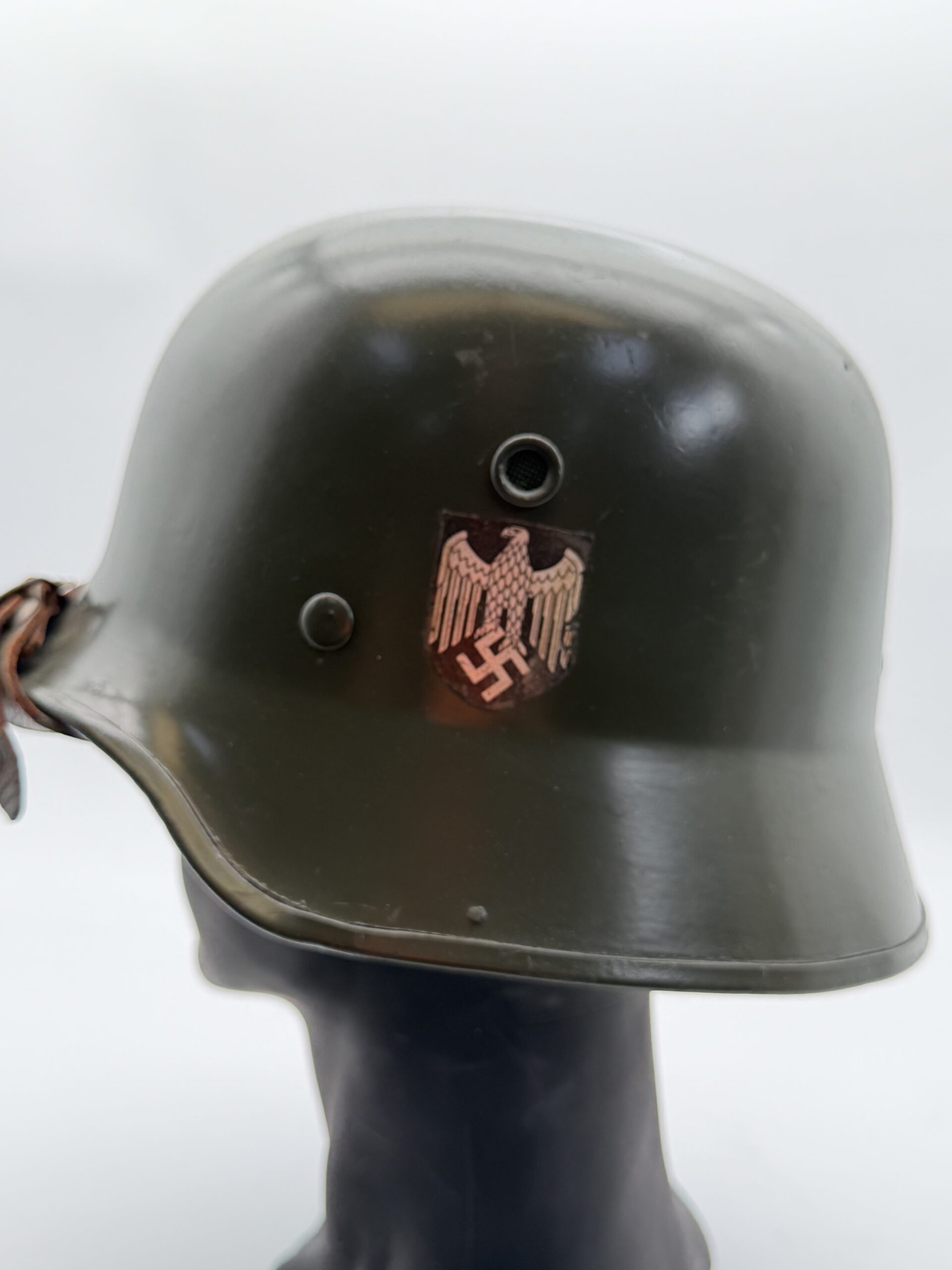
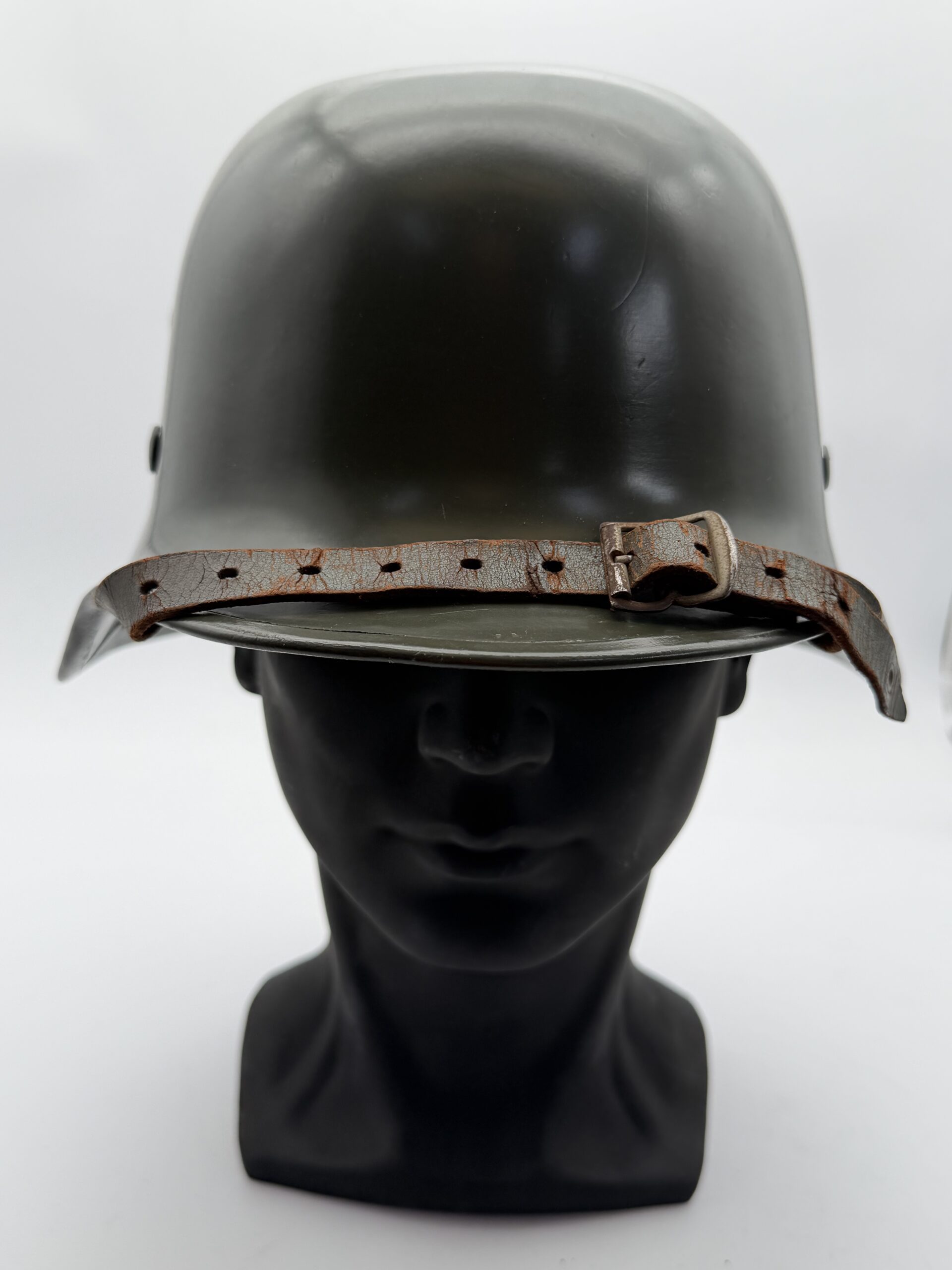
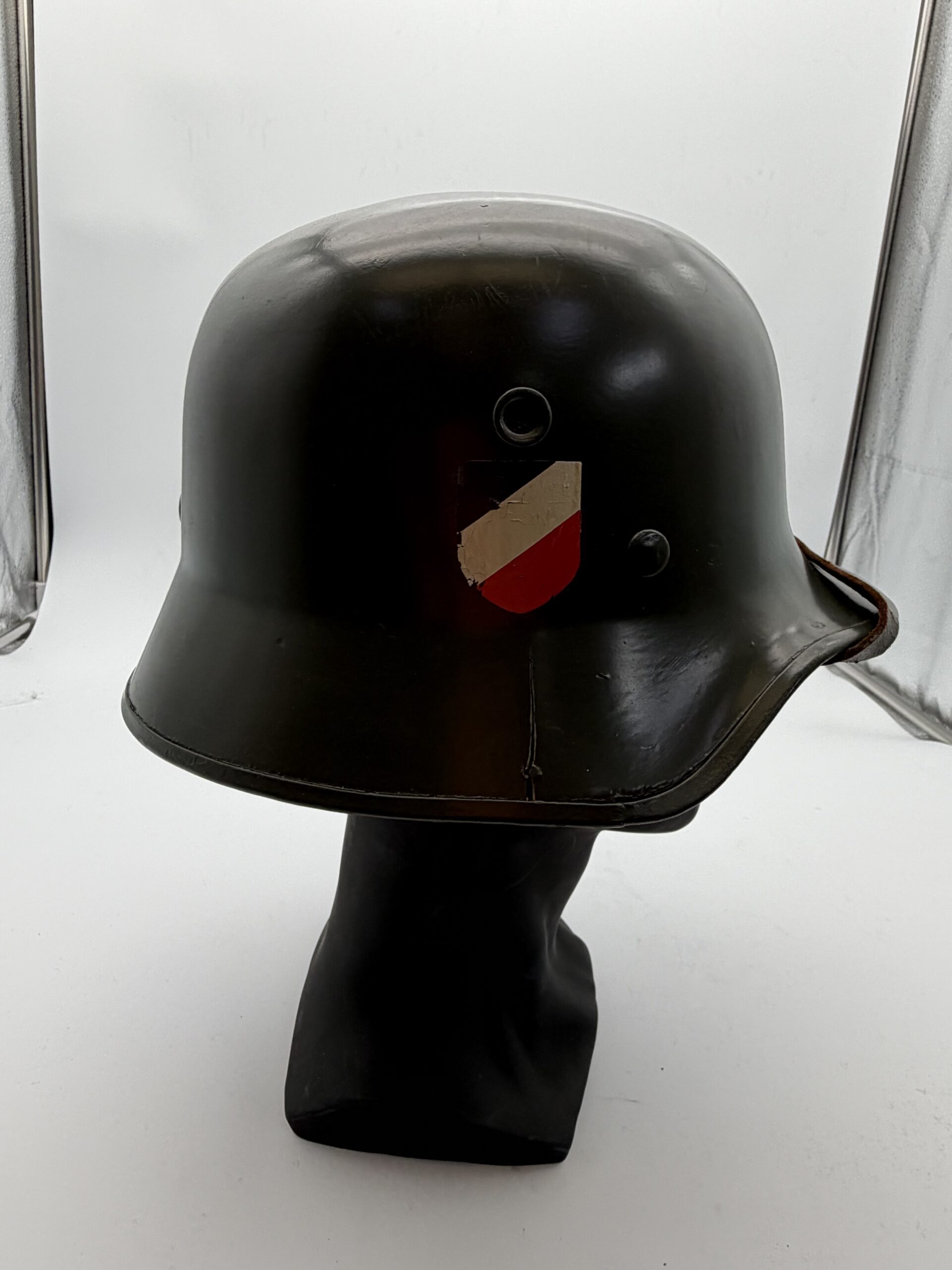
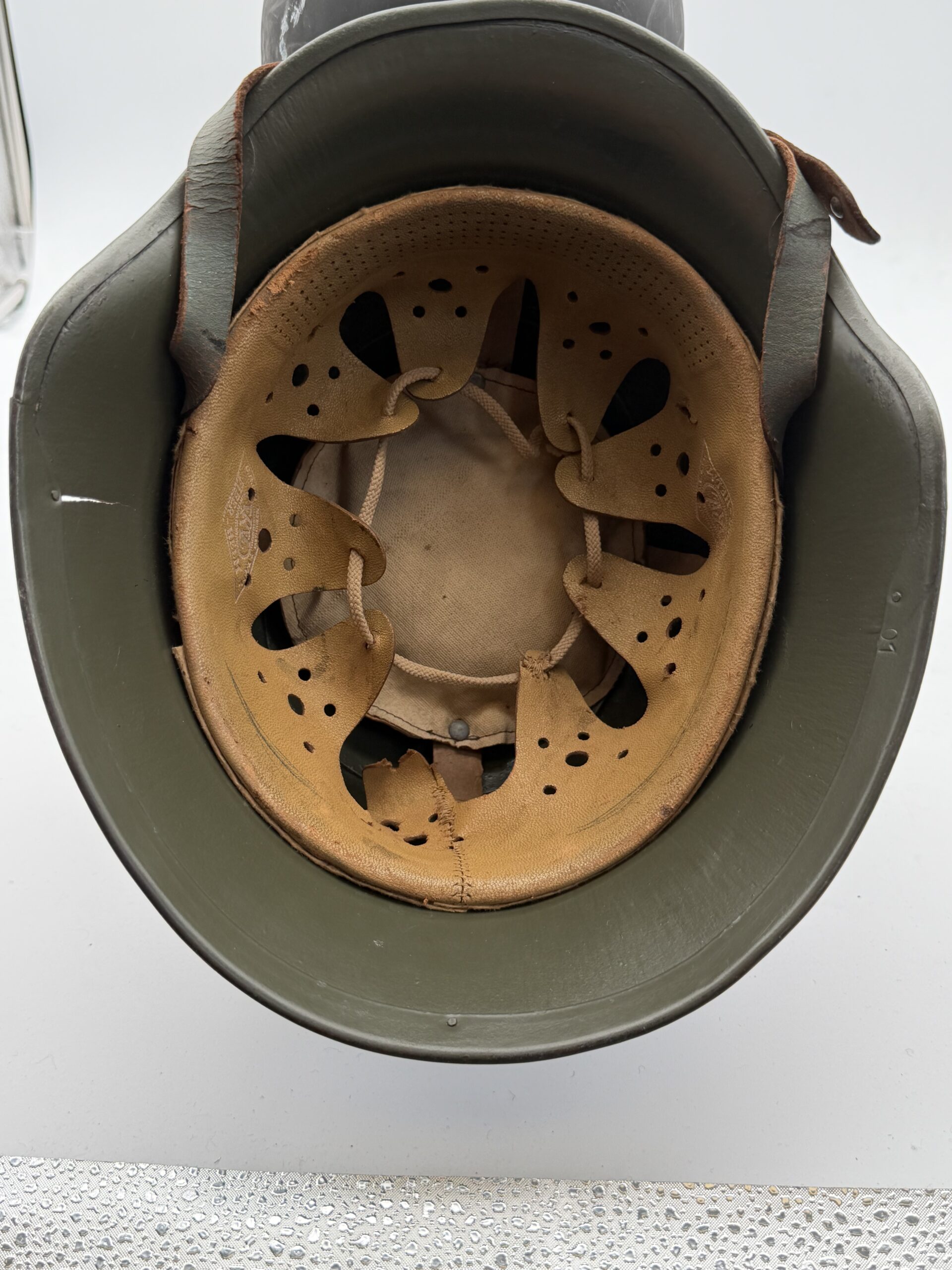
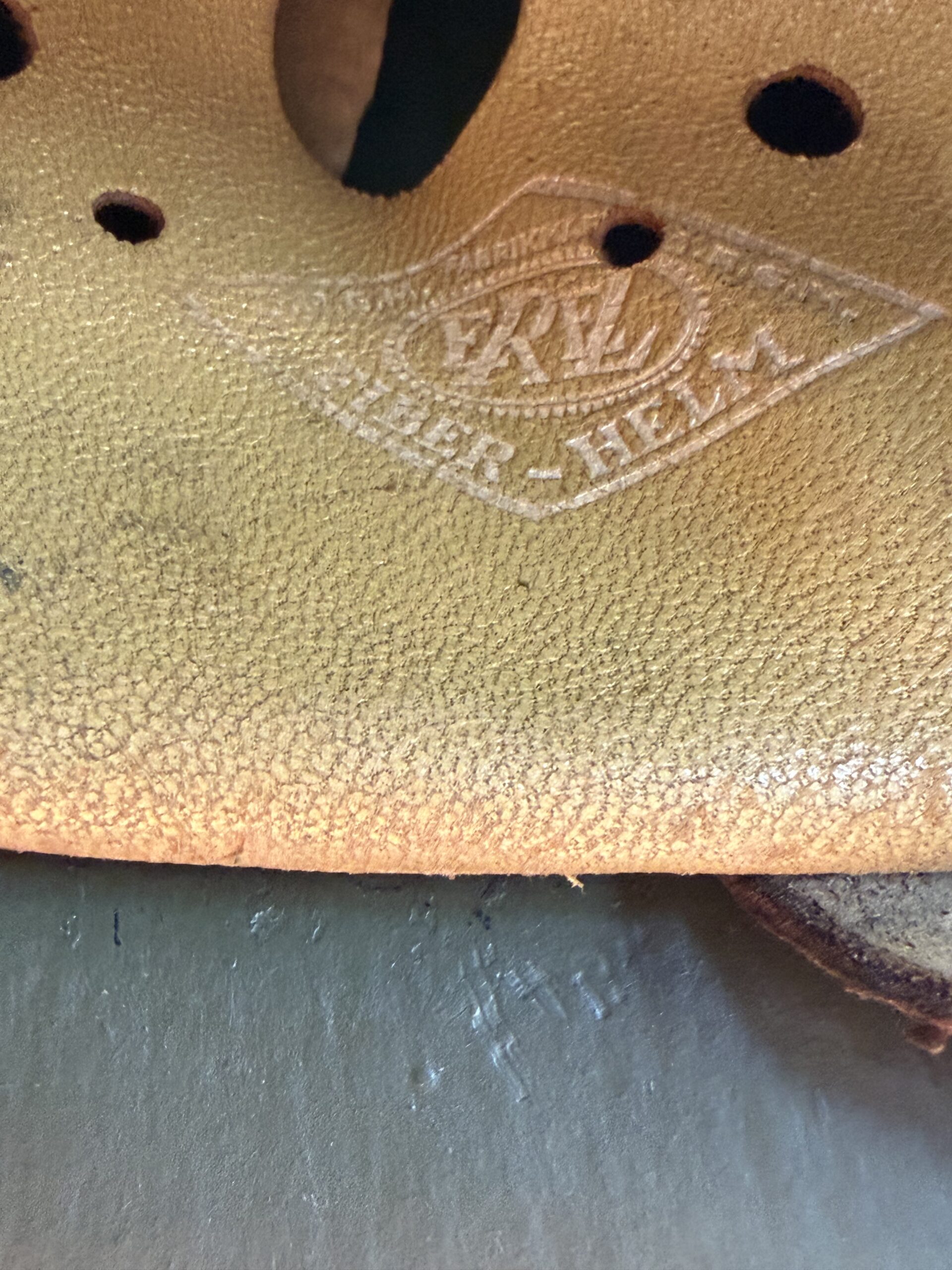
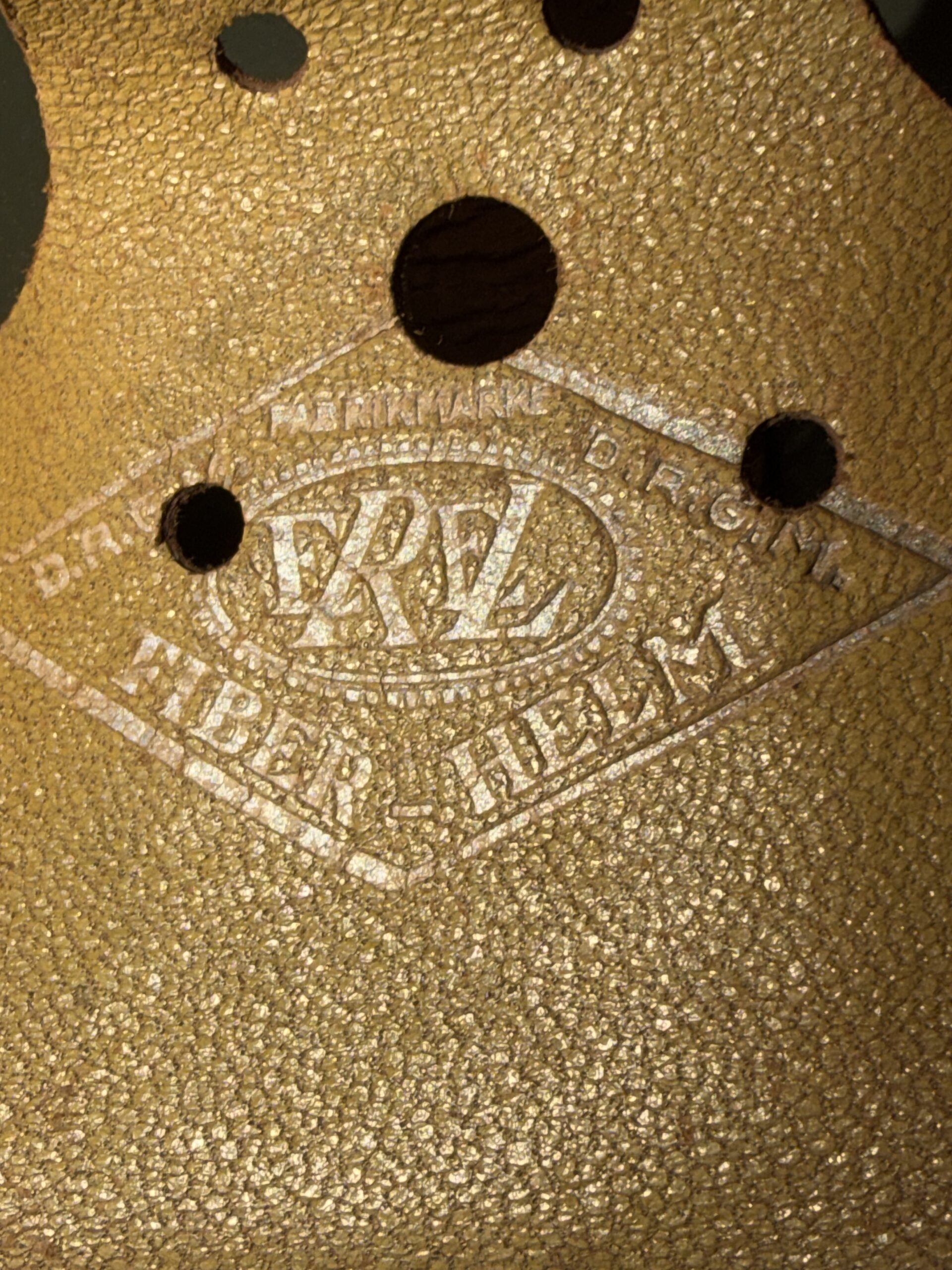
The Original Heer General’s Fibre Parade Helmet ranks among the rarest examples of German ceremonial military headgear from the Third Reich. EREL (Robert Lubstein, Berlin) manufactured this exceptional helmet using premium materials and outstanding craftsmanship. Today, the helmet retains its original Heer decals, rare double EREL embossed liner markings, complete leather liner and original leather chinstrap. Together, these features create a superb museum-quality example.
€ 4.500
1 in stock
The Original Heer General’s Fibre Parade Helmet ranks among the rarest examples of German ceremonial military headgear from the Third Reich. EREL (Robert Lubstein, Berlin) manufactured this exceptional helmet using premium materials and outstanding craftsmanship. Today, the helmet retains its original Heer decals, rare double EREL embossed liner markings, complete leather liner and original leather chinstrap. Together, these features create a superb museum-quality example.
The German Army introduced the Original Heer General’s Fibre Parade Helmet for ceremonial wear. General Officers wore these helmets during state ceremonies, military reviews, diplomatic receptions and official parades. They never wore them in combat. Instead, they reserved them for occasions that demanded the highest standard of military dress.
EREL produced the shell from compressed vulcanised fibre rather than steel. This construction reduced weight while preserving the classic appearance of the Imperial German Pickelhaube. At the same time, it reflected the traditions and prestige of the German Army during the 1930s.
Advanced collectors actively seek original EREL parade helmets because they rarely appear on the market. The scarce double EREL liner embossing increases the historical importance of this example and adds significant collector appeal.
To learn more about related artefacts, visit our German Helmets, Heer General Visor Caps, German Army Uniforms, EREL Military Headwear, and Museum Collection pages. These articles provide additional historical context while strengthening the internal structure of our website.
For independent historical research, consult the collections of the Imperial War Museums, the Australian War Memorial, the Deutsches Historisches Museum, and the Bundesarchiv. Each institution preserves important material relating to German military uniforms and ceremonial equipment.
The German Army introduced the Original Heer General’s Fibre Parade Helmet as part of the full dress uniform for General Officers. The helmet symbolised authority, prestige and military tradition. General Officers wore it only during ceremonial duties and never on the battlefield.
They commonly wore the helmet during:
After the First World War, the German Army adopted the steel helmet for combat service. However, it retained the traditional parade helmet for ceremonial occasions. This decision preserved the visual heritage of the Imperial German Army while presenting a modern and disciplined image.
Manufacturers produced relatively few Original Heer General’s Fibre Parade Helmets. Many examples disappeared after 1945, while others suffered damage because compressed fibre is more fragile than steel. Consequently, collectors now regard surviving original examples as some of the most desirable pieces of German ceremonial headgear.
Readers interested in German military dress can also explore our German Parade Uniforms, Heer Uniform Insignia, General Officer Swords, German Military Decorations, and Wehrmacht Ceremonial Equipment pages. These related articles provide valuable historical background and strengthen our internal knowledge base.
Robert Lubstein, better known by the trade name EREL, built one of Germany’s most respected military tailoring companies. The firm supplied high-quality headwear to the Heer, Luftwaffe, Kriegsmarine, diplomatic service and several government organisations. Collectors continue to regard EREL products as the benchmark for German wartime military headwear.
This Original Heer General’s Fibre Parade Helmet displays the scarce double EREL embossed liner markings. Collectors encounter this variation far less frequently than the standard single embossing. Therefore, the double marking enhances both rarity and historical significance.
EREL combined skilled craftsmanship with premium materials. The company also maintained exceptionally high production standards. Those qualities explain why original EREL helmets continue to command strong prices at specialist auctions and remain highly sought after by advanced collectors.
To compare this helmet with similar examples, visit our EREL Heer Officer Visor Caps, German General Headgear, Third Reich Parade Headgear, and Museum Highlights pages. You can also consult the collections of the Imperial War Museums, Australian War Memorial, Deutsches Historisches Museum, and Bundesarchiv for additional historical research.
Explore related listings: Helmets.