
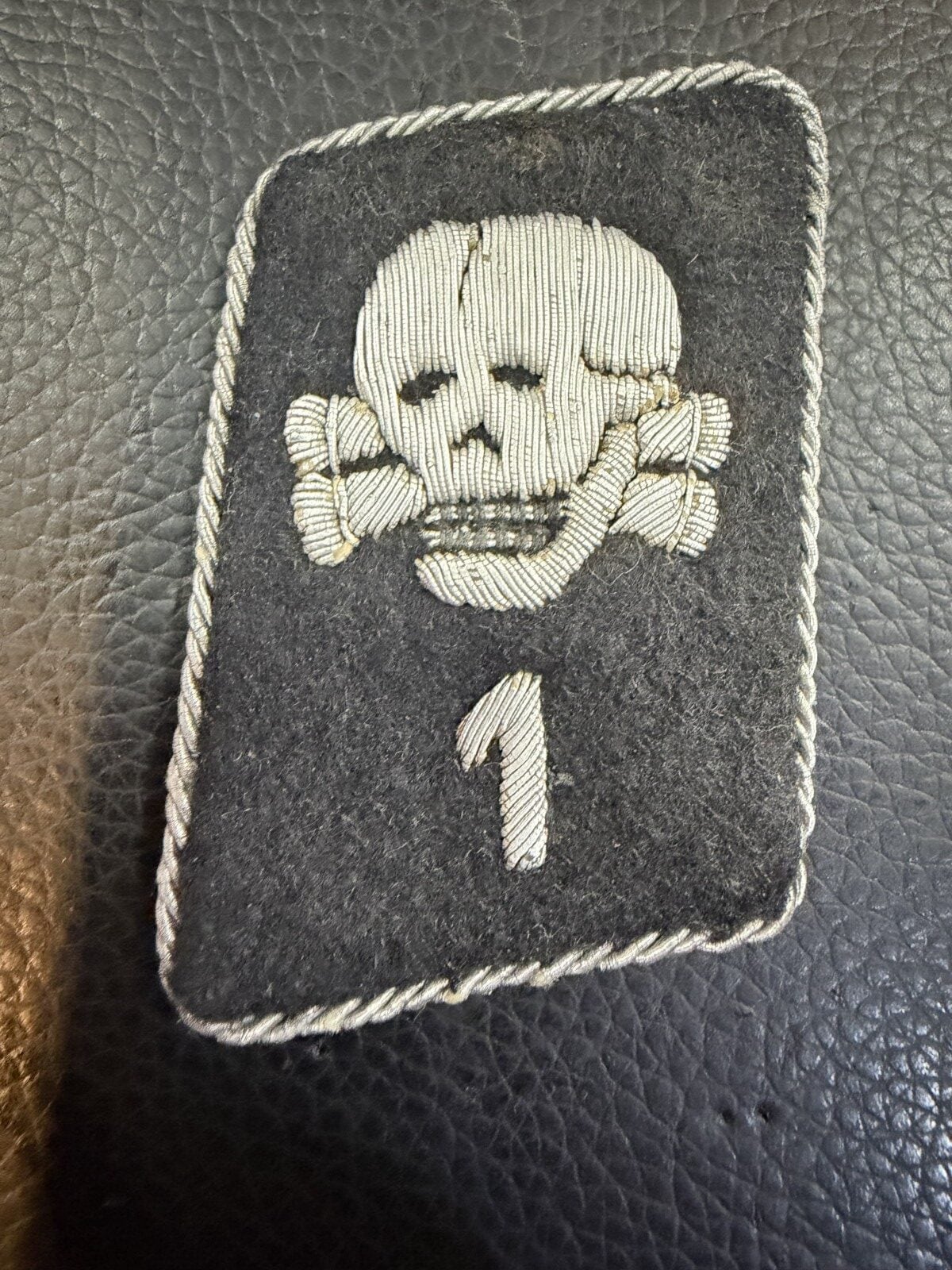
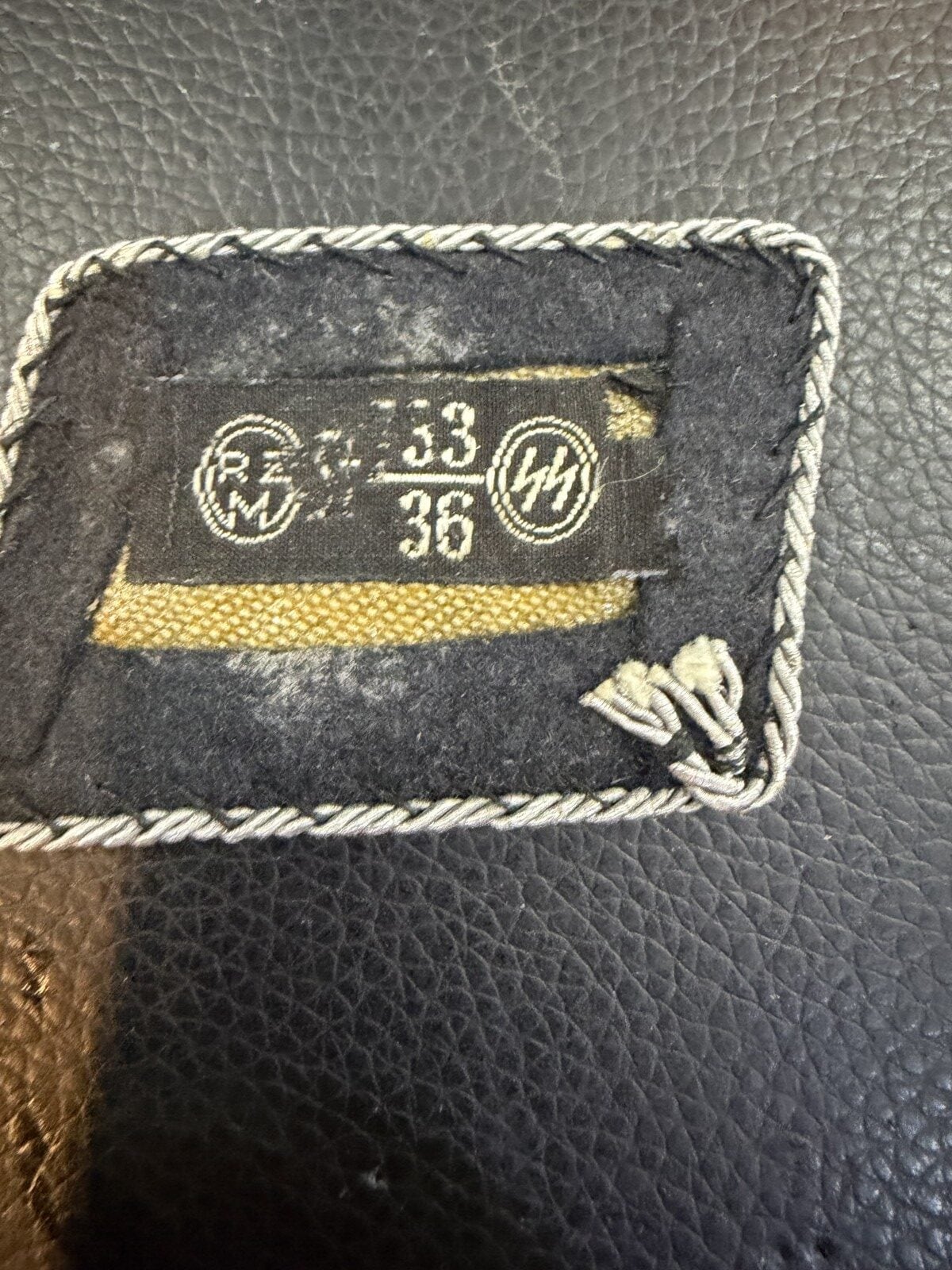
Rare original circa-1936 SS Totenkopfverbände collar tab featuring a hand-embroidered silver metal-thread Totenkopf over the Arabic numeral “1.” Black wool construction with coarse buckram backing, twisted silver edging and accompanying detached woven RZM St 733/36 SS label. Measures approximately 57.66 × 42.69 mm and weighs 3.68 g.
€ 2.795
This original SS Totenkopfverbände collar tab represents a particularly scarce example of early numbered SS cloth insignia. Dating to approximately 1936, the black wool tab carries a finely hand-embroidered metal-thread Totenkopf positioned above the Arabic numeral “1.”
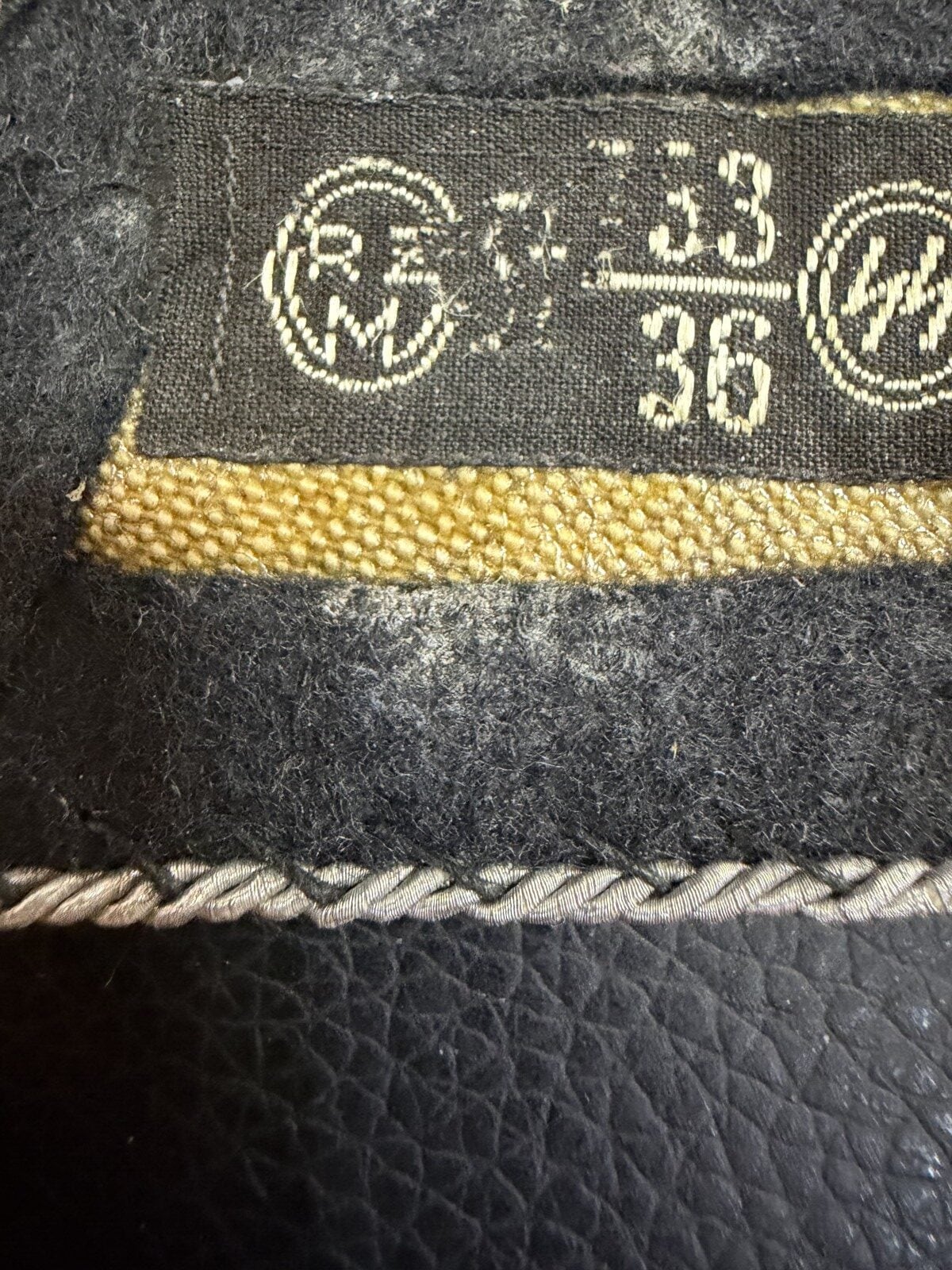
Silver twisted cord surrounds the complete collar patch. Furthermore, the reverse retains its coarse tan woven buckram stiffener, while the accompanying detached woven label bears the marking RZM St 733/36 SS.
Close examination of the embroidery, wool, backing, piping and label construction shows characteristics consistent with documented period SS insignia. Its dimensions also correspond remarkably closely with surviving original examples.
The central feature of this SS Totenkopf collar tab is the vertically positioned skull and crossbones.
Rather than using machine embroidery, the manufacturer formed the Totenkopf from individually laid metal threads. Consequently, subtle differences appear around the forehead, eye sockets, nasal opening, jaw and crossbones.
These small irregularities are important. Hand embroidery should not display the mechanical repetition associated with later machine-produced insignia.
Natural wear has exposed portions of the underlying textile core where sections of the metallic wrapping have deteriorated. Nevertheless, the skull remains extremely well defined.
The complete Totenkopf motif measures approximately:
22.8 mm high × 16.6 mm wide
The skull section itself measures approximately 10.55 mm in height.
Immediately below the Totenkopf sits an individually hand-worked Arabic numeral “1.”
The numeral measures approximately 4.85 mm high and displays the same type of metal thread, underlying textile core and natural surface ageing found on the skull.
Importantly, I see no obvious difference in patination or construction that would suggest the numeral was recently added to an older plain Totenkopf tab.
Early SS-Totenkopfverbände collar insignia used Arabic numbers within the organisation. However, the precise interpretation of individual numerals changed as the SS-TV structure developed. Therefore, this example should not automatically be attributed to SS-Totenkopfstandarte 1 “Oberbayern” solely because it carries the number 1.
The more cautious description is:
SS-Totenkopfverbände numbered collar tab, Arabic numeral “1”, circa 1936.
A particularly important feature is the accompanying woven cloth label marked:
RZM – St 733/36 – SS
The label originally adhered directly to the reverse buckram rather than being stitched around its perimeter. It has now been removed and should remain detached rather than being reattached with modern adhesive.
This attachment method has documented precedent. An original SS collar-tab pair recorded by eMedals carries the same 733/36 marking on a label described as glued to the underside. That pair measures approximately 56 × 43 mm, uses black wool, silver aluminium bullion embroidery, twisted silver edging and a buckram core.
Compare the documented RZM 733/36 SS collar tabs at eMedals
The St 733/36 marking therefore provides a useful period comparison, although the contractor code itself does not identify the Totenkopfverbände unit.
The complete original SS Totenkopfverbände collar tab measures:
Height: 57.66 mm
Width: 42.69 mm
Weight: 3.68 g
These measurements provide a particularly strong comparison with the documented 733/36 example noted above, which measures approximately 56 × 43 mm.
The difference is only approximately:
1.66 mm in height
0.31 mm in width
For hand-finished textile insignia, that represents an exceptionally close dimensional correspondence.
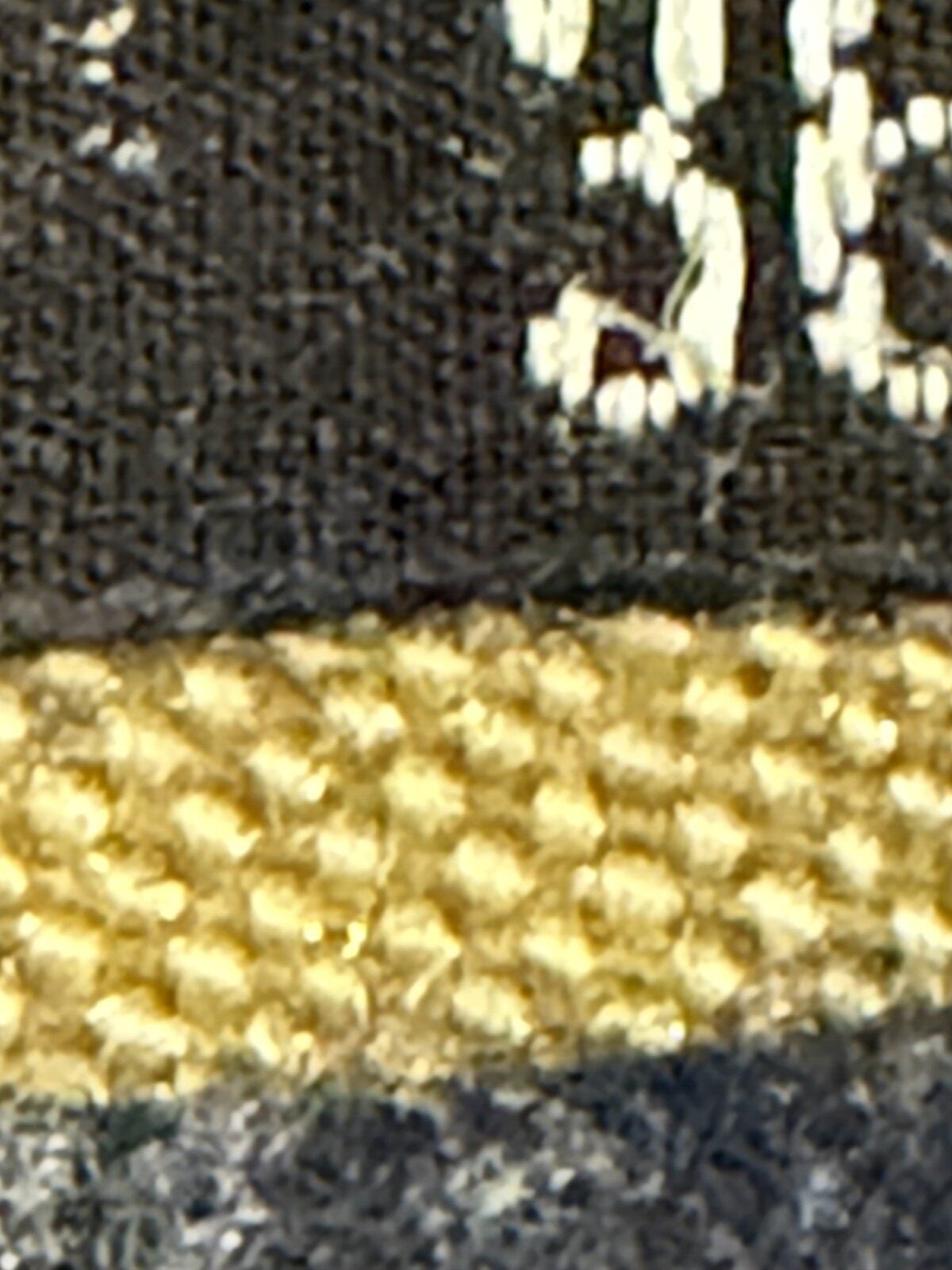
The tab uses a dense black wool face with the material folded around a coarse woven internal stiffener.
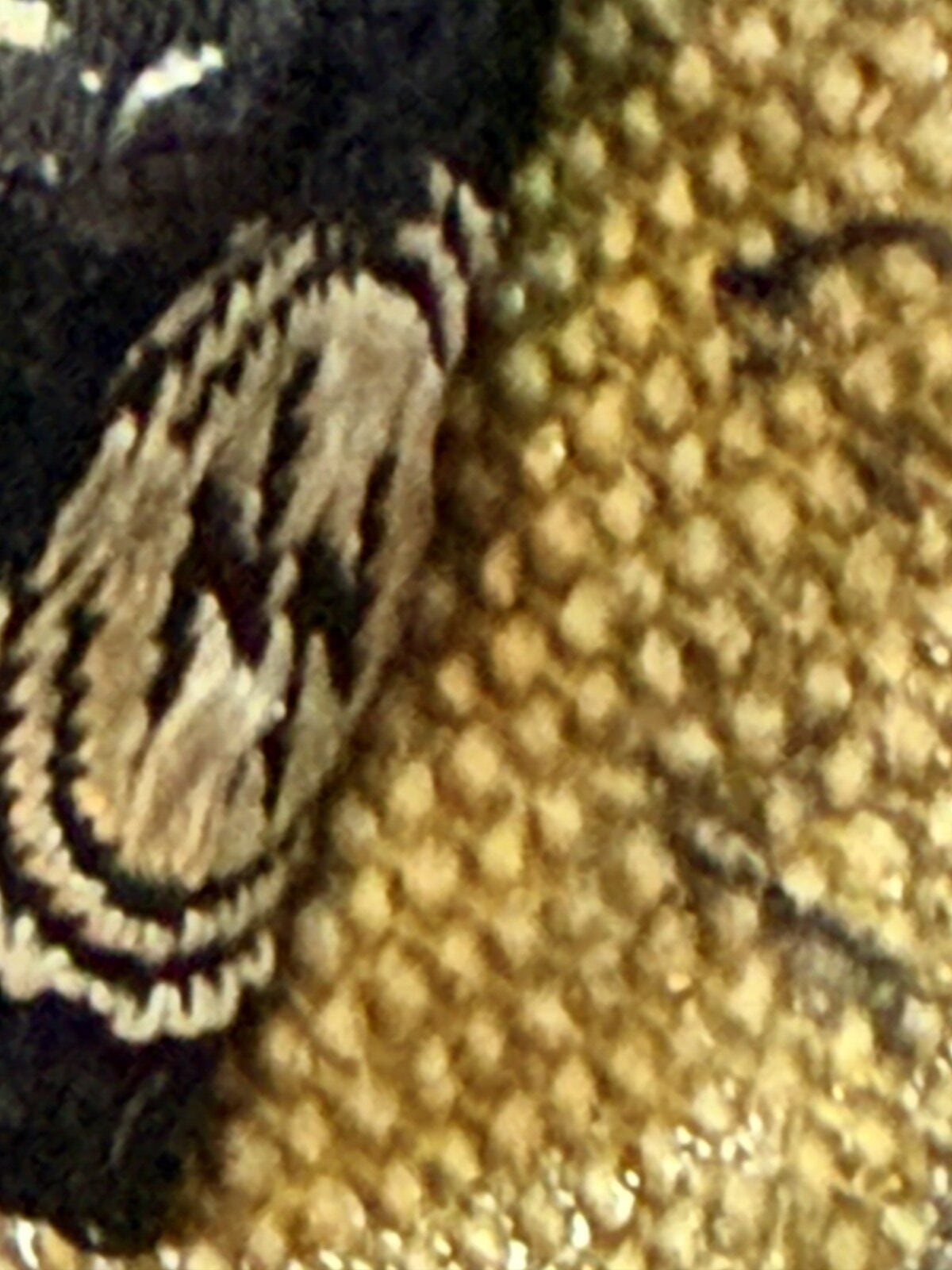
Once the RZM label was removed, the underlying tan/ochre buckram became fully visible. Its coarse weave, irregular fibres and age-related surface changes correspond with the construction expected on original early SS collar insignia.
Notably, the reverse shows none of the obvious modern plastic interfacing or foam-backed material commonly encountered on reproductions.
The black wool also displays natural compression, embedded fibres and uneven surface wear rather than a uniformly artificial aged appearance.
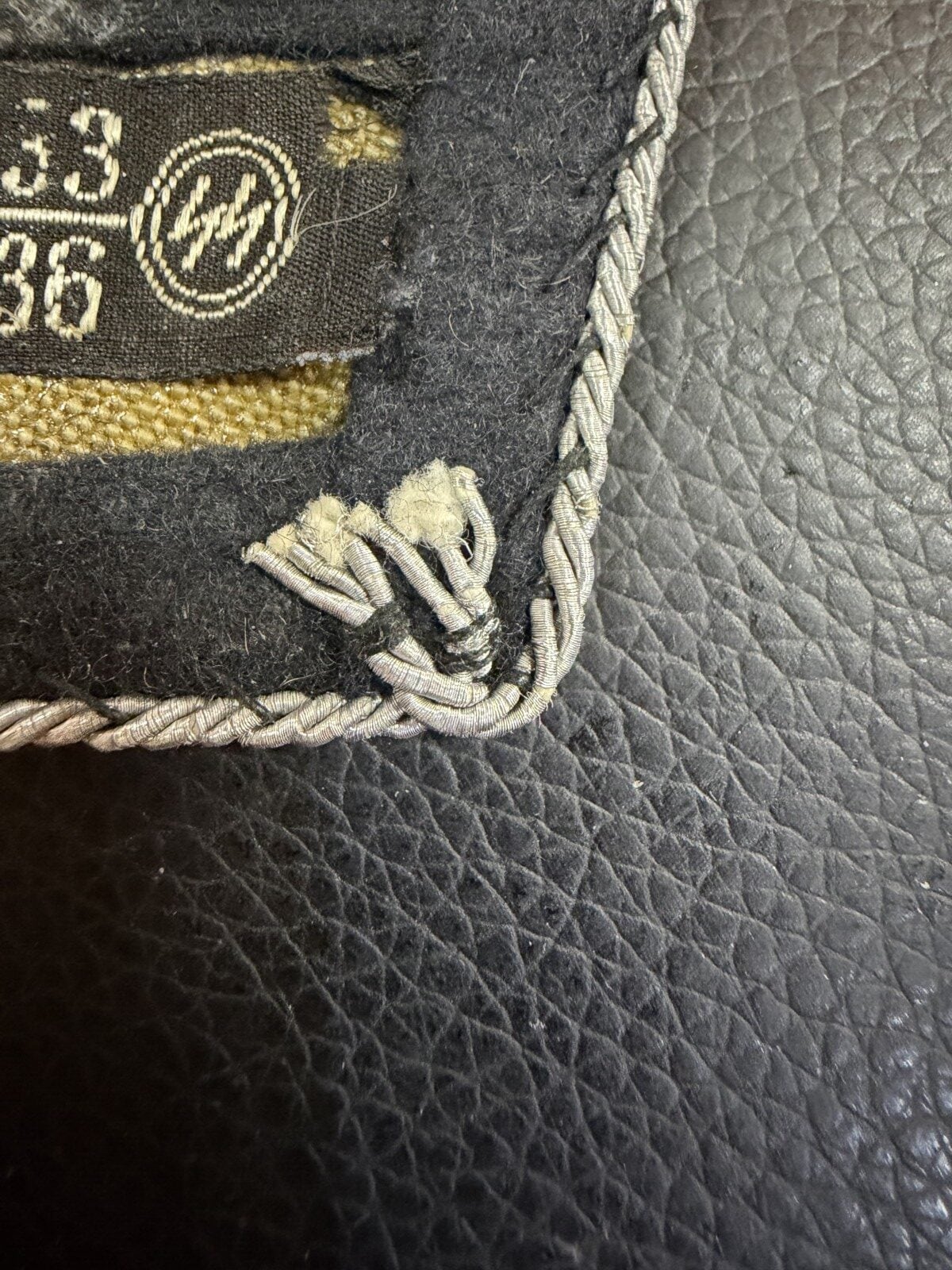
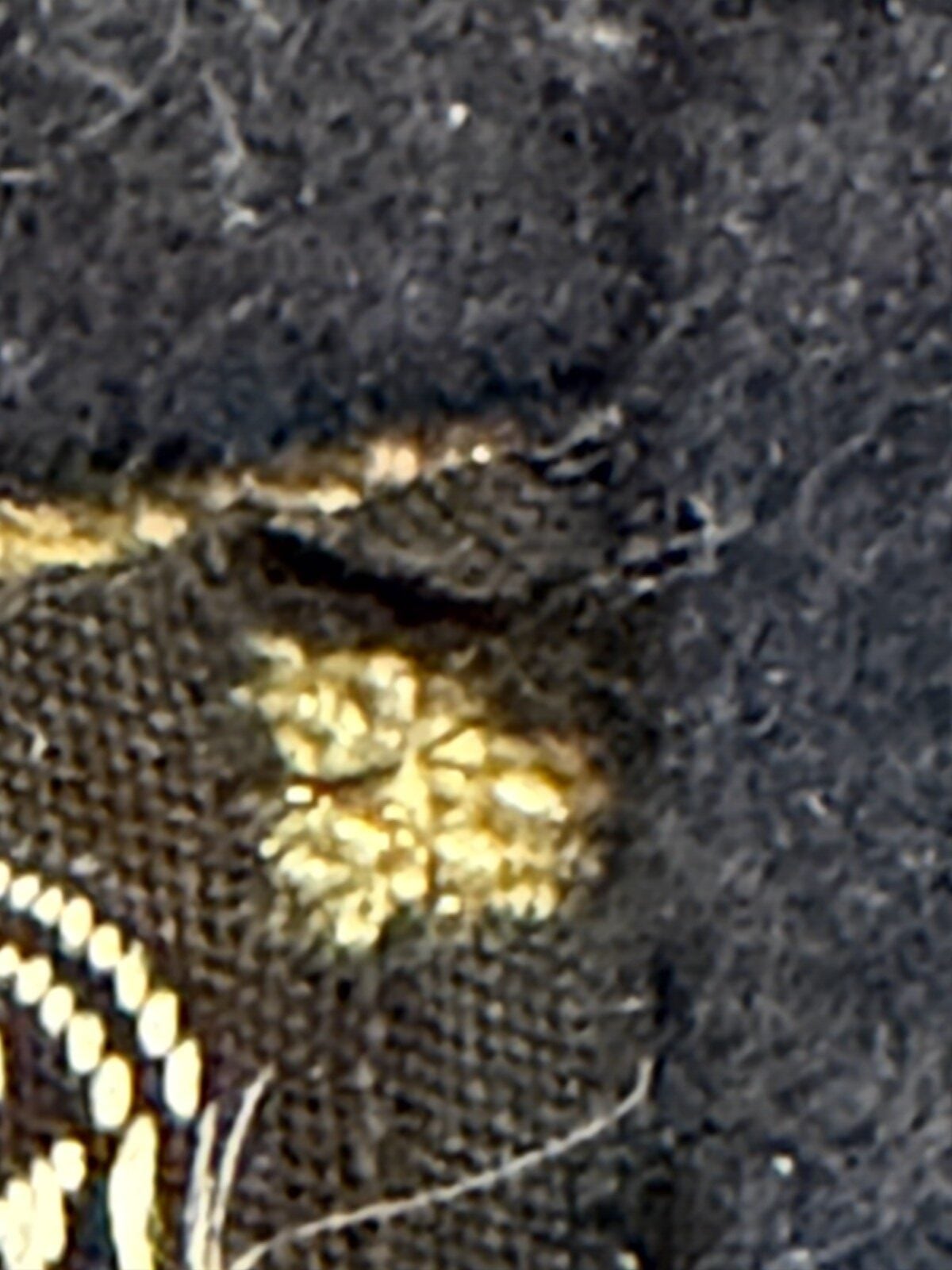
A silver metal-thread cord surrounds the collar patch.
Close examination reveals a textile core wrapped with metallic material. Raised areas remain comparatively bright, while protected sections show duller grey and warmer oxidation.
Additionally, one rear corner has partially unravelled. This exposed area allows the individual constituent threads of the cord to be seen clearly.
The ageing appears progressive rather than artificially applied.
Helmut Weitze documents an original circa-1938 SS-Totenkopfverbände numbered collar-tab pair with a vertically embroidered Totenkopf above the Arabic numeral 5, hand-worked metal thread and surrounding silver piping. This provides a particularly useful pattern comparison for the present No. 1 tab.
View the numbered SS-Totenkopfverbände comparison at Helmut Weitze
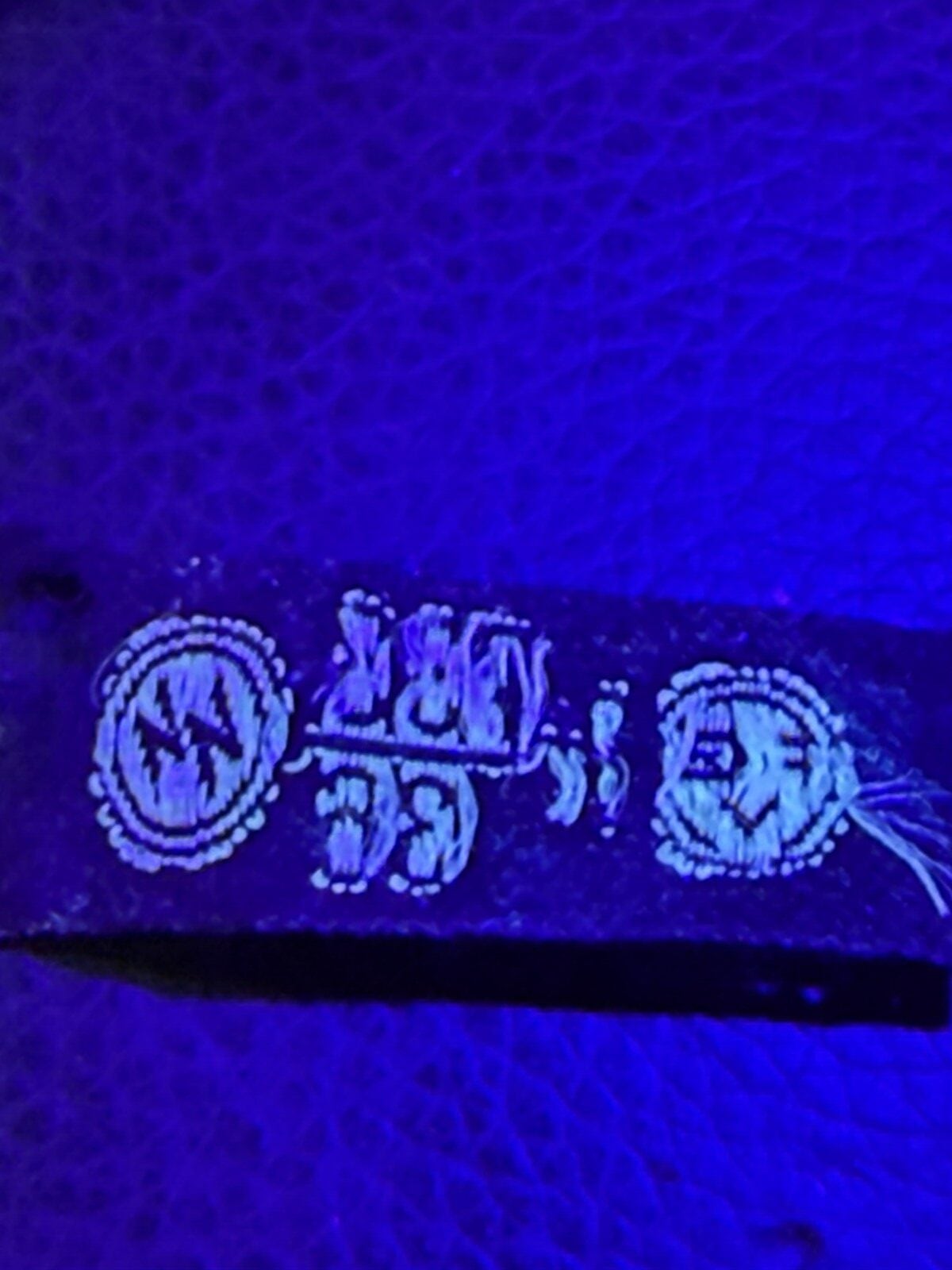
The backing, collar patch and detached RZM label have also undergone UV examination.
Under ultraviolet light, the black wool remains comparatively subdued while the coarse buckram gives a much stronger blue-white response. The pale woven elements of the RZM label also fluoresce distinctly.
UV response alone cannot date historical textile material. Consequently, this test should identify inconsistent repairs or obviously different modern components rather than operate as a simple “glow equals reproduction” test.
In this case, no isolated modern repair material stood out from the surrounding construction.
Furthermore, examination of both sides of the RZM label confirms a genuinely woven structure. The reverse shows the expected mirrored interlacing of the design rather than a simple surface print.
Several independent characteristics support the originality of this original SS Totenkopfverbände collar tab.
The Totenkopf uses convincing hand-laid metal-thread embroidery. Likewise, the numeral 1 shares the same construction and ageing.
Period-consistent black wool surrounds a coarse buckram core, while the silver edging displays convincing textile and metallic construction.
Most importantly, the overall dimensions closely match documented original SS collar tabs carrying the same 733/36 RZM marking.
Although photographic examination can never replace handling by an experienced specialist, no decisive modern reproduction characteristic has been identified in the material examined.
For catalogue purposes, I would classify the collar tab itself as a very strong candidate for genuine circa-1936 manufacture.
The detached RZM label also appears consistent with period production. However, because the label was adhesively mounted and is now detached, its uninterrupted association with this specific tab cannot be proven beyond doubt.
The SS-Totenkopfverbände developed during the 1930s as SS formations associated with the concentration-camp system. Bundesarchiv records specifically document Totenkopf units and their personnel, while surviving photographs include SS-Totenkopfverbände material from March 1937.
The organisation formed part of the SS concentration-camp guard and administrative apparatus. The historical context of such insignia is therefore inseparable from the crimes committed within that system. Bundesarchiv material documents the SS-Totenkopfverbände’s role in guarding and administering concentration camps.
Research SS-Totenkopfverbände photographs in the Bundesarchiv image database
This archival context makes surviving original insignia useful objects for the study of SS organisation, uniform development and the material history of the National Socialist period.
The collar patch remains in very good original condition for its age.
The hand-embroidered Totenkopf retains excellent definition, although minor wear has exposed sections of the underlying embroidery core. Corresponding age-related patination appears across the numeral and silver cord.
The black wool remains sound with expected surface wear. Meanwhile, the exposed buckram shows natural age and minor fibre disturbance.
One corner of the silver edging has partially unravelled.
The RZM St 733/36 SS label is detached and accompanies the collar tab separately. For conservation reasons, it should not be glued back into place.
Early numbered SS Totenkopfverbände insignia is considerably scarcer than standard later SS cloth insignia.
This example combines several desirable features:
hand-embroidered metal-thread Totenkopf, Arabic numeral 1, early black wool and buckram construction, silver cord edging, excellent documented dimensions and a surviving RZM St 733/36 SS woven label.
The combination makes this an important example for an advanced collection concentrating on early SS cloth insignia, RZM-marked SS collectables or Totenkopfverbände uniform insignia.
Explore related listings: SS Collar Tabs.