
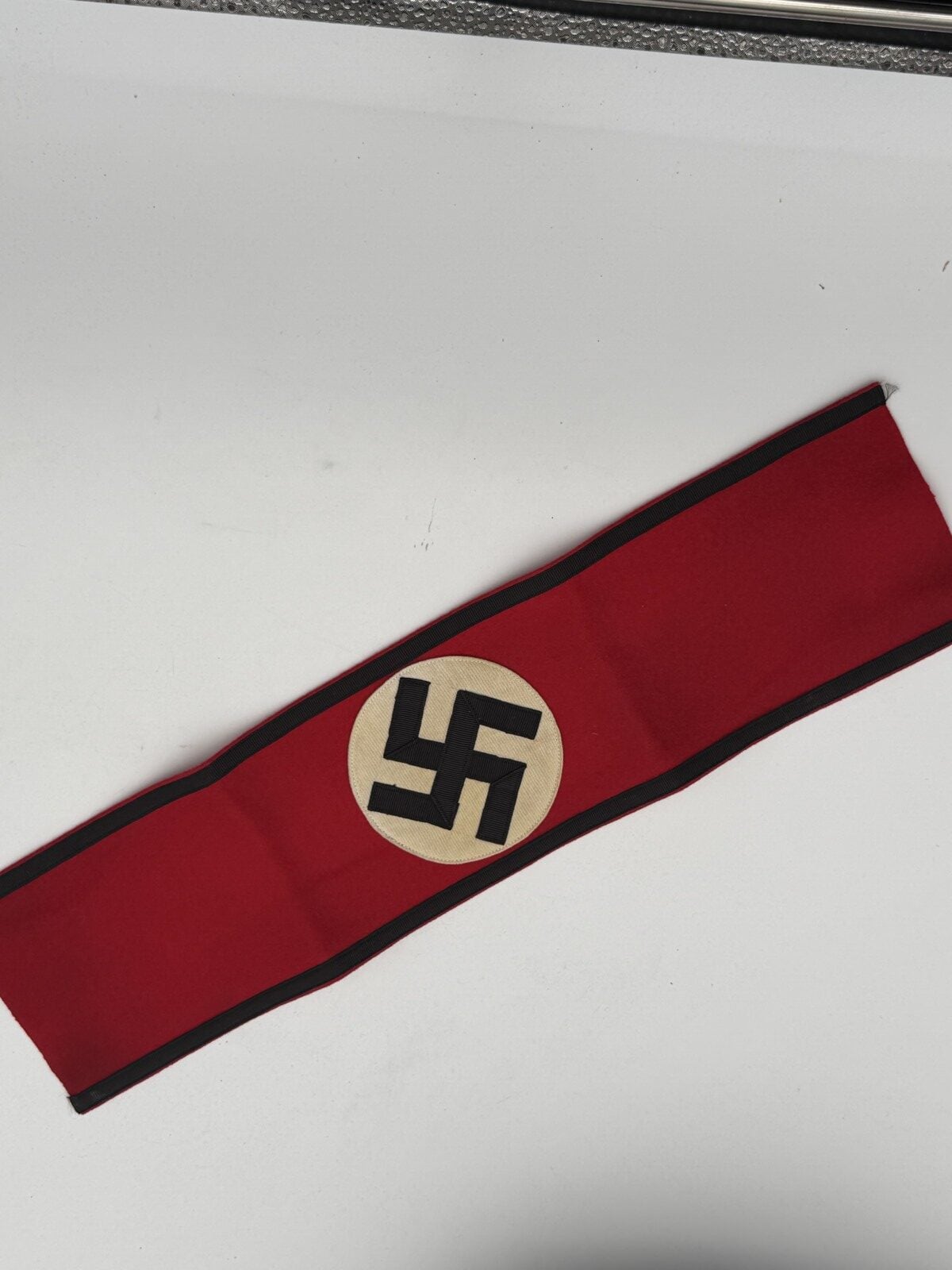
An exceptionally rare SS RZM Sealed Sample Armband, apparently preserved in its original unissued inspection configuration rather than having been fitted to a uniform.
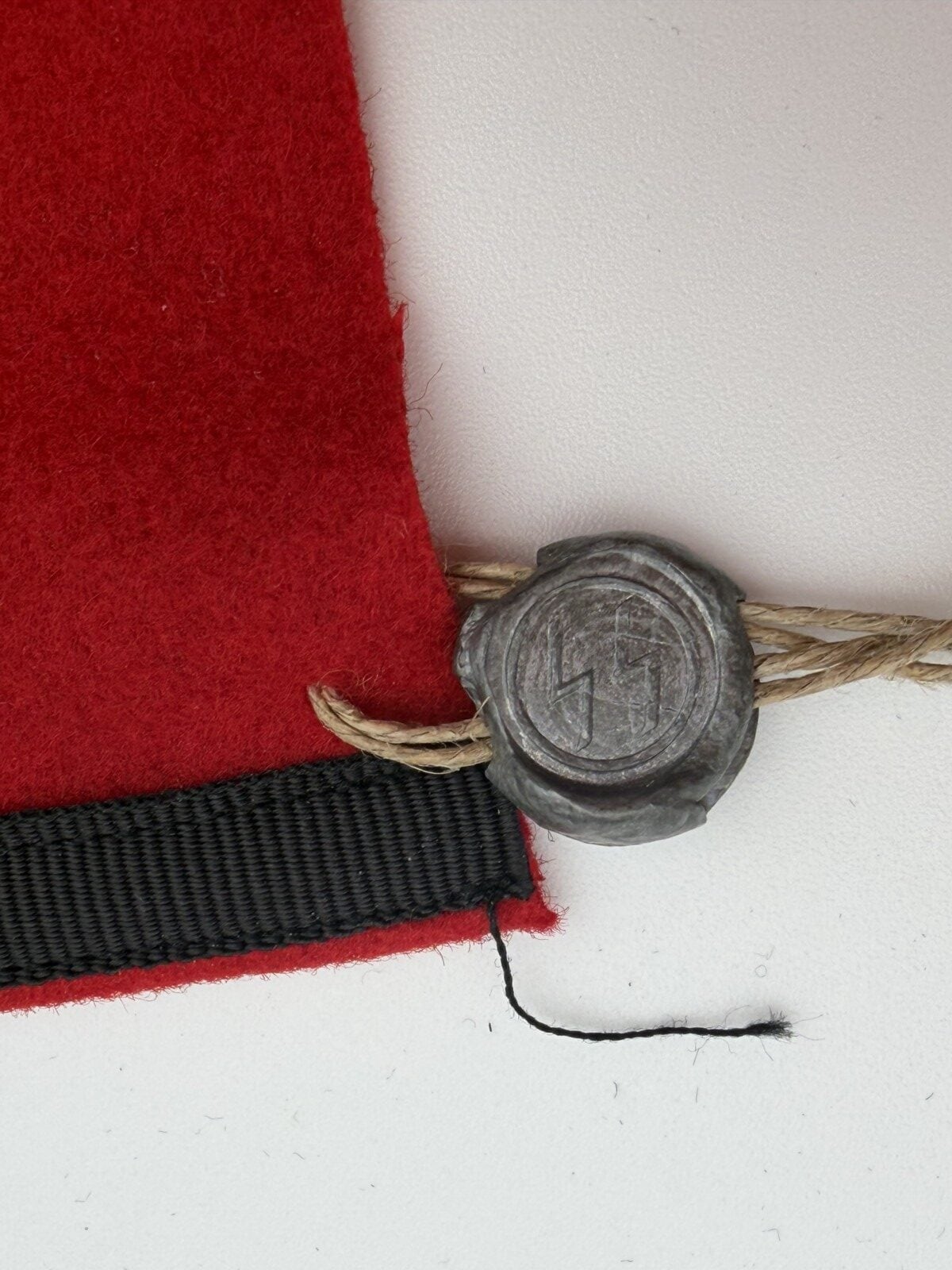
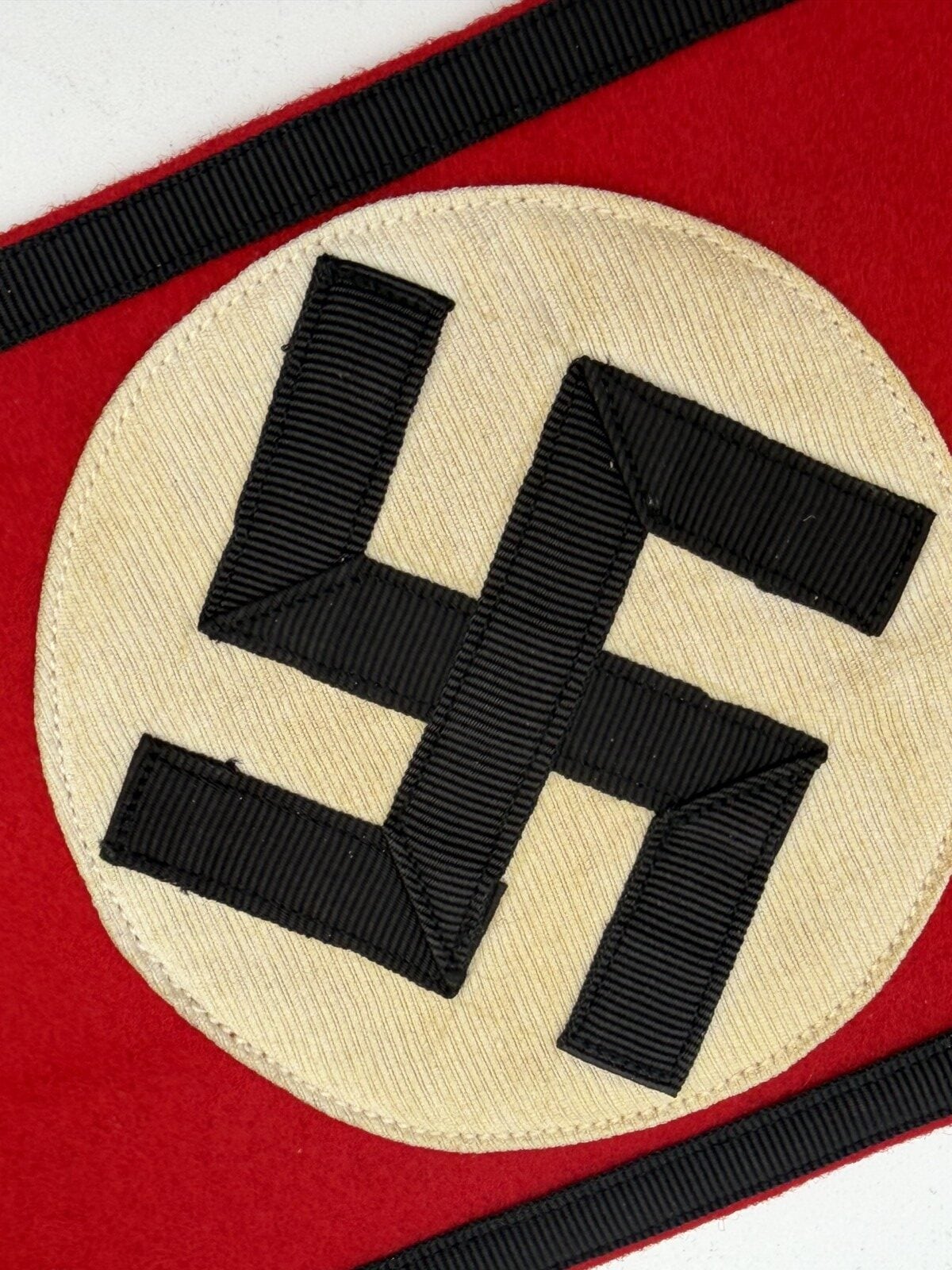
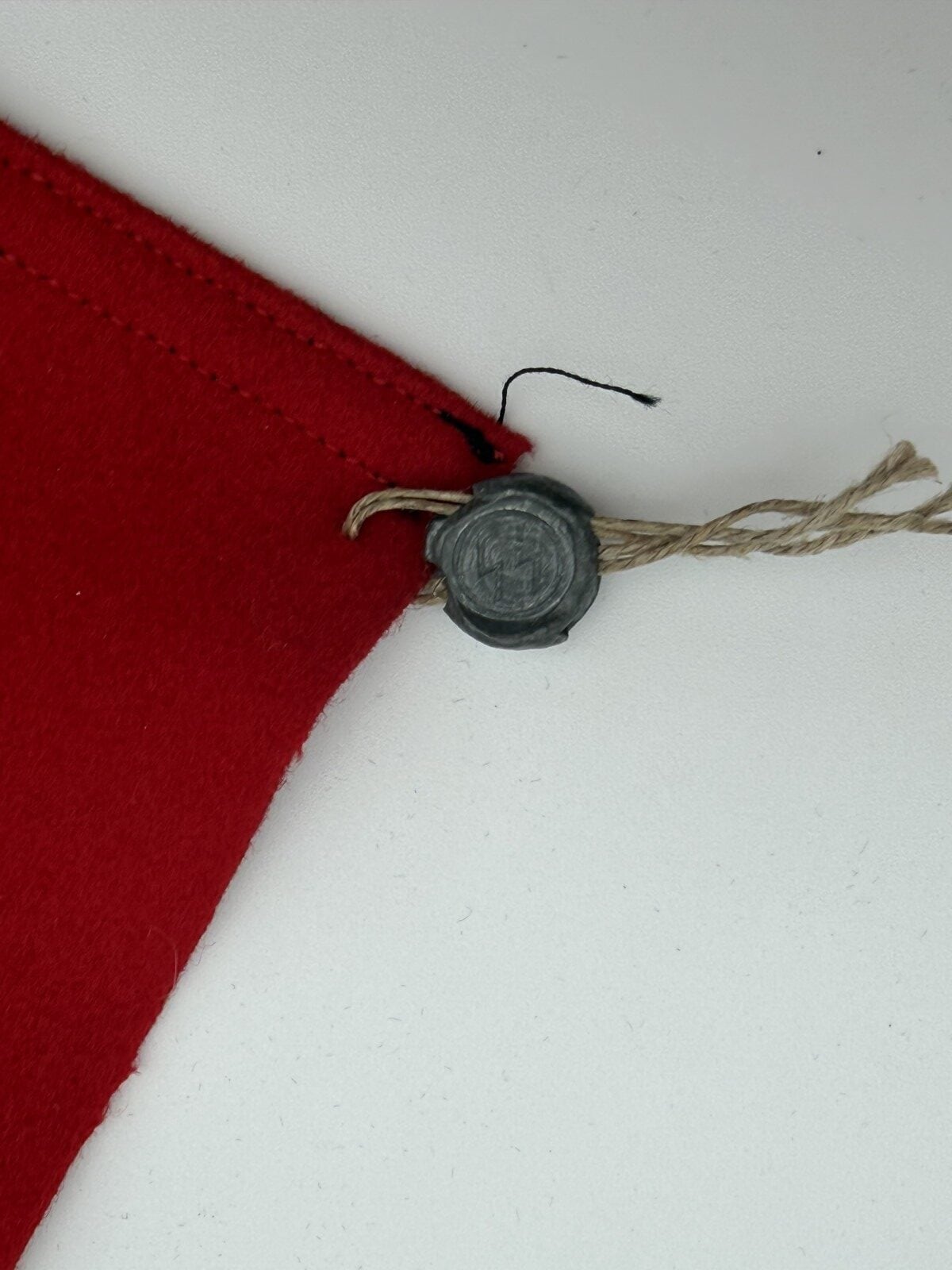
The armband uses a rich red wool body with black ribbed borders, a separately applied white roundel and a carefully constructed black ribbed swastika. Most importantly, an original-style lead control seal remains attached by its period cord at one end. One face of the seal clearly displays the SS runes within a circular border.
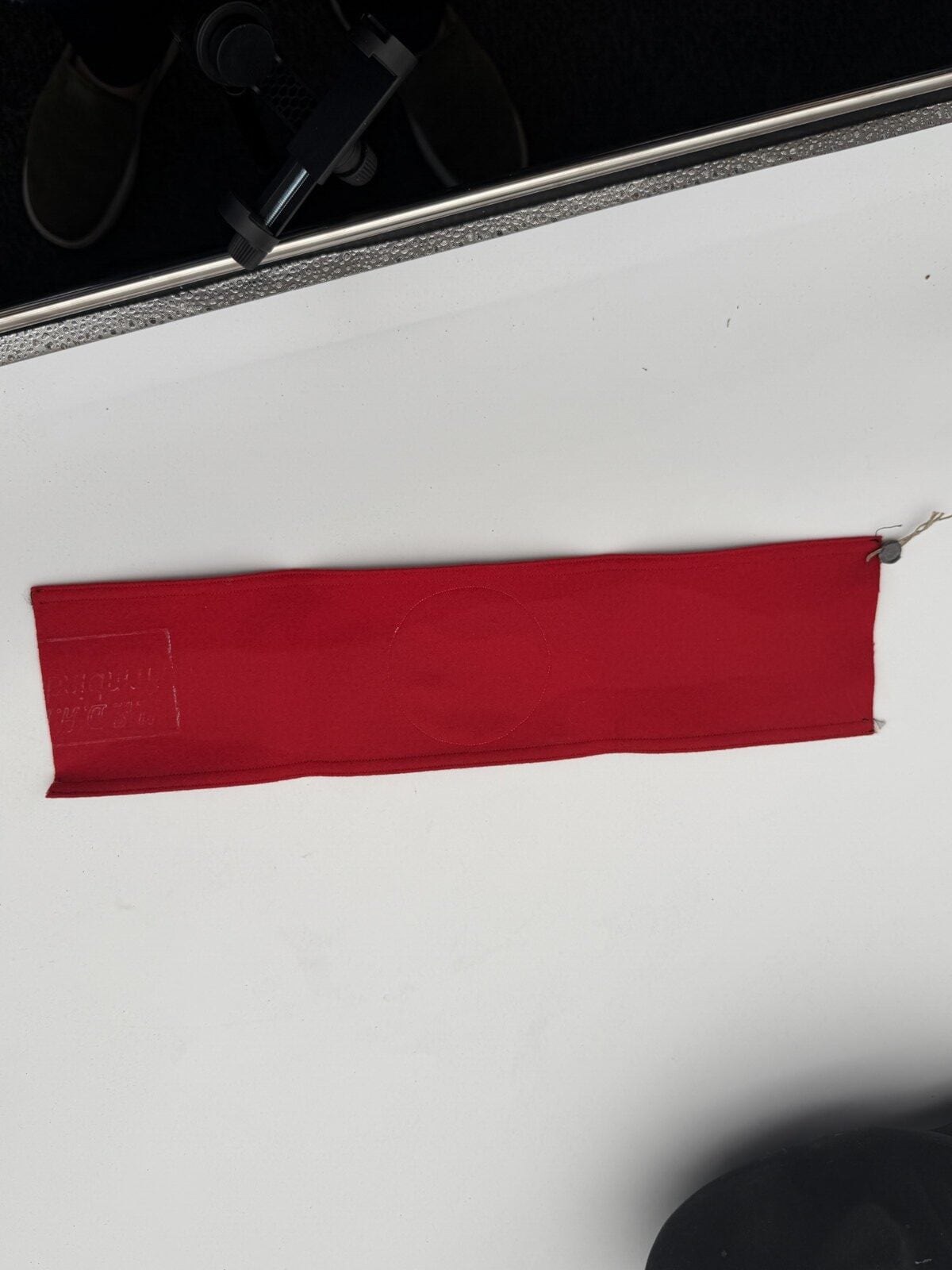
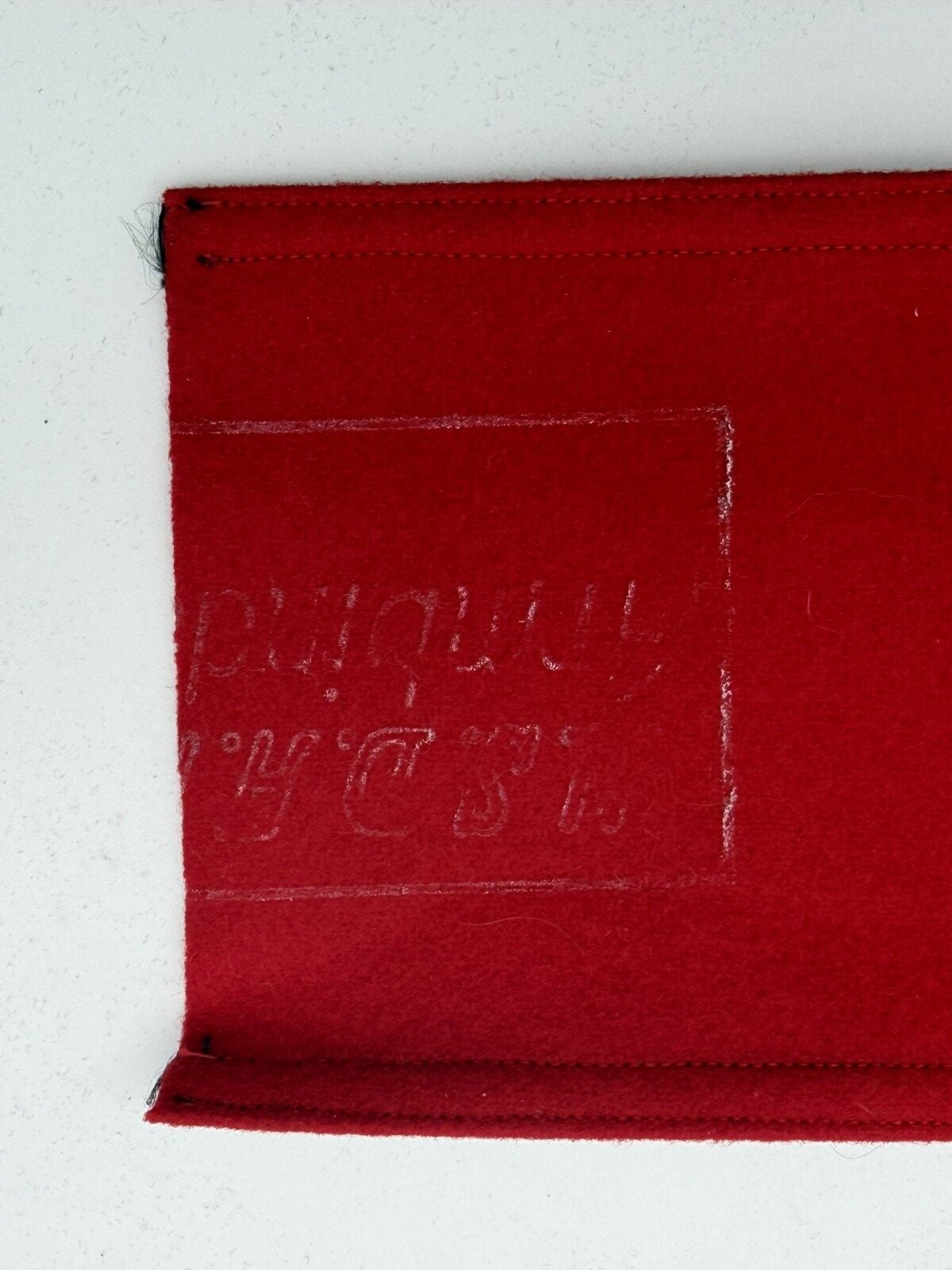
A large, heavily faded rectangular control or inspection stamp also survives on the reverse at the opposite end. The short ends remain open and unjoined, strongly supporting the interpretation that this was retained as an RZM-controlled reference or approval sample rather than issued for ordinary wear.
I have not located a directly comparable SS armband retaining this form of attached control plombe in the specialist dealer and auction records reviewed. Therefore, I would describe it as an extremely rare surviving SS/RZM sample piece, but I would not use the unsupported phrase “only one known.”
€ 2.500
1 in stock
This SS RZM Sealed Sample Armband represents an extraordinary variation of the familiar red SS Kampfbinde used with the black service uniform of the Allgemeine-SS and SS-Verfügungstruppe.
Ordinary period SS armbands are already desirable. However, the survival of an attached inspection seal radically changes the historical importance of this particular example.
Rather than appearing to be a conventional uniform-removed insignia, the armband remains open at both ends. Furthermore, the inspection plombe is still secured by its cord, while a large faded control marking survives on the reverse.
Taken together, these characteristics point toward a factory or RZM-controlled sample/reference function.
The foundation consists of fine red wool cloth.
Its material quality closely follows documented high-grade SS armbands manufactured for wear on the black service tunic.
Helmut Weitze currently describes comparable Allgemeine-SS and SS-Verfügungstruppe armbands as heavy wool examples with silk-ribbed appliqués. Documented specimens date principally to the mid and late 1930s.
The cloth on the present example retains very strong colour.
Moreover, no broad wear pattern or sleeve curvature is visible, which again agrees with an unused rather than extensively worn item.
Black ribbed bands run along both long edges.
These borders are particularly important because they distinguish the familiar SS pattern from the standard plain-edged NSDAP Kampfbinde.
Weitze describes the SS pattern as having a black ribbed strip along each edge and records the same configuration on documented black-service-tunic examples.
The strips on this armband display a tight horizontal ribbed weave.
Their construction also corresponds closely with the black rayon or silk-rep borders found on surviving SS examples.
The white central disc is a separate component.
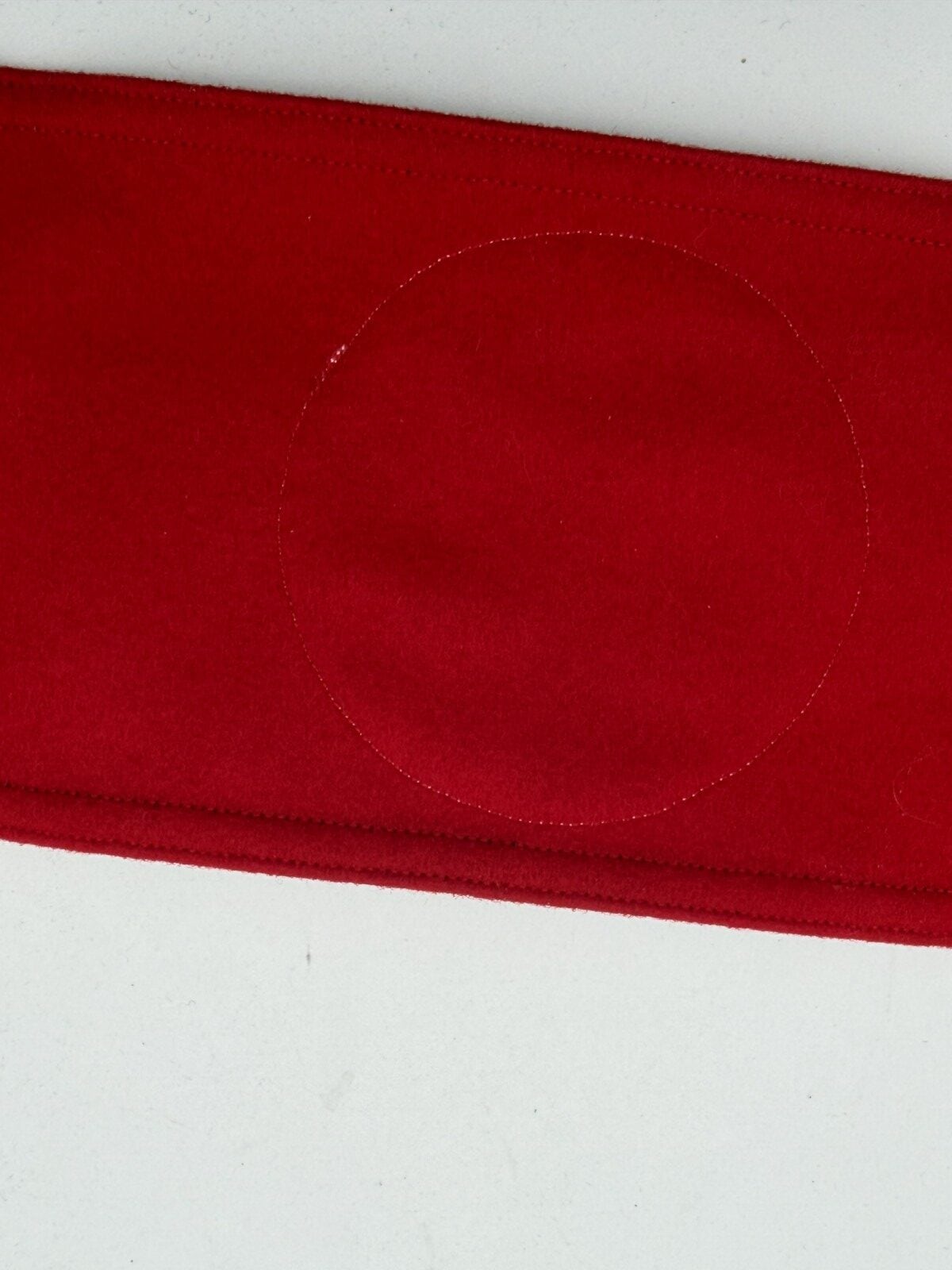
Reverse examination reveals the circular line of stitching that secures it to the red wool body.
This is important because original higher-quality SS armbands commonly used multi-piece construction rather than a cheaply printed design.
The circular panel remains remarkably clean and shows only natural age toning.
Black ribbed tape forms the central swastika.
Rather than being printed directly onto the white field, each section has been carefully folded and positioned.
The corners show the characteristic directional changes created when ribbed material was manipulated into the geometric emblem.
Comparable RZM-tagged SS armbands are documented with ribbed rayon swastikas applied separately to the central white roundel.
This construction is therefore entirely appropriate for a quality SS uniform armband.
The most significant feature appears at one open end.
A period cord remains threaded through an attached metal or lead plombe.
Under close examination, one face clearly carries:
SS runes enclosed within a circular border.
The impression is strong enough to identify confidently.
The opposite face is considerably weaker in the supplied photographs. Therefore, I would not claim a precise inscription from that side until it can be photographed under angled light.
Nevertheless, the overall arrangement is highly significant.
Documented SS insignia survive with official SS/RZM control seals when retained as approved reference samples.
Weitze currently lists an SS-Oberführer collar tab and shoulder board retained together as a gesiegelte Probe der RZM, or sealed RZM sample. That set carries a metal seal stamped SS/RZM and is priced at €2,600.
Weitze explains that such sealed pieces functioned as approved production references rather than ordinary uniform insignia.
That comparison is particularly relevant to your armband.
The intact plombe, unjoined ends and inspection marking make considerably more sense on a control specimen than on an armband intended to be immediately tailored onto a sleeve.
RZM-controlled sealed samples were not restricted to SS collar insignia.
Ratisbon’s has documented Hitler Youth insignia surviving with original RZM seals and explicitly catalogued them as samples.
Likewise, Hermann Historica sold several unconfigured NSDAP Political Leader armbands still bearing RZM plombes. One Ortsgruppenleiter example realised €680 in 2021 and was specifically described as “unkonfektioniert mit anhängender RZM-Plombe” — unassembled with attached RZM seal.
Therefore, the presence of a control seal on an unused armband has strong documented precedent.
Another extremely important feature appears at the opposite end of the reverse.
A large rectangular ink marking remains visible against the red wool.
Although much of the original pigment has faded, several letters and outlines can still be distinguished.
I would catalogue this conservatively as:
Large period-style rectangular RZM/inspection control stamp, substantially faded and only partially legible.
I would not digitally reconstruct missing letters and then present the reconstruction as established fact.
The existence of both a stamped control area and an attached seal is much more significant than attempting to force a complete reading from faded ink.
The ends remain unjoined.
No seam connects the armband into a wearable tube.
Furthermore, there is no evidence that the ends were subsequently cut apart following tunic removal.
Weitze confirms that untouched SS armbands could remain open before being tailored onto the sleeve. Its current 1937 black-service-tunic example likewise notes open ends as part of the original configuration.
On this particular piece, however, the accompanying control seal gives the open construction additional significance.
It suggests that the item may intentionally have remained in its manufacturing or approval state.
The construction fits best within the mid-to-late 1930s RZM-controlled period.
Weitze documents heavy-wool SS armbands with woven RZM labels from approximately 1935 onward and paper-labelled examples around 1937.
Accordingly, a working catalogue dating of:
circa 1935–1938
is sensible until the faded reverse stamp or second face of the plombe provides firmer dating evidence.
This pattern was associated with the black SS service uniform.
The Allgemeine-SS used the black uniform extensively during the pre-war period. Meanwhile, the SS-Verfügungstruppe also wore related black service uniform configurations before field-grey military uniforms became dominant.
Weitze specifically identifies comparable black-bordered armbands as appropriate to both the Allgemeine-SS and SS-Verfügungstruppe black service tunic.
Consequently, I would not narrow this piece to a particular Standarte or wearer.
Its significance lies instead in its apparent RZM reference-sample status.
The photographs provide several compelling characteristics supporting period manufacture.
The strongest points are:
I see no obvious modern construction feature in the supplied photographs.
However, because the seal is the feature responsible for the exceptional rarity and value, I would still examine the cord fibres, seal compression and attachment points under magnification before issuing an unconditional written certificate.
An ordinary RZM-labelled SS armband was a production item intended to enter normal uniform supply.
A sealed reference example served a very different function.
RZM sample pieces provided manufacturers and inspectors with an approved standard against which subsequent production could be checked. Weitze’s surviving sealed SS sample demonstrates exactly this administrative practice.
Consequently, such an item documents not simply SS uniform wear but also the bureaucratic manufacturing and inspection system behind SS uniform production.
That distinction makes this armband particularly important from a textile and uniform-research perspective.
I specifically searched the available specialist references for comparable SS armbands.
Current Weitze stock includes conventional RZM-labelled SS examples at approximately €1,000–€1,600, depending on condition and pattern.
I also located documented RZM-plombed Political Leader armbands and other sealed SS insignia.
However, I did not locate a directly comparable standard SS Kampfbinde retaining an attached SS/RZM inspection plombe in the records reviewed.
That does not prove it is unique.
For catalogue purposes, I recommend:
“Extremely rare RZM-sealed SS sample armband; no directly comparable plombe-sealed SS armband located in the specialist references examined.”
That statement is powerful while remaining defensible.
Condition is excellent and apparently unissued.
The red wool remains remarkably vibrant.
Likewise, the black rayon edging retains strong colour and clear ribbing.
The white centre disc shows only light natural toning, while the applied black swastika remains sharply constructed.
Minor loose threads are visible around the unfinished ends.
Most importantly, the control cord and seal remain attached.
The faded reverse stamp has naturally weakened through age but remains plainly visible.
Do not:
The armband’s highest historical value lies in preserving its current unconfigured sample condition.
Explore related listings: Cuff Titles & Armbands; SS-Inspektion Black Service Tunic – VA 1937; Original SS RZM Overhoff 36/38 Belt Support Hooks 1938; SS Hauptamtschef Cuff Title RZM 38/38 | Original 1938.
For the closest standard armband construction comparison:
Helmut Weitze – Allgemeine-SS / SS-VT Armband circa 1937
For the particularly important sealed-sample comparison:
Helmut Weitze – Sealed RZM SS Sample Insignia
| Feature | Details |
|---|---|
| Organisation | Allgemeine-SS / SS-Verfügungstruppe |
| Item | SS Kampfbinde / armband |
| Period | Third Reich |
| Approximate date | circa 1935–1938 |
| Body | Red wool |
| Border | Black ribbed rayon/silk-rep type |
| Roundel | Separate white textile disc |
| Swastika | Multi-piece black ribbed tape |
| Ends | Open / apparently never fitted |
| Control seal | Attached metal/lead plombe |
| Seal marking | SS runes clearly visible on one face |
| Reverse marking | Large faded rectangular control stamp |
| Interpretation | RZM-controlled sealed reference/sample |
| Condition | Excellent / apparently unissued |
| Rarity | Extremely rare |