
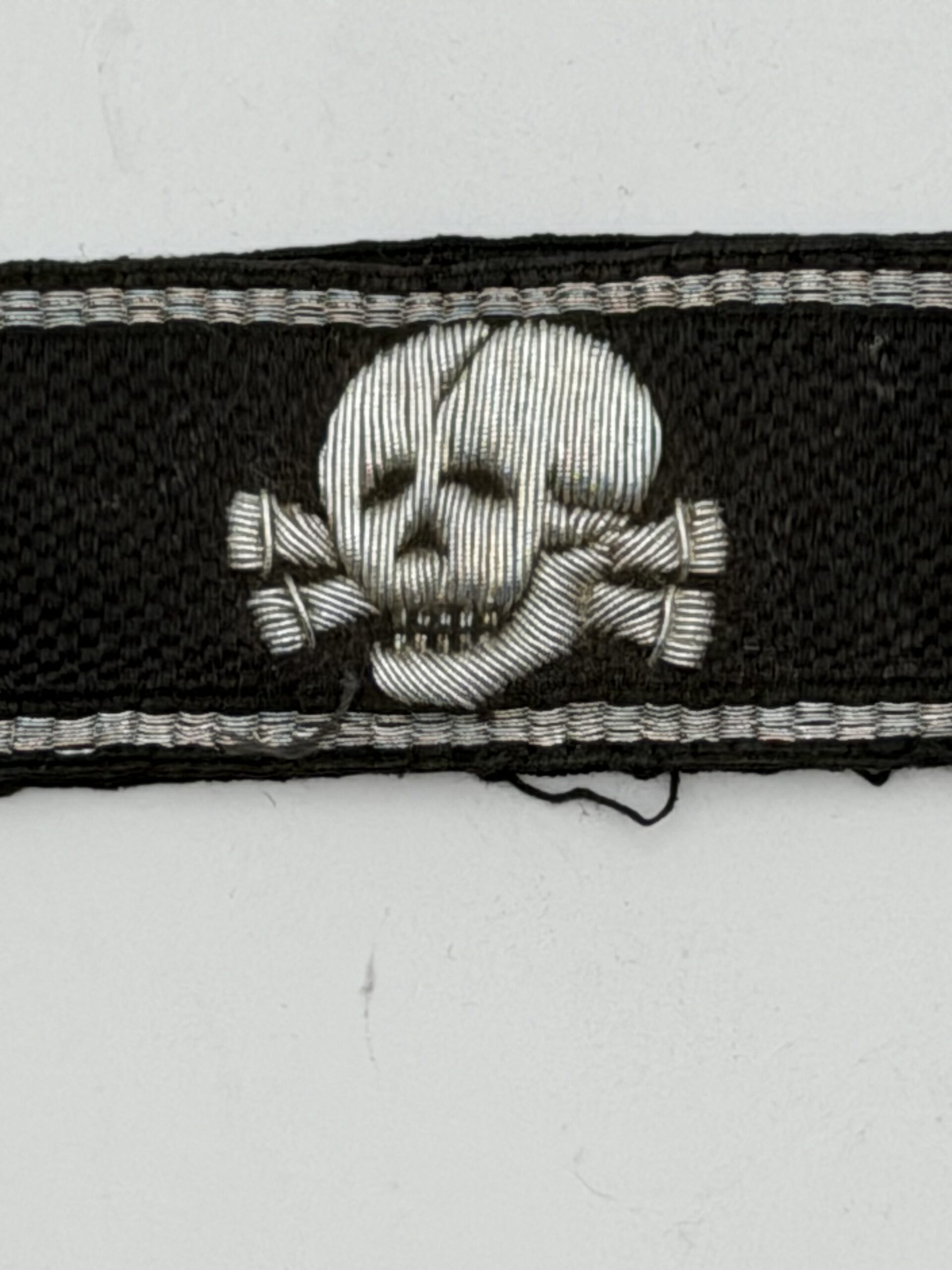
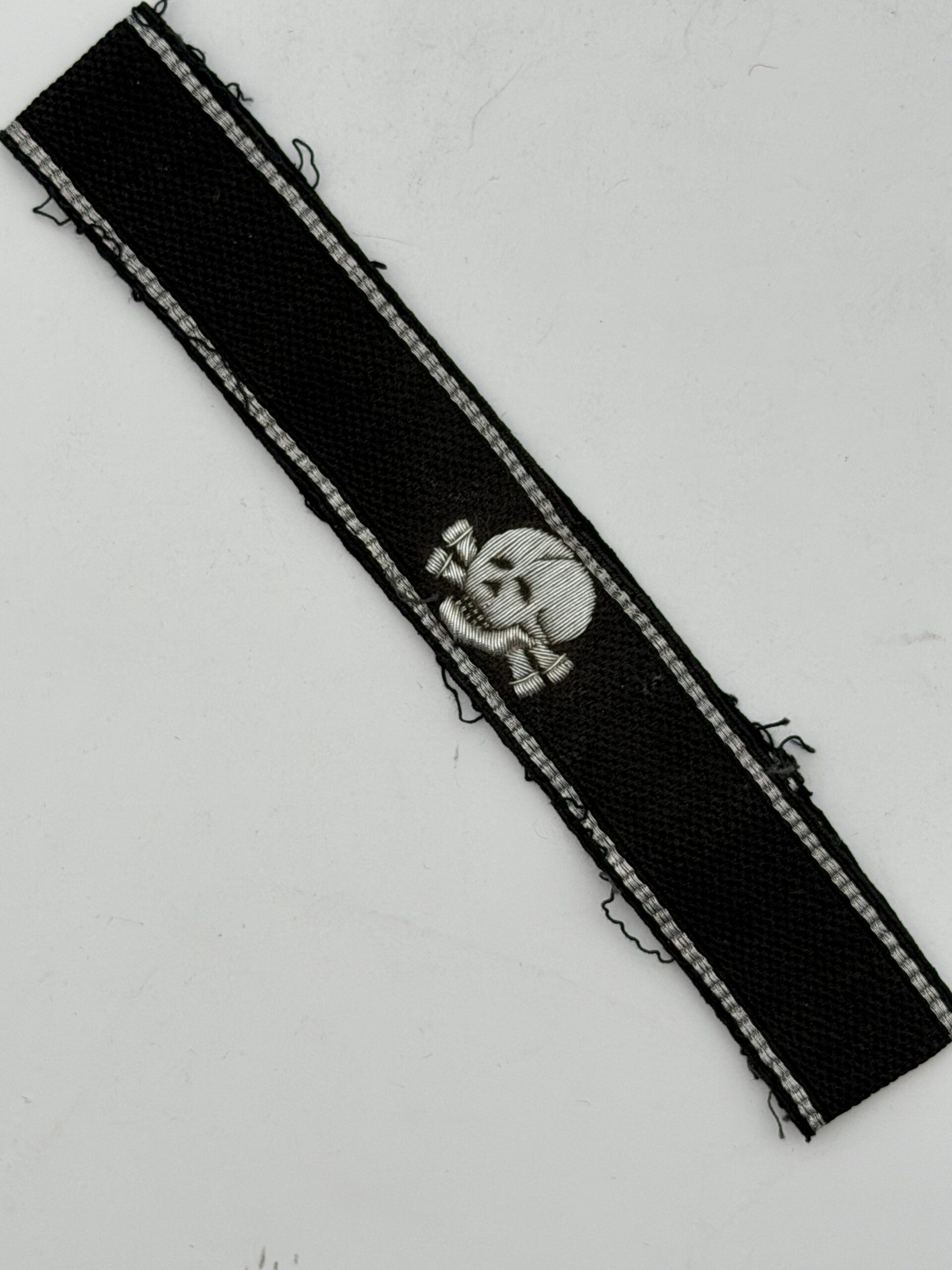
Exceptionally scarce original SS Totenkopf Cuff Title produced in the high-quality leader/officer pattern. A hand-embroidered silver-aluminium Totenkopf sits on a black woven band with silver-aluminium borders.
Importantly, this example is uniform removed rather than unissued. Original sewing threads, edge distortion and attachment evidence remain visible along the cuff title. Consequently, the piece retains genuine evidence of period uniform use.
The finely embroidered skull remains exceptionally well preserved. Overall construction corresponds closely with documented original leader cuff titles associated with SS-Standarte “Oberbayern” and later officer use within the Waffen-SS Totenkopf formation.
€ 4.950
Out of stock
The SS Totenkopf Cuff Title belongs to a particularly distinctive family of early SS leader insignia.
Specialist auction records identify this skull-only pattern as an insignia worn by leaders of SS-Standarte “Oberbayern”. Later examples are also documented in association with officers of the Waffen-SS Totenkopf Division. Ratisbon’s records an original leader example consisting of a black band with a hand-embroidered silver-wire skull and specifically attributes this pattern to these formations.
SS-Standarte “Oberbayern” formed part of the SS-Totenkopfverbände system. These Death’s-Head formations initially provided personnel for the administration and guarding of the Nazi concentration-camp system. Subsequently, personnel from these organisations contributed to the formation of the Waffen-SS Totenkopf Division.
The United States Holocaust Memorial Museum documents that the SS-Totenkopfverbände administered and guarded concentration camps. It also records that the Waffen-SS Death’s-Head Division developed from this organisational background. Therefore, the insignia represents material evidence of an organisation directly connected with the machinery of Nazi persecution and war.
For further historical context, see the United States Holocaust Memorial Museum history of the SS Death’s-Head Units.
Unlike the more commonly encountered machine-woven or machine-embroidered cuff titles, this example uses elaborate hand-applied metal-thread embroidery.
The central Totenkopf displays broad silver-aluminium flat-wire work. Individual sections form the skull, eye sockets, nasal cavity, teeth and crossed bones. Moreover, the embroiderer altered the direction of the metal thread across different sections.
That change in embroidery direction creates the characteristic three-dimensional reflection seen on genuine period bullion work.
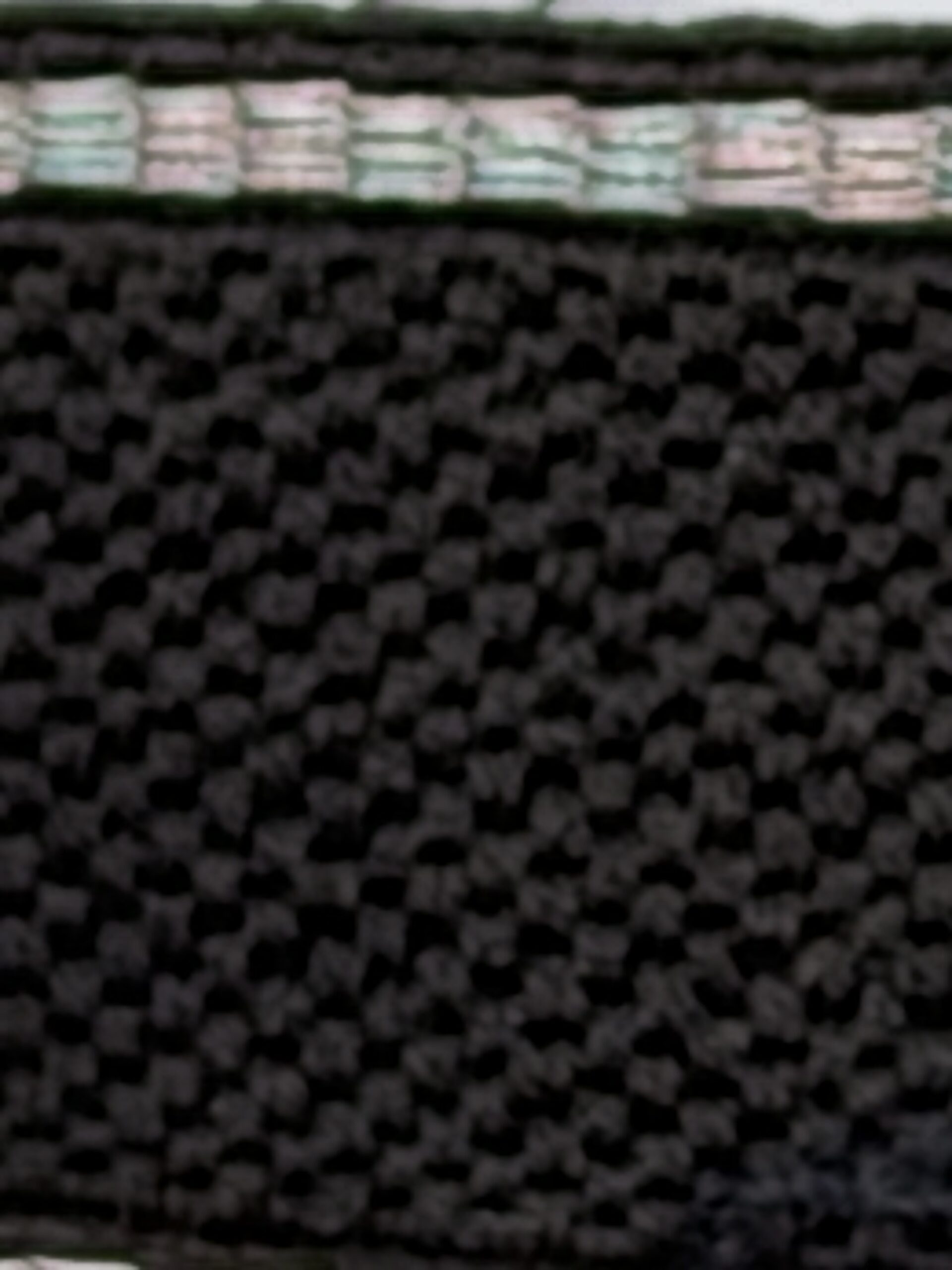
The black foundation consists of densely woven period textile. Meanwhile, narrow silver-aluminium woven borders run along both long edges.
This combination of materials and workmanship identifies the piece as a high-grade leader/officer-pattern SS Totenkopf Cuff Title, rather than the simpler enlisted form.
Close examination of the photographs reveals particularly convincing embroidery.
The skull shows individually formed anatomical details rather than a modern machine-produced outline. Equally important, the crossed bones contain separately worked sections and carefully finished terminals.
Fine parallel lines remain visible across the aluminium embroidery. Furthermore, natural variation occurs where the wire changes direction around the contours.
The facial details have not been printed or mechanically stamped onto the cloth. Instead, the embroidery builds the Totenkopf directly from metallic thread.
Small irregularities within the handwork are also positive. They demonstrate manual construction rather than modern computer-controlled embroidery.
Both sides of the cuff title retain their original metallic border strips.
The borders show:
Comparable documented officer cuff titles use the same black foundation, silver-aluminium edge borders and hand-embroidered central Totenkopf. A 48 cm example sold by Hermann Historica in 2024 displayed precisely this combination of features.
One of the most important characteristics of this SS Totenkopf Cuff Title is its unmistakable uniform-removed condition.
Loose and broken black sewing threads remain along both long edges. In addition, the outer edges show minor irregularity where the original sleeve stitches were removed.
Subtle waviness also runs through portions of the band. This appearance differs substantially from an untouched factory-stored cuff title.
Consequently, the surviving attachment evidence strongly indicates that the cuff title spent a significant period sewn to a uniform before later removal.
For a serious collection, this feature adds important historical character. It provides physical evidence of actual uniform installation rather than simple wartime manufacture.
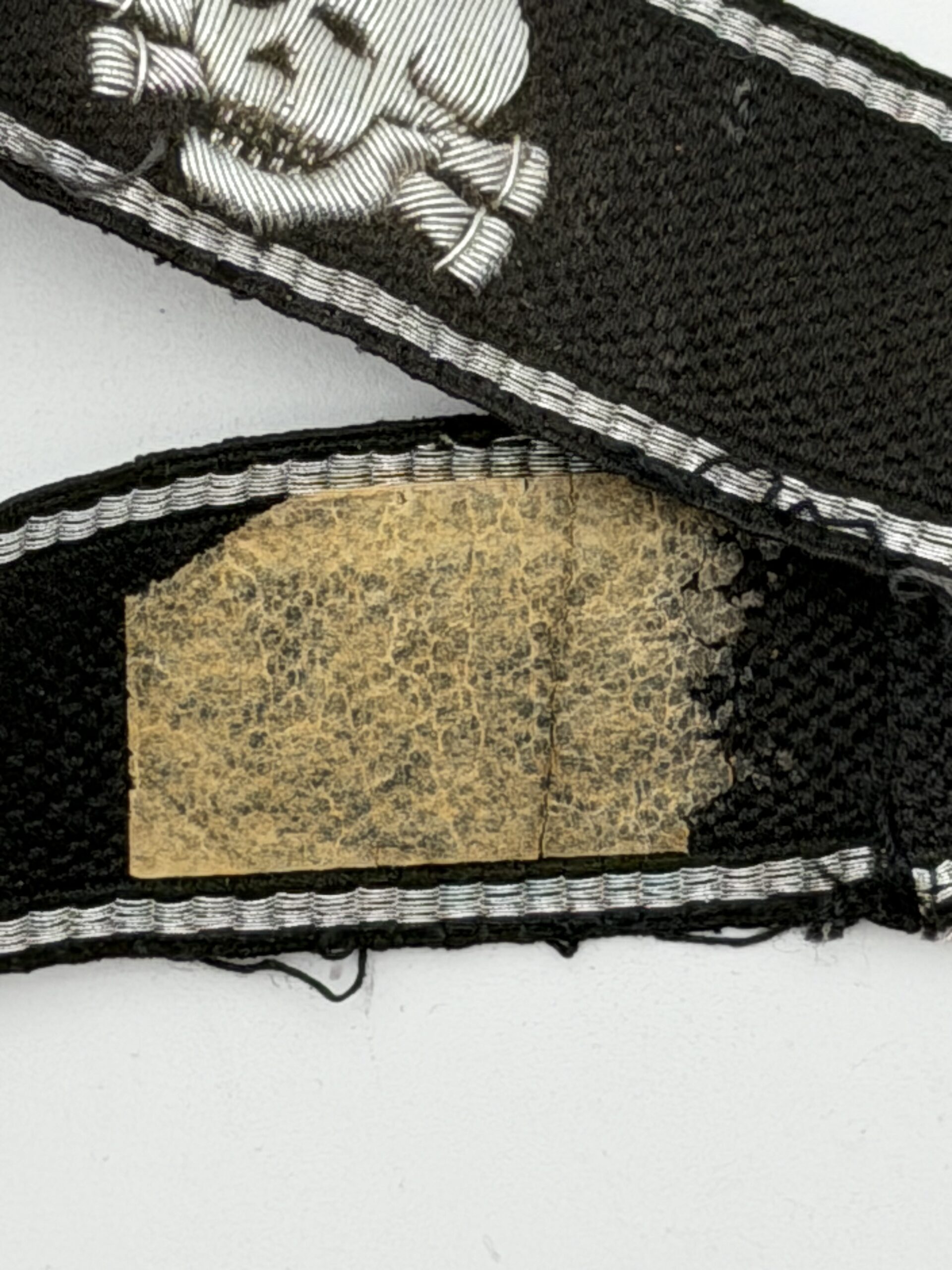
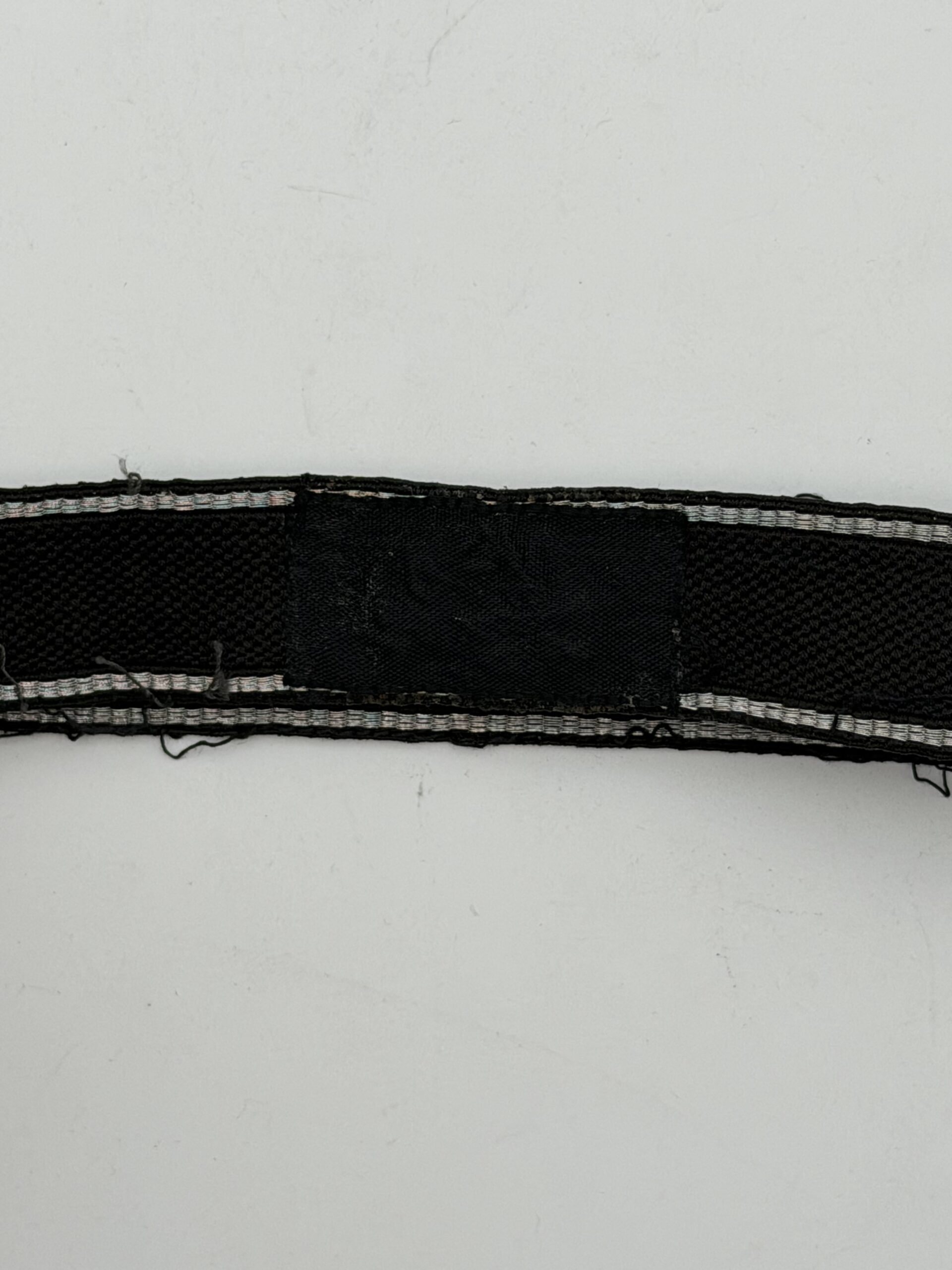
The reverse provides further useful construction evidence.
A black textile reinforcement or protective panel remains behind the embroidered Totenkopf. This backing protected the reverse of the elaborate metal-thread work and prevented direct abrasion against the tunic sleeve.
Part of the backing can be lifted, revealing an aged brown paper or card-like component below it.
The material shows substantial age toning, surface cracking and oxidation-related discoloration. However, no readable RZM or manufacturer markings can be confirmed from the photographs.
For that reason, the surviving material should not be described as an RZM label without further evidence.
This conservative attribution is important for a museum-standard catalogue description.
Based upon the supplied high-resolution photographs, the cuff title displays a strong combination of characteristics expected from an original period example.
The hand-worked aluminium embroidery, woven black foundation, metallic borders and reverse construction appear internally consistent. Furthermore, the surviving sleeve-sewing evidence follows the age and condition of the cuff title itself.
No obvious feature visible in the photographs suggests modern computer embroidery or recently assembled construction.
Particularly persuasive is the interaction between the cuff title and its old attachment threads. These surviving threads occur irregularly along the edges instead of appearing artificially added for effect.
Therefore, the photographic evidence supports identification as an original, period-manufactured and uniform-removed SS Totenkopf officer/leader cuff title.
As with all high-value textile insignia, microscopic fibre examination and UV testing can provide additional supporting evidence if required.
An especially useful comparison appears in the Hermann Historica archive.
Lot 6384, sold in May 2024, comprised an officer cuff title attributed to Standarte “Oberbayern.” That piece featured a black woven band, silver-aluminium wire borders and a hand-embroidered silver-aluminium Totenkopf. It measured approximately 48 cm and realised €2,500.
Ratisbon’s separately documents the skull-only leader pattern and states that leaders of SS-Standarte “Oberbayern” and officers of the Waffen-SS Totenkopf Division wore it.
More recently, a particularly exceptional 48 cm officer flat-wire Totenkopf cuff title associated with named SS member Völz realised $10,500 in April 2026. Its named provenance substantially increased the result, so that figure should not serve as the normal baseline for an unattributed example.
These surviving comparisons demonstrate both the rarity of the pattern and the significant premium commanded by well-preserved original examples.
Condition is very good original uniform-removed condition.
The aluminium Totenkopf remains remarkably sharp. Likewise, the silver borders retain good metallic appearance with natural age toning.
Expected service and removal evidence includes loose threads, minor edge distortion and limited wear to the black textile. Nevertheless, the central embroidery remains impressive.
Most importantly, the cuff title has not been restored into an artificial “mint” appearance.
Its surviving wear forms part of its history.
Among original SS cuff titles, the skull-only SS Totenkopf Cuff Title remains significantly scarcer than standard machine-woven regimental titles.
Officer-quality examples are especially desirable because each skull required extensive hand embroidery. Surviving uniform-removed examples also provide direct evidence of contemporary wear.
Furthermore, the historical connection with SS-Standarte “Oberbayern” and the later Totenkopf formation makes this pattern important for serious study of SS uniform development.
Accordingly, the piece would form a major addition to an advanced collection of original SS cloth insignia.
This valuation reflects the combination of rarity, officer-quality hand embroidery, strong condition and genuine uniform-removal evidence.
The €2,500 Hermann Historica result provides a useful lower documented comparison. Conversely, the $10,500 Ratisbon’s result demonstrates the premium possible for exceptional examples carrying important named provenance.
At €4,950, this example sits appropriately between an ordinary auction result and the exceptional provenance-driven upper end of the market.
Collectors researching this SS Totenkopf Cuff Title can browse the Nordmenn Original SS Cuff Titles collection for further period examples.
Additional Waffen-SS and Allgemeine-SS insignia can be found within the Nordmenn SS Items collection.
For cuff titles, uniforms, shoulder boards and related cloth insignia, see the wider Nordmenn Uniforms collection.
For comparison with another documented skull-only leader example, consult Ratisbon’s SS Totenkopf leader insignia archive.
Historical background concerning the SS-Totenkopfverbände can be studied through the United States Holocaust Memorial Museum Holocaust Encyclopedia.
The documented 2024 market comparison appears in the Hermann Historica auction record for the Oberbayern officer cuff title.
| Feature | Description |
|---|---|
| Organisation | SS / Waffen-SS |
| Pattern | Totenkopf leader/officer cuff title |
| Associated formation | SS-Standarte “Oberbayern” / Totenkopf formation |
| Period | Third Reich, circa 1930s–1945 |
| Foundation | Black woven textile |
| Central device | Hand-embroidered Totenkopf |
| Embroidery | Silver-aluminium metal thread |
| Borders | Silver-aluminium woven borders |
| Grade | Leader / officer quality |
| Condition | Uniform removed |
| Reverse | Original protective textile backing |
| RZM label | No readable RZM marking confirmed |
| Restoration | None apparent from photographs |