More about the product
Waffen-SS Cavalry Crusher Cap – Yellow Piping, Size 57
Field-grey construction and yellow piping
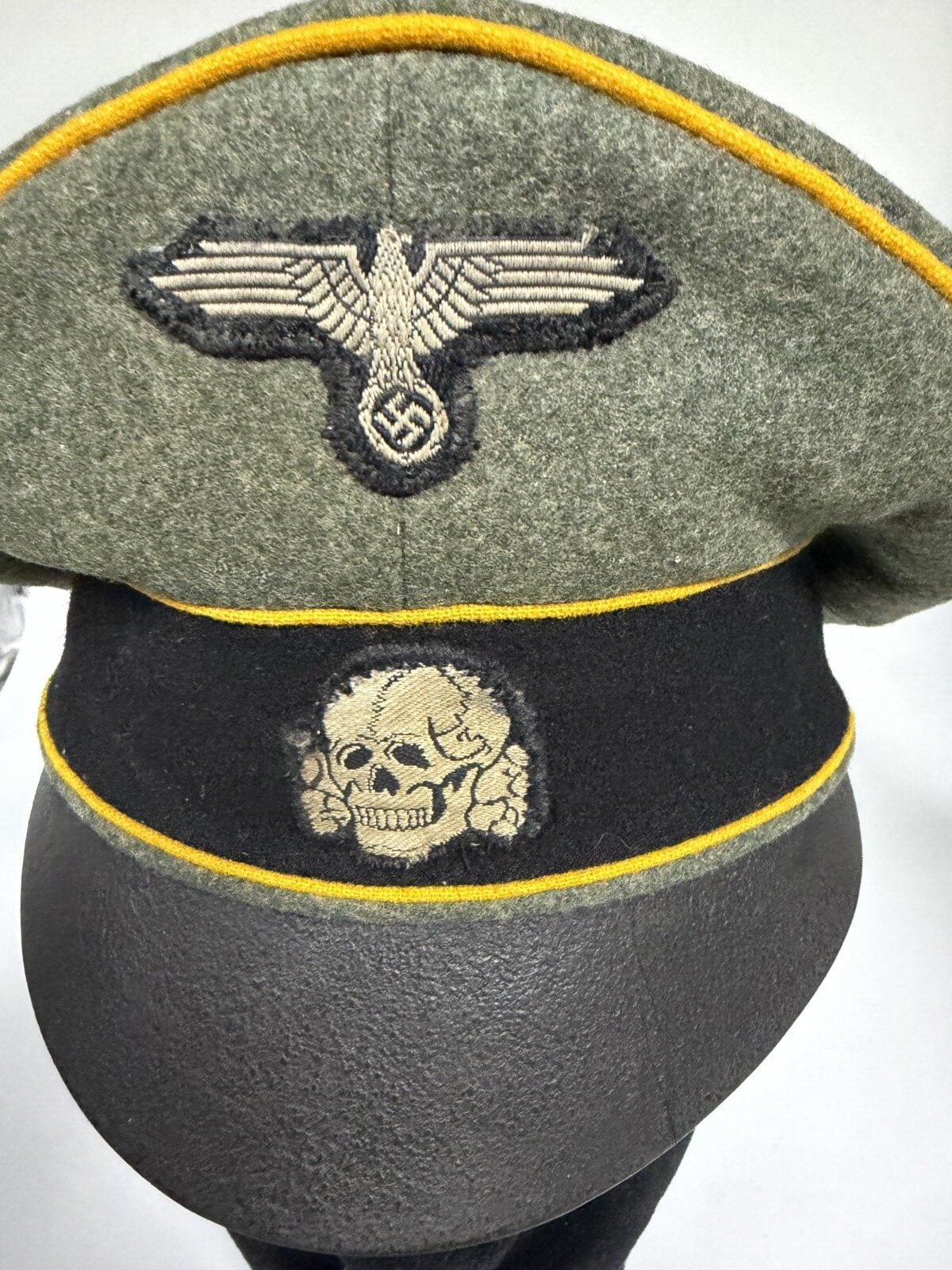
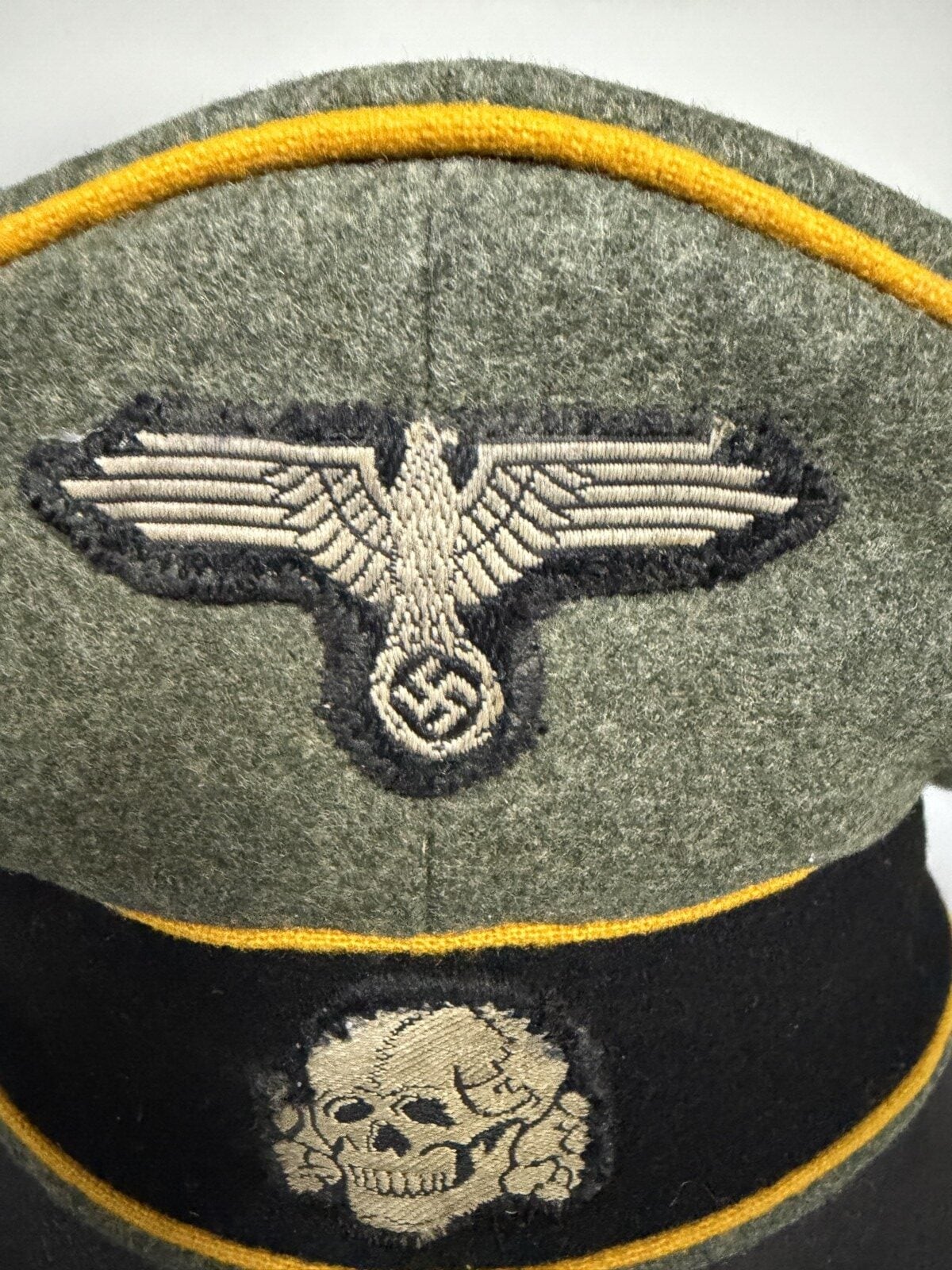
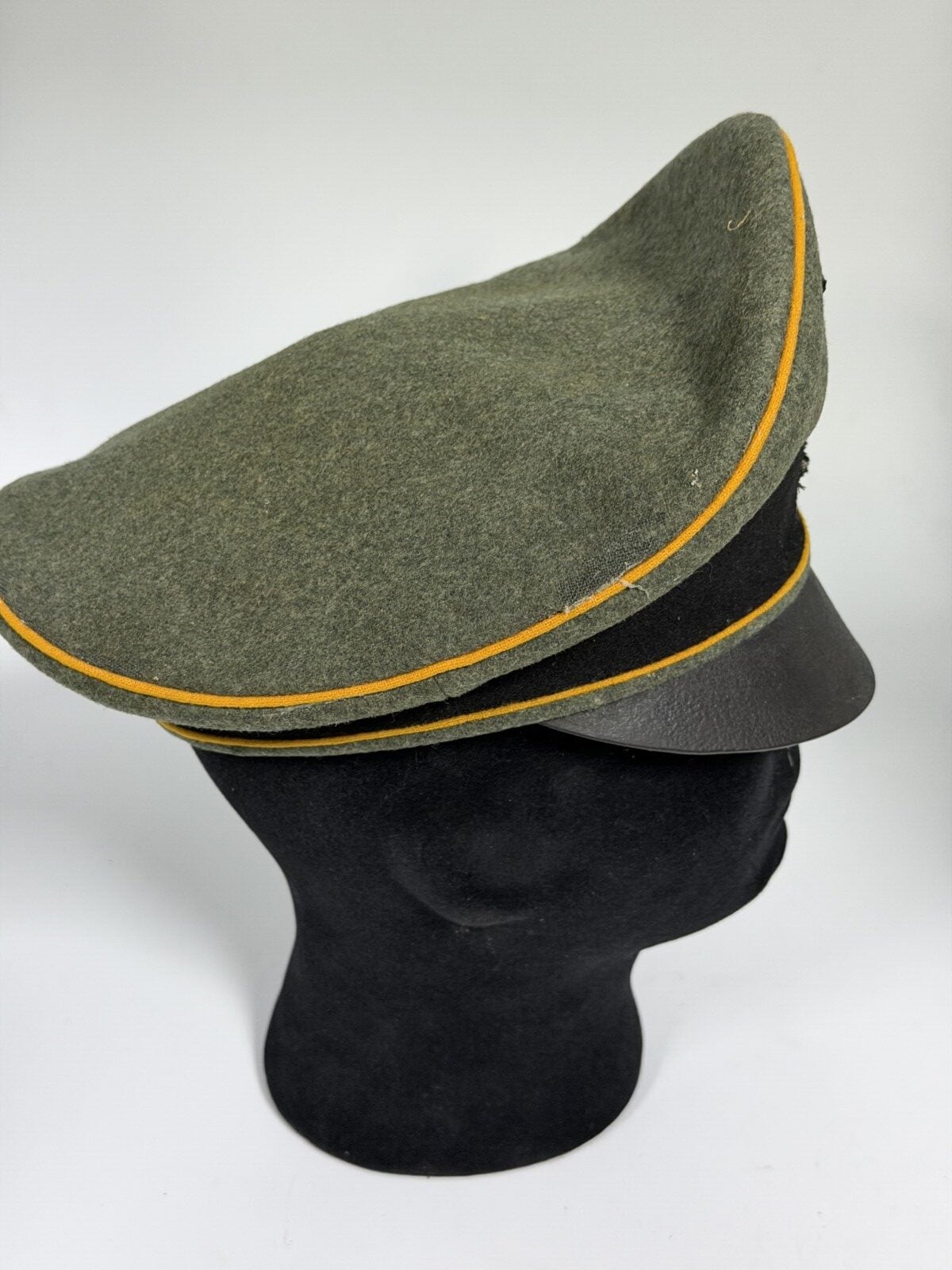
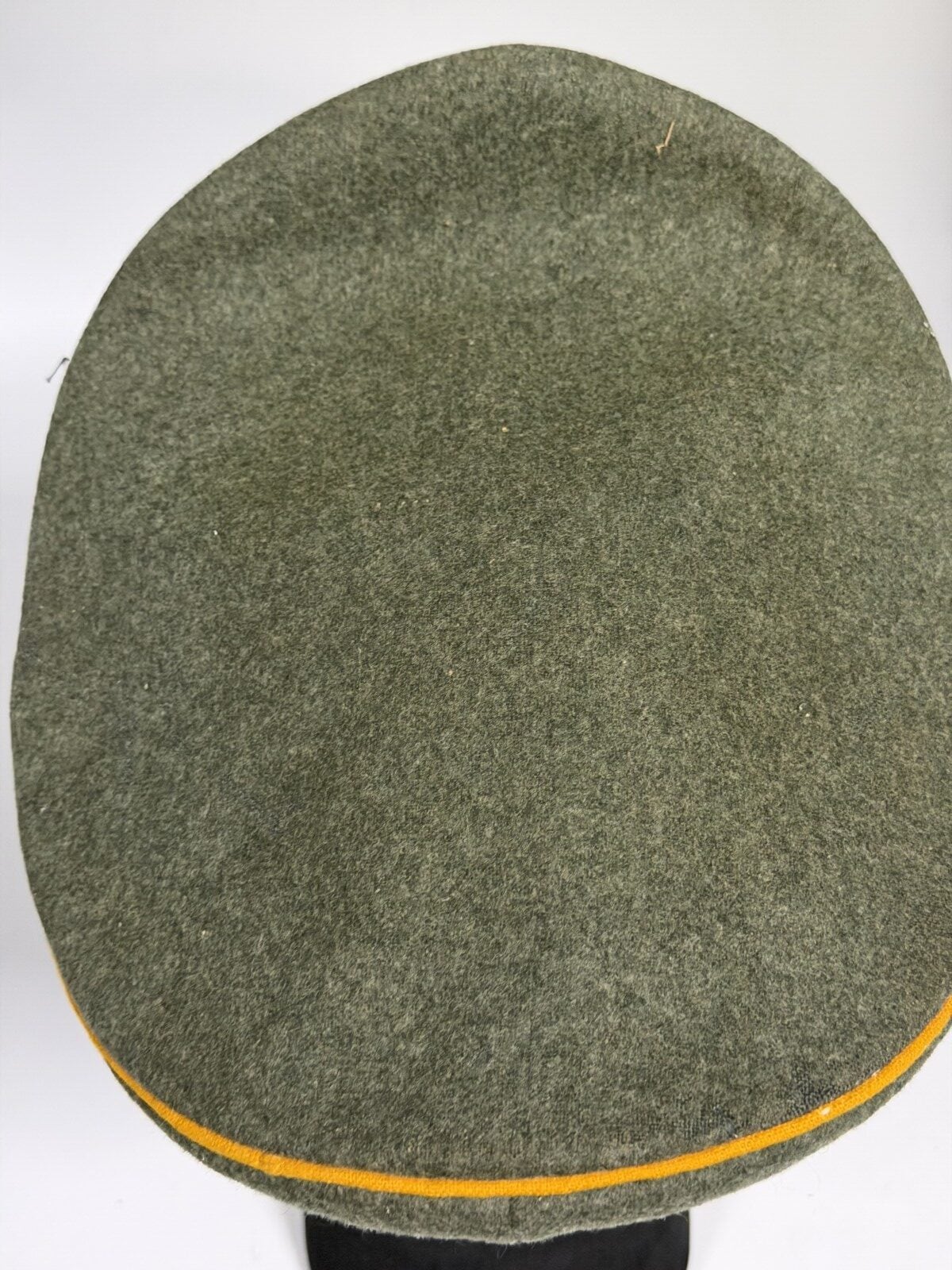
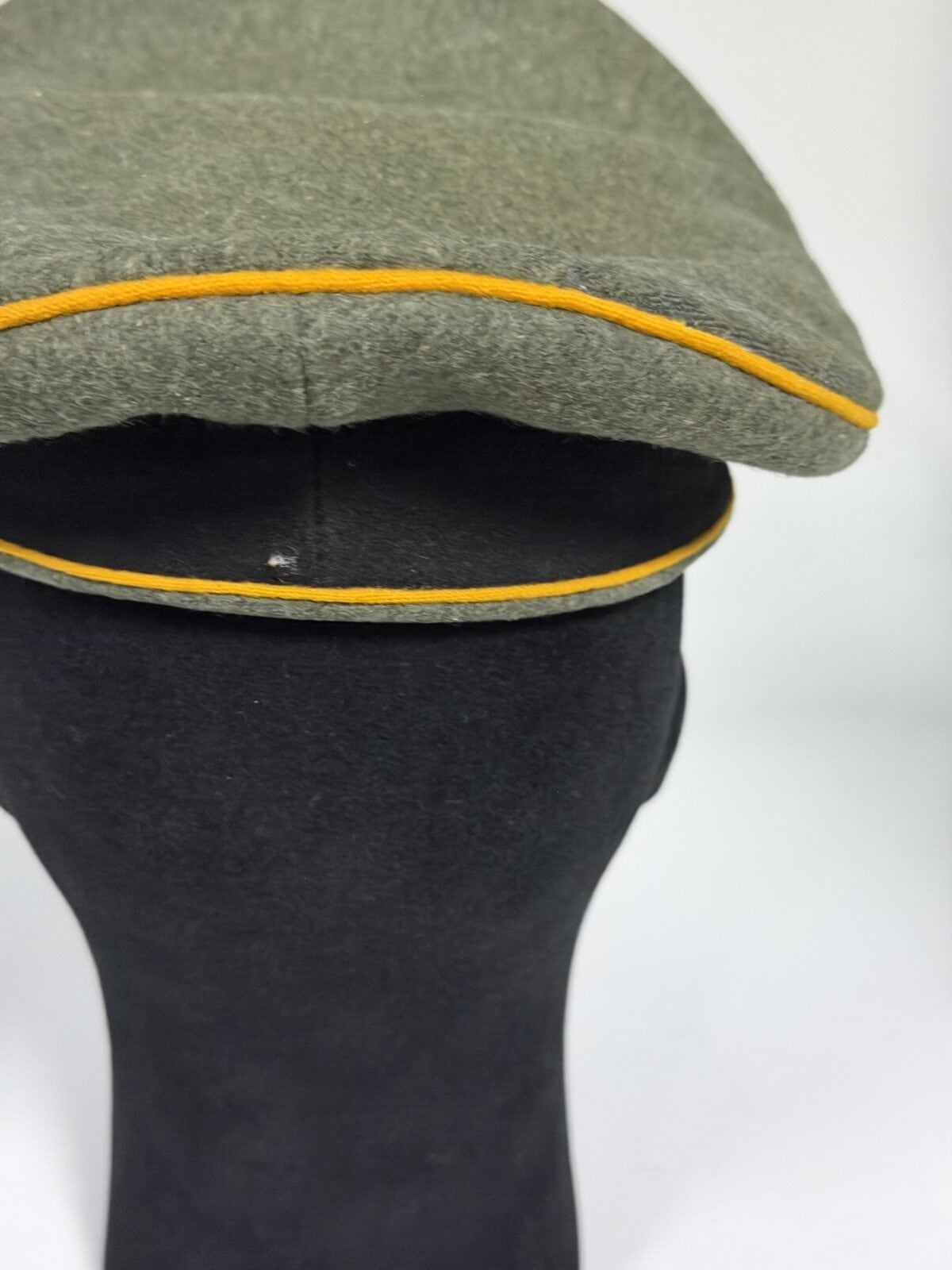
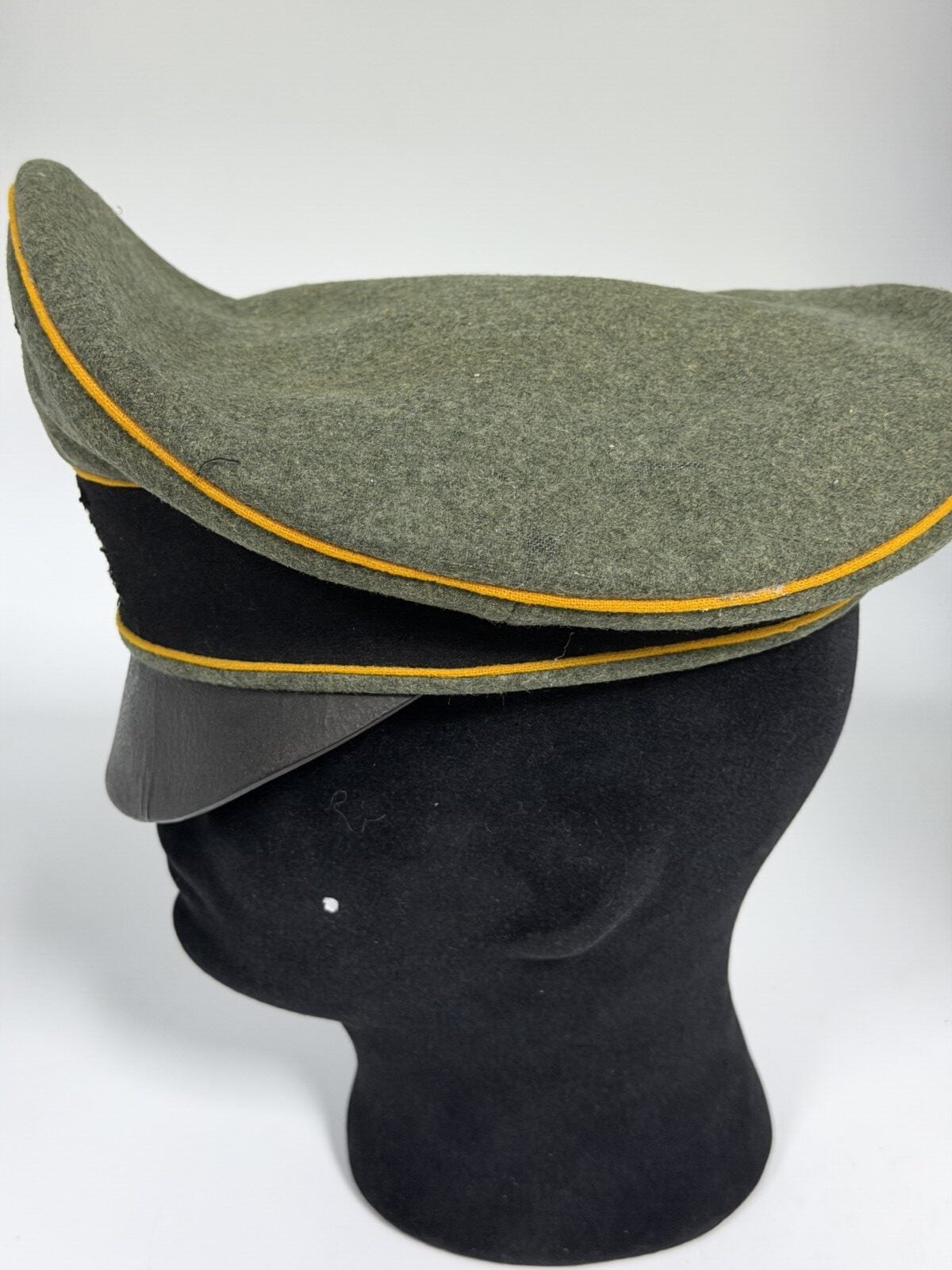
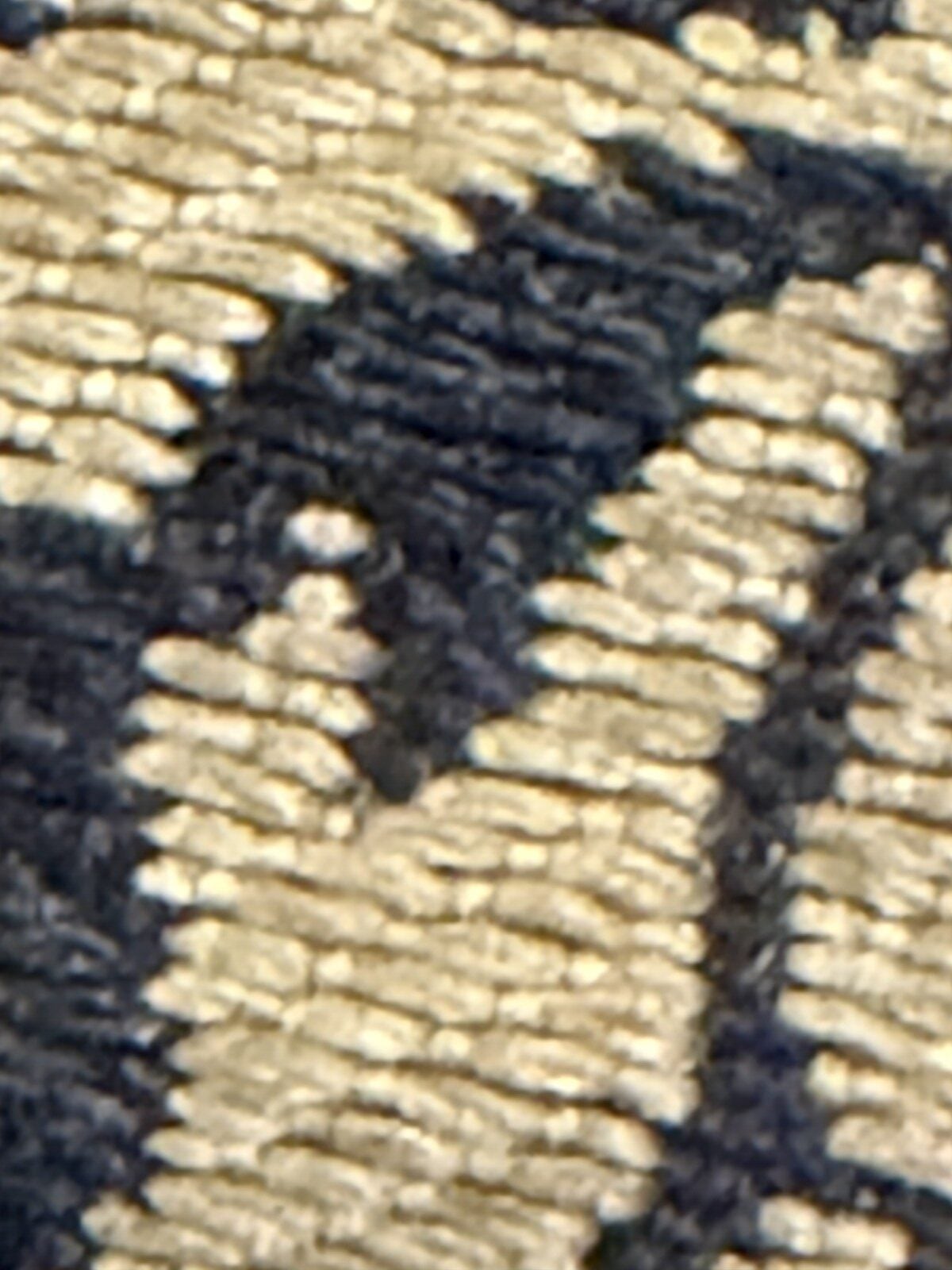
This Waffen-SS cavalry crusher cap combines a soft field-grey crown with a black cloth centre band. Golden-yellow piping follows the crown seam and both edges of the band, giving the cap its distinctive branch-coloured appearance.The outer cloth has a coarse texture, which the owner describes as rough to the touch. Its soft crown forms the relaxed profile associated with crusher-style headgear. Below the band, a black peak shows a grained surface and visible creasing.No chin cords are fitted.
Woven eagle and Totenkopf insignia
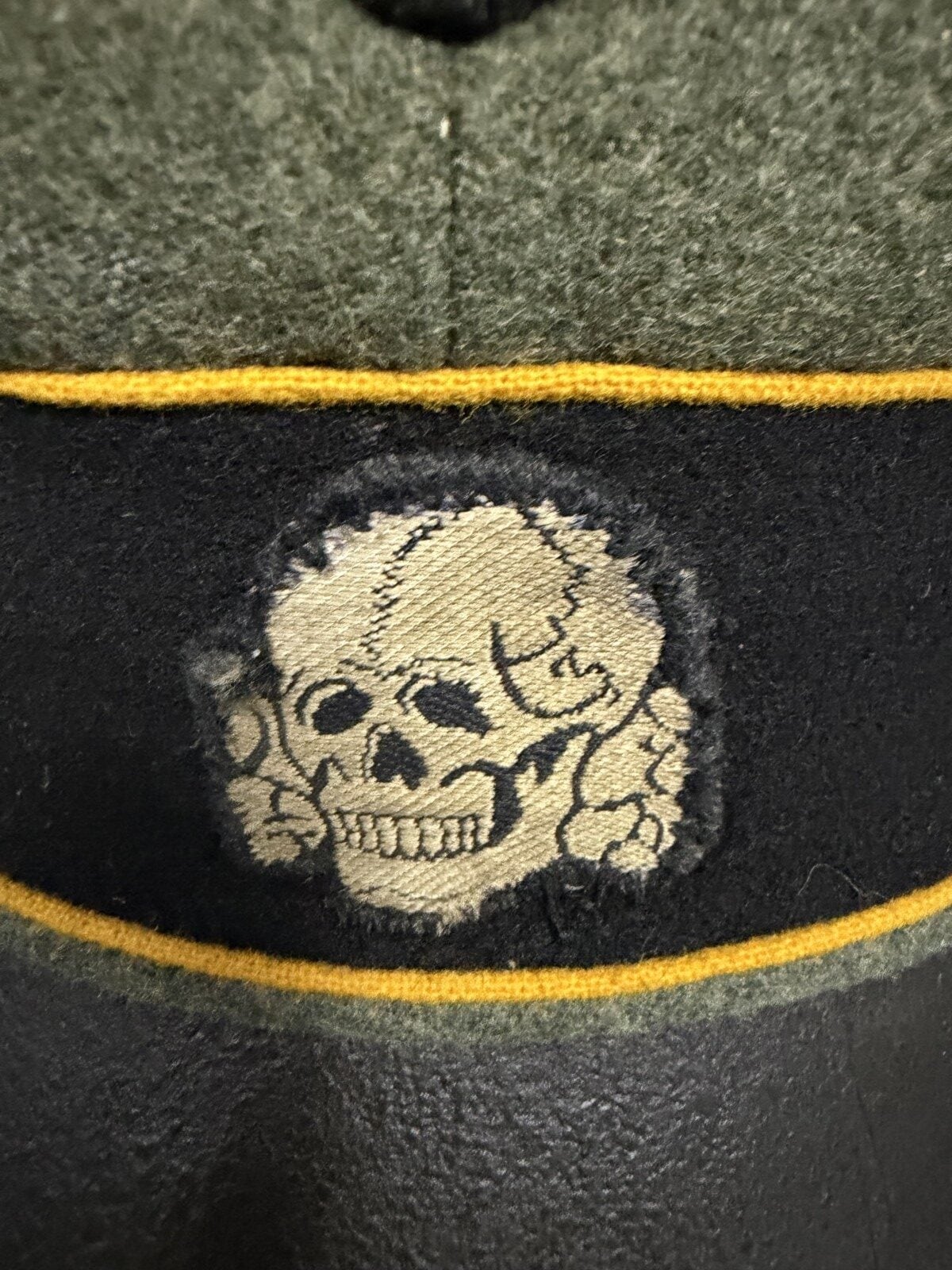
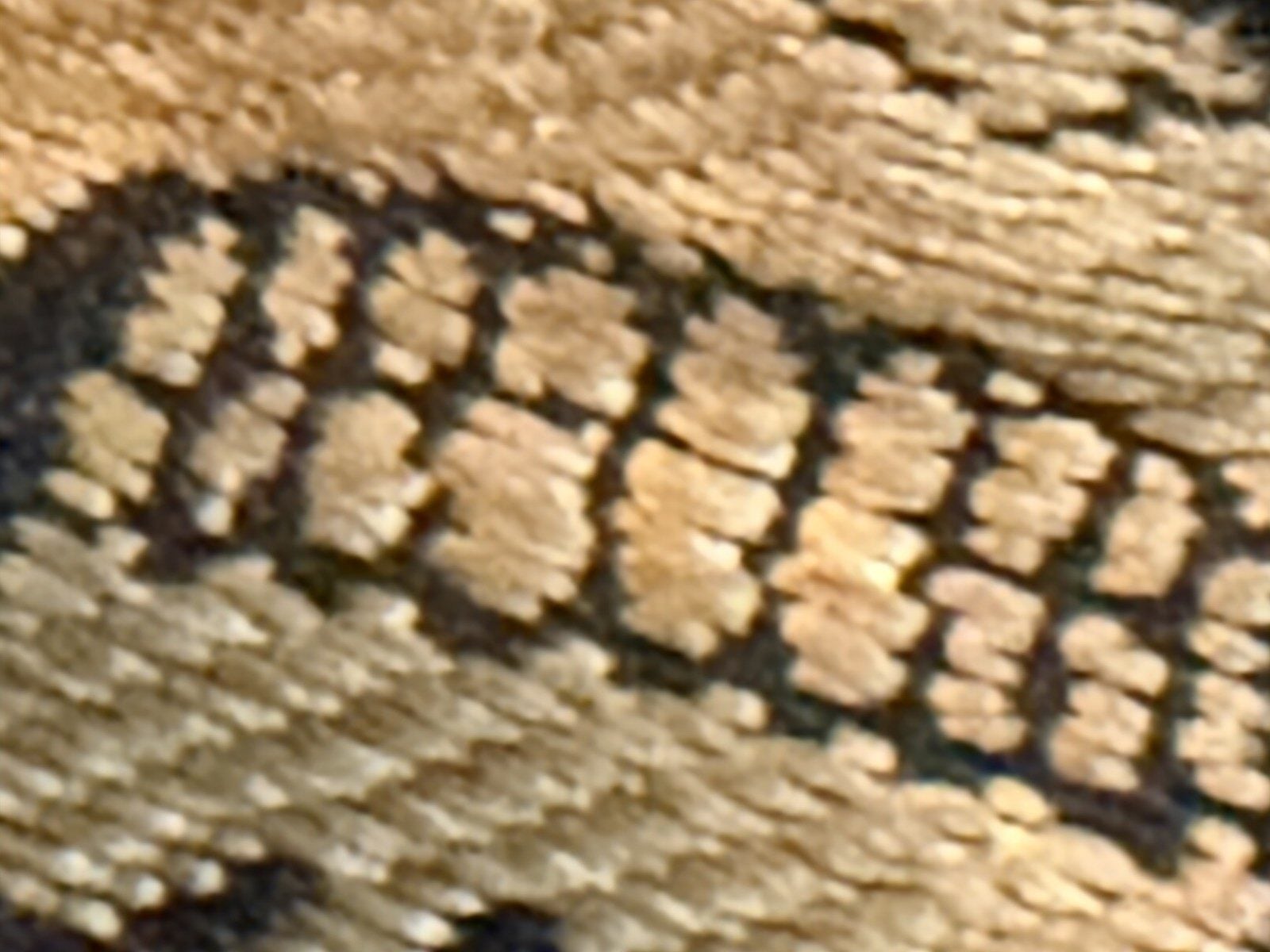
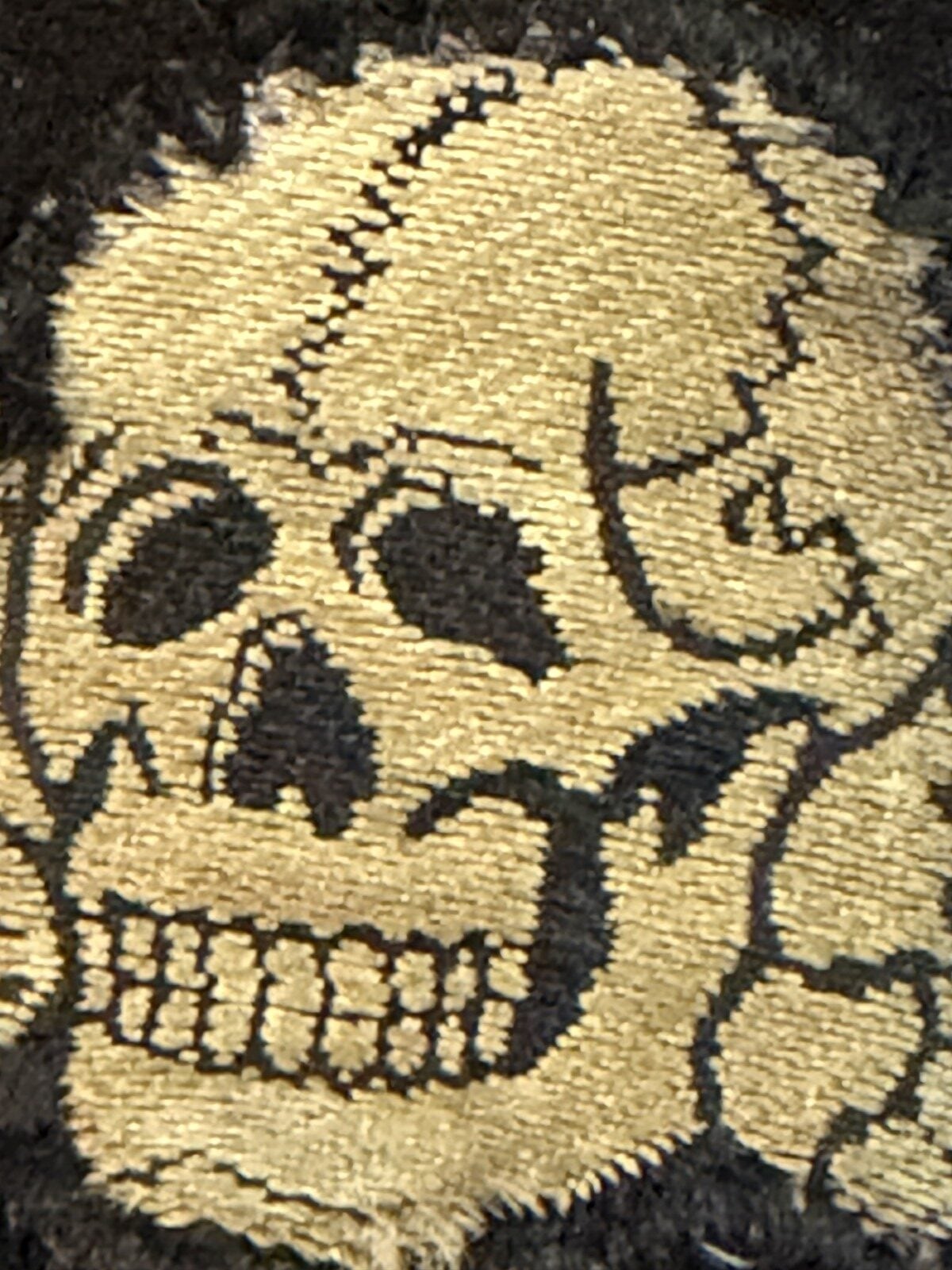
A pale woven SS-pattern eagle sits above the centre band. Beneath it, the woven Totenkopf displays the skull, crossbones and two rows of teeth.Both insignia have dark backing material and closely trimmed edges. Close-up photographs show their weave, attachment stitching and areas of fraying. The description records them as woven cloth insignia without assigning a specific manufacturer or metallic-thread composition.
Interior, size and maker
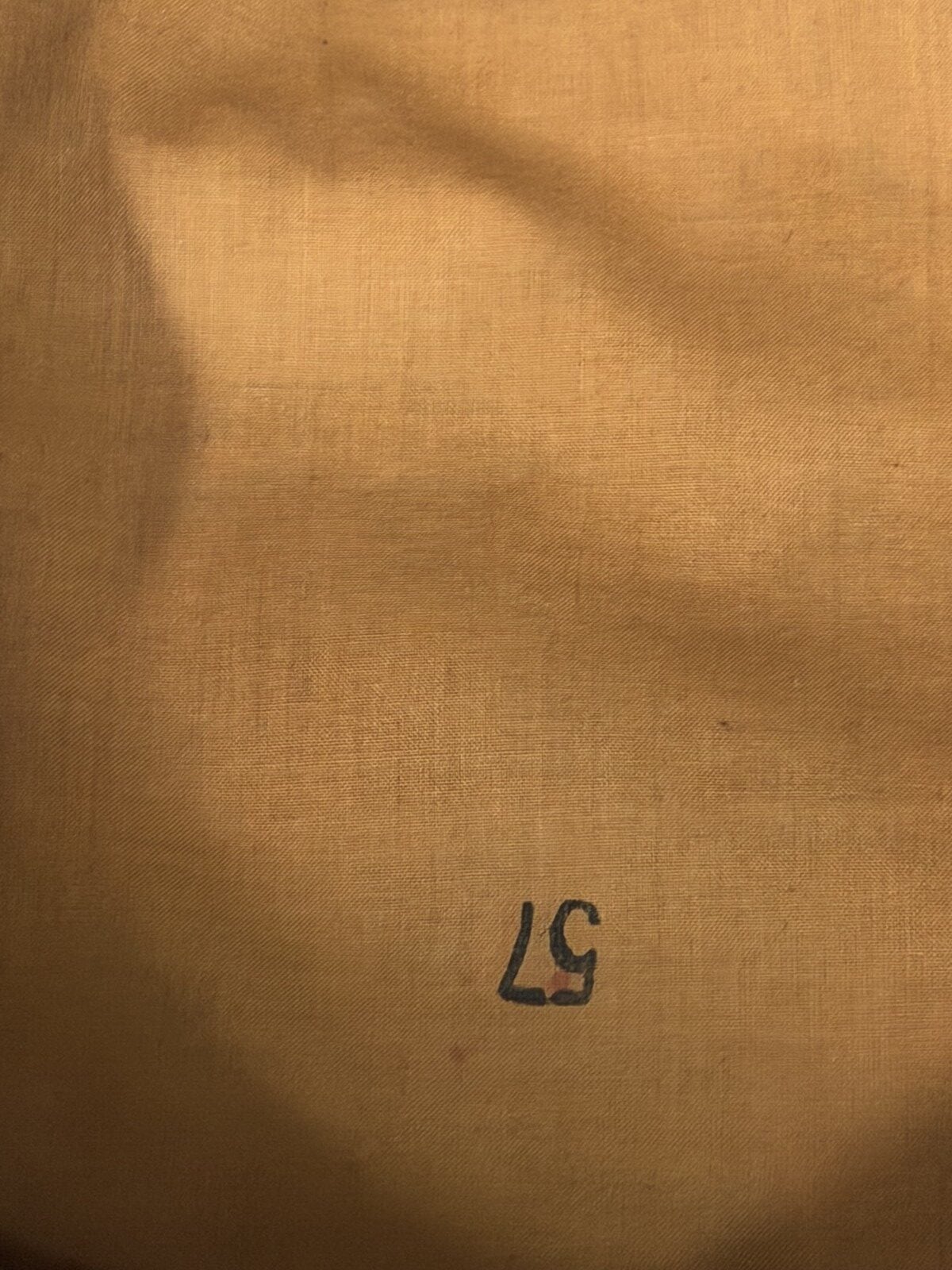
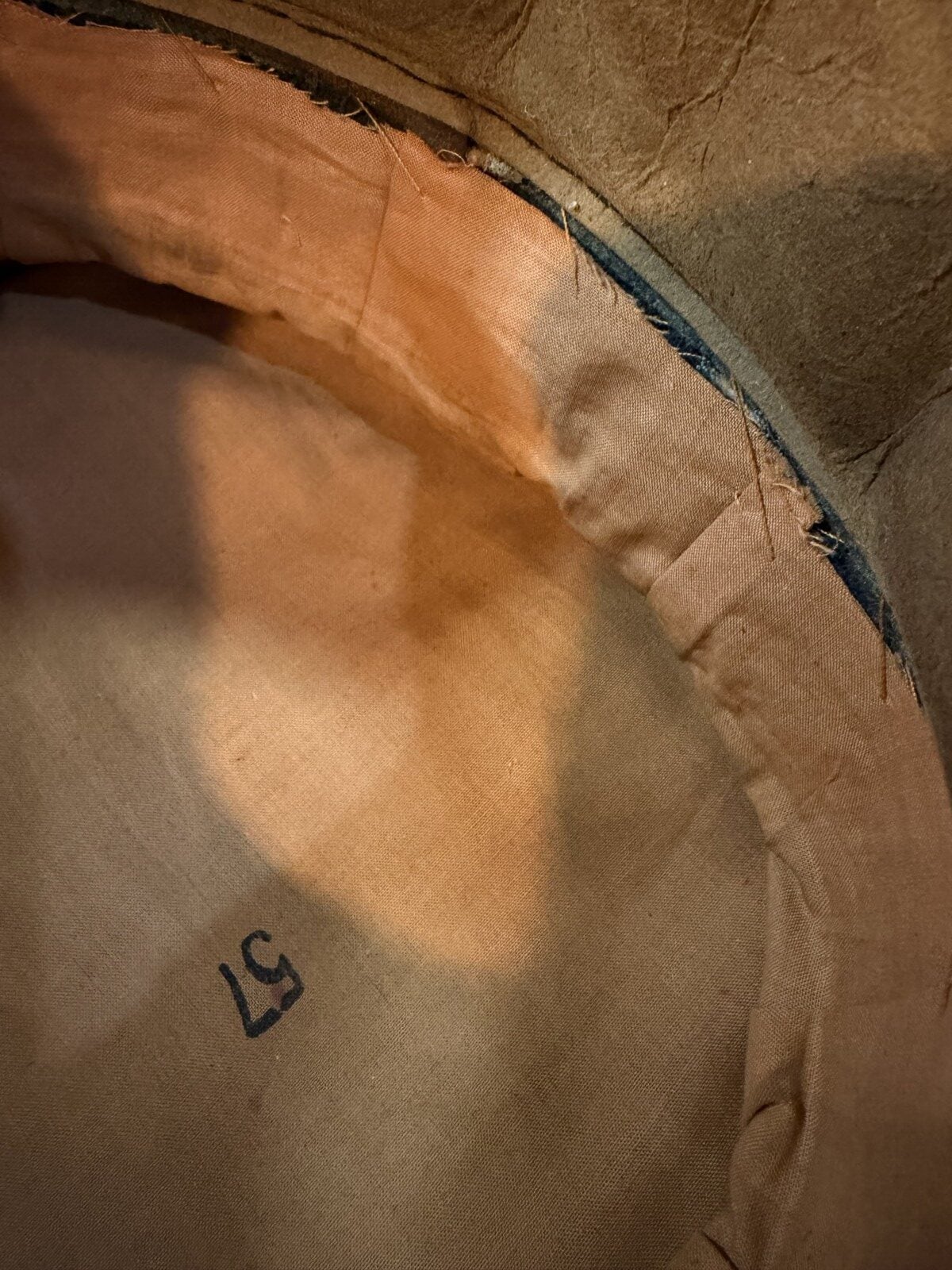
The cap has a golden-tan textile lining bearing a clear
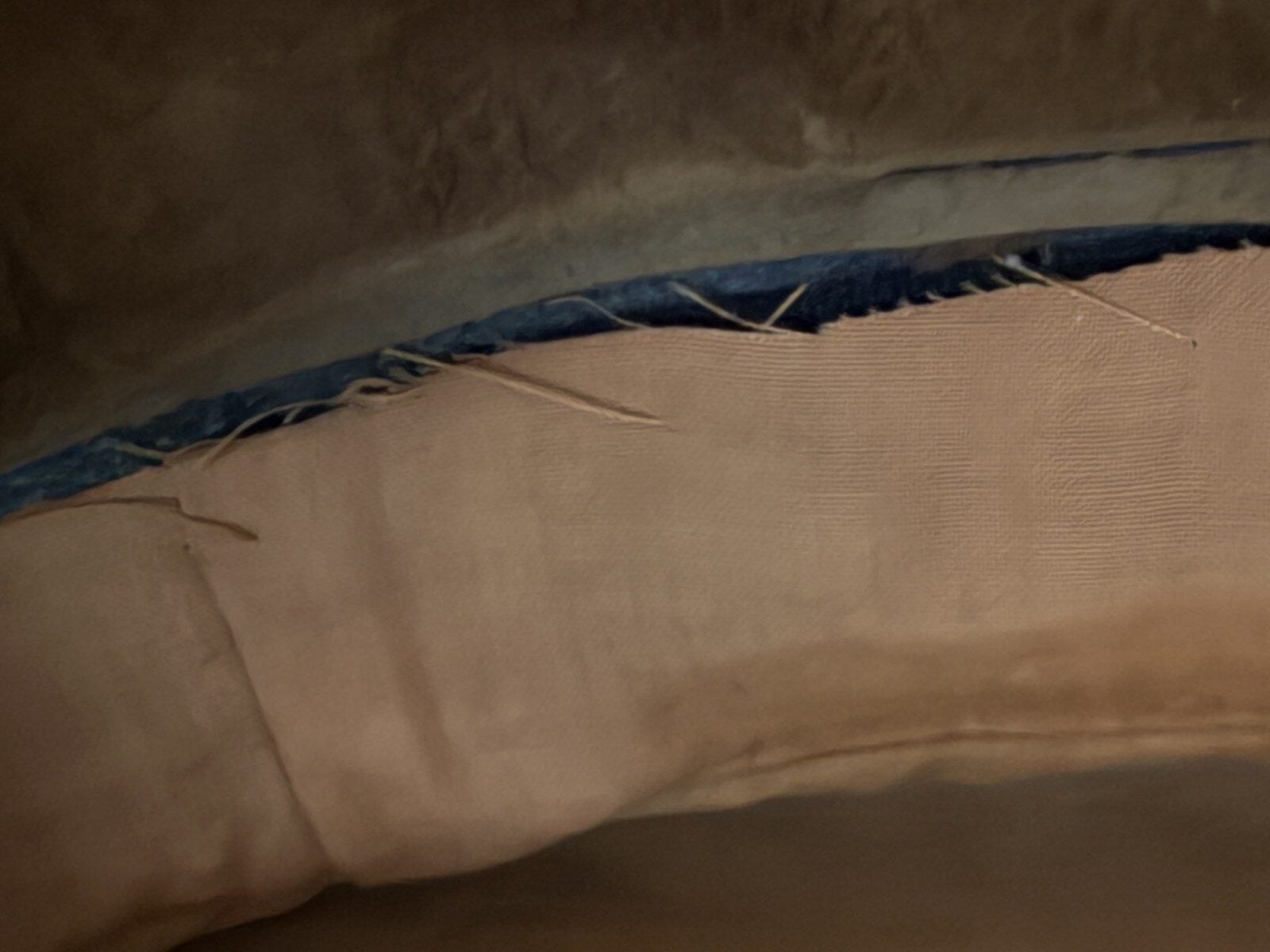
size 57 stamp. A pale tan sweatband runs around the interior, with ventilation perforations visible in the detailed photographs.Views beneath the sweatband reveal woven reinforcement material and attachment stitching. Some lining edges show loose threads and local separation.No legible maker’s name or production date has been identified. Consequently, the cap remains unattributed to a particular manufacturer.
Cavalry attribution and historical context
Golden-yellow Waffenfarbe supports the cavalry attribution. However, piping colour alone cannot identify a particular regiment, division or wearer.For comparison, the
Collector’s Guild cavalry visor-cap reference illustrates the same branch colour on a different Waffen-SS cap configuration. It provides context for the colour attribution rather than authentication of this example.
Condition and UV examination
The cap shows surface wear, creasing and local abrasion. Loose fibres appear along sections of