
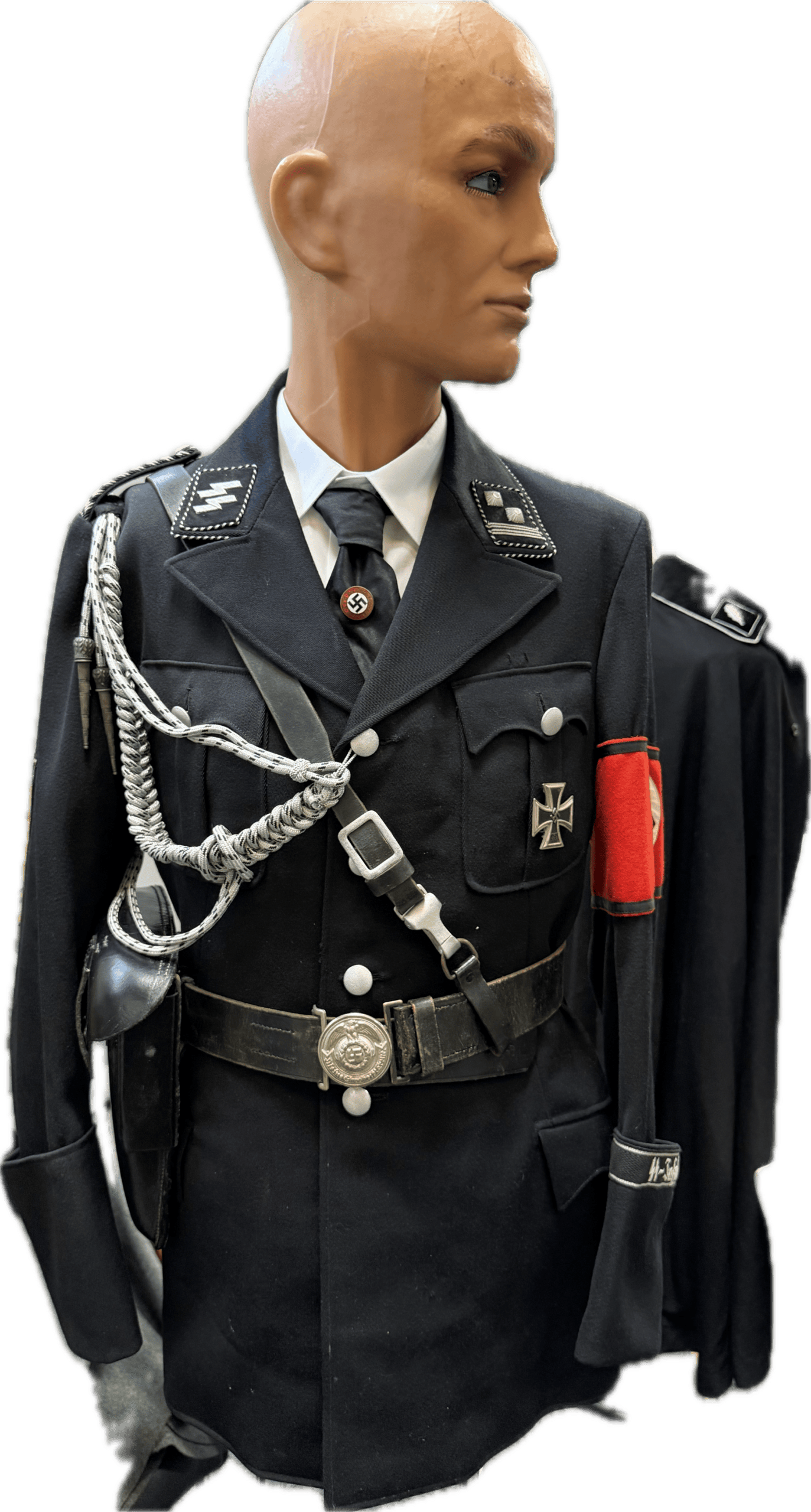
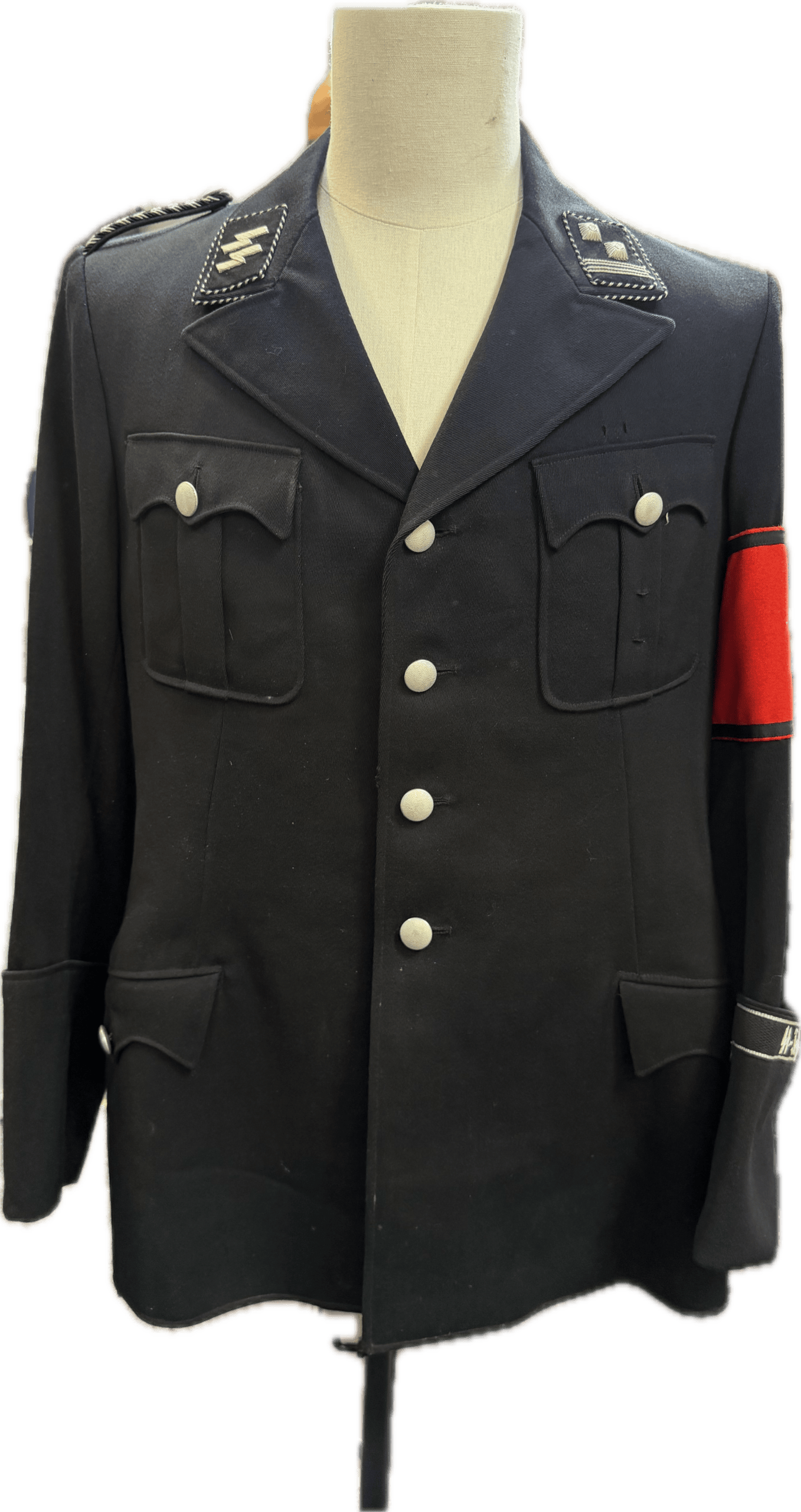
Exceptional SS-Inspektion black service tunic configured for the rank of SS-Hauptscharführer and retaining extensive pre-war SS insignia.
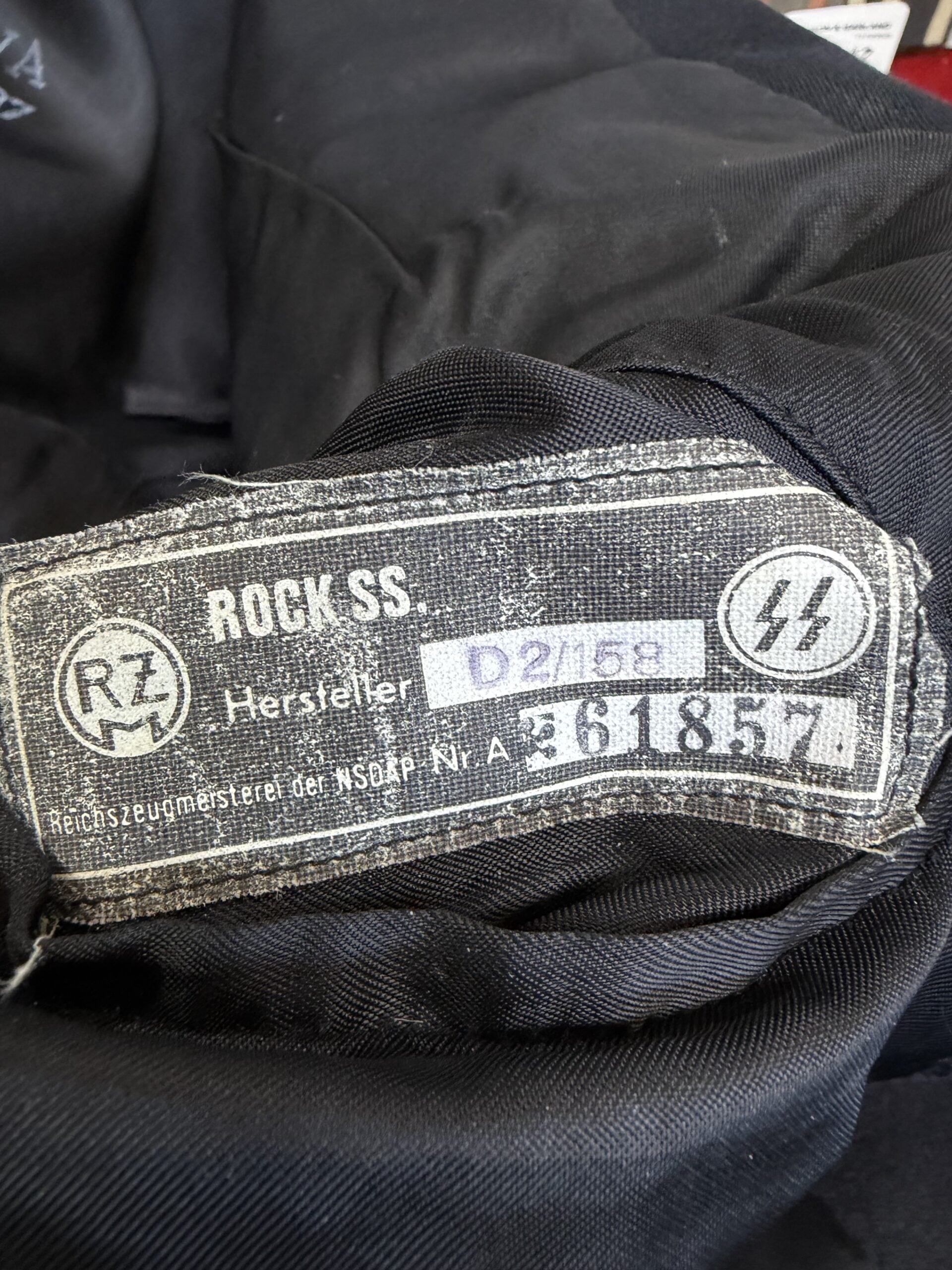
The black service tunic carries a clear VA 1937 acceptance marking and size 50 stamp. Moreover, the interior retains its large printed RZM ROCK SS control label.
Its insignia includes black-and-silver piped collar tabs, a braided NCO shoulder board, SS armband and rare SS-Inspektion cuff title. Consequently, the tunic represents an unusually complete surviving example of early SS uniform construction.
€ 16.500
Out of stock
This SS-Inspektion black service tunic is an impressive pre-war black SS uniform dating from 1937.
Fine black cloth forms the tailored four-pocket body. Meanwhile, the characteristic open collar, turn-back cuffs and rear skirt construction follow established SS service-uniform styling.
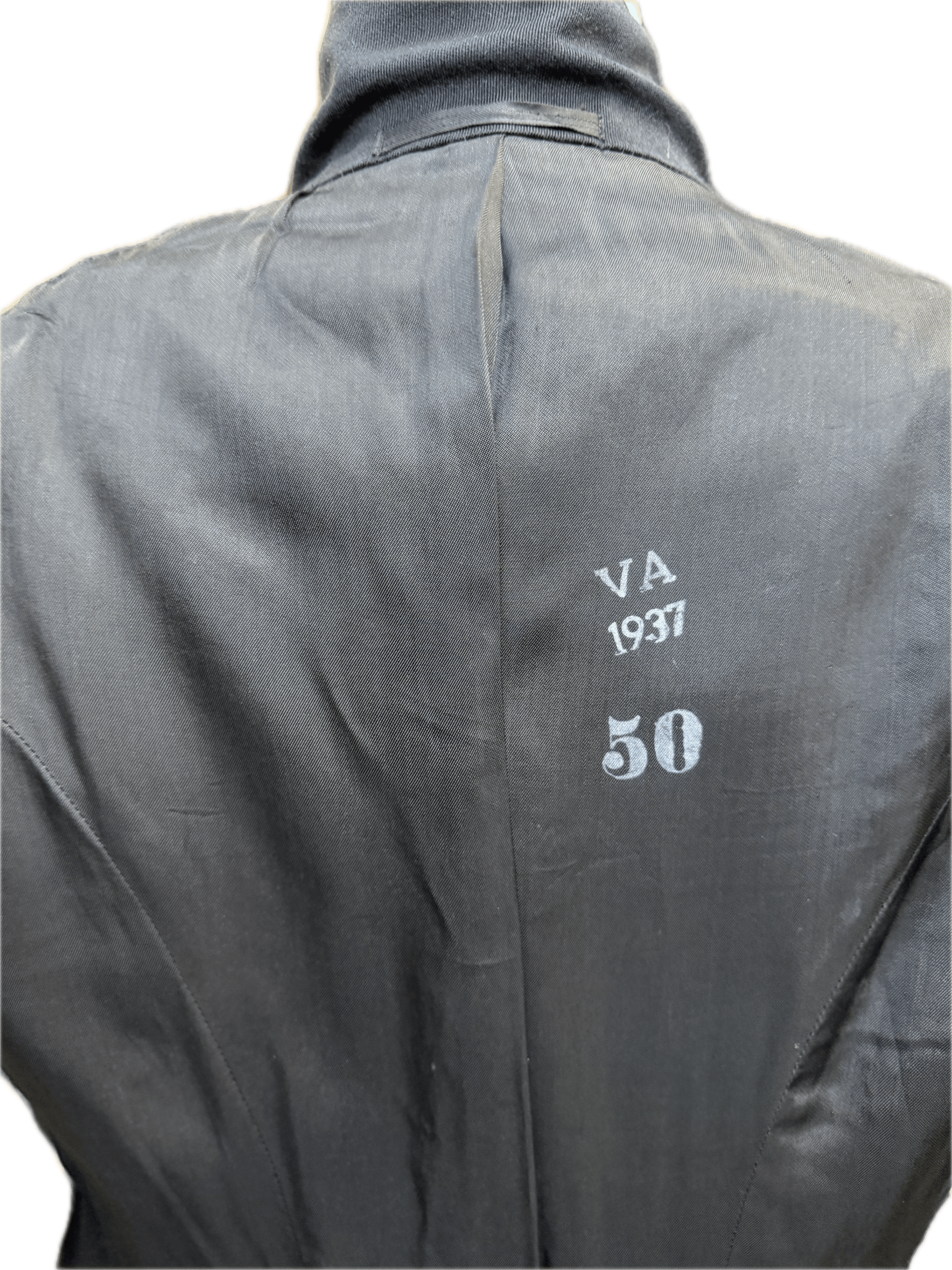
A white interior marking reads VA 1937 above the size number 50. Furthermore, the internal pocket retains a large original-style RZM control label headed ROCK SS.
Both features are particularly important when studying officially supplied SS clothing.
Comparable VA-dated SS garments survive in recognised collections and specialist archives. Therefore, these markings provide useful reference points when examining the tunic.
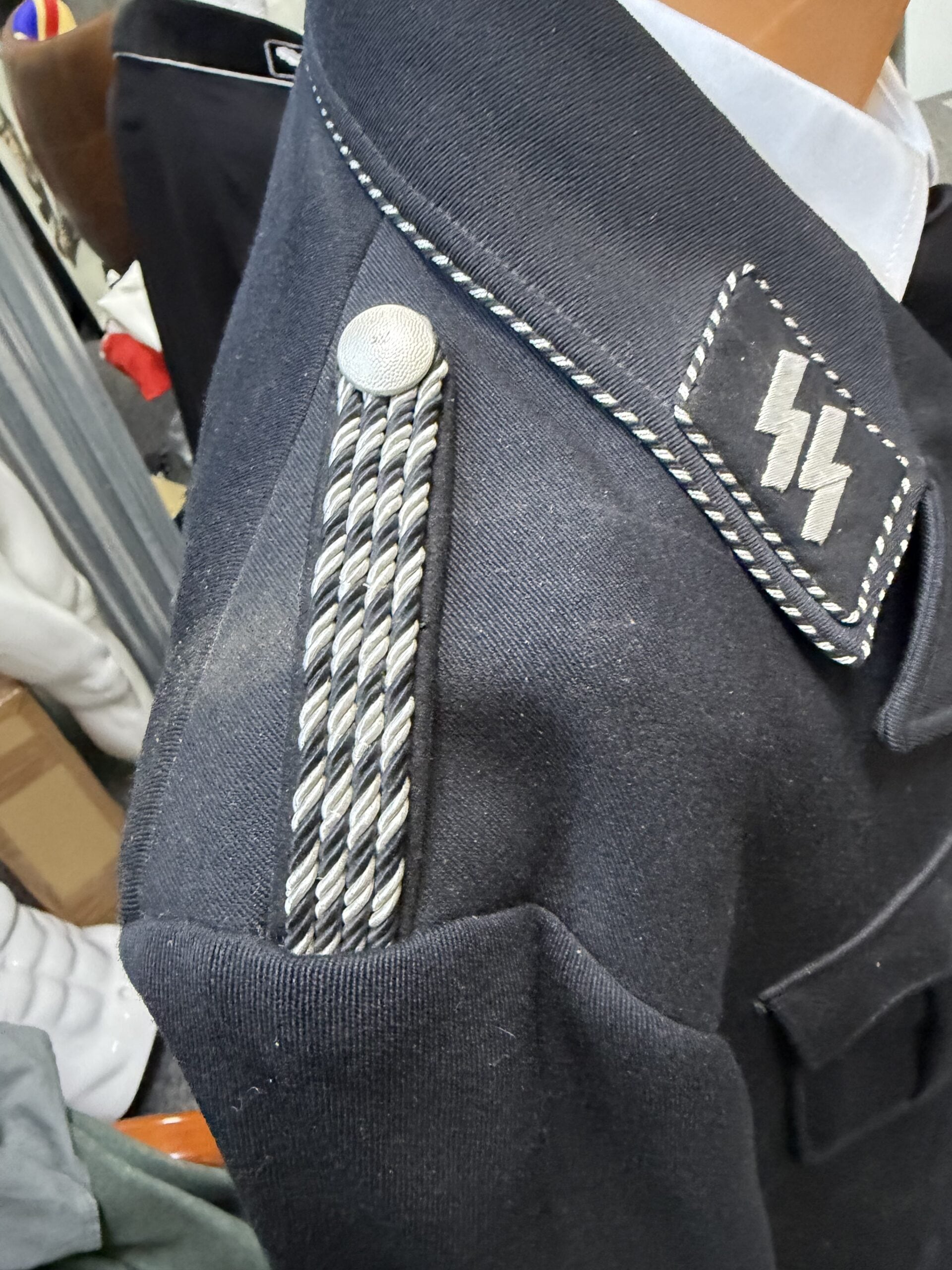
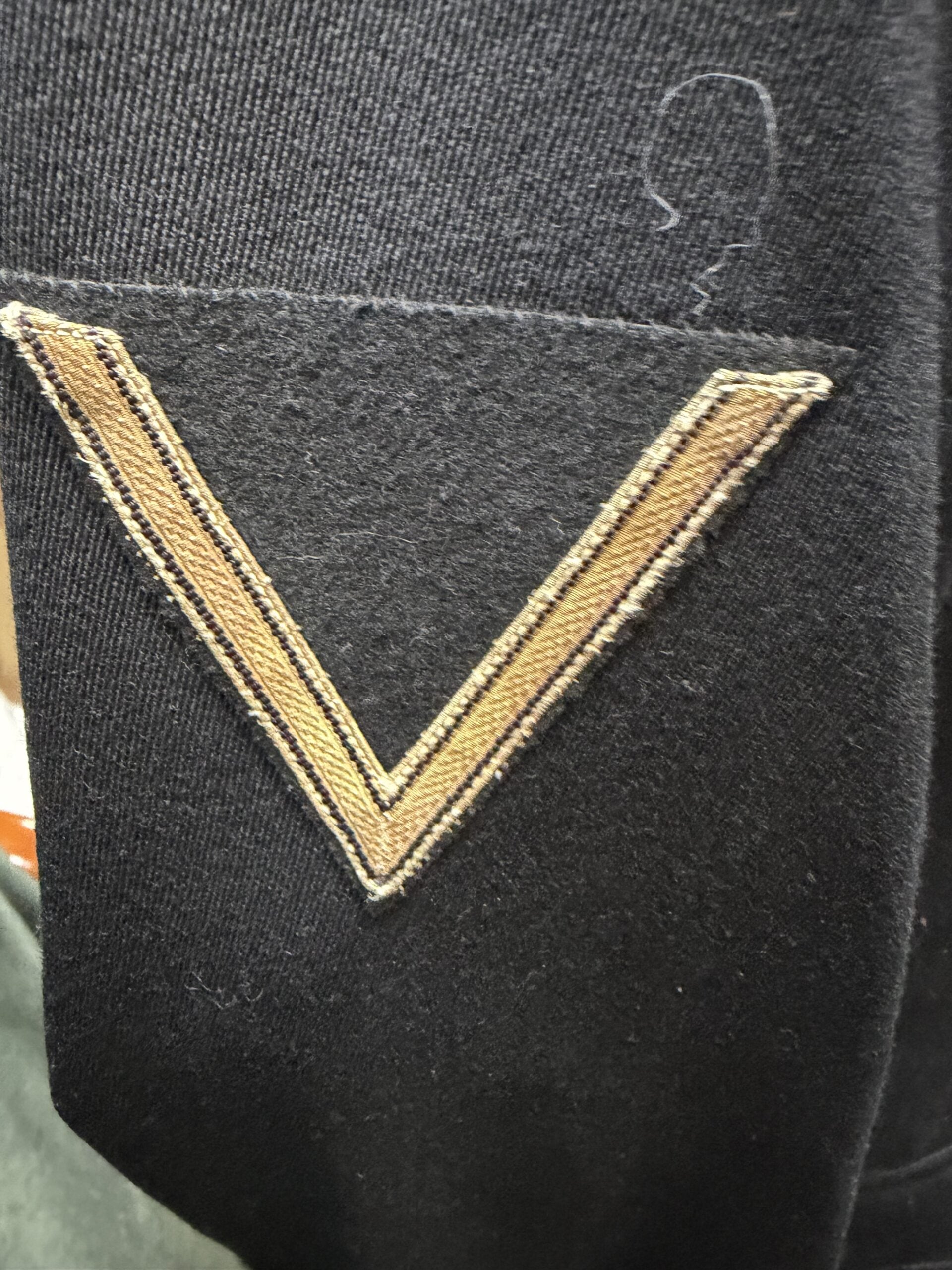
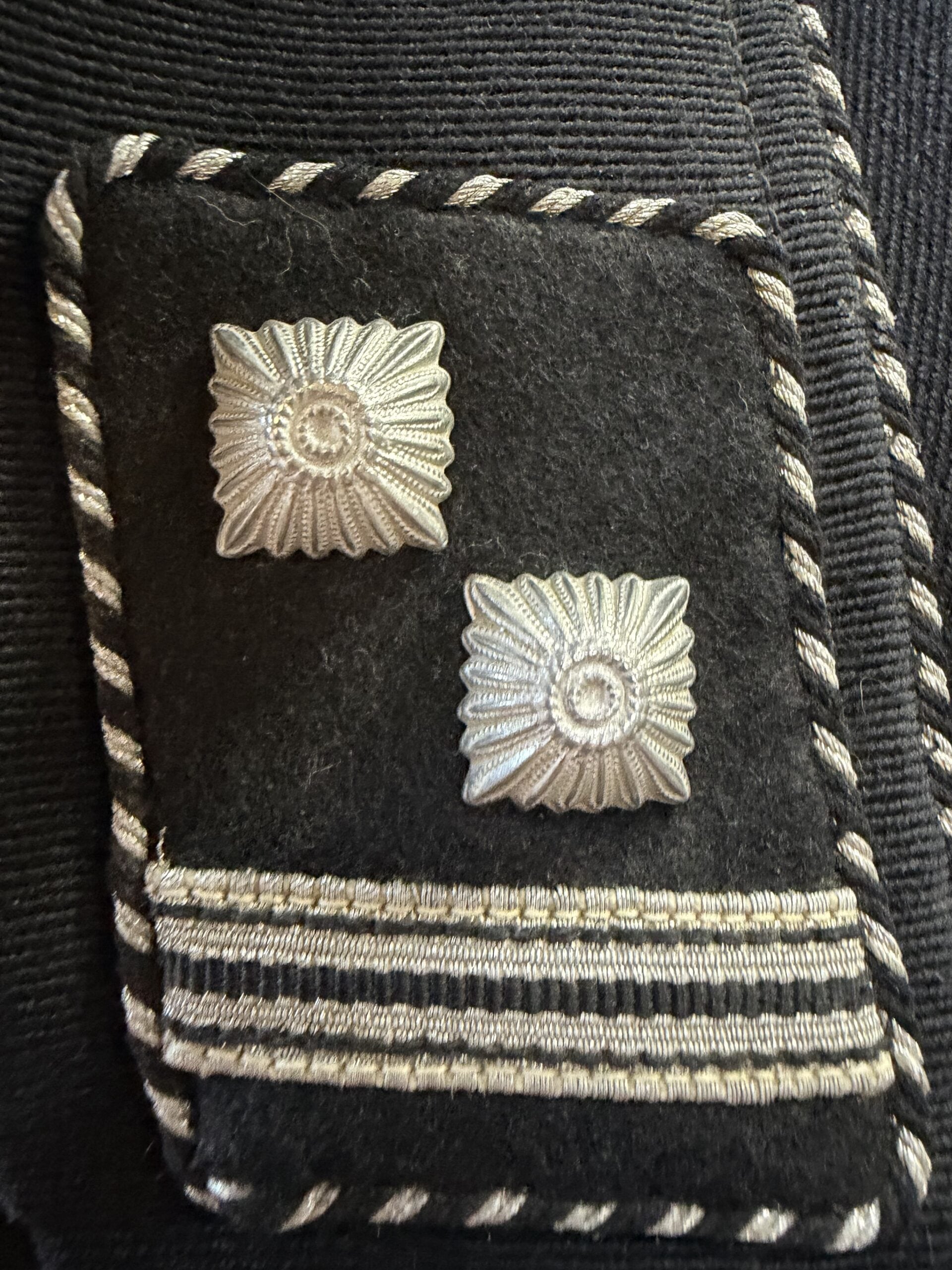
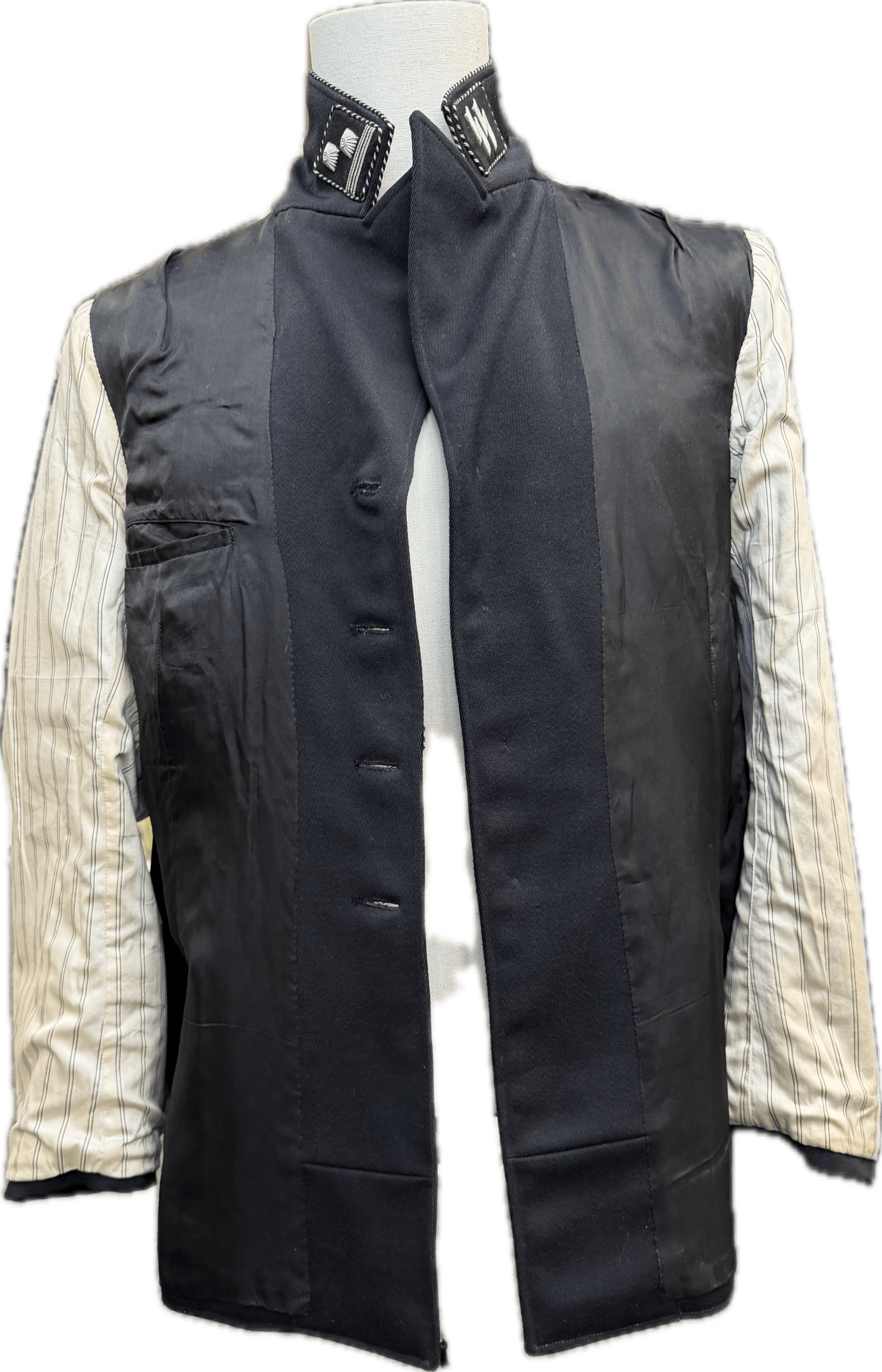
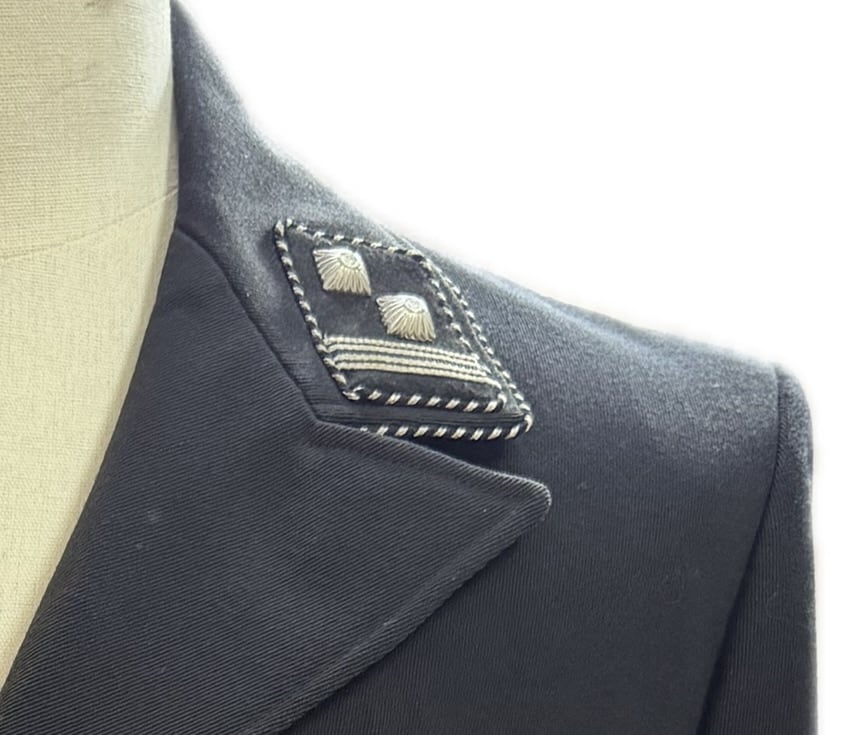
The left collar tab identifies the rank as SS-Hauptscharführer.
Two square metal rank pips sit above a single aluminium rank stripe. Additionally, black-and-silver twisted piping surrounds the tab.
This arrangement corresponds with the recognised SS-Hauptscharführer insignia pattern.
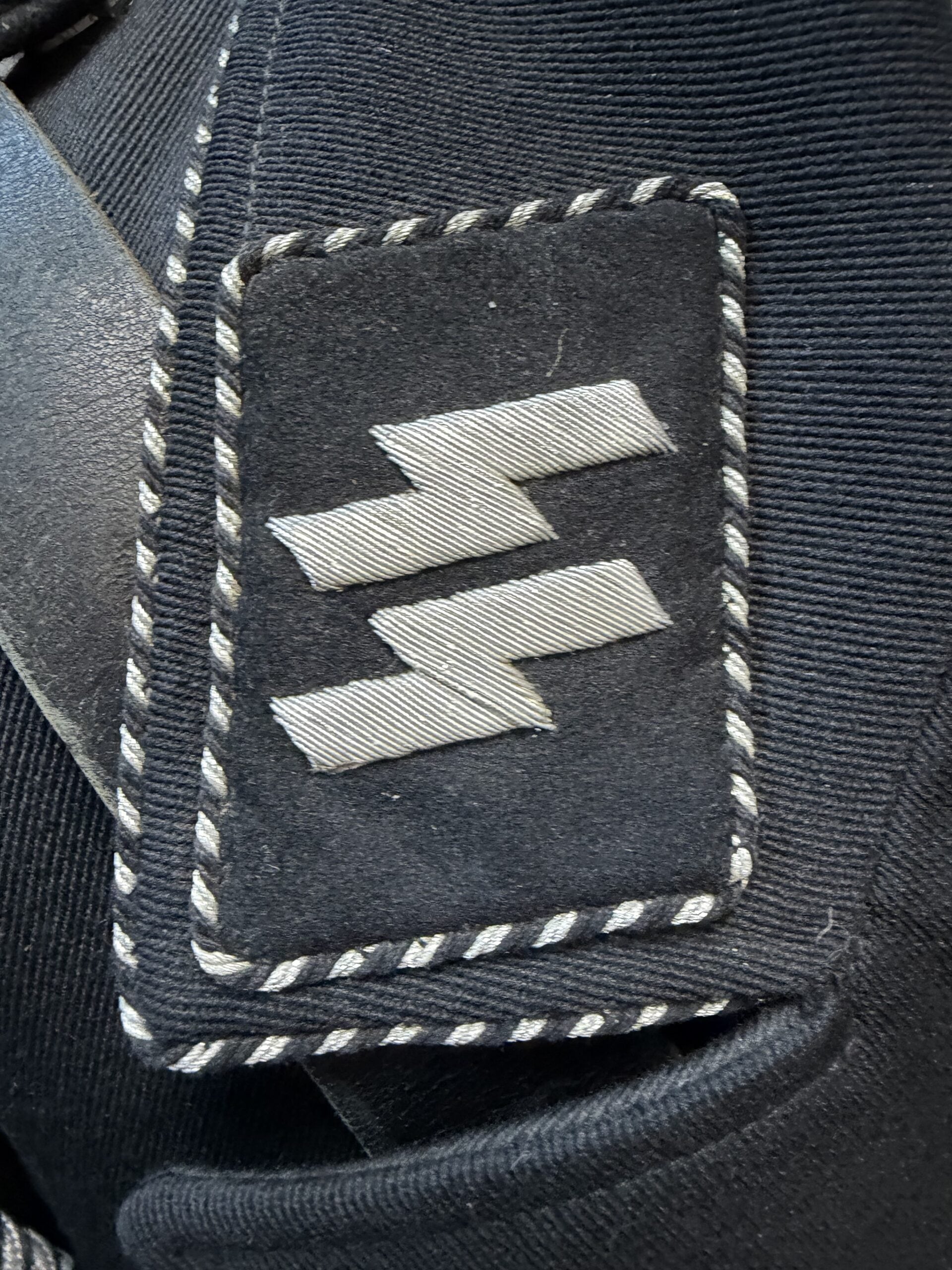
The opposite collar patch carries the familiar embroidered SS runes. Matching black-and-silver piping frames the cloth foundation.
A single braided black-and-silver shoulder board appears at the shoulder. Such single-board wear is characteristic of the pre-war black SS service uniform.
Together, these features create the appearance of a senior SS non-commissioned officer.
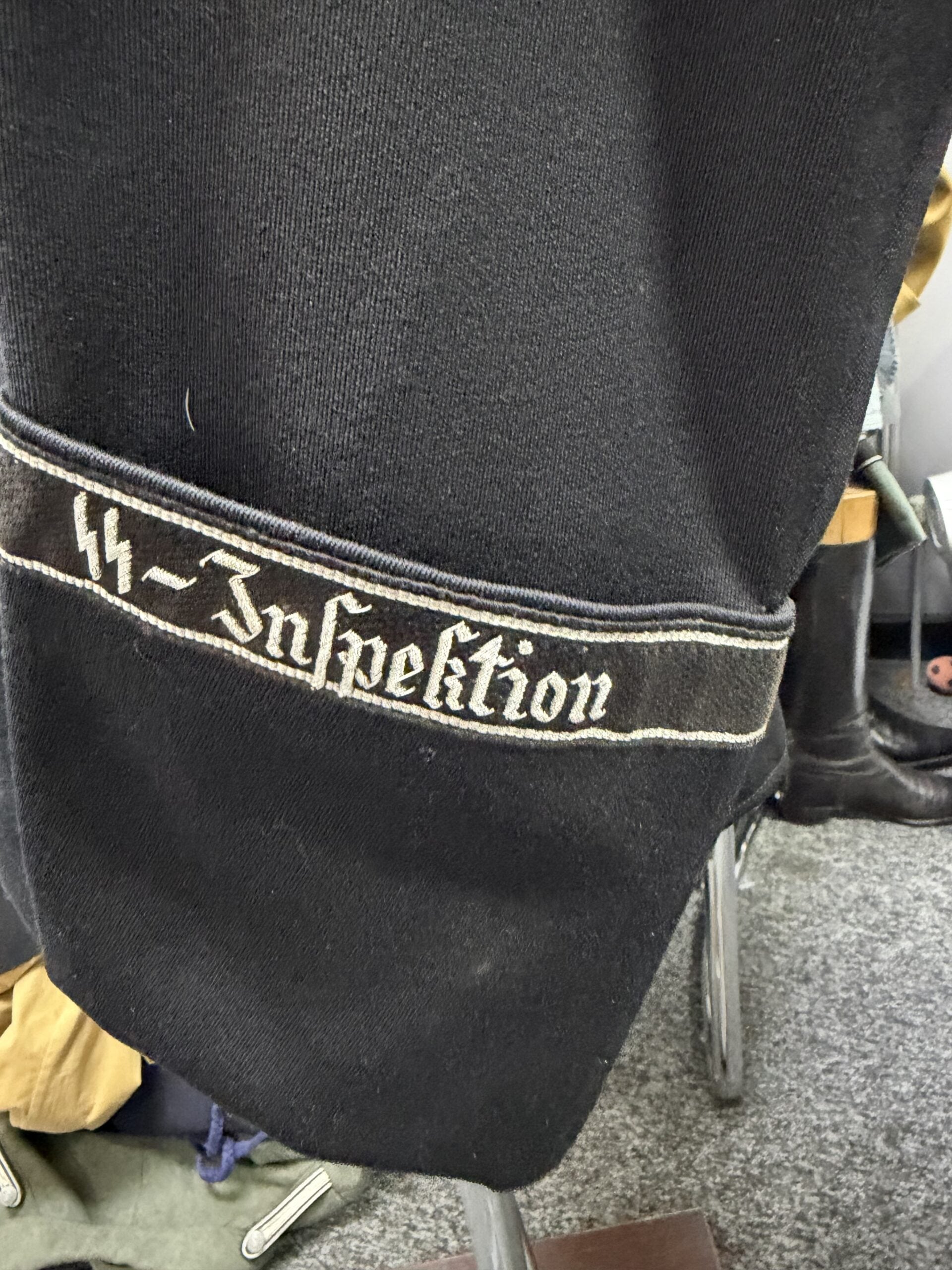
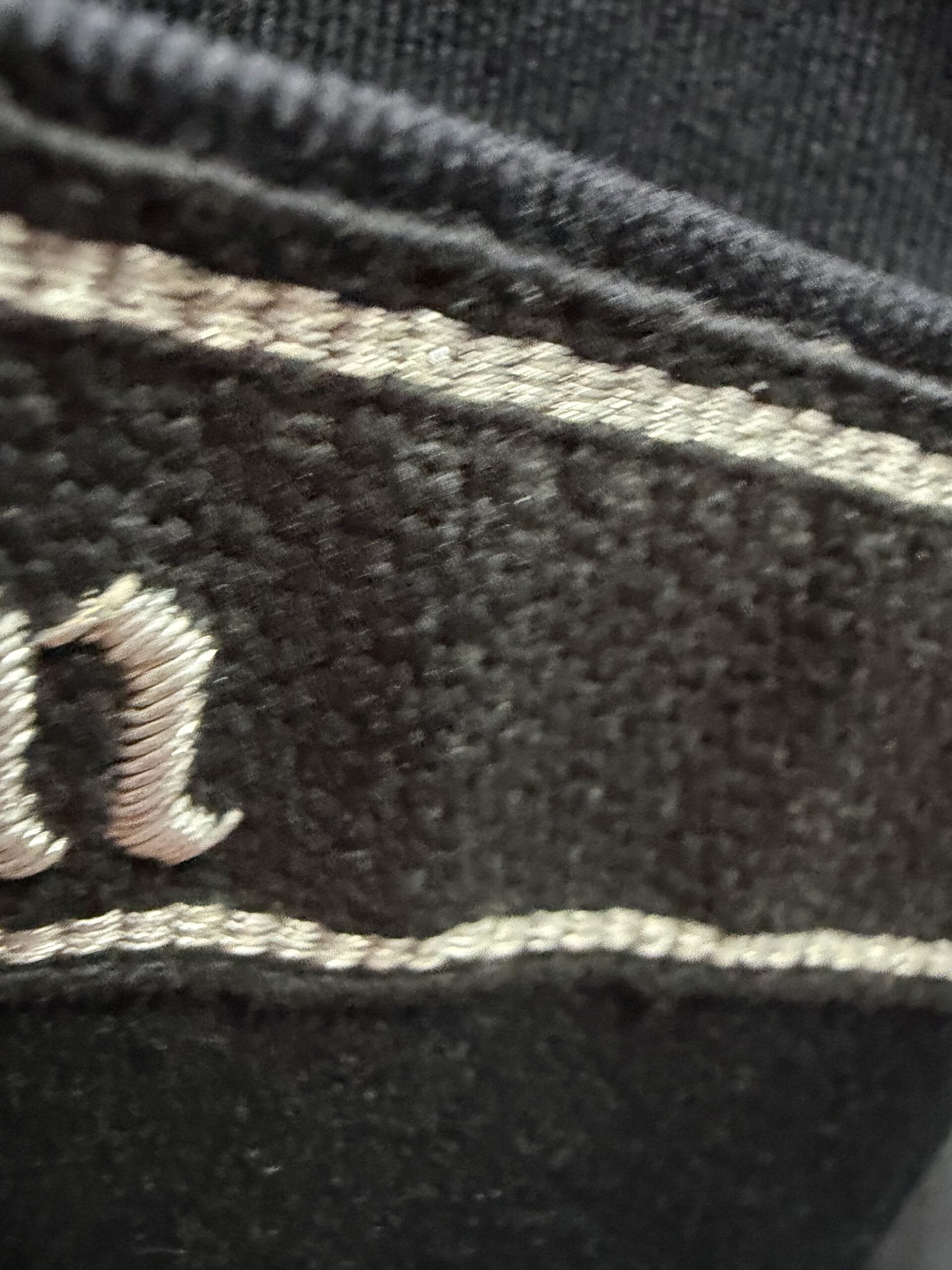
One of the most important components is the SS-Inspektion cuff title fitted to the lower sleeve.
Silver-grey lettering appears against a black foundation. Significantly, the inscription begins with SS runes followed by the Gothic word “Inspektion.”
The SS-VT Inspectorate supervised training and administration within the developing SS-Verfügungstruppe. Paul Hausser became Inspector of the SS-VT during the organisation’s pre-war expansion.
Published cuff-title references identify an earlier Gothic-SS version and a later version using runes. Subsequently, the SS-Inspektion title disappeared during the organisational changes of 1940.
Because comparatively few examples survive, genuine SS-Inspektion cuff titles rank among the more difficult SS administrative and SS-VT sleeve distinctions to obtain.
Collectors can compare this tunic with the Original SS-Inspektion Cuff Title – Unissued RZM Example currently held in the Nordmenn collection.
Nordmenn Uniforms and SS-Inspektion material:
Nordmenn Militaria Uniforms Collection
Another useful internal reference is the wider SS collection.
Related SS insignia:
Nordmenn Militaria SS Items Collection
Specialist reference material records a distinctive SS-VT Inspectorate right collar tab.
That documented version combines the SS runes with a Gothic letter “I.”
The present tunic instead carries a conventional runes-only right collar tab. Therefore, the safest museum-standard description records the uniform exactly as it survives today.
Accordingly, the tunic should be catalogued as a 1937 SS black service tunic currently configured for an SS-Hauptscharführer with an SS-Inspektion cuff title.
Without examining concealed stitching, the description should not claim that every insignia component has remained untouched since 1937.
That distinction protects the historical accuracy of the catalogue entry while preserving the considerable significance of the uniform itself.
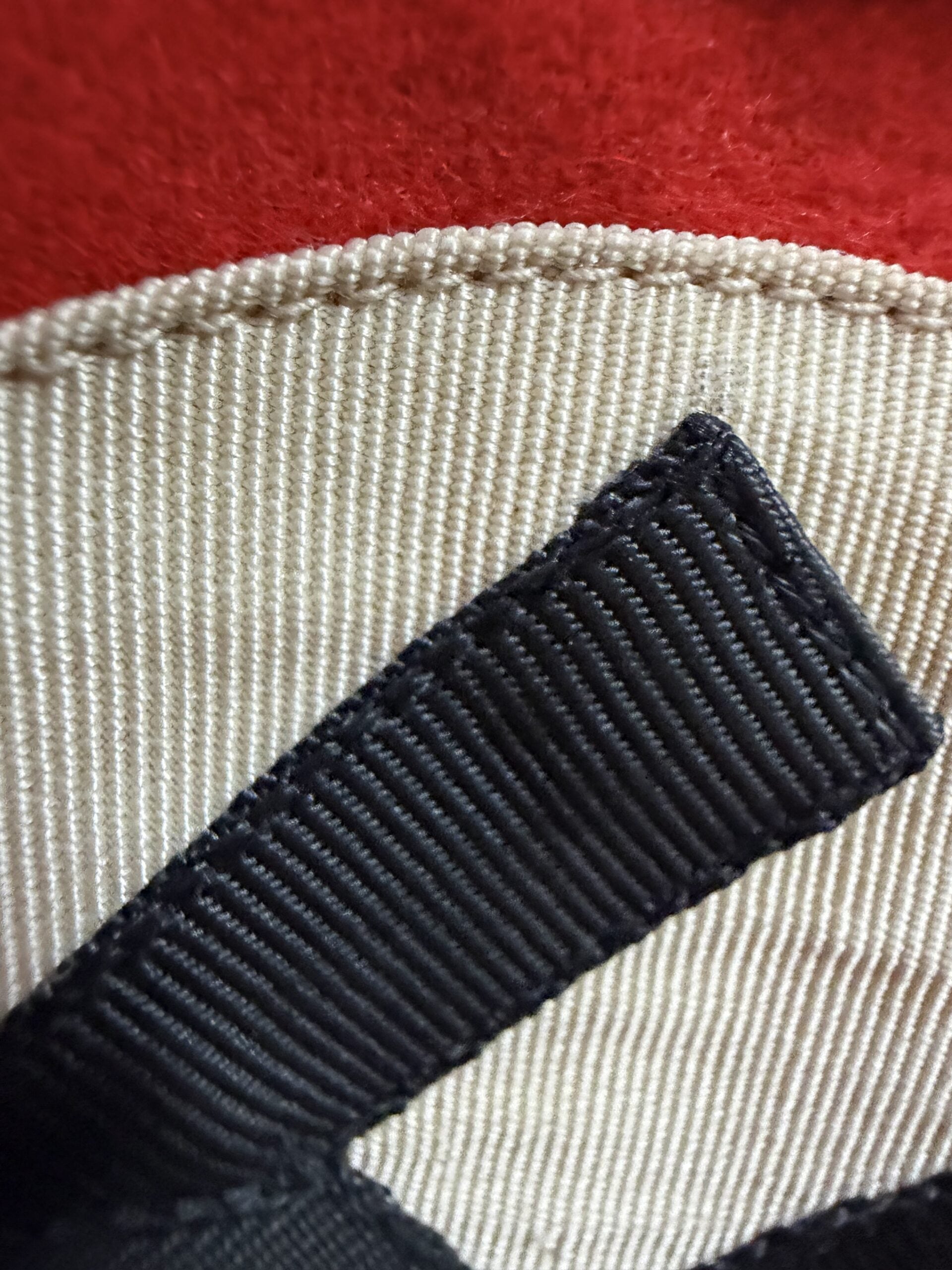
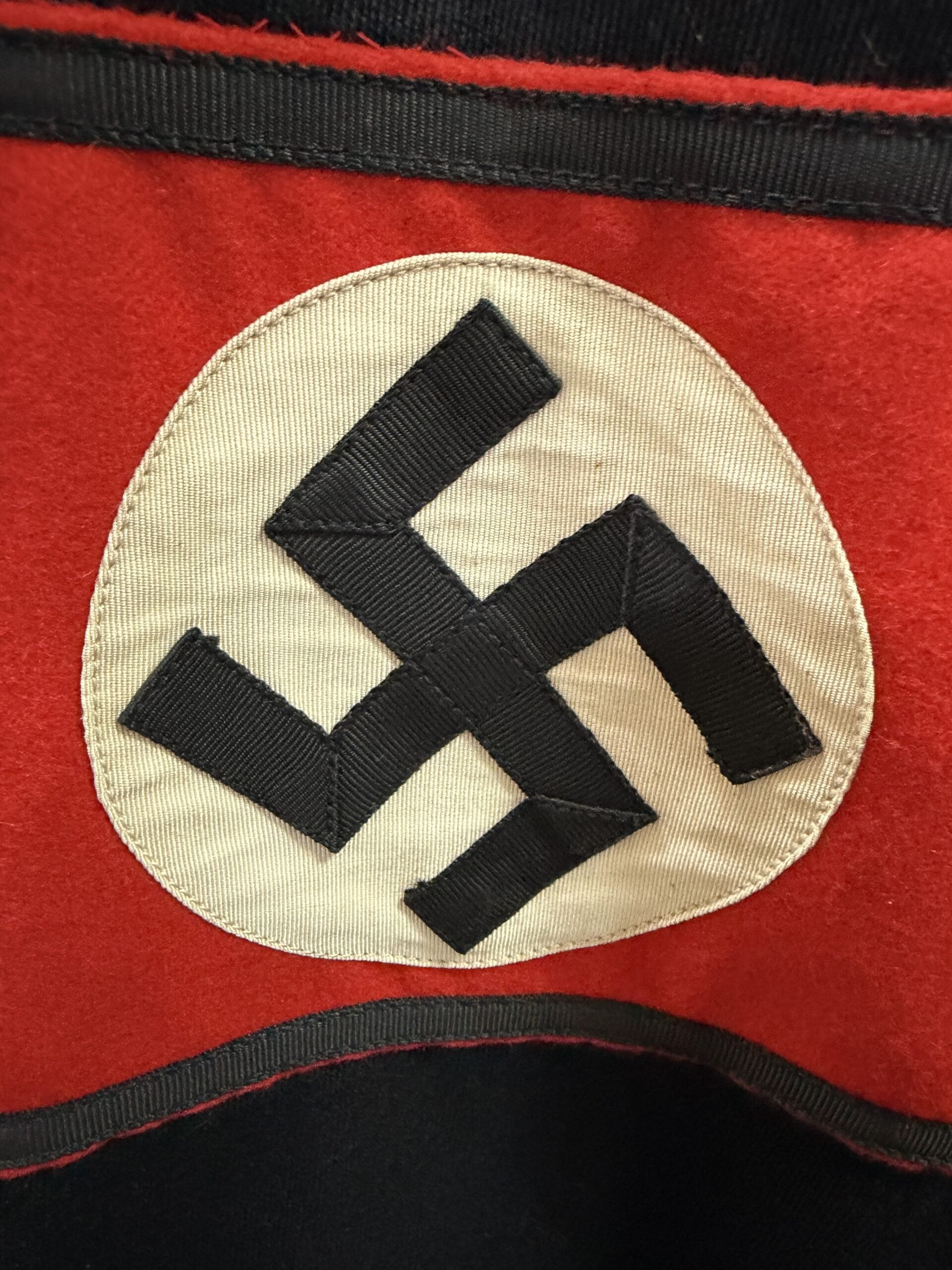
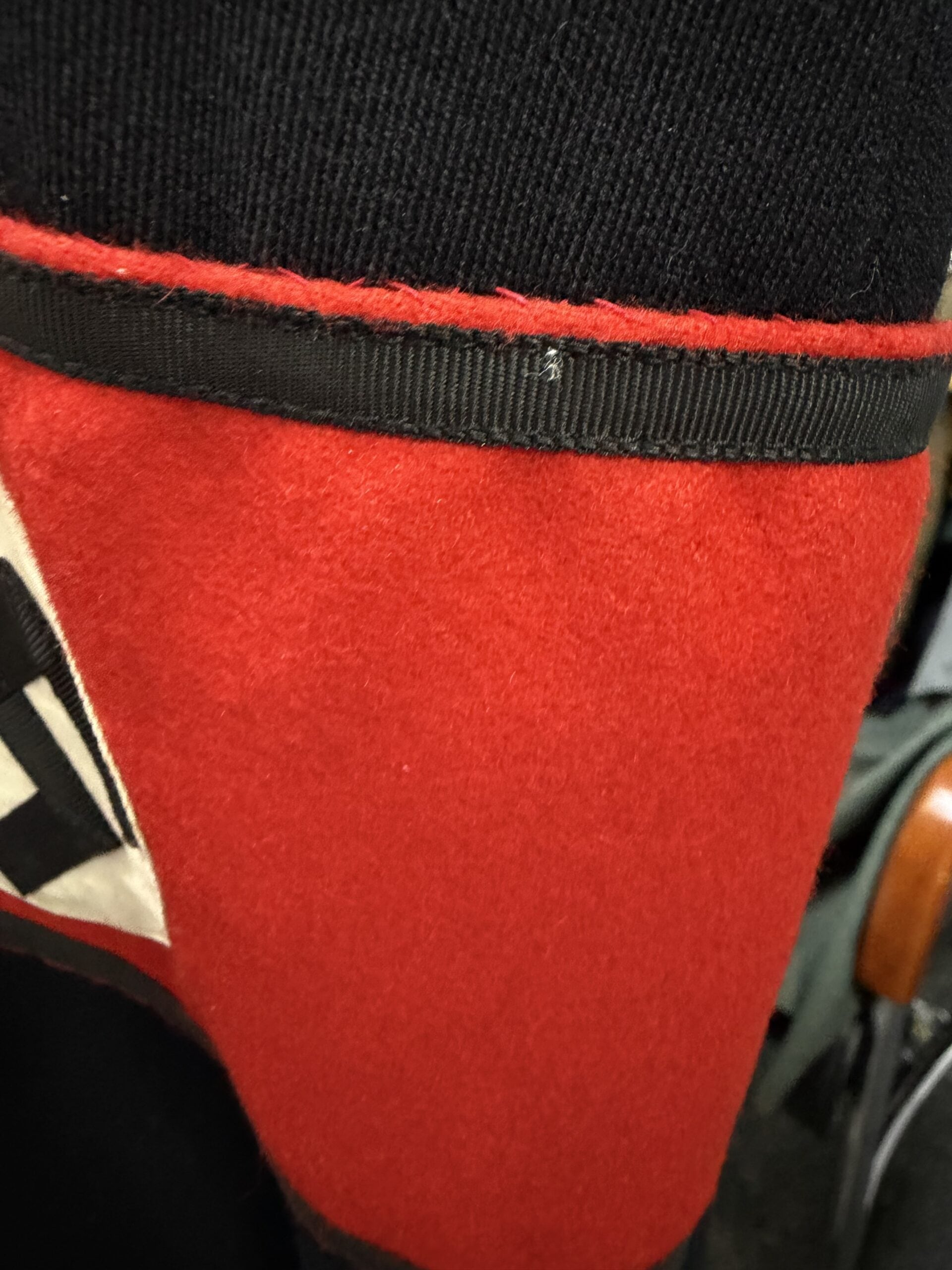
A multi-piece red SS armband remains fitted to the upper sleeve.
Bright red wool forms the principal field. In contrast, black ribbed bands border the white central disc.
The black swastika consists of separately applied ribbed textile sections rather than a printed device.
Construction of this type corresponds with better-quality pre-war SS armbands intended for wear with the black service uniform.
Comparable period armbands can command substantial prices independently. Therefore, their survival with a black SS tunic materially increases the collector appeal of a complete uniform.
The interior carries a particularly important white VA 1937 marking.
Below it appears the size designation 50.
Similar VA 1937 markings are documented on surviving SS clothing and equipment. Moreover, specialist auction archives record comparable markings on SS-VT garments from the same period.
The stamp strongly supports a 1937 issue date for the tunic body.
For comparison, an archived SS-VT M37 tunic bearing a VA 1937 marking can be studied here:
Ratisbon’s reference example:
Ratisbon’s SS-VT VA 1937 Uniform Reference
Another major feature appears inside the uniform pocket.
The large black control label bears:
The surviving serial or control number appears as 361857.
A manufacturer entry also remains visible. However, the photograph should be read conservatively rather than assigning a maker without documentary confirmation.
The ageing of the label is extensive and coherent with the surrounding lining. Furthermore, wear appears concentrated naturally along the edges and folds.
RZM-labelled SS garments are especially useful for comparative uniform research because their internal markings provide evidence unavailable on privately tailored examples.
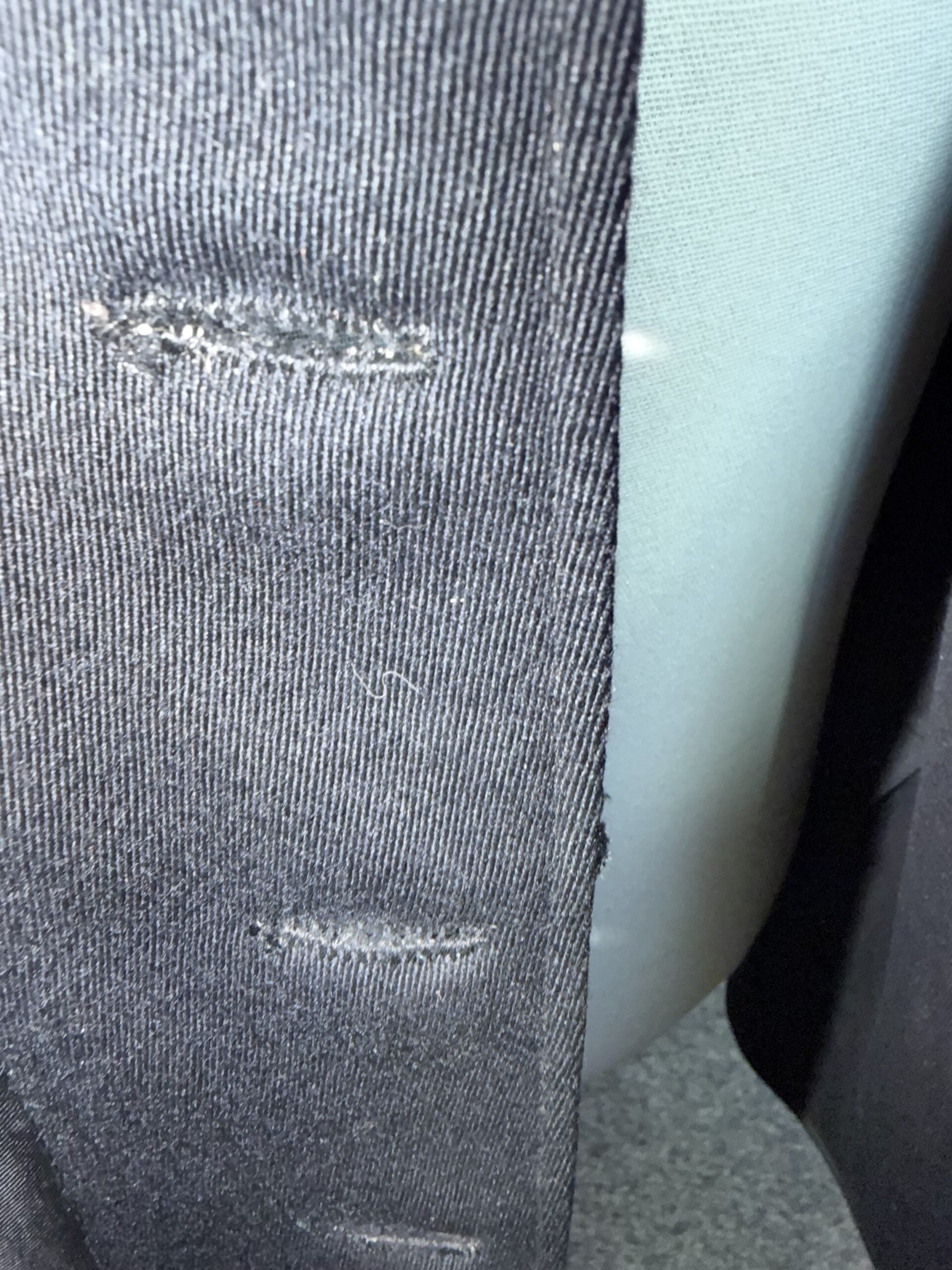
The body uses high-quality black cloth with a pronounced diagonal woven structure.
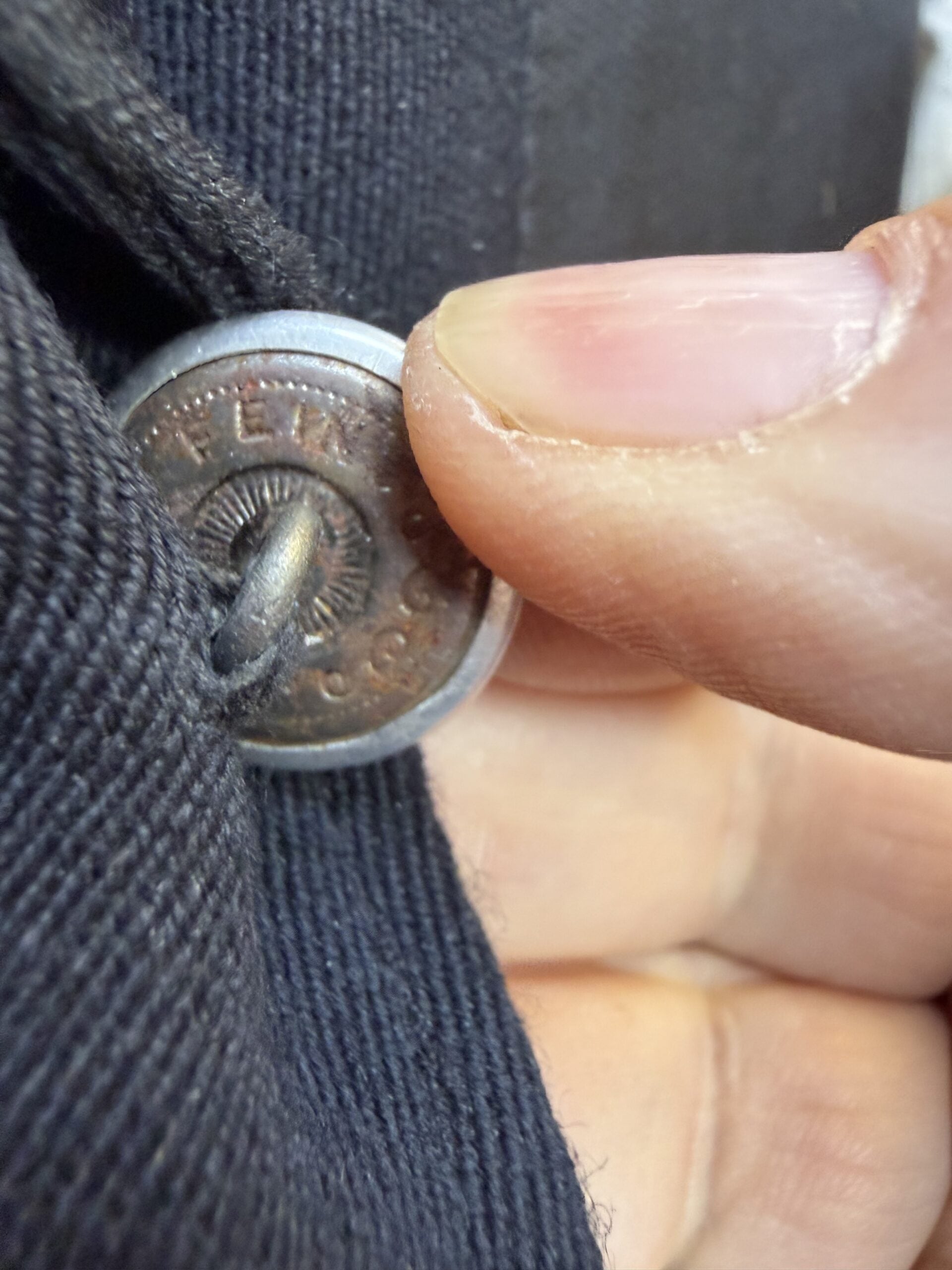
Four external pockets define the front. Meanwhile, silver-finished pebbled buttons provide the traditional service-uniform appearance.
Turn-back cuffs remain present on both sleeves.
At the rear, shaped seams create the fitted military silhouette. Two silver-finished buttons sit above the long rear vent.
Black lining covers most of the interior. By contrast, striped light-coloured textile forms the internal pocket bags.
The overall tailoring appears consistent with pre-war SS uniform construction.
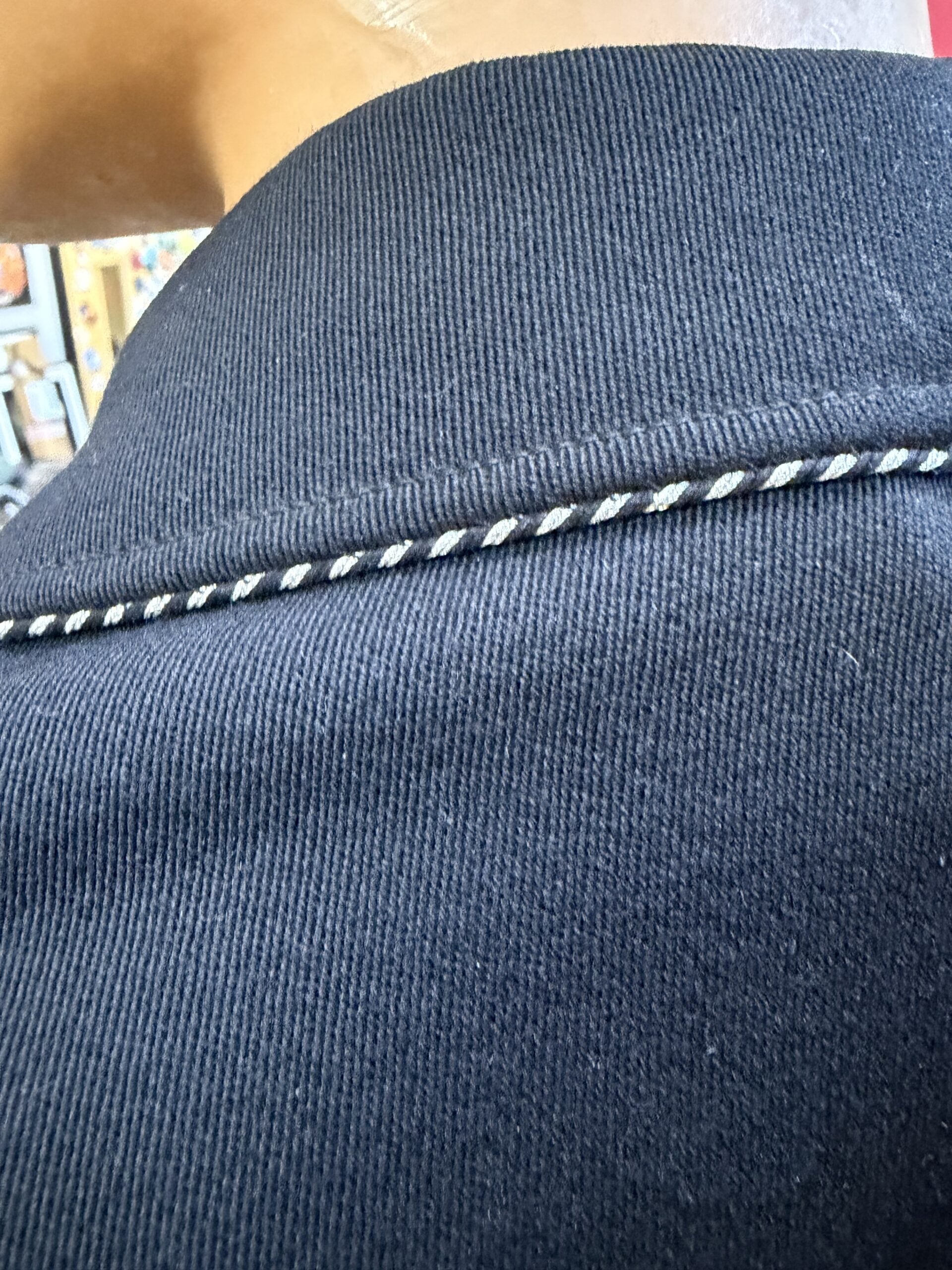
Black-and-silver twisted piping follows the collar edge.
Matching twisted cord surrounds both collar tabs. Consequently, the different elements form a visually coherent pre-war NCO configuration.
Close photographs show genuine woven metallic structure rather than modern shiny synthetic cord.
Natural oxidation and tonal variation appear across the metallic elements. In addition, wear remains consistent with the age visible elsewhere on the garment.
These details are valuable when comparing the tunic with untouched period examples.
Overall condition is very good for age.
The black exterior cloth remains strong and displays excellent colour. Nevertheless, minor surface wear and light storage marks remain visible.
No extensive moth destruction appears in the photographs.
Interior lining remains substantially complete. Furthermore, both the VA stamp and RZM label remain clearly identifiable.
The armband retains vivid colour, while the collar insignia remains strongly defined.
Metallic piping displays natural ageing rather than excessive polishing. Likewise, the cuff title retains an attractive period appearance.
Taken as a whole, the uniform presents extremely well.
The SS-Verfügungstruppe developed during the mid-1930s as the permanently trained armed component of the SS.
By 1936, former army officer Paul Hausser had become Inspector of the SS-VT. Under his supervision, the organisation expanded its training structure before later forming a major component of the Waffen-SS.
The German Federal Archives confirm that the SS-Verfügungstruppe existed alongside the regular German armed forces before its later transformation into the Waffen-SS.
Primary archival research should begin with the Bundesarchiv collections.
Bundesarchiv:
Bundesarchiv – SS-Verfügungstruppe and Waffen-SS Records
The Bundesarchiv also identifies surviving SS-VT and Waffen-SS material held in Freiburg and Berlin.
Consequently, archival records offer the best route for tracing individual wearers when a name or service number becomes available.
Specialist insignia research records the SS-Inspektion cuff title as an identifying distinction for Inspectorate personnel.
The runic version represents the later form. Furthermore, reference sources record its discontinuation during the organisational restructuring of 1940.
A detailed technical reference can be consulted here:
SS-Inspektion cuff title reference:
MedalBook – SS-Inspektion Cuff Title
The SS-Hauptscharführer rank configuration can also be compared with recognised surviving insignia.
SS-Hauptscharführer rank reference:
MedalBook – SS-Hauptscharführer Collar Tab
Collectors studying early SS textile construction may also compare this tunic with an original SS-VT regimental cuff title in the Nordmenn collection.
SS-Verfügungstruppe:
Original SS-Verfügungstruppe Deutschland BeVo Cuff Title
For detailed uniform-study photography, Nordmenn also lists an extensive reference work covering black and field-grey SS uniforms.
Uniform reference:
Black and Field Grey Uniforms of Himmler’s SS – Reference Book
These links strengthen the page’s internal structure while directing collectors towards genuinely relevant material.
Several characteristics of the tunic body strongly support period manufacture.
The VA 1937 stamp represents a particularly useful feature. Likewise, the large RZM ROCK SS label follows a known type used inside SS service garments.
Construction of the black cloth body also corresponds with documented originals.
Collar piping, rank insignia and shoulder-board construction appear compatible with pre-war SS manufacture in the photographs.
Equally important, the SS-Hauptscharführer rank tab has the correct two-pip-and-stripe arrangement.
The SS-Inspektion cuff title represents an exceptionally scarce distinction. However, its relationship to the runes-only right collar tab deserves further examination.
For that reason, a definitive claim that every badge has remained factory or period applied should await inspection of the concealed stitching.
Such caution does not diminish the rarity of the underlying SS-Inspektion black service tunic configuration.
Complete black SS service tunics command substantially higher prices than isolated uniform components.
Condition makes a major difference. Moreover, RZM-labelled examples attract a premium over unmarked garments.
A genuine SS-Inspektion cuff title carries significant independent value. Nordmenn currently lists an unissued RZM example at €5,000.
Meanwhile, current specialist dealers value complete SS black and early SS uniform pieces at considerably higher levels than ordinary wartime tunics.
A comparable complete SS-VT black service tunic can be studied through Helmut Weitze Militaria:
Market comparison:
Helmut Weitze – SS-VT Black Service Tunic Reference
Taking the tunic body, VA 1937 marking, RZM label, rank insignia, armband and rare SS-Inspektion cuff title into account, a premium retail valuation is justified.
Item: Original black SS service tunic
Current configuration: SS-Inspektion
Rank: SS-Hauptscharführer
Date marking: VA 1937
Size: 50
Interior label: RZM ROCK SS
Visible control number: 361857
Construction: Black pre-war service uniform cloth
Collar piping: Black and silver twisted cord
Rank tab: Two pips with aluminium rank stripe
Right collar tab: SS runes
Shoulder insignia: Single braided NCO shoulder board
Armband: Multi-piece SS wool armband
Cuff title: SS-Inspektion
Condition: Very good
Few early SS uniforms provide as many individual construction features as this SS-Inspektion black service tunic.
Its VA 1937 marking establishes an important chronological reference. Furthermore, the surviving RZM ROCK SS label provides another major authentication feature.
The SS-Hauptscharführer rank insignia remains visually impressive, while the rare SS-Inspektion cuff title gives the uniform exceptional collector interest.
Most importantly, the garment retains the appearance of a genuine pre-war issued SS black service tunic rather than a later reproduction uniform.
Careful wording concerning the present Inspectorate insignia configuration preserves the historical integrity of the catalogue entry.
For a specialist collection of early SS-VT uniforms, RZM clothing or pre-war German textile history, this is a highly significant surviving uniform.