
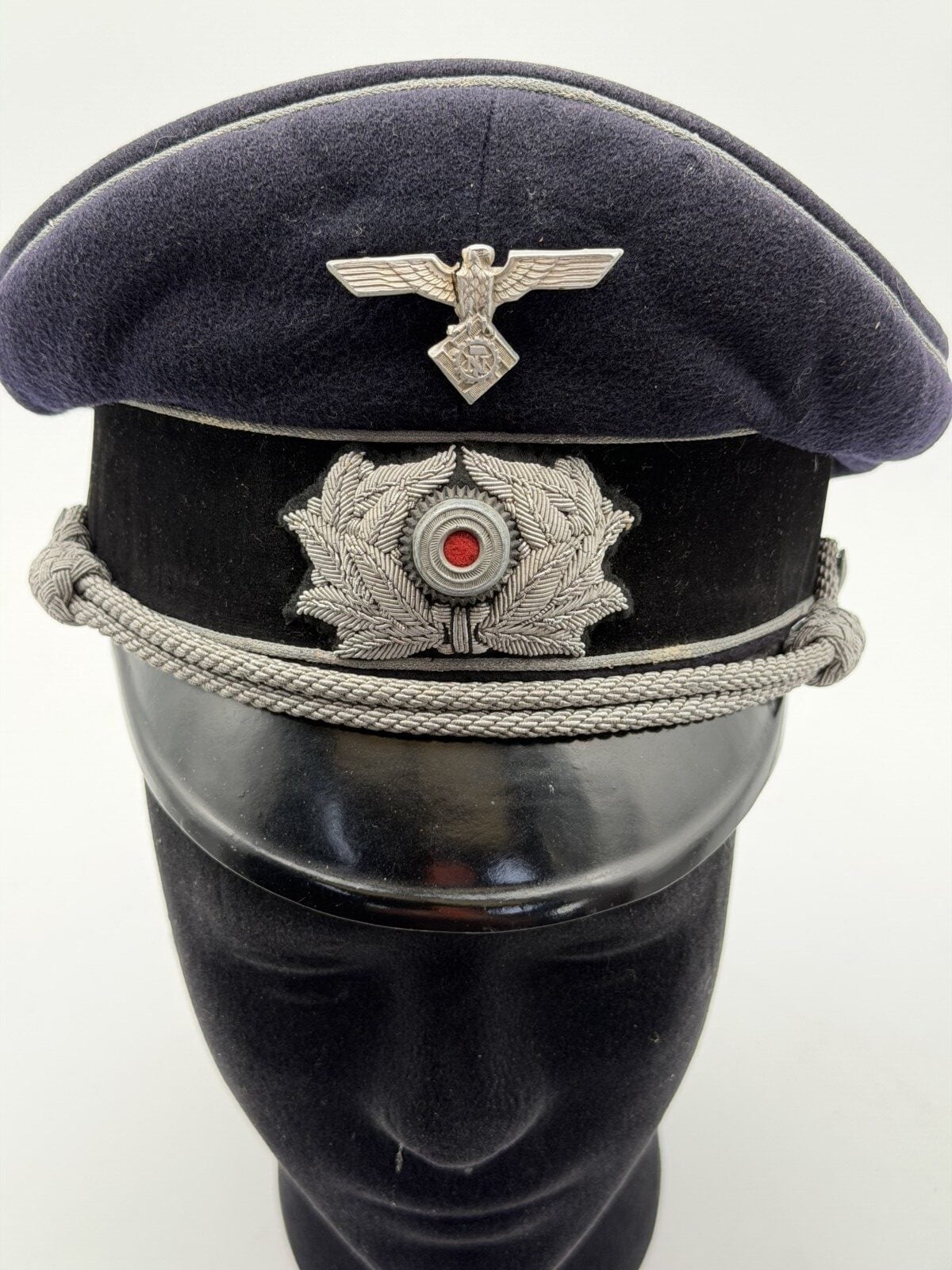
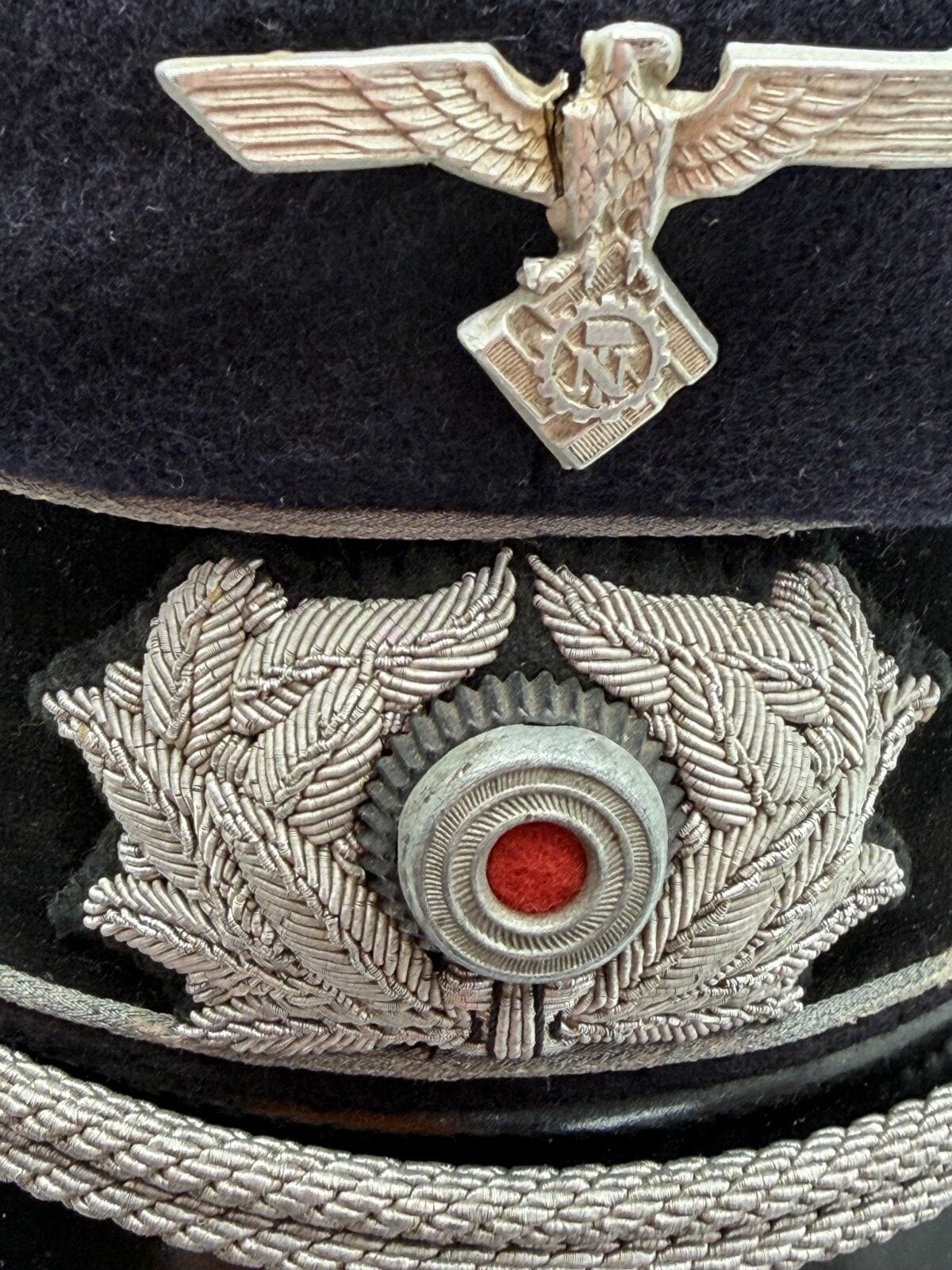
Exceptional original TeNo Officer Visor Cap manufactured by EREL / Robert Lubstein of Berlin, dating to approximately 1939. The dark navy-blue wool cap retains its black velvet band, silver leader piping and cords, original aluminium TeNo eagle and superb hand-embroidered silver bullion wreath with ventilated national cockade.
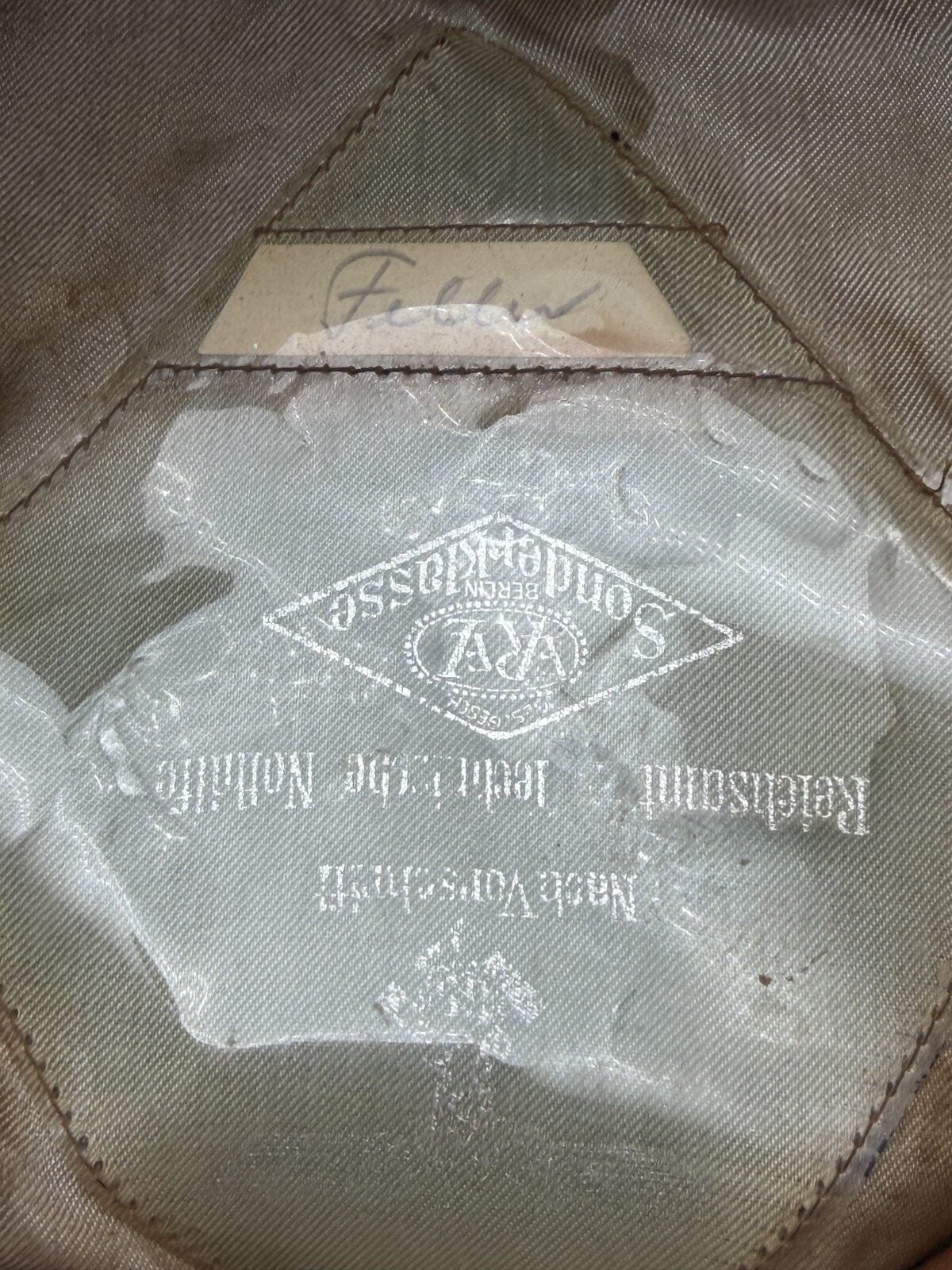
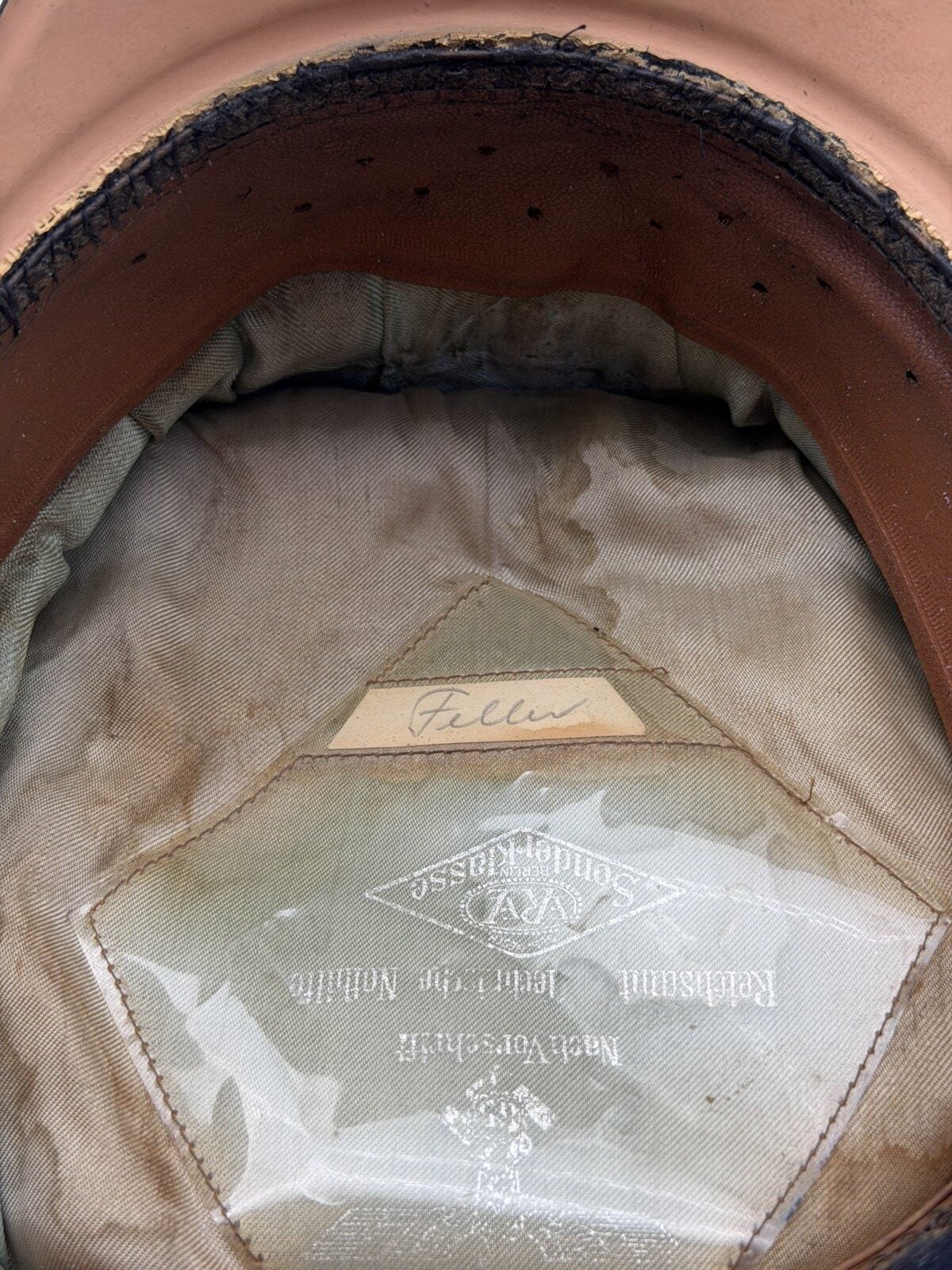
Inside, the original lining and celluloid shield retain the important “Nach Vorschrift Reichsamt Technische Nothilfe – EREL Berlin Sonderklasse” markings. A surviving handwritten owner’s label appears to read “Feller.”
€ 2.495
1 in stock
This rare TeNo Officer Visor Cap is an exceptionally attractive private-purchase Schirmmütze for a leader of the Technische Nothilfe, Germany’s Technical Emergency Service.
The cap is constructed from dark navy-blue wool with a luxurious black velvet centre band. Silver piping surrounds the principal edges, while matching silver officer-quality cap cords cross the front above the black visor.
Most importantly, the interior retains the distinctive markings associated with EREL / Robert Lubstein of Berlin and states that the cap was manufactured “Nach Vorschrift Reichsamt Technische Nothilfe” – according to the regulations of the Reich Office of the Technische Nothilfe.
The surviving marking also incorporates the desirable EREL Berlin Sonderklasse quality designation.
Helmut Weitze documents almost identical EREL TeNo leader caps from circa 1939, including examples with the same dark-blue crown, black velvet band, silver piping, silver cords, aluminium TeNo eagle, hand-embroidered wreath and EREL Sonderklasse interior.
Mounted centrally on the crown is the distinctive silver-coloured Technische Nothilfe national eagle.
Unlike standard Wehrmacht insignia, the eagle incorporates the specialised TeNo organisational emblem beneath its body. The device combines the national eagle with the industrial symbolism associated with the organisation.
The insignia appears to be a silvered aluminium or light-metal example rather than bullion embroidery.
Detail remains particularly strong across the wings, eagle body and lower TeNo emblem. Natural surface toning has developed within the recessed areas, while the exposed highlights remain brighter.
This exact combination is documented by Weitze on an original circa-1939 TeNo Führer cap using an aluminium eagle above a hand-embroidered wreath.
The black velvet centre band carries a particularly impressive hand-embroidered silver bullion oak-leaf wreath.
Dense metallic thread has been worked individually to create the overlapping leaves. At the centre sits the national cockade with its red centre and silver surround.
The cockade incorporates the characteristic ventilated construction associated with high-quality period caps.
Close examination shows natural variation throughout the metallic thread rather than an artificially uniform modern finish. Furthermore, the silver-grey oxidation corresponds convincingly with the eagle, piping and officer cords.
Weitze describes the same combination of hand-embroidered metal-thread wreath, ventilated national cockade and black velvet band on surviving EREL TeNo caps.
Heavy silver-coloured braided cords run across the visor.
Their construction and decorative side knots are consistent with the quality expected on a TeNo Führer, or leader-grade, visor cap.
The correct German collector terminology is therefore “TeNo Schirmmütze für Führer.”
The cords remain complete and display convincing age toning without excessive deterioration.
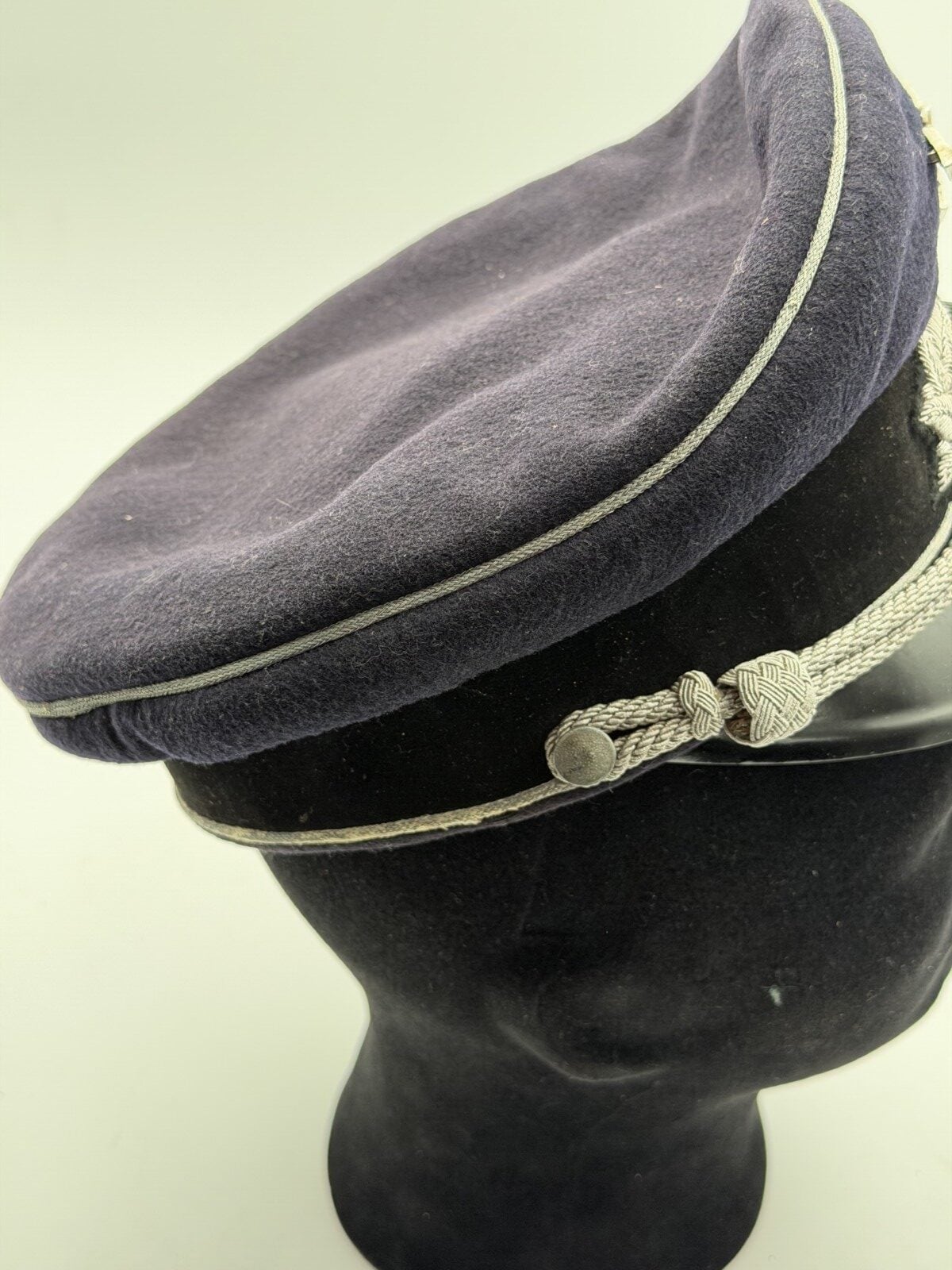
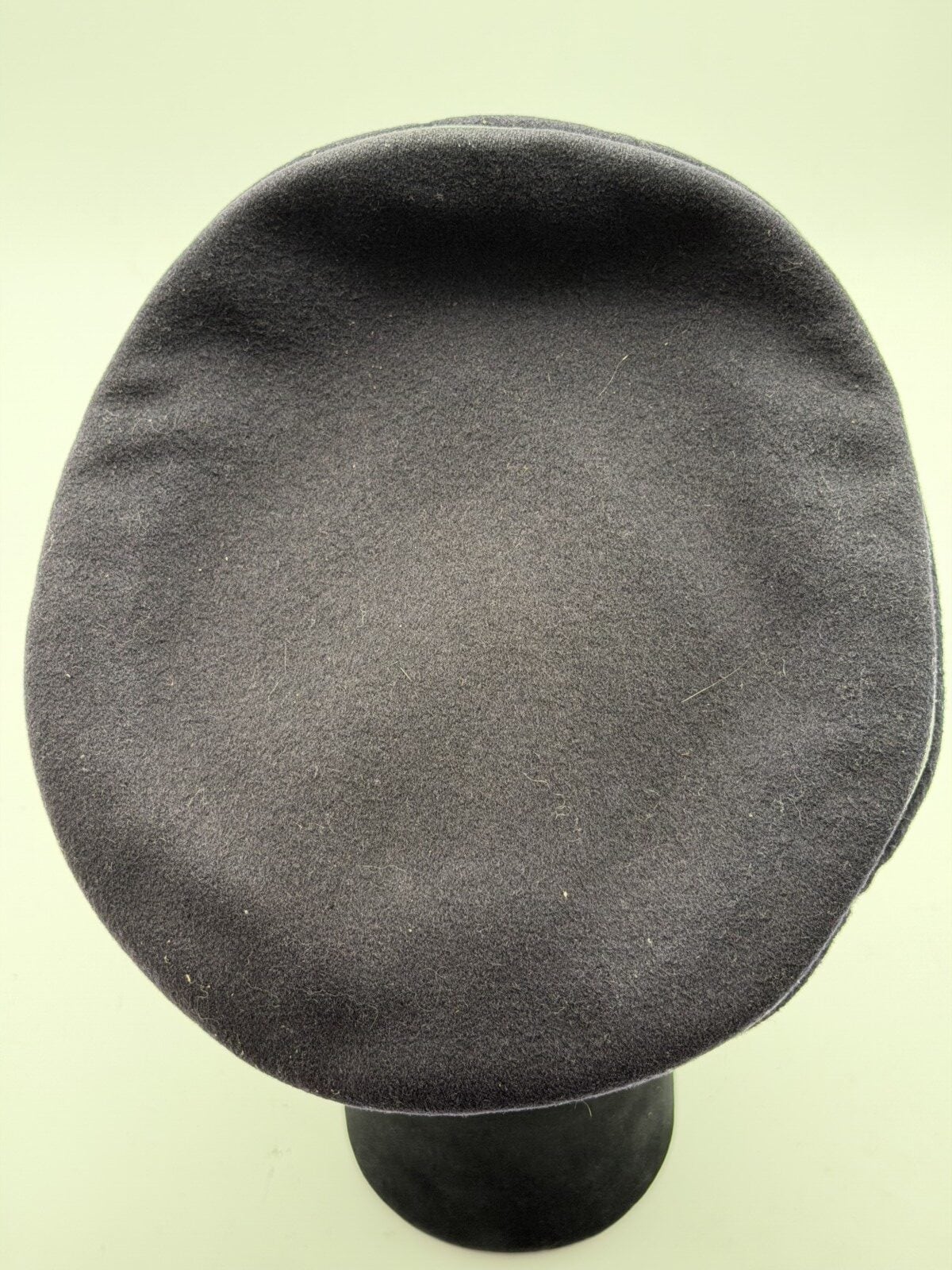
Fine dark navy-blue wool forms the crown.
Its colour is a characteristic feature of the earlier TeNo dress uniform and provides a strong contrast with the black velvet band and silver trim.
The crown has developed an attractive soft saddle profile. Light age marks and surface fibres remain visible, but there is no substantial moth damage apparent from the supplied photographs.
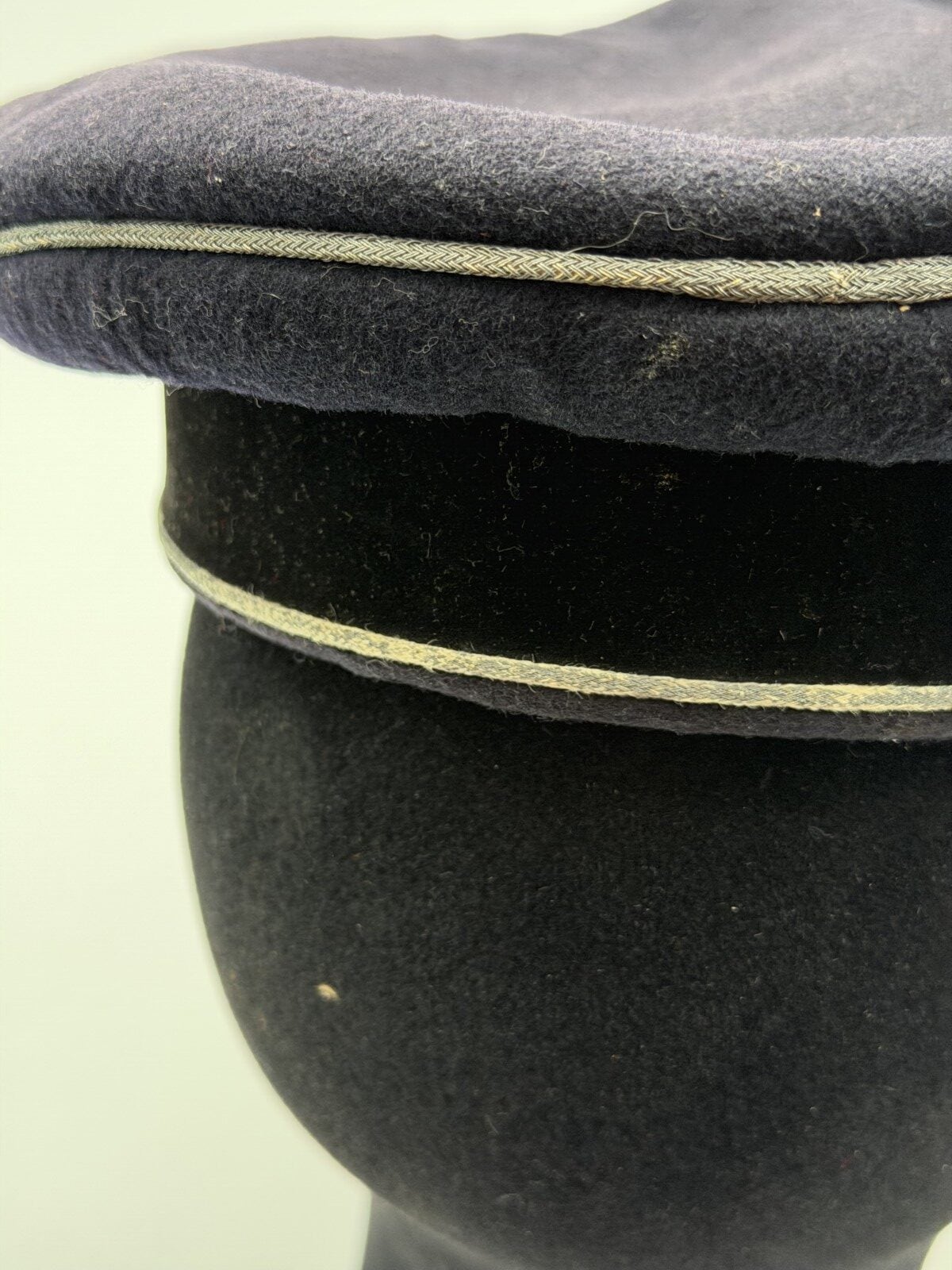
The silver piping is still present around the crown edge and lower band.
Weitze dates comparable dark-blue TeNo leader caps to approximately 1939.
The black velvet centre band is another important identification point.
Its deep matt appearance contrasts clearly with the blue crown. Meanwhile, the hand-embroidered wreath sits centrally without obvious evidence of recent disturbance.
Original TeNo leader caps documented by both Weitze and Ratisbon’s use precisely this black velvet band arrangement.
The interior is particularly important for authentication.
The cap was produced by EREL, the trade name used by Robert Lubstein of Berlin, one of the foremost German military headgear manufacturers.
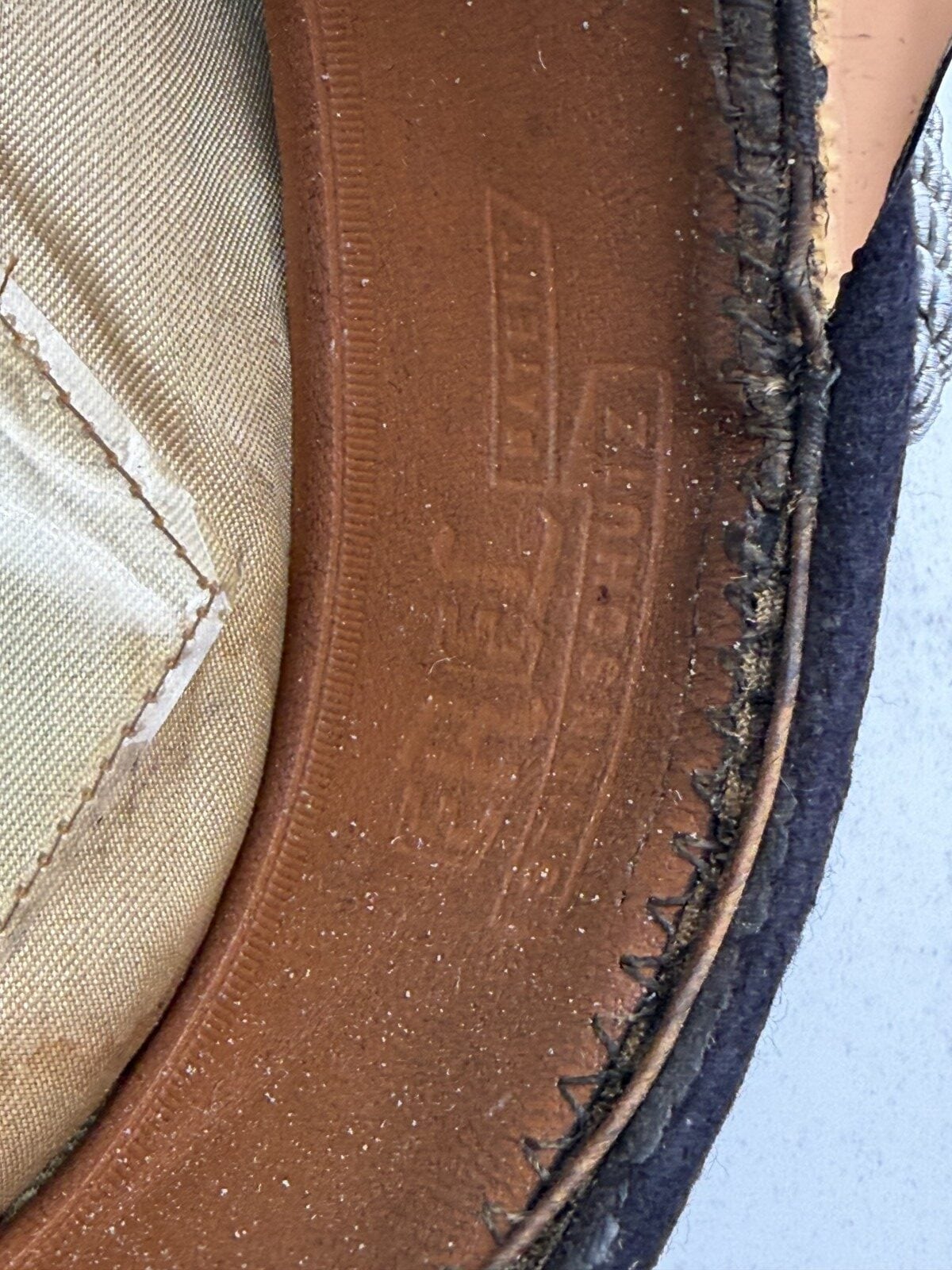
The leather sweatband carries the faint but recognisable EREL pressure-protection marking associated with Lubstein’s patented construction.
Underneath the celluloid sweat shield, the surviving printing corresponds with the known wording:
Nach Vorschrift
Reichsamt Technische Nothilfe
EREL Berlin Sonderklasse
Weitze documents this exact marking on genuine TeNo Führer caps. One current example also has an EREL Patent Stirnschutz sweatband and identical regulation wording beneath the celluloid diamond.
Another superior example carries “Erel Stirnschutz D.R.G.M. D.R.P. angem.”, together with the same Reichsamt Technische Nothilfe and Sonderklasse markings.
This represents particularly strong authentication evidence.
The term Sonderklasse identified one of EREL’s premium commercial grades.
Such caps were privately purchased rather than being basic depot-issue headgear. Better materials, improved lining, superior sweatband construction and high-grade embroidered insignia commonly appear on these examples.
The present cap clearly fits that superior-quality category.
Its velvet band, bullion wreath, ventilated cockade, EREL interior and fine overall tailoring all demonstrate costly private-purchase manufacture.
A small handwritten owner’s label survives beneath the interior pocket.
The inscription appears to read:
I would retain this information in the catalogue but describe it conservatively as “owner label apparently reading Feller” until the handwriting can be linked conclusively with a known TeNo member.
This could become important.
Named TeNo headgear can command a meaningful premium if the individual can be identified through period membership, police or organisational records. Weitze’s named examples demonstrate that surviving owner labels are taken seriously when cataloguing TeNo caps.
For now, I would not assign the cap to a particular person solely from the handwritten surname.
A tan-gold rayon or silk-type lining covers the interior.
The large transparent celluloid shield remains stitched in position, although considerable age, scratching and surface staining are visible.
Underneath, the TeNo and EREL markings remain sufficiently clear to be highly useful.
The brown leather sweatband shows honest use, light cracking and age-related wear. Perforations and pressure marks remain consistent with period construction.
Nothing inside should be replaced.
Likewise, the celluloid should not be lifted simply to improve photography. Its undisturbed condition is valuable authentication evidence.
The black visor retains a smooth period profile and glossy finish.
Minor scratches and signs of handling appear naturally across its surface. However, the visor remains structurally sound and well connected to the cap body.
The visor should remain untreated. Modern polish could alter its original surface.
The Technische Nothilfe, abbreviated TN or TeNo, was established in Germany in 1919 to provide technically trained personnel capable of maintaining essential public infrastructure and responding to emergencies.
Its work included electricity, water, transport, communications, disaster response and later air-raid protection.
By decree of 13 October 1936, the organisation was placed under the Reichsführer-SS and Chief of the German Police as a technical auxiliary formation of the police. A 1939 law subsequently formalised its status as a public-law body. Bundesarchiv records specifically document the Reichsamt Technische Nothilfe within the Ordnungspolizei structure.
For authoritative historical research:
Bundesarchiv – History of the Ordnungspolizei and Technische Nothilfe
The evidence visible throughout this TeNo Officer Visor Cap is strongly positive.
The most important features are the correct dark-blue wool, black velvet band, silver piping, TeNo aluminium eagle, hand-embroidered wreath, ventilated cockade, silver leader cords and premium EREL interior.
More importantly, the internal Reichsamt Technische Nothilfe / EREL Sonderklasse wording corresponds directly with documented originals.
Organisation: Technische Nothilfe – TeNo / TN
Item: Leader / officer visor cap
German terminology: Schirmmütze für Führer
Manufacturer: EREL / Robert Lubstein, Berlin
Quality: Sonderklasse
Date: Approximately 1939
Crown: Dark navy-blue wool
Centre band: Black velvet
Piping: Silver leader/officer piping
Cords: Silver officer-quality braided cords
Upper insignia: Silvered aluminium TeNo eagle
Lower insignia: Hand-embroidered silver bullion wreath and national cockade
Interior: Gold/tan rayon lining
Sweatband: Brown leather, EREL type
Interior marking: Reichsamt Technische Nothilfe / EREL Berlin Sonderklasse
Owner label: Apparently “Feller”
Condition: Very good original worn condition
Authentication assessment: Highly convincing original pre-1945 example
I see no major reproduction warning signs in the photographs supplied.
The strongest comparison is Helmut Weitze’s current Technische Nothilfe TeNo Schirmmütze für Führer, dating to circa 1939.
That cap has:
Weitze currently asks €2,800 for that worn example.
A superior dark-blue example with both eagle and wreath hand embroidered, EREL markings and surviving owner label is currently offered by Weitze at €3,200.
Helmut Weitze – TeNo Führer Visor Cap reference
Original TeNo officer headgear is substantially scarcer than ordinary Wehrmacht visor caps.
Furthermore, EREL manufacture adds a considerable premium because the company’s products are particularly sought after by advanced headgear collectors.
The present cap has the additional advantages of its original complete insignia, desirable Sonderklasse construction, strong exterior appearance and surviving apparent owner’s name.
A damaged TeNo officer cap missing its eagle sold at Ratisbon’s for €870 in September 2024, demonstrating how dramatically condition and completeness affect market value.
Your example belongs in a very different category because its insignia and EREL details survive.
Explore related listings: Military Visor & Peaked Caps; TENo 1922 Honour Badge | Technische Nothilfe No. 2149; Original Third Reich Uniforms and Headgear – Nordmenn Militaria.