
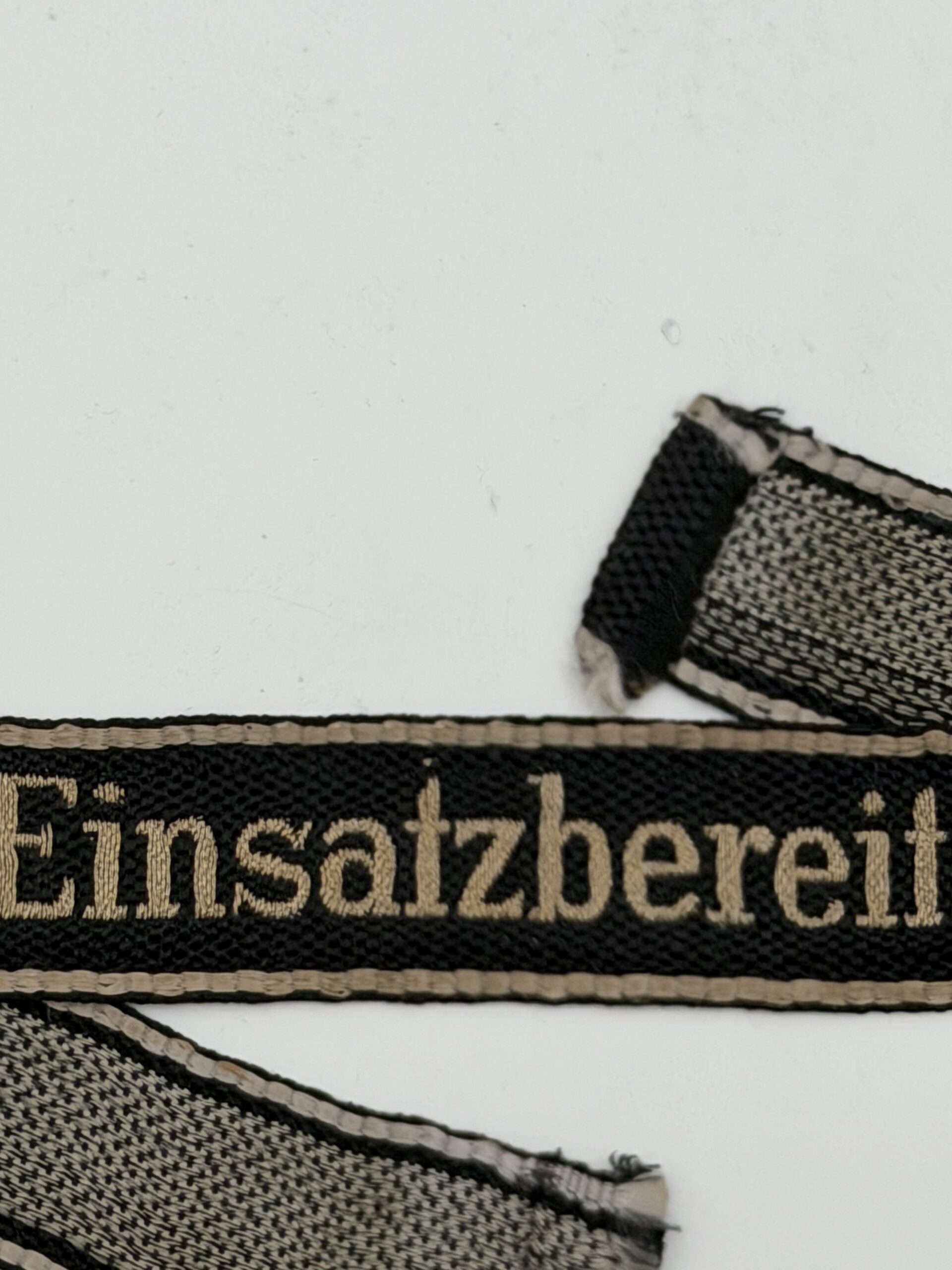
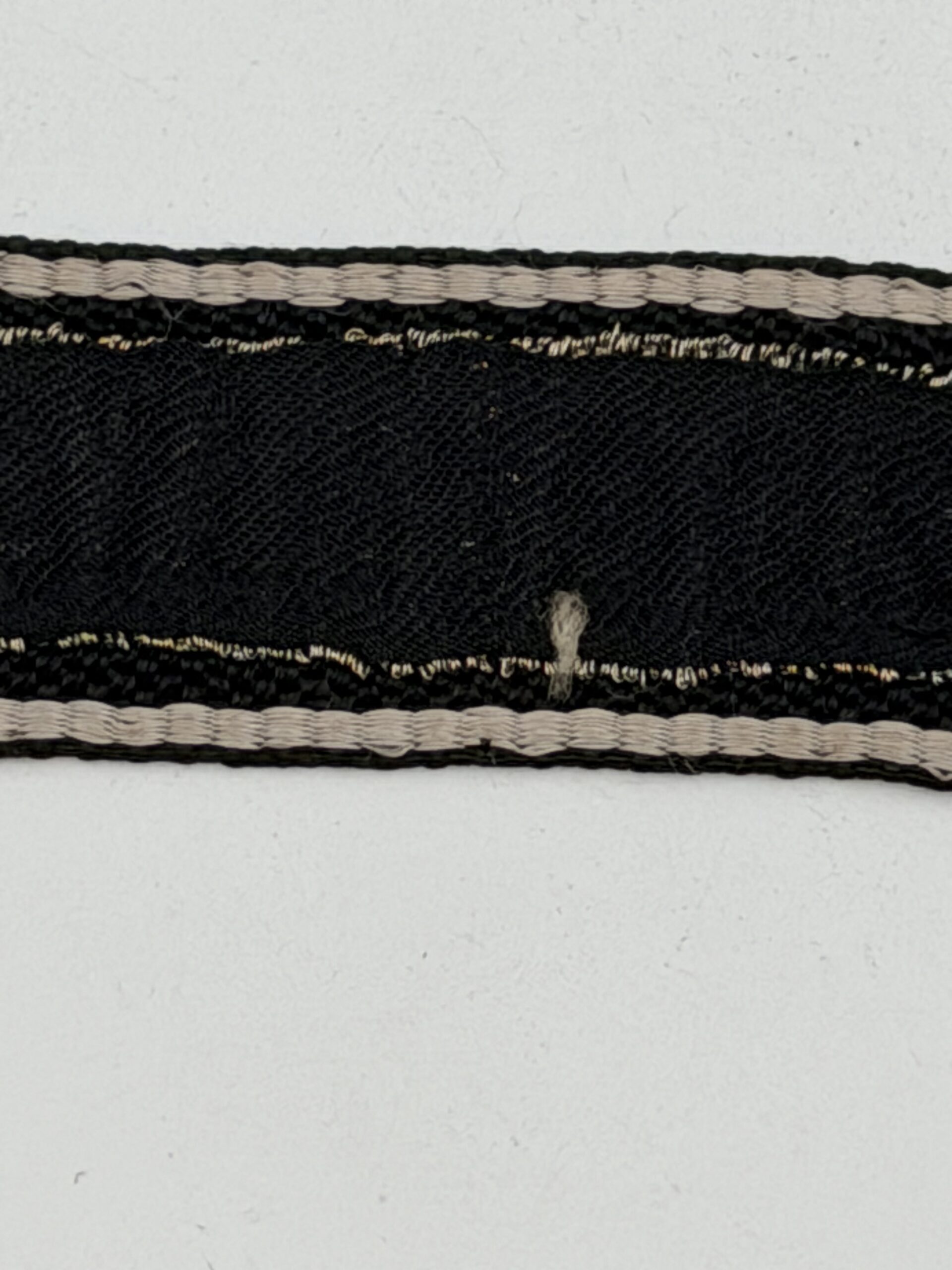
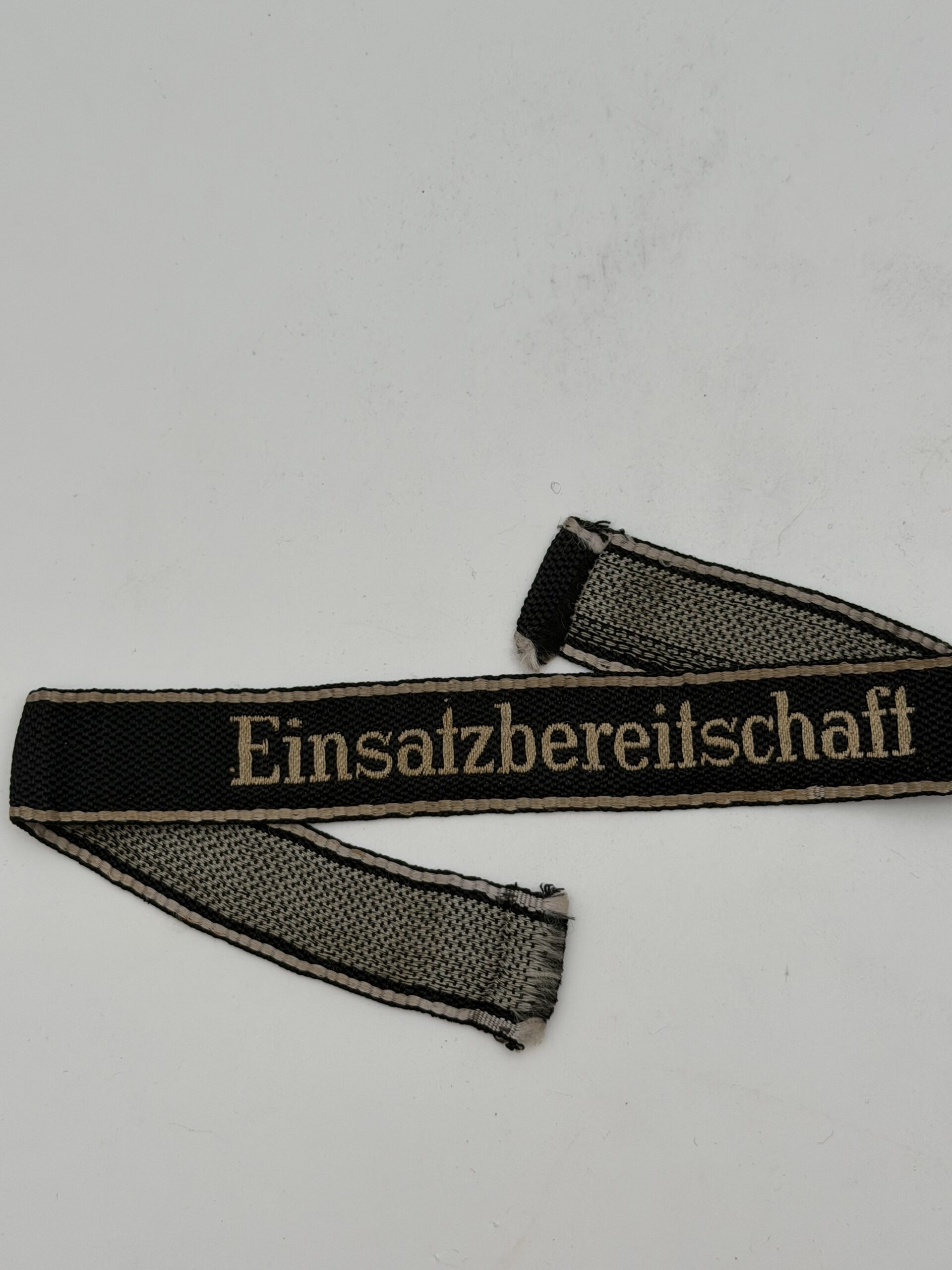
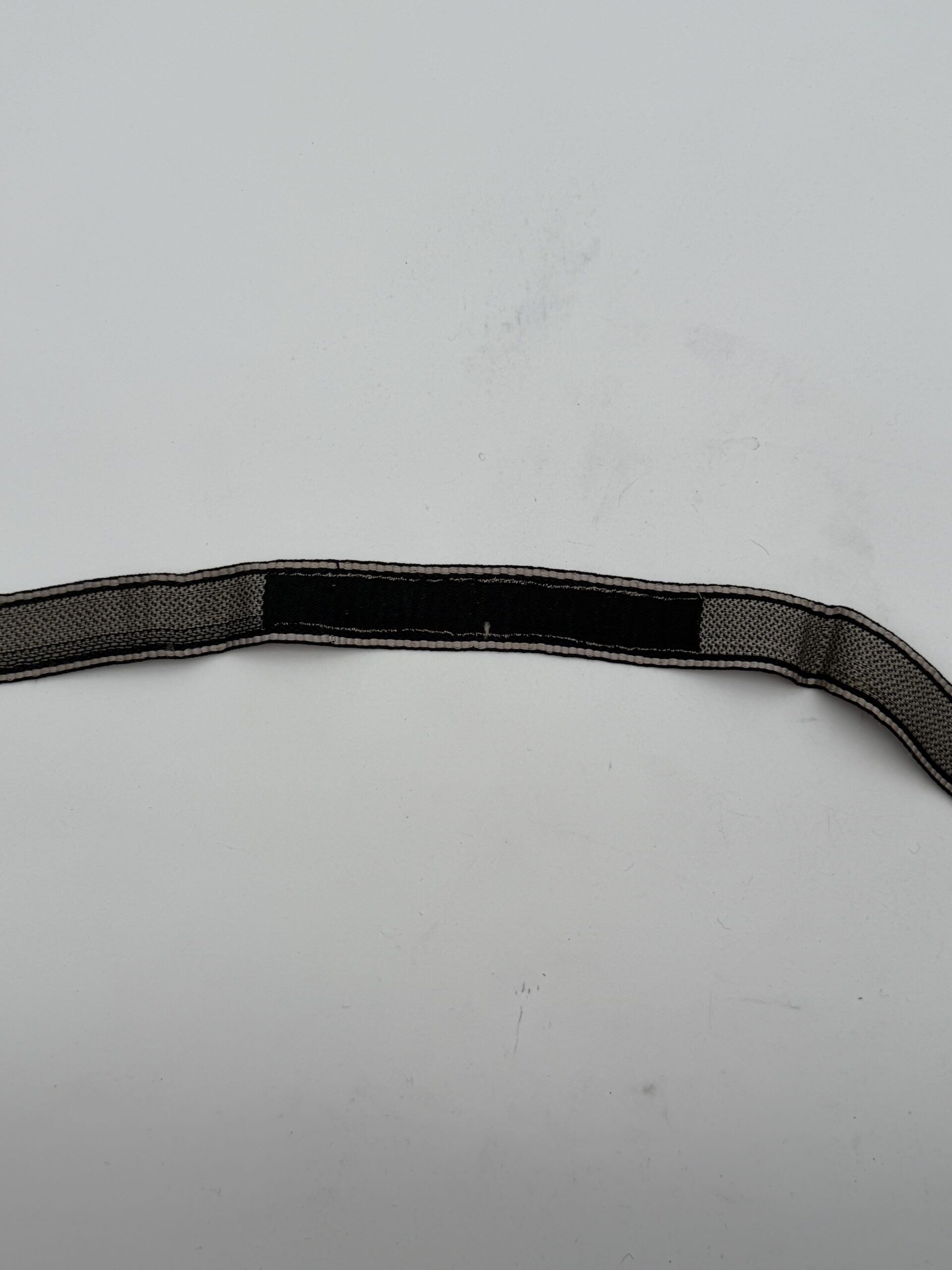
Rare original NSKK Einsatzbereitschaft cuff title for Führer or leader ranks. Manufactured in high-quality BeVo-type metal-thread woven construction, with silver-aluminium lettering and borders on a black rayon foundation. This substantially full-length example was removed from a uniform and retains excellent lettering, correct reverse construction and honest service wear
€ 750
1 in stock
| Dimensions | 45 cm |
|---|
This original NSKK Einsatzbereitschaft cuff title is an exceptionally scarce leader-rank example produced in metal-thread woven construction. The black rayon title carries the complete word “Einsatzbereitschaft” in finely formed silver-aluminium Latin lettering, bordered above and below by matching metallic woven tress.
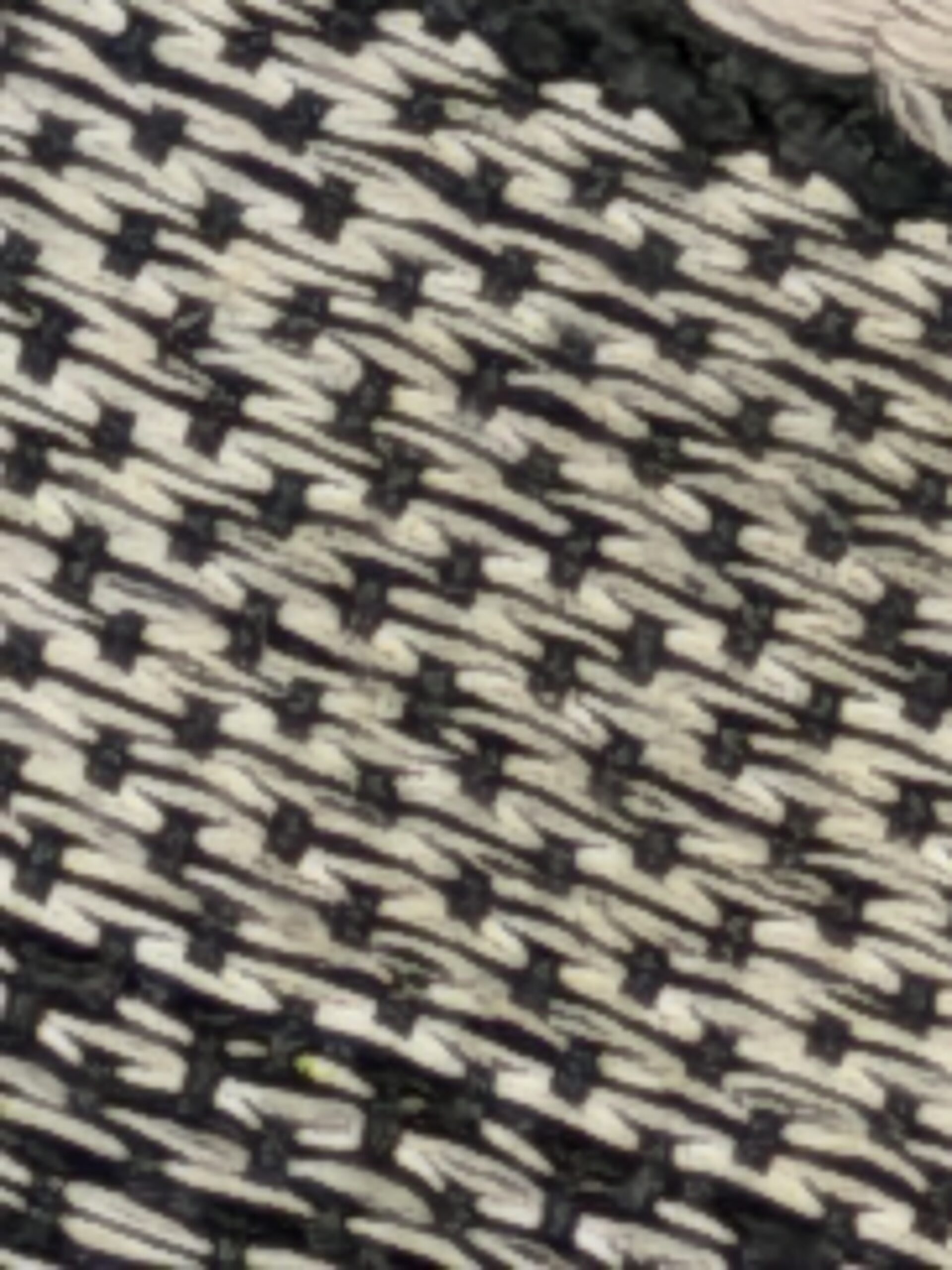
The reverse displays the characteristic black-and-silver woven structure, together with the original black protective backing strip behind the inscription. Furthermore, the opened and frayed ends retain evidence of previous sleeve attachment. These details give the cuff title convincing uniform-removed character.
This is the high-quality Führer-Ausführung, or leader-rank version. It should not be confused with the simpler non-metallic woven version associated with NSKK Mannschaften or enlisted personnel. Specialist dealers distinguish the Führer pattern by its metal-thread lettering and borders.
The Nationalsozialistisches Kraftfahrkorps, commonly abbreviated as NSKK, developed from the earlier Nationalsozialistisches Automobilkorps. It adopted the NSKK name in 1931. Following the 1934 reorganisation of the Nazi Party’s paramilitary formations, the NSKK became an independent Party organisation under the direct authority of Adolf Hitler.
The organisation expanded rapidly. By 1941, it had more than 500,000 members. Its structure included Motorobergruppen, Motorgruppen, Motorstandarten, Motorstaffeln, Motorstürme and smaller local formations.
The NSKK trained members in driving, vehicle maintenance, traffic control, motor sport and technical subjects. It also provided pre-military motor training. During the war, the organisation supplied transport personnel and logistical support to the German armed forces and the armaments industry. The principal surviving NSKK records form Bundesarchiv collection NS 24, which includes material from the Korpsführung, Motorstandarten, administrative offices and motor schools.
The NSKK also acted as a political instrument of the Nazi Party. Its members supported Party demonstrations, transported officials and assisted large propaganda events. Historical research records the participation of NSKK personnel in anti-Jewish violence during the November 1938 pogroms. Consequently, this insignia should be preserved and interpreted as material evidence of the National Socialist dictatorship rather than as an object of political admiration.
Further historical information is available through the Historisches Lexikon Bayerns study of the NSKK and the Bundesarchiv NS 24 collection description.
The German word Einsatzbereitschaft translates most naturally as “operational readiness,” “readiness for service” or “readiness for deployment.”
Specialist insignia references associate this cuff title with NSKK personnel assigned to on-call, standby or emergency deployment duties. These personnel could be mobilised when the organisation required drivers, vehicles, technical support or transport resources at short notice.
The cuff title identified a particular organisational function. It did not represent an award for bravery, long service or individual achievement. Likewise, it did not identify one geographical Motorgruppe or Motorstandarte.
The word Führer in the description refers to the NSKK leader-rank class. It does not associate the title with one named individual. NSKK rank terminology used “Führer” for commissioned or leadership grades within the organisation.
Two principal production levels of the NSKK Einsatzbereitschaft cuff title are documented.
The Mannschaften version used pale woven textile thread. By contrast, the Führer version employed metallic silver-coloured thread for the inscription and borders. The more elaborate construction created a brighter, higher-quality appearance suitable for personnel in leader ranks.
Helmut Weitze describes a directly comparable example as a:
BeVo metal-thread woven version, produced in the same general manner as Waffen-SS cuff titles.
That comparison concerns the manufacturing method only. This is an NSKK title, not a Waffen-SS or Allgemeine-SS cuff title.
The designation “BeVo-type” describes the characteristic machine-woven or Jacquard method. However, no surviving manufacturer’s label appears in the supplied photographs. Therefore, the title should not be attributed unconditionally to the Ewald Vorsteher factory.
The face uses a tightly woven black rayon foundation. This material has a subtle diagonal texture and a slight natural sheen under direct light.
The complete inscription reads:
Einsatzbereitschaft
The maker formed the word in clearly defined Latin serif lettering rather than Gothic script. Each letter displays narrow vertical strokes, pronounced serifs and consistent spacing. The tall initial E remains particularly strong, while the complicated central sequence of letters retains excellent clarity.
The silver-aluminium thread has mellowed to a warm silver-grey or champagne tone. This colour variation appears natural and results from age, oxidation, handling and long-term exposure. It does not resemble bright modern synthetic metallic thread.
Both long edges carry matching woven metallic borders. These borders remain substantially complete, although small areas show rubbing, minor pulled strands and age-related discolouration.
The reverse provides valuable evidence of the manufacturing method.
Where exposed, the back displays the characteristic alternating black-and-silver woven pattern created during manufacture. The metallic inscription and borders form part of the woven structure rather than appearing as separately applied embroidered components.
A black rayon protective strip covers the reverse of the central inscription. Period manufacturers used this type of reinforcement to protect the exposed metallic floats and prevent them from catching against the uniform sleeve.
The backing strip displays compatible wear, texture and age. It does not appear newly applied. In addition, the exposed woven areas, protective strip and face of the cuff title all show a coherent degree of use.
Comparable originals published by Weitze and eMedals display the same principal features: black rayon construction, silver-grey lettering, metallic borders, exposed reverse weaving and a black reinforcing strip behind the inscription.
This example shows clear evidence of removal from a uniform.
Both ends have been opened and retain frayed black and pale threads. One end also preserves a folded black termination, while loose attachment threads remain visible around the edges. The reverse shows compression and minor disturbance consistent with earlier sleeve mounting.
The wear does not affect the central wording. No letter has been cut through, and the complete designation remains clearly readable. Moreover, the generous blank sections beyond the inscription suggest that the title retains substantially its full issue length.
The opened ends should remain untouched. Trimming loose fibres, resewing the ends or applying adhesive would remove original evidence and reduce the historical value.
The visible construction strongly supports an original pre-1945 attribution.
Positive characteristics include:
The letter forms, border structure and reverse construction correspond closely with recognised original examples. In particular, they match the technical features seen on the 45 cm Weitze example and the example formerly sold by eMedals.
On the photographic evidence, this title presents as an authentic period-manufactured NSKK Einsatzbereitschaft Führer cuff title.
Obverse: The black woven ground remains strong and displays only light surface wear. The complete inscription remains clear, evenly positioned and fully legible.
Metal-thread lettering: The silver-aluminium thread has developed attractive age toning. Minor rubbing appears on individual high points, but no major section of lettering is missing.
Borders: Both metallic borders remain substantially complete. Small thread pulls and localised darkening reflect genuine use.
Reverse: The characteristic woven construction remains clearly visible. The central protective strip survives and shows normal age and compression.
Ends: Both ends show fraying and retained threads from uniform removal. The ends have not been modernly heat sealed.
Repairs: No obvious modern repair or replacement section appears in the supplied photographs.
Overall condition: Very good service-worn condition, with strong presentation and desirable uniform-removal character.
The NSKK used many types of sleeve insignia, but the Einsatzbereitschaft title appears infrequently on the collector market. The metal-thread Führer version is especially desirable because its elaborate construction differs sharply from standard NSKK cloth insignia.
Its rarity reflects several factors. Only personnel assigned to the relevant readiness function qualified to wear the title. The Führer pattern served only the organisation’s leader-rank personnel. In addition, many examples were discarded, destroyed or cut from uniforms in 1945.
A current 45 cm Weitze example carries a retail price of €1,750 and is described as very rare. An eMedals example sold for US$1,200, although it measured only 38.5 cm. These comparisons support a strong specialist retail valuation for the present substantially full-length, uniform-removed example.
| Feature | Description |
|---|---|
| Organisation | Nationalsozialistisches Kraftfahrkorps |
| Abbreviation | NSKK |
| Designation | Einsatzbereitschaft |
| English meaning | Operational readiness or readiness for deployment |
| Rank class | Führer or leader-rank version |
| Construction | BeVo-type metal-thread machine-woven construction |
| Foundation | Black rayon |
| Lettering | Silver-aluminium metal thread |
| Script | Latin serif lettering |
| Borders | Woven silver-aluminium upper and lower borders |
| Reverse | Exposed black-and-silver weave with black protective strip |
| Condition | Worn and removed from a uniform |
| Length | 45 CM |
| Period | Original pre-1945 Third Reich period |
| Maker | Unmarked |
Explore additional original material through the Nordmenn Militaria Cuff Titles collection.
The original NSKK and NSFK senior leader collar tab provides useful rank-insignia context for a Führer-level display.
The original NSKK Verkehrserziehungsdienst sleeve shield illustrates another specialised NSKK duty appointment.
Collectors of NSKK edged weapons can also view the original transitional Carl Eickhorn NSKK dagger.
No. This is an NSKK cuff title. Its metal-thread woven construction resembles some Waffen-SS cuff titles, but the inscription belonged to the Nationalsozialistisches Kraftfahrkorps.
It means operational readiness, readiness for service or readiness for deployment. Specialist references associate the title with NSKK standby or emergency deployment personnel.
The metallic silver-aluminium lettering and borders identify the higher-quality version intended for NSKK leader ranks. The Mannschaften version used simpler textile thread.
Yes. The opened ends, retained threads, edge wear and reverse compression are consistent with removal from a uniform sleeve.
The inscription is complete, and the title retains long blank sections beyond the wording. It appears substantially full length, although the exact measurement should be entered before publication.
The weave, lettering, metallic borders, reverse reinforcement and coherent service wear support an original pre-1945 assessment.