
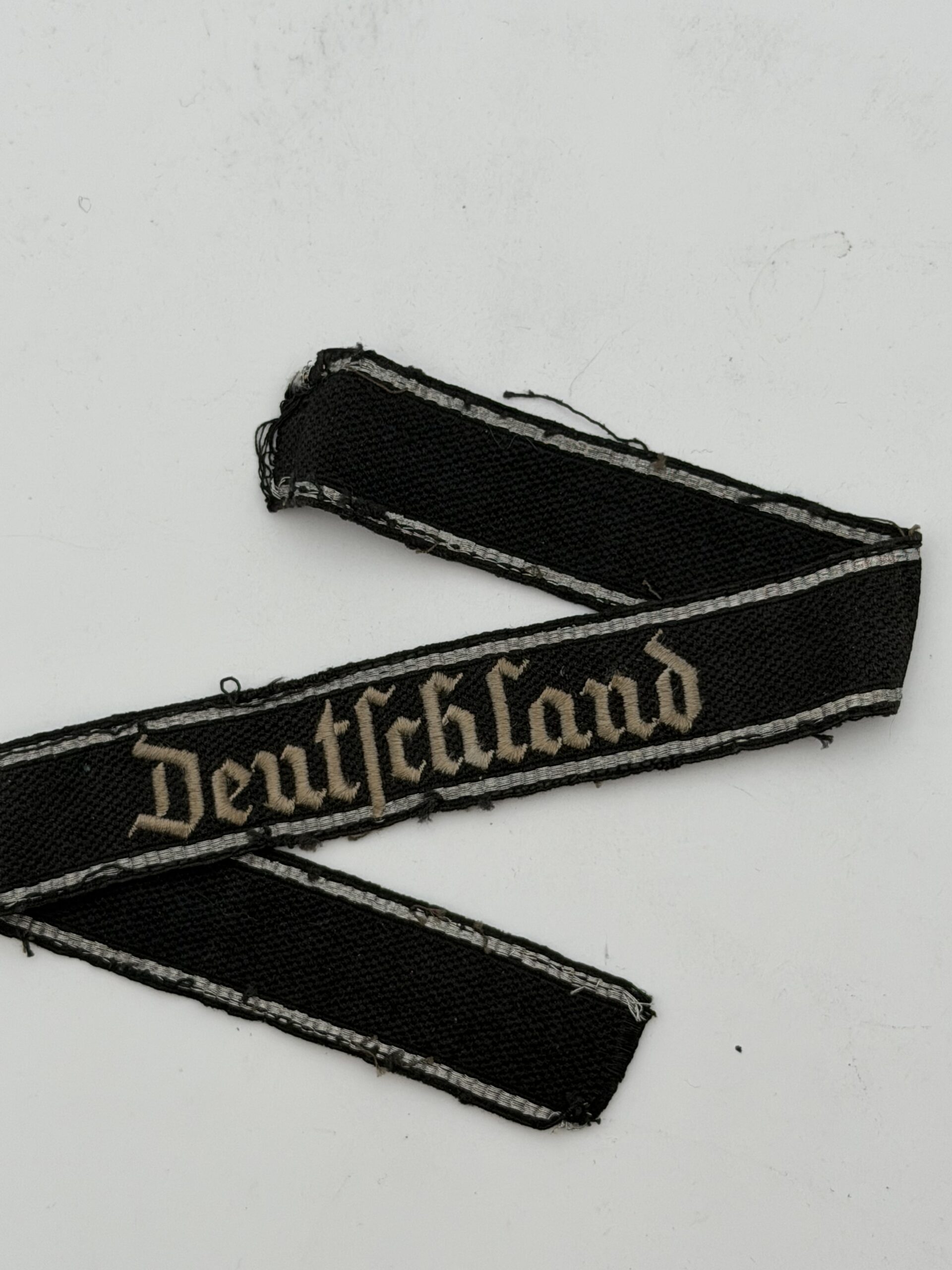
Original early-pattern SS Deutschland cuff title for enlisted men and NCOs of SS-Regiment 1 “Deutschland.” Machine embroidered in silver-grey thread on black RZM-pattern rayon, with silver-aluminium borders and distinctive Gothic or Fraktur lettering. Measuring 38 cm, this example was removed from a tunic and retains honest edge wear, opened ends and old attachment threads. The inscription remains complete and exceptionally clear.
€ 2.025
1 in stock
This original SS Deutschland cuff title is an early, first-pattern example produced for enlisted men and non-commissioned officers of SS-Regiment 1 “Deutschland.” It measures 38 cm and retains clear evidence of removal from a period tunic.
The manufacturer machine embroidered the name “Deutschland” in silver-grey thread on a tightly woven black rayon foundation. In addition, narrow silver-aluminium borders run along both long edges. The inscription appears in the distinctive Gothic or Fraktur script associated with the early SS-Verfügungstruppe pattern.
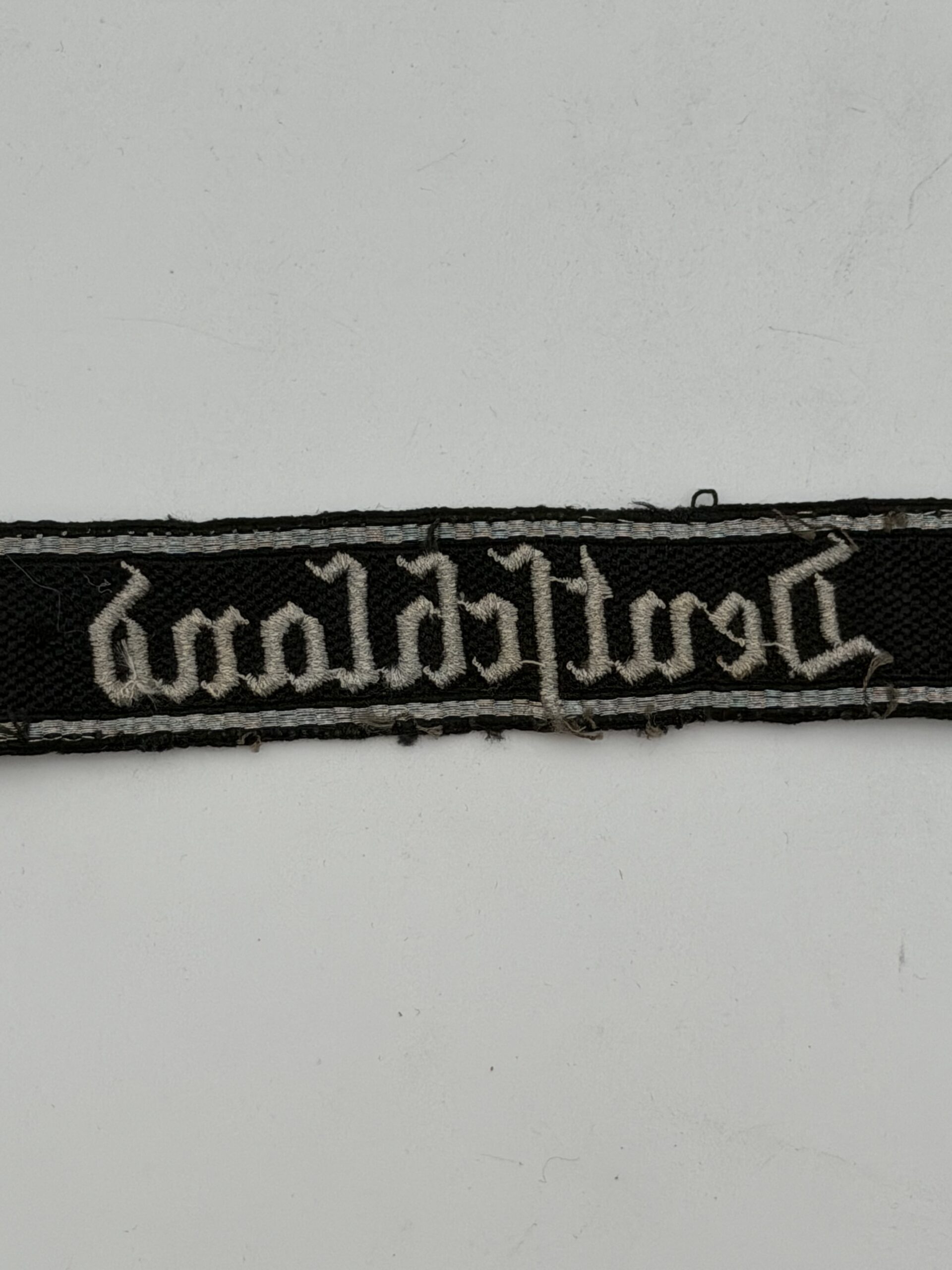
The reverse exposes the machine-embroidered construction. It shows the mirrored lettering, securing stitches and travelling threads created during production. Therefore, this is not a BeVo flatwoven or officer flatwire version. Instead, it is the correct enlisted and NCO machine-embroidered pattern.
The SS-Verfügungstruppe, normally abbreviated as SS-VT, formed the barracked and militarily trained element of the SS before the establishment of the wartime Waffen-SS.
The “Deutschland” formation developed as one of the principal SS-VT Standarten. Surviving Bundesarchiv records include personnel appointments, promotions, training documents and administrative correspondence relating specifically to SS-Standarte “Deutschland” between 1936 and 1938. These records are preserved as BArch NS 34/77.
The title identified the wearer’s regimental affiliation. It appeared on the lower left sleeve of the service and field uniform. Consequently, the name did not indicate nationality, an award or a general SS appointment. It referred specifically to the “Deutschland” formation.
Specialist references classify this Gothic-script version as the first pattern. Ratisbon’s describes the same form as an RZM-pattern cuff title with machine-embroidered white or silver-grey thread for enlisted men and NCOs. Helmut Weitze generally dates the early Gothic version to around 1938.
The “Deutschland” Standarte became one of the formations used to create the SS-Verfügungs-Division on 1 April 1940. The other principal Standarten were “Germania” and “Der Führer.”
After several organisational changes, the division became SS-Division “Reich” and later 2. SS-Panzer-Division “Das Reich.” The “Deutschland” formation eventually received the designation SS-Panzergrenadier-Regiment 3 “Deutschland.” This organisational lineage appears in the Bundesarchiv’s surviving divisional records.
The Bundesarchiv also holds a separate file covering SS-Standarte “Deutschland” during the 1940 campaign in Western Europe. Catalogued as BArch N 756/109, it includes a war diary, orders and operational reports.
Therefore, this cuff title belongs to the formative period of the armed SS. Its Gothic lettering is particularly associated with the pre-war and early-war identity of the “Deutschland” formation.
The inscription uses the early Gothic or Fraktur form:
Deutschland
The large initial D has a broad ornamental upper stroke and a sharply formed lower section. The remaining letters display the pointed terminals, narrow upright strokes and angular curves expected from this early pattern.
The lettering remains complete. Moreover, the silver-grey embroidery has developed an even cream-grey patina. Minor colour variation appears natural and consistent with age, handling and long-term exposure.
No important section of the inscription is missing. Likewise, the black foundation around the lettering shows no evidence that the original wording was removed or replaced.
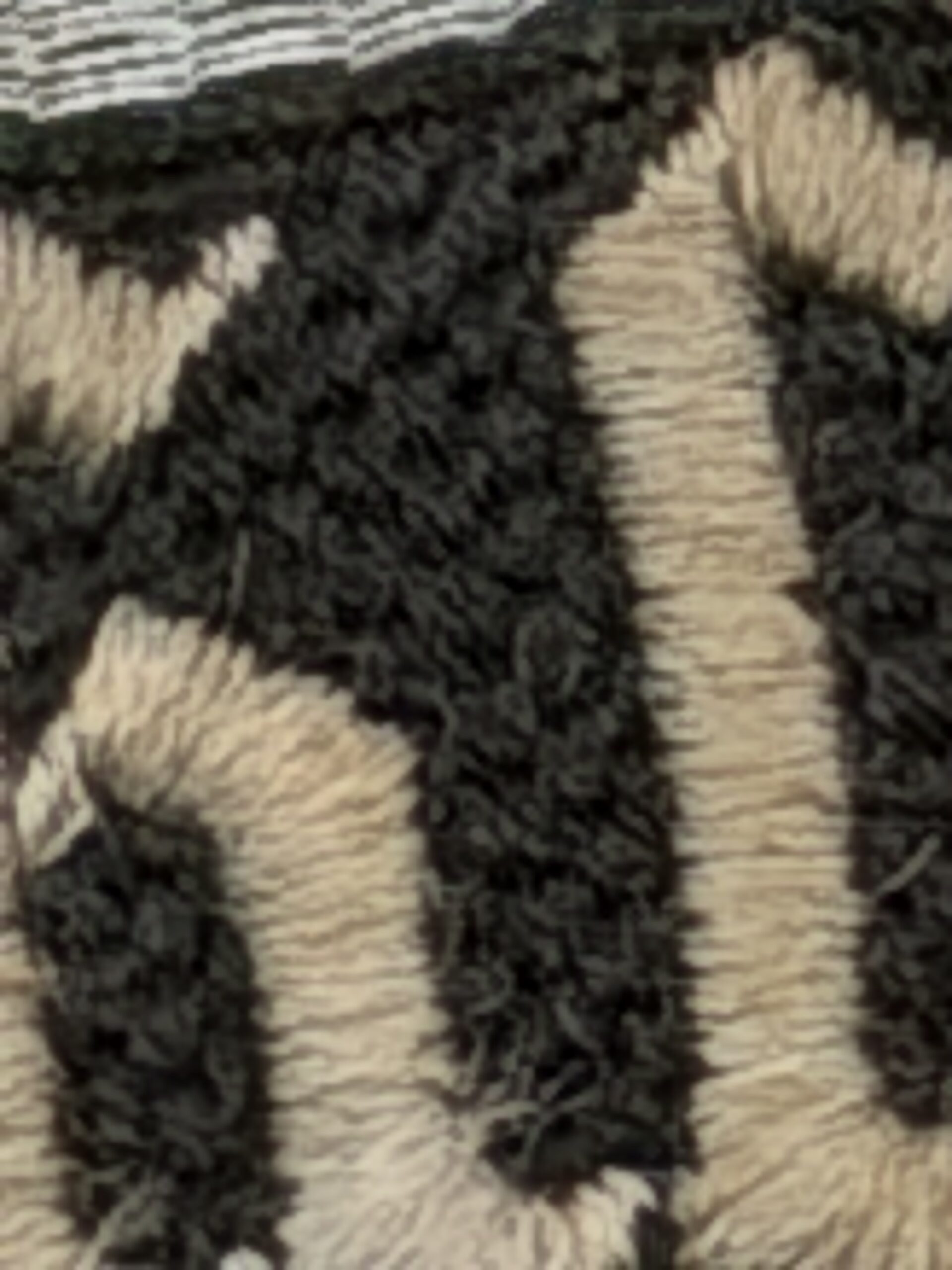
The thread sits slightly above the black ground. This raised surface confirms machine embroidery rather than flat weaving. The reverse also displays the expected mirror image and connecting threads.
This example represents the Mannschaften und Unterführer version. In English, that means enlisted men and non-commissioned officers.
The manufacturer used pale silver-grey textile thread for the wording. By contrast, officer or Führer versions generally used metal-thread embroidery, hand embroidery or BeVo flatwire weaving.
A directly comparable 43 cm example catalogued by eMedals uses:
Those features correspond closely with the construction visible on the present cuff title.
The present piece should therefore be described as:
First-pattern SS-Verfügungstruppe “Deutschland” machine-embroidered cuff title for enlisted men and NCOs.
It should not be described as an officer flatwire cuff title. Likewise, it is not a later block-letter BeVo example.
The title uses a dense black woven foundation with a fine diagonal surface. This material has the characteristic appearance of period rayon cuff-title band.
The weave remains strong across the surviving length. Although the band shows folds and compression from wear, it has not become weak or transparent.
Both long edges carry narrow silver-coloured borders. The maker incorporated these metallic threads into the band before adding the central inscription. Consequently, the borders and black foundation form one coherent piece of material.
The metallic thread now displays slight dulling and localised darkening. However, it retains much of its original silver-grey appearance.
No modern heat-sealed edge appears in the photographs. Furthermore, the visible ends show ordinary broken textile fibres rather than melted synthetic material.
The reverse provides important evidence of the title’s production.
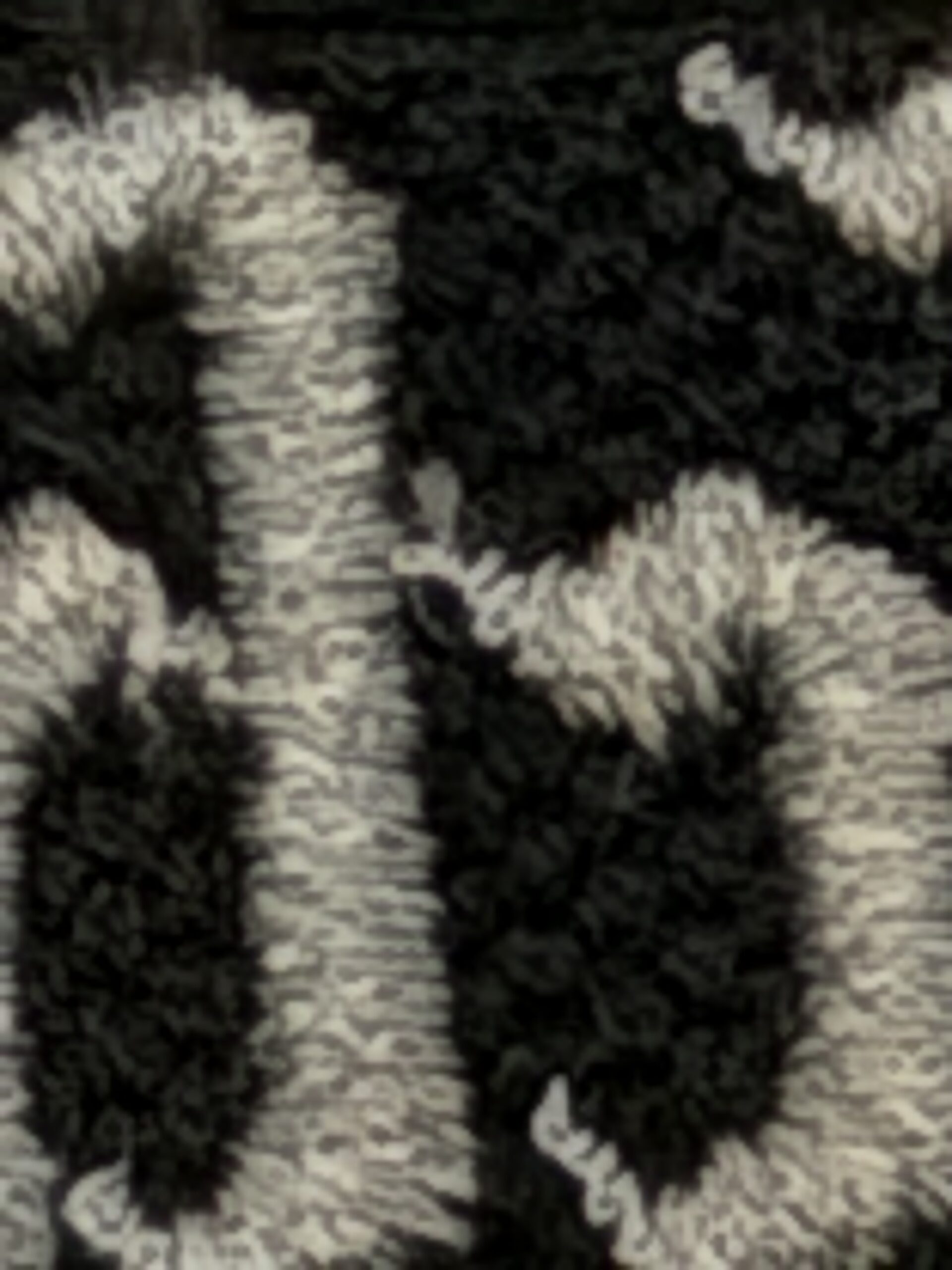
The wording appears in mirror image. Individual securing stitches and travelling threads remain visible between the letters. This is exactly what collectors expect from machine embroidery applied to prepared cuff-title band.
The reverse has no modern protective backing. It also lacks the dense “salt-and-pepper” appearance associated with certain BeVo flatwoven constructions.
The thread colour, stitch density and ageing remain consistent throughout the inscription. Therefore, there is no visible evidence of later replacement lettering or modern over-embroidery.
A period RZM paper label no longer survives. This is unsurprising on a shortened, tunic-removed title. Labels often disappeared during tailoring, active wear, removal or later handling.
The cuff title measures 38 cm from end to end.
This length is shorter than an untouched factory-length example. However, it is entirely compatible with a title that a tailor fitted to a particular tunic sleeve and later removed.
The ends retain:
These features support the stated tunic-removed history. They also give the title considerable service character.
A particularly close Ratisbon’s comparison measured 39 cm. It displayed the same first-pattern Gothic lettering and machine-embroidered EM/NCO construction. Ratisbon’s specifically described that example as removed from a tunic.
Therefore, the 38 cm length should not be treated as a serious defect. Nevertheless, the listing must state clearly that the title is shortened and not an untouched full-length example.
The black woven field remains complete and structurally sound. It displays light surface wear, folding and compression associated with uniform use.
The complete word “Deutschland” remains present and clearly legible. The silver-grey embroidery shows age toning but no major loss.
Both upper and lower silver-aluminium borders remain substantially complete. Minor pulls, darkened points and displaced strands appear along the edges.
The ends are opened and worn from tunic removal. Loose original threads remain visible. No attempt has been made to modernise or conceal this wear.
The original machine-embroidered stitch structure remains exposed. No modern backing, adhesive or replacement panel appears in the photographs.
No obvious post-war repair or replacement embroidery is visible.
Very good tunic-removed condition. The title has honest service wear but retains a strong black ground, complete inscription and excellent early Gothic appearance.
The loose threads should remain untouched. Trimming, gluing or resewing them would remove historical evidence and reduce the item’s value.
The photographed construction shows the principal characteristics expected from an original period example:
The band also corresponds closely with recognised examples published by Ratisbon’s and eMedals. In particular, the 39 cm Ratisbon’s example shares the same pattern, rank class, production method and tunic-removed character.
On the available photographic evidence, this piece presents as an original pre-1945 SS-Verfügungstruppe “Deutschland” cuff title for enlisted men and NCOs.
Early Gothic “Deutschland” titles have particular collector appeal because they document the formative SS-Verfügungstruppe period. Later examples often used simpler Latin or block lettering.
The early style also connects directly with the organisation’s pre-war visual identity. Consequently, collectors often prefer Gothic examples when assembling an SS-VT display.
This title also retains clear evidence of actual uniform use. It was not simply stored as unused factory stock. Therefore, the shortened length and opened ends form part of its history.
The cuff title cannot identify one individual wearer. It also cannot establish a particular battalion, company or campaign. However, it confirms affiliation with the “Deutschland” regiment.
The Waffen-SS formed the military branch of the SS and participated in Germany’s wartime campaigns. Its formations and personnel were also involved in war crimes and the broader system of Nazi persecution. The United States Holocaust Memorial Museum’s Waffen-SS overview provides essential institutional context.
| Feature | Description |
|---|---|
| Organisation | SS-Verfügungstruppe |
| Formation | SS-Regiment 1 “Deutschland” |
| Later lineage | SS-Panzergrenadier-Regiment 3 “Deutschland” |
| Type | Enlisted men and NCO cuff title |
| Pattern | First pattern |
| Script | Gothic or Fraktur |
| Inscription | Deutschland |
| Construction | Machine-embroidered lettering |
| Lettering material | Silver-grey textile thread |
| Foundation | Black woven rayon-pattern band |
| Borders | Silver-aluminium upper and lower borders |
| Reverse | Exposed mirrored machine embroidery |
| Length | 38 cm |
| Condition | Worn and removed from a tunic |
| RZM label | Not present |
| Repairs | None apparent |
| Period | Circa 1938 and the early SS-VT period |
Explore related listings: Cuff Titles & Armbands; Original SS-Verfügungstruppe Deutschland BeVo Flatwoven Cuff Title; Original Der Führer BeVo Flatwire Cuff Title; Nordmenn Militaria Uniforms Collection.
The Bundesarchiv record BArch NS 34/77 documents personnel, training and administrative matters concerning SS-Standarte “Deutschland” from 1936 to 1938.
The Bundesarchiv record BArch N 756/109 contains material relating to SS-Standarte “Deutschland” during the 1940 campaign in Western Europe.
The Bundesarchiv organisational history of 2. SS-Panzer-Division “Das Reich” explains how “Deutschland,” “Germania” and “Der Führer” formed the original SS-Verfügungs-Division.
A close market and construction comparison appears in the Ratisbon’s 39 cm tunic-removed Deutschland cuff title archive.
The materials, Gothic lettering, reverse embroidery, borders and removal wear correspond with recognised original examples. The photographic evidence strongly supports period manufacture.
It is the early first-pattern Gothic or Fraktur version for enlisted men and non-commissioned officers.
No. The pale machine-embroidered textile lettering identifies the EM/NCO pattern. Officer examples normally used metal-thread, hand-embroidered or BeVo flatwire construction.
No. The raised lettering and mirrored reverse stitches confirm machine embroidery on prepared RZM-pattern band.
The cuff title was removed from a tunic. Tailoring and later removal often reduced the surviving length. A directly comparable tunic-removed example measured 39 cm.
It carries a lower value than a complete 45–49 cm labelled example. However, the 38 cm length remains substantial, and the uniform-removal character adds historical appeal.
No. The title identified personnel of the “Deutschland” regiment. That regiment later formed part of the division that became “Das Reich.”
Not from the cuff title alone. A named tunic, documented grouping, photograph or service record would be needed.
No replacement is visible. The front and reverse stitch structures appear coherent, while the lettering and foundation show matching age.