
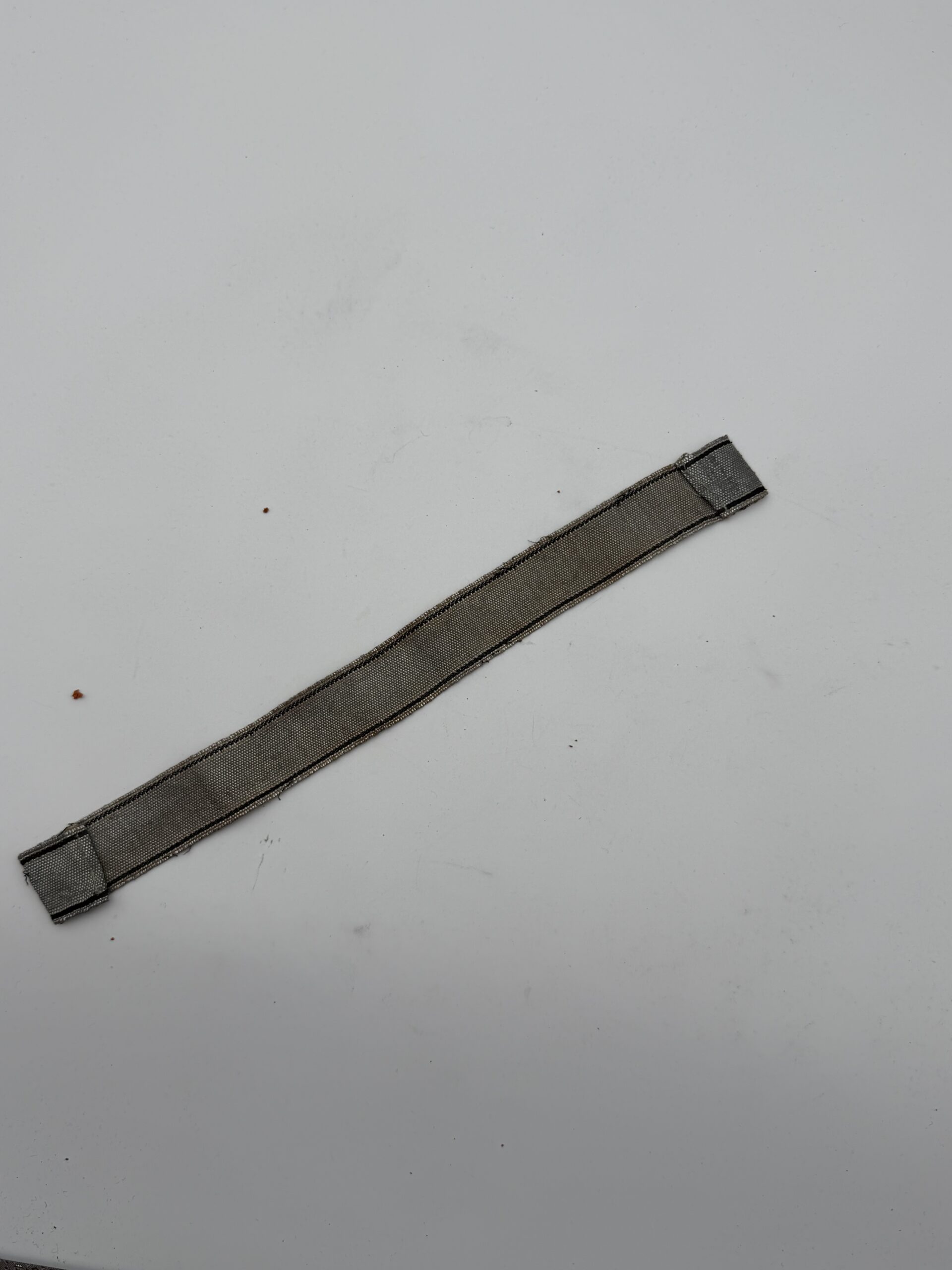
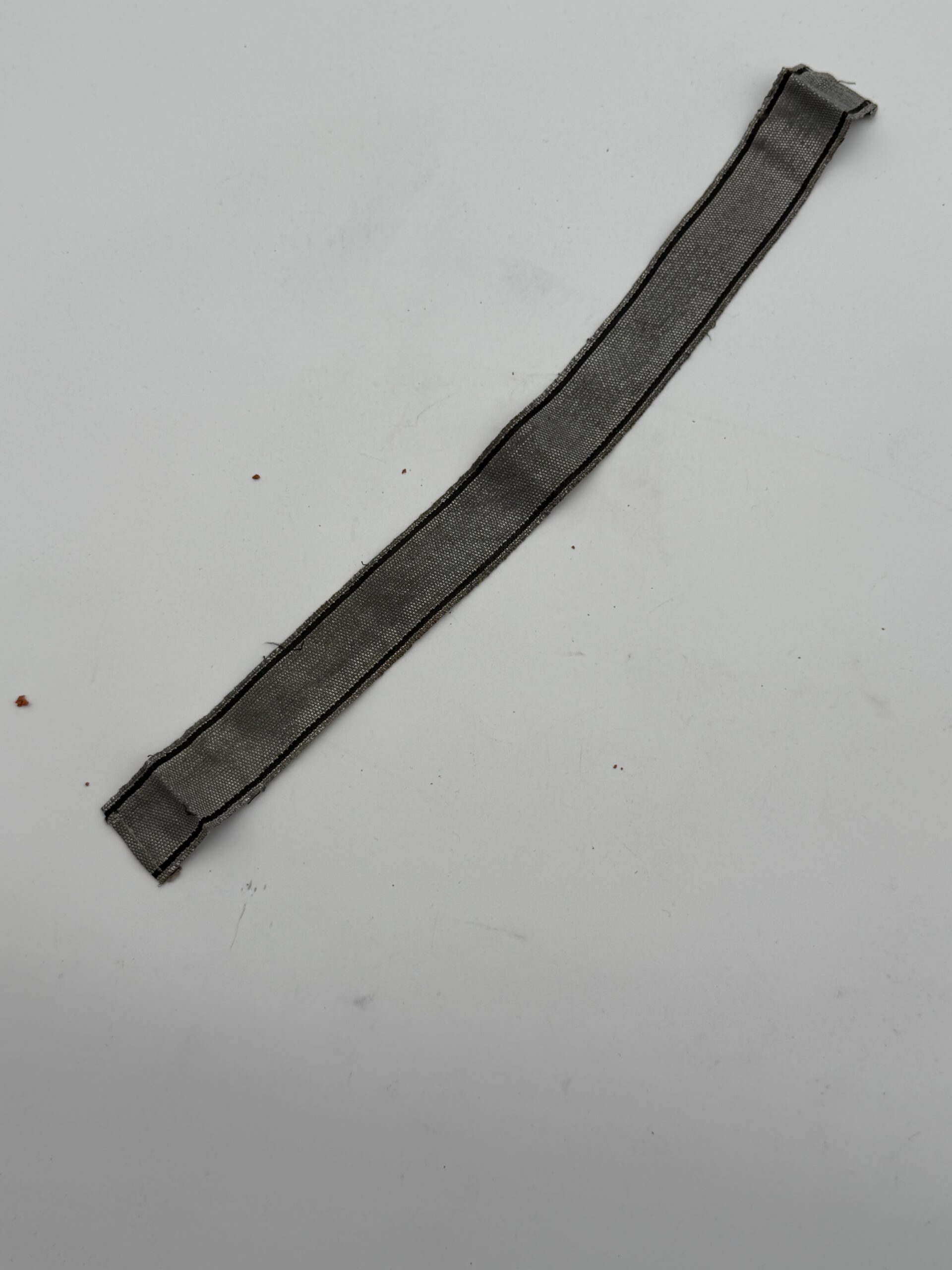
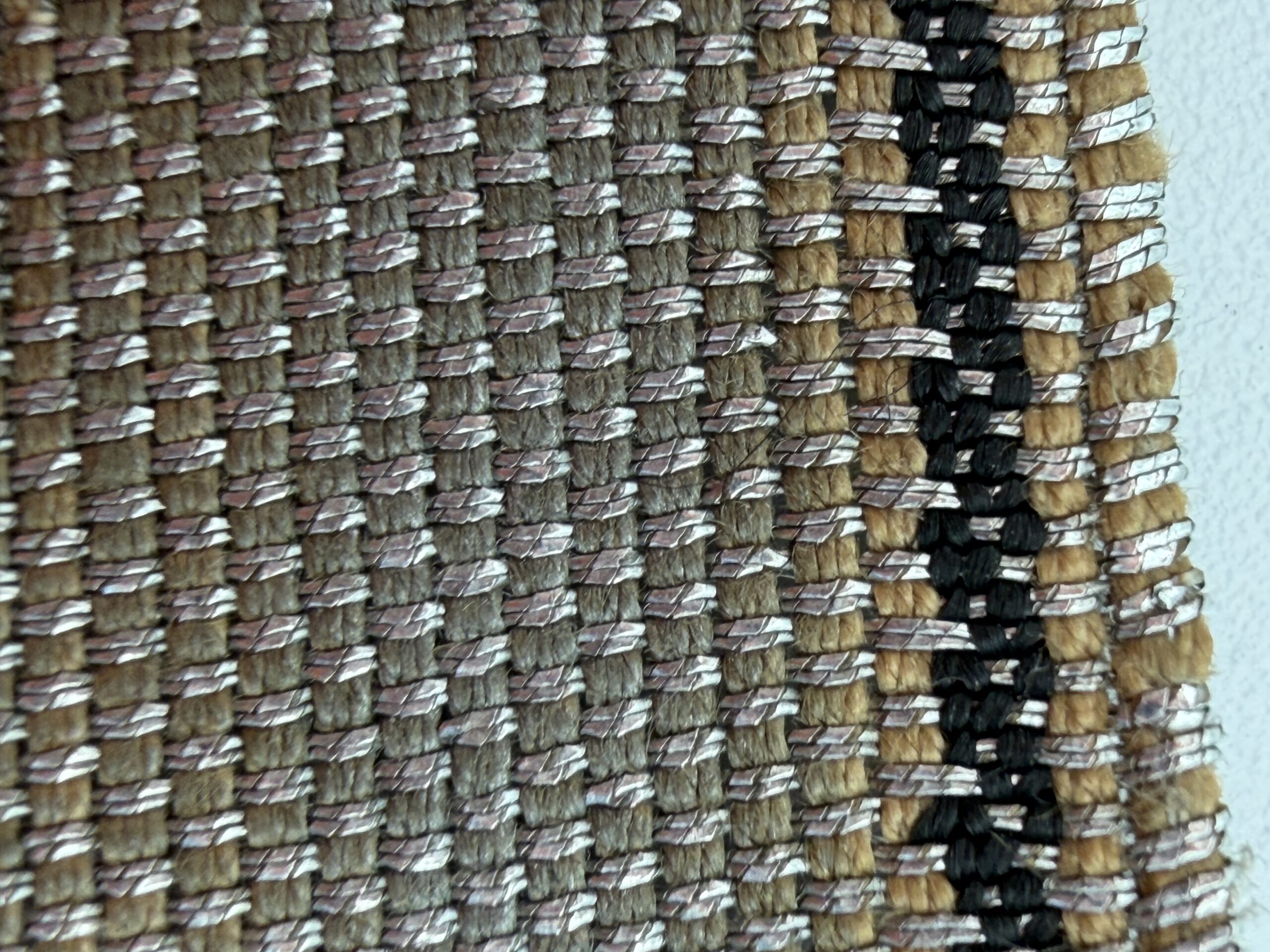
Extremely rare original SS Hauptamtschef cuff title in silver-aluminium tresse with black woven borders and surviving RZM/SS 38/38 label.
The band measures exactly 31 mm wide, which precisely matches the 3.1 cm dimension specified for the Amtschef silver sleeve band in the official 1937 Organisationsbuch der NSDAP.
Most importantly, its distinctive open rectangular aluminium weave closely matches the cuff title preserved on the documented service tunic of SS-Obergruppenführer Werner Lorenz. By contrast, documented examples associated with Heinrich Himmler, Karl Wolff and Oswald Pohl use visibly different metallic-tresse constructions.
Length approximately 39 cm. Uniform removed. Circa 1938.
€ 7.500
1 in stock
This exceptionally rare SS Hauptamtschef cuff title belongs to the highest level of the pre-war SS administrative insignia system.
Silver-aluminium tresse forms the main body. In addition, woven black stripes run along the upper and lower edges.
Significantly, there is no black centre stripe.
That feature identifies the senior configuration associated with the Reichsführer-SS, Hauptamtschefs and Amtschefs.
Unlike a Waffen-SS formation cuff title, this example does not identify a regiment or division. Instead, it indicated a senior administrative appointment within the SS leadership structure.
One of the strongest objective features is the width.
Actual width: exactly 31 mm
The official 1937 Organisationsbuch der NSDAP specifies:
Amtschef: silver sleeve strip 3.1 cm wide.
Therefore, the regulation measurement converts to exactly 31 mm.
The present SS Hauptamtschef cuff title matches that measurement precisely.
Furthermore, the same contemporary source explains the hierarchy of these silver administrative bands. An Amtschef used the plain silver band. Lower appointments added black centre stripes.
The official system was:
The contemporary source specifically states that the Amtschef band measured 3.1 cm wide.
Additionally, Tafel 51 identifies the senior plain-silver pattern with the Reichsführer-SS, Hauptamtschefs and Amtschefs.
Consequently, the 31 mm measurement provides unusually strong documentary support for the identification.
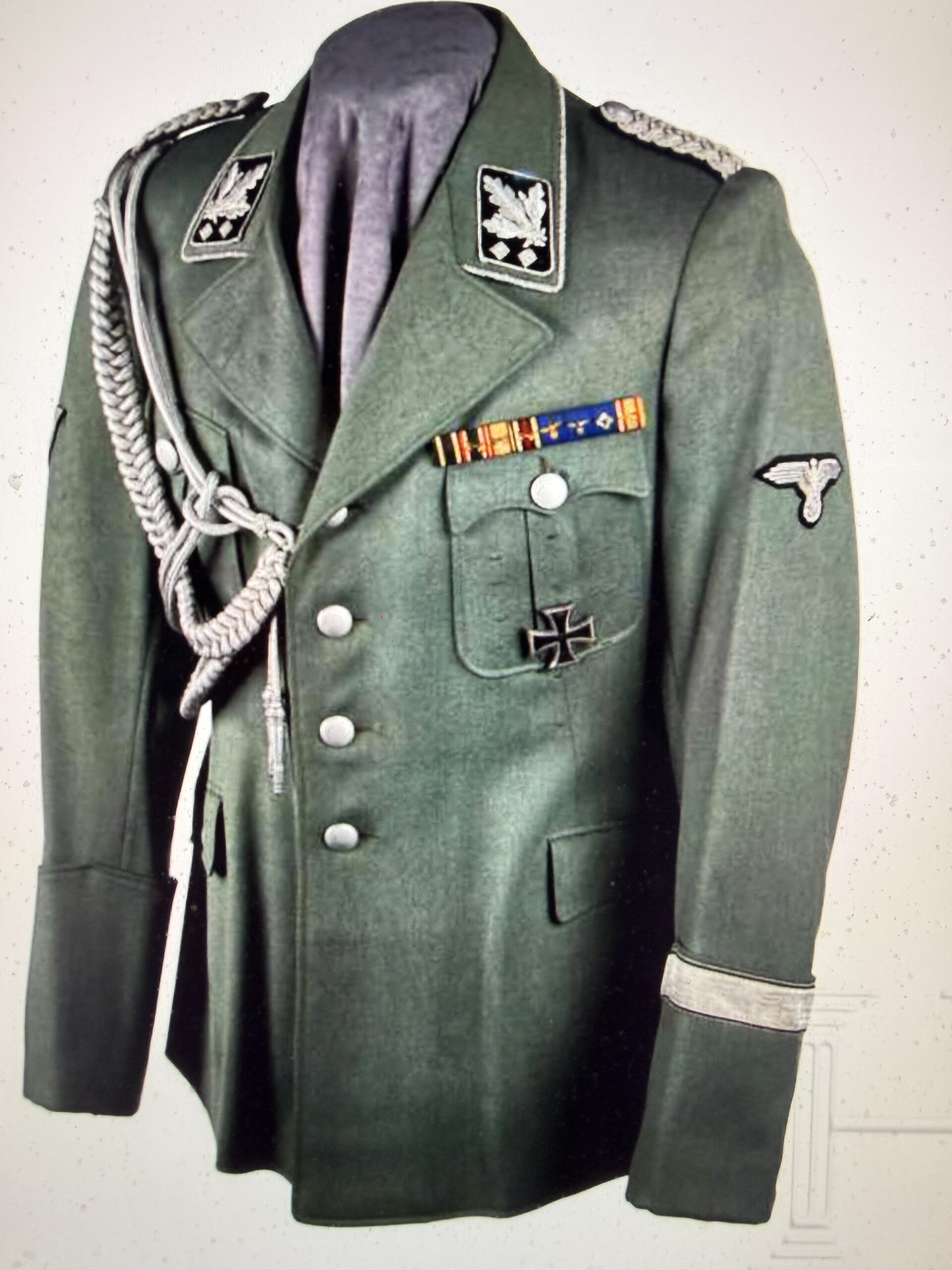
The most significant surviving comparison is the documented field-grey service tunic of SS-Obergruppenführer Werner Lorenz.
Hermann Historica offered the tunic as Lot 1037 on 6 November 2024.
Their catalogue specifically identifies the cuff title as an extremely rare Reichsführer-SS / Hauptamtschef / Amtschefexample made from silver-aluminium tresse with black thread borders.
The Lorenz uniform sold for €25,000.
The Lorenz example is especially important because its metallic weave differs from several other surviving senior SS cuff titles.
Rather than showing an almost solid silver surface, the Lorenz band has a more open construction.
Individual metallic elements remain clearly visible.
Moreover, darker textile can be seen between sections of aluminium.
That structure creates a distinctive rectangular or block-like appearance.
The present SS Hauptamtschef cuff title displays the same broad construction characteristics.
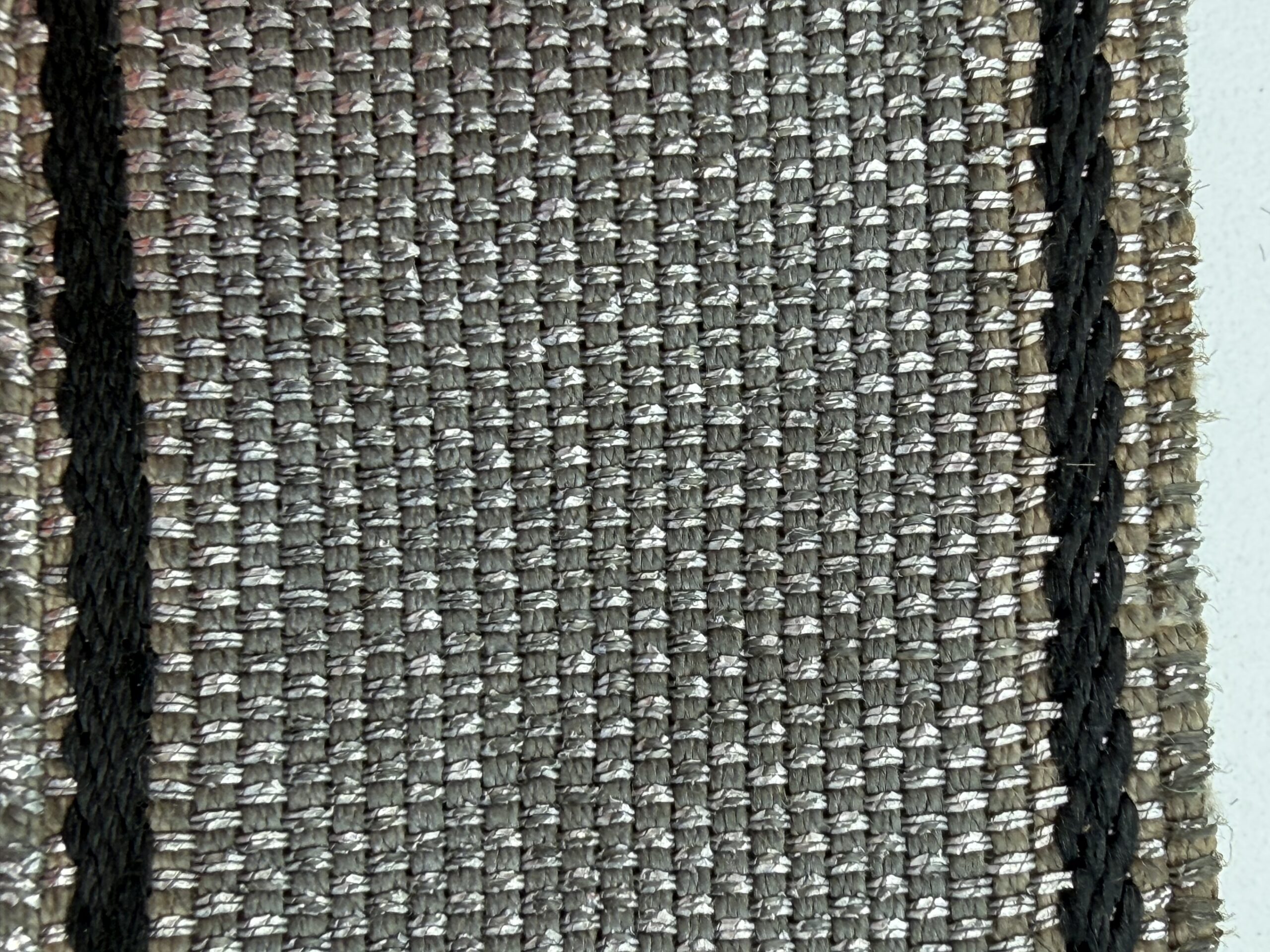
Close examination of the present band reveals a very distinctive metallic weave.
Flattened aluminium strips pass over and around fibrous textile yarns.
As a result, the surface forms repeated rectangular units.
Small areas of the underlying textile remain visible between the metallic sections.
The same basic appearance can be observed on the Werner Lorenz cuff title.
Several construction points correspond particularly well.
The similarities include:
Therefore, the Lorenz example provides the closest documented visual construction comparison presently located.
For catalogue purposes, this version can usefully be described as a:
However, this phrase is a modern comparative description.
It does not claim that Werner Lorenz owned the present cuff title.
Likewise, it does not prove that both bands came from the same manufacturer.
Instead, the term identifies the closest documented weave style.
A documented Heinrich Himmler cuff title shows another version of the same general senior administrative pattern.
The Himmler example also has:
However, its aluminium weave is noticeably denser.
The metallic elements form a much more continuous silver surface.
Consequently, less of the underlying textile structure remains visible.
That difference is important.
It demonstrates that an authentic Reichsführer-SS / Hauptamtschef / Amtschef cuff title does not necessarily have one single weave construction.
Therefore, the Himmler example confirms the type, but it is not the closest weave comparison for the present band.
The documented white service uniform of SS-Obergruppenführer Karl Wolff also carries the same senior style of silver cuff title.
Nevertheless, the Wolff weave differs from the present example.
Its metallic elements appear finer.
Moreover, the pattern produces a more elongated or chain-like visual structure.
By comparison, the present cuff title has broader rectangular elements.
The underlying textile also appears more clearly between metallic sections.
Consequently, the Karl Wolff cuff title remains an important reference for the authorised insignia design.
However, it does not provide the closest construction match.
The Werner Lorenz cuff title does.
A documented tunic associated with SS-Obergruppenführer Oswald Pohl also carries a Hauptamtschef silver cuff title.
Again, the basic design agrees with the regulation.
Nevertheless, its metallic tresse appears considerably denser.
The silver surface looks more continuous than the open construction found on the present example.
Therefore, Pohl provides another important reference for the authorised pattern.
Once again, though, the Lorenz example gives the stronger weave comparison.
Collectors should not confuse differences in weave with differences in appointment.
The Himmler, Wolff, Pohl and Lorenz examples belong to the same general senior administrative cuff-title system.
However, their metallic tresse was not necessarily identical.
Different manufacturers could have supplied approved material.
Production techniques may also have changed over time.
Similarly, separate weaving batches could create visible variations.
At present, no primary RZM document has been located that proves which manufacturer produced each individual weave.
Therefore, the safest interpretation is that several construction variants existed.
| Reference | Identification | Weave style | Match to this example |
|---|---|---|---|
| Werner Lorenz | Reichsführer-SS / Hauptamtschef / Amtschef | Open rectangular metallic weave | Closest match |
| Heinrich Himmler | Senior administrative pattern | Dense silver weave | Different |
| Karl Wolff | Senior administrative pattern | Fine elongated weave | Different |
| Oswald Pohl | Hauptamtschef pattern | Dense metallic tresse | Different |
| Present example | Reichsführer-SS / Hauptamtschef / Amtschef | Open rectangular weave | Lorenz-type |
This distinction is one of the most important features of the present cuff title.
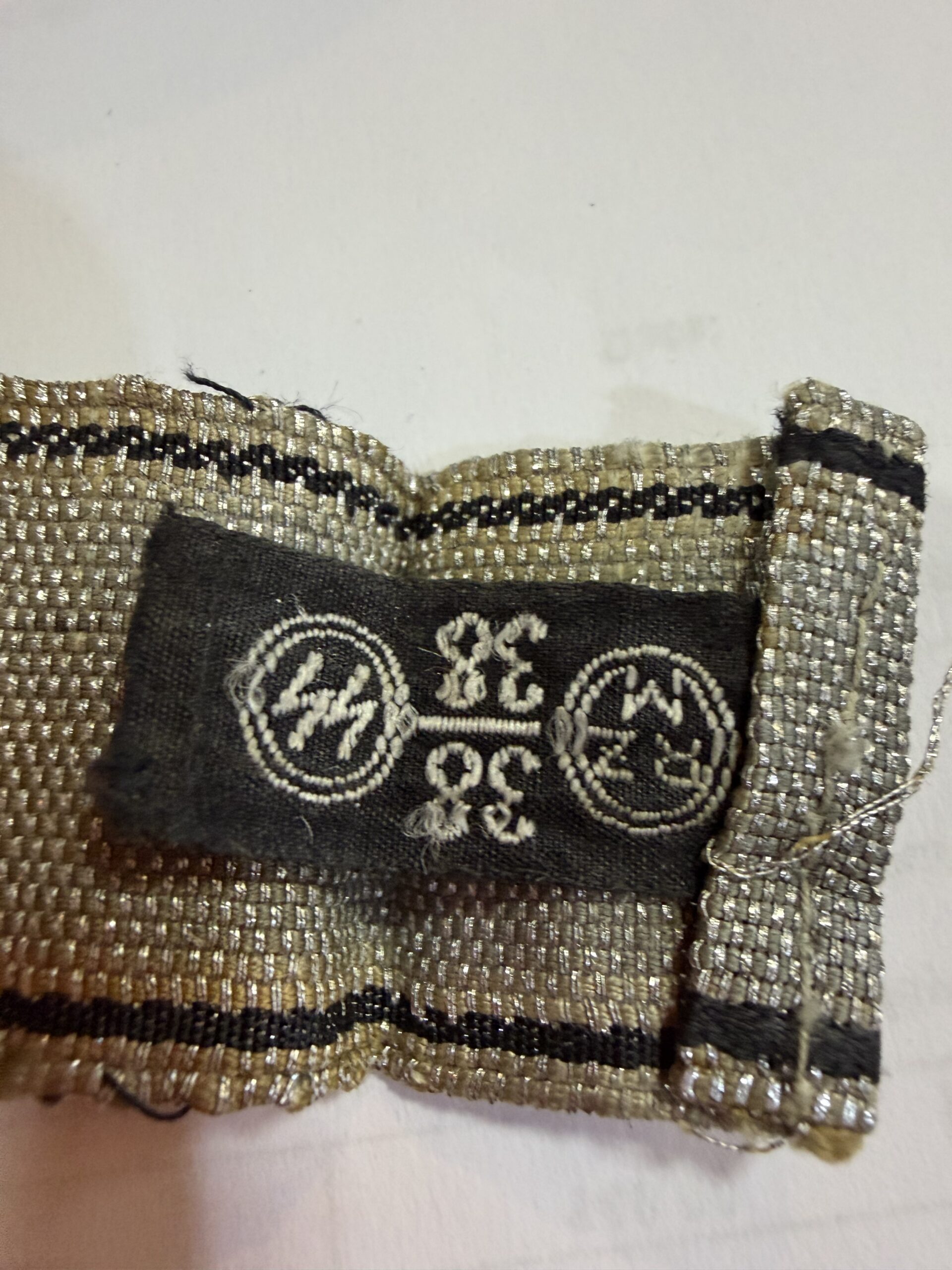
The reverse retains a black woven RZM/SS 38/38 label.
When viewed correctly, the label shows:
RZM emblem – 38 / 38 – SS runes
The second 38 is consistent with production in 1938.
That date fits the documented period of use perfectly.
Furthermore, a published Hauptamtschef cuff title held by eMedals also retains an RZM/SS 38/38 woven label. Their example consists of machine-woven silver-aluminium material with black upper and lower borders.
That comparison is particularly useful.
It proves that the 38/38 label configuration is known on surviving Hauptamtschef cuff titles.
The first number appears to represent the RZM licence or manufacturer identification.
However, a specific company should not yet be named.
Different RZM product categories could use separate numbering systems.
Therefore, numbers from belt-buckle, metal-insignia or unrelated manufacturer lists cannot automatically be transferred to woven SS insignia.
The correct catalogue description is:
RZM/SS 38/38 woven control label – manufacturer/licence code 38, dated 1938; manufacturer presently unconfirmed.
That wording avoids an unsupported attribution.
The metallic construction provides another major authentication point.
Under magnification, the aluminium has naturally dulled.
Some sections remain silver-grey.
Meanwhile, other areas display darker grey, bronze or faint reddish tones.
Exposed textile yarns have aged toward tan and brown.
Importantly, these changes occur irregularly across the material.
That pattern differs from uniform artificial ageing.
The metallic strips also show compression and small fractures.
Furthermore, individual aluminium elements sit naturally around the textile cores.
Together, these characteristics support prolonged age.
Black longitudinal stripes run along both edges.
The border structure deserves close attention.
Each black line sits slightly inside the physical outer edge.
Consequently, a narrow silver section remains visible beyond the black stripe.
The sequence is:
silver field → black border → narrow silver outer edge
The Werner Lorenz cuff title shows the same broad arrangement.
Therefore, the border construction provides another useful point of comparison.
The cuff title measures approximately 39 cm long.
That length is shorter than many untouched factory examples.
However, this is entirely understandable for a uniform-mounted piece.
Tailors shortened cuff titles to fit individual sleeves.
Later removal could reduce the surviving length further.
Consequently, a 39 cm length does not create a problem.
Instead, the folded areas, old threads and edge wear support the interpretation that the title was previously worn.
The SS Hauptamtschef cuff title did not show the wearer’s personal SS rank.
Personal rank appeared on the collar patches.
For example, Werner Lorenz held the rank of SS-Obergruppenführer.
His silver cuff title identified his senior appointment rather than his rank.
Therefore, this band should not be called an:
“SS-Obergruppenführer cuff title.”
The correct identification is:
The contemporary Organisationsbuch der NSDAP provides the most important primary evidence.
Its SS section specifically describes the Amtschef silver sleeve band as 3.1 cm wide.
Furthermore, the official insignia plate identifies the plain senior pattern with the Reichsführer-SS, Hauptamtschefs and Amtschefs.
The same source also states that personnel directly attached to the Reichsführer-SS staff wore the RFSS title unless they wore Amtschef-type bands.
Consequently, this is not simply a collector-created designation.
The administrative cuff-title system is directly documented in a contemporary period source.
Several independent points now support the identification of this SS Hauptamtschef cuff title.
Most importantly, the band measures exactly 31 mm.
That figure precisely matches the contemporary 3.1 cm regulation.
Additionally, the title has the correct plain silver centre.
Both black longitudinal borders remain present.
The metallic tresse also displays natural ageing.
Furthermore, the woven RZM/SS 38/38 label fits a 1938 production date.
Finally, the Werner Lorenz tunic provides an unusually strong visual comparison for the open aluminium weave.
Taken together, these characteristics create a very convincing period profile.
Nevertheless, physical examination remains preferable before making an absolute guarantee on an insignia of this rarity.
The Lorenz uniform should receive special emphasis in this catalogue entry.
It is not simply another senior SS tunic.
Hermann Historica specifically catalogued the cuff title on that uniform as the extremely rare Reichsführer-SS / Hauptamtschef / Amtschef type.
More importantly, the Lorenz title displays the open metallic construction seen on this loose example.
The Himmler cuff title does not.
Likewise, the Karl Wolff example uses a visibly finer structure.
Pohl’s surviving cuff title also appears denser.
Therefore, the Lorenz title currently provides the closest documented construction comparison.
This point does not prove that both pieces came from the same manufacturer.
However, it does demonstrate that the more open aluminium weave existed on a documented senior SS uniform.
That evidence is extremely important when authenticating the present band.
The cuff title remains in excellent untouched research condition.
Age has naturally dulled the aluminium.
Meanwhile, exposed textile fibres show appropriate tonal variation.
The black borders remain clearly defined.
Old wear appears at the ends.
Most importantly, the woven RZM/SS label survives.
No restoration is recommended.
Cleaning the metallic material could destroy useful oxidation evidence.
Likewise, loose threads should remain untouched.
Very few SS insignia represented appointments at this level.
Consequently, genuine examples rank among the rarest Allgemeine-SS cuff titles.
This example becomes particularly important because it combines:
exact 31 mm regulation width
RZM/SS 38/38 woven label
1938 dating
correct no-centre-stripe senior pattern
uniform-removed condition
and
Lorenz-type metallic weave
Those characteristics elevate it well above an anonymous section of silver tresse.
Item: SS administrative appointment cuff title
Designation: Reichsführer-SS / Hauptamtschef / Amtschef
Organisation: Allgemeine-SS / Reichsführung-SS
Division: None
Material: Silver-aluminium tresse
Borders: Black woven longitudinal borders
Centre stripe: None
Width: Exactly 31 mm
Regulation width: 31 mm / 3.1 cm
Length: Approximately 39 cm
Label: Woven RZM/SS 38/38
Date: Circa 1938
Manufacturer code: 38
Manufacturer name: Unconfirmed
Construction: Open rectangular metallic weave
Closest documented comparison: Werner Lorenz cuff title
Condition: Uniform removed
Rarity: Extremely rare
Price: €7,500
Explore related listings: Cuff Titles & Armbands; SS Totenkopfverbände Cuff Title | Officer RZM 38/38; Original SS-Hauptamt Officer Cuff Title with Original RZM Label; SS Deutschland Cuff Title | Original Gothic Pattern.
This is the most important external comparison.
Hermann Historica Werner Lorenz Service Uniform Archive
Hermann Historica specifically describes the Lorenz sleeve band as the extremely rare Reichsführer-SS / Hauptamtschef / Amtschef silver-aluminium type.
eMedals RZM 38/38 SS Hauptamtschef Cuff Title
This published example retains the same 38/38 label configuration.
1937 Organisationsbuch der NSDAP – SS Insignia Regulations
The contemporary text specifies an Amtschef silver Armstreifen 3.1 cm wide.
It is a senior SS administrative appointment cuff title produced from silver-aluminium tresse.
Yes. The contemporary regulation specifies 3.1 cm, which equals exactly 31 mm.
The senior Reichsführer-SS / Hauptamtschef / Amtschef configuration used the plain silver centre.
Lower appointments added one, two or three black stripes.
Different surviving examples use different metallic-tresse constructions.
The Himmler type appears much denser.
No. Wolff’s cuff title uses a visibly finer metallic pattern.
The documented Lorenz tunic carries the same recognised senior cuff-title pattern.
More importantly, its open aluminium weave provides the closest documented visual comparison with this example.
No.
It proves that this open construction existed on a documented senior SS cuff title.
However, the precise manufacturer remains unconfirmed.
The label is consistent with manufacturer or licence code 38 and production year 1938.
The company has not yet been conclusively established from the correct contemporary RZM textile-manufacturer register.
No.
It represented an administrative appointment rather than a combat formation.
Original Allgemeine-SS Reichsführer-SS / Hauptamtschef / Amtschef Cuff Title – Silver-Aluminium Tresse – RZM/SS 38/38 – Exact 31 mm Regulation Width – Circa 1938 – Lorenz-Type Weave – Uniform Removed – Extremely Rare